Carlos Slim
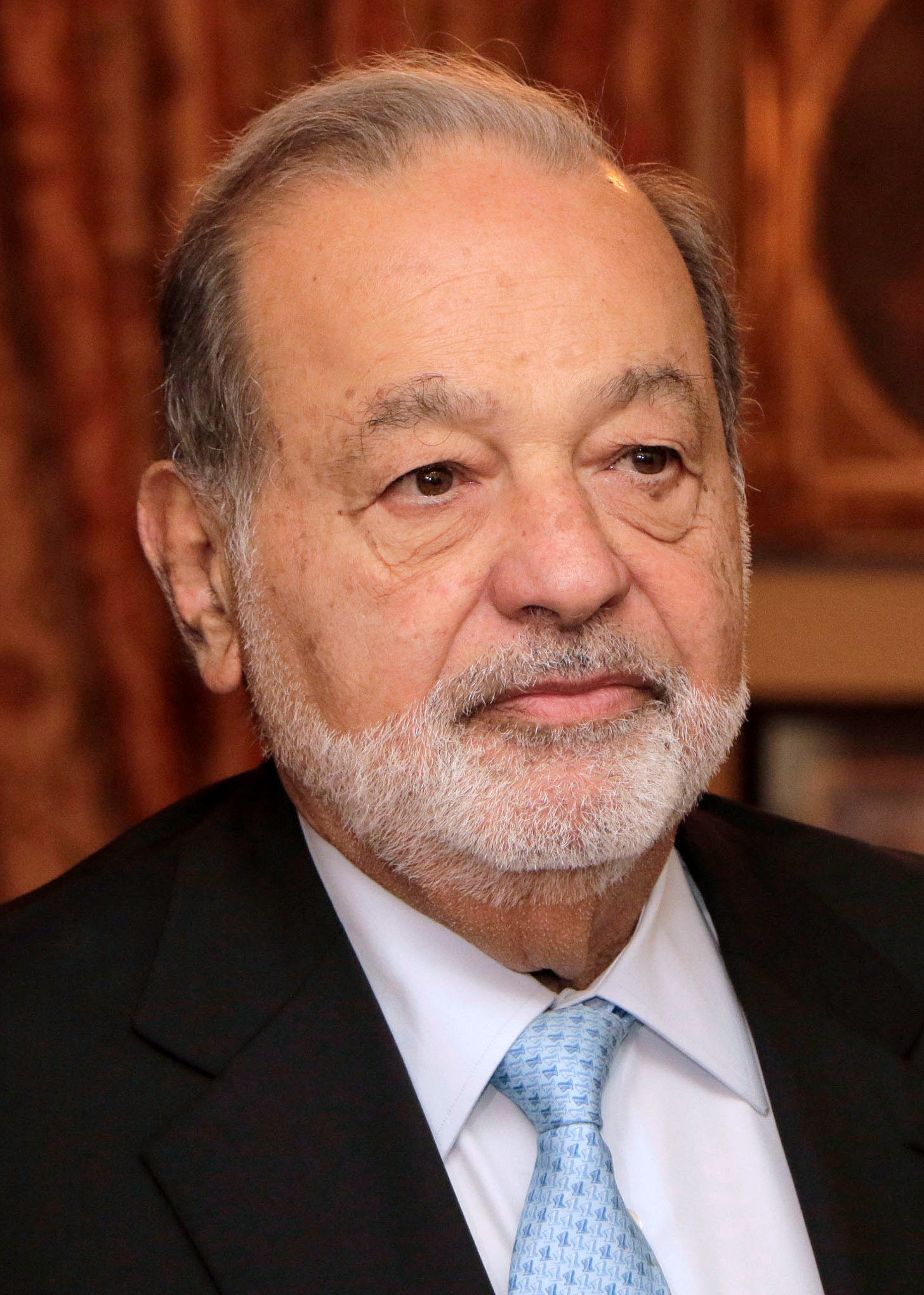
born Carlos Slim Helú
Chairman emeritus of Grupo Carso, Telmex, and América Móvil · b. 1940 · Mexico City, Mexico
Two calls made by hand, not formulas. how we score →
Summary
His father, a Lebanese immigrant merchant, built retail and real-estate wealth in Mexico City and taught him bookkeeping as a boy.
Slim traded stocks from age eleven, built an industrial group through Mexico's 1980s debt crisis, then led the consortium that bought the state telephone monopoly in 1990. He multiplied a fortune he did not start from zero into one of the largest on earth.
How it happened
Born in Mexico City in January 1940 to Julián Slim Haddad, a Lebanese Maronite Christian who had emigrated at fourteen to escape Ottoman conscription and built a dry-goods store and real-estate holdings into a substantial local fortune, and Linda Helú Atta, also of Lebanese descent. His father taught him bookkeeping and the mechanics of compound interest as a small child, put him into a government savings bond at eleven, and helped him buy his first stock, in a Mexican bank, at twelve. By fifteen he held shares in the country's largest bank. Julián died in 1953, when Carlos was thirteen, but the family's wealth and habits were already set.
He earned a civil engineering degree from the National Autonomous University of Mexico in 1961, trading stocks through his student years and teaching algebra and linear programming on the side. By 1965 his trading profits were large enough to found his own brokerage, Inversora Bursátil, and a real-estate holding company, Inmuebles Carso; within a year or two he was already a wealthy man by any Mexican standard, and he spent the 1970s buying construction, bottling, printing, and tobacco businesses.
When Mexico's economy collapsed under the 1982 debt crisis, Slim went shopping. With prices for Mexican assets depressed and few other buyers willing to bid, he bought mining and chemical producer Frisco, copper maker Nacobre, tire manufacturer Euzkadi, the Sanborns retail chain, an insurance company, and stakes in the Mexican arms of British American Tobacco and Hershey, consolidating the purchases under what became Grupo Carso.
In December 1990 Slim led a consortium with Southwestern Bell and France Télécom that won the Mexican government's sale of Teléfonos de México, the state phone monopoly, with a bid of $1.76 billion for roughly 20 percent of the equity and majority voting control. Grupo Carso itself put up $860 million, half the total, and Slim became chairman. The deal handed him control of a near-total monopoly on Mexican landlines that a 2006 U.S. diplomatic cable, later released via WikiLeaks, put at 95 percent market share.
Telmex's wireless arm was spun off in 2000 as América Móvil, which built out mobile networks across Latin America and made Slim the world's richest person by Forbes' count for four straight years, 2010 through 2013. His companies' market power drew sustained criticism: the OECD estimated in 2012 that weak telecom competition was driving Mexican prices well above international norms, and in March 2014 Mexico's new telecom regulator designated the América Móvil/Telmex/Telcel/Grupo Carso group a "preponderant economic agent," ordering free interconnection for rivals and cutting rates. Forbes put his real-time net worth at $125.1 billion in August 2026.
The coded evidence
Thirteen groups, every claim sourcedCoarse public-record coding; race is a noisy, interpretive category, more so across a Mexican classification system built around Indigenous/European mixture.
↗ en.wikipedia.orgSecond-generation — both parents emigrated from Lebanon to Mexico before he was born.
↗ en.wikipedia.orgSpanish, with strong Lebanese-Mexican community ties at home; his mother founded an early Arabic-language magazine for that community.
↗ en.wikipedia.orgNo move was made for a partner's career.
Not established either way in sources consulted.
↗ en.wikipedia.orgThe family's merchant and real-estate wealth gave him a substantial cushion throughout childhood and into adulthood. No housing precarity is documented at any point.
↗ en.wikipedia.orgEarned wages of 200 pesos a week working in his father's company as a teenager, then built independent trading income through his twenties well before any major acquisition was attempted.
↗ en.wikipedia.org0
No dependents during the 1950s–60s trading buildup, before his 1967 marriage to Soumaya Domit; six children followed. By the 1990 Telmex deal he had a family, but by then he was already independently wealthy.
↗ en.wikipedia.orgNo money was owed or sent outward during the build.
↗ en.wikipedia.orgThe $1.76 billion Telmex purchase, and Grupo Carso's $860 million share of it, sat inside corporate and consortium financing structures, not as personal recourse debt against Slim himself.
↗ referenceforbusiness.comThe hardship was imposed, not chosen. There was nothing to fall back on.
Nothing about the build involved chosen austerity; wealth accumulated continuously from childhood.
↗ en.wikipedia.orgFather Julián Slim Haddad ran the dry-goods store La Estrella de Oriente and invested in Mexico City real estate; mother Linda Helú Atta managed the household and published an early Arabic-language magazine for the Lebanese-Mexican community.
↗ en.wikipedia.orgA parent worked for themselves, the strongest known predictor of founding.
↗ en.wikipedia.orgnot established
Julián Slim Haddad's formal education level is not established in the sources consulted; he arrived in Mexico at fourteen and built the business through direct trading and real estate investment.
↗ en.wikipedia.org5
Listed fifth of six children in the source consulted; not confirmed as strict birth order.
↗ en.wikipedia.orgJulián Slim Haddad had built a documented net worth of just over one million pesos by 1922, an early and notable example of Lebanese-Mexican mercantile success, but no aristocratic or elite Mexican lineage beyond that generation is documented.
↗ en.wikipedia.orgHis father taught him bookkeeping and financial discipline from around age ten, placed him in a government savings bond at eleven, and backed his first stock purchase at twelve — active sponsorship into investing as a childhood activity.
↗ en.wikipedia.orgnot established
Raised by his mother after his father's 1953 death, with no adoption or foster transfer.
↗ en.wikipedia.orgFather Julián Slim Haddad died in 1953, when Carlos was thirteen. The family's established wealth and the financial habits his father had already instilled continued to support him afterward.
↗ en.wikipedia.orgMexico City. The family was an established, comfortable-to-wealthy merchant household; no specific neighborhood-level mobility data was located.
↗ en.wikipedia.orgGrew up around his father's dry-goods business in central Mexico City, with direct childhood exposure to bookkeeping, commerce, and property investment.
↗ en.wikipedia.orgWorked in his father's company as a teenager, earning wages and gaining direct exposure to running a business.
↗ en.wikipedia.orgNone for Carlos himself — born and raised in Mexico City. Both parents immigrated separately from Lebanon before his birth.
↗ en.wikipedia.orgThe Lebanese-Mexican merchant and social network, which his mother's publishing work also served, is documented as a community identity but no specific capital, customer, or introduction flowing from it into his own ventures is established in the sources consulted.
↗ en.wikipedia.orgnot established
No single named individual who opened the door to the 1990 Telmex bid is established in the sources consulted; the opportunity arose from the Salinas government's privatization program generally.
↗ en.wikipedia.orgHis own accumulated trading capital and real-estate holding company, built from family teaching and personal trading rather than an outside employer, functioned as the launch platform for Grupo Carso.
↗ en.wikipedia.orgCapital, Credibility
↗ en.wikipedia.org13
From his first stock purchase at 12 to founding his own brokerage, Inversora Bursátil, in 1965 at age 25.
↗ en.wikipedia.orgWinning the Telmex bid required standing within Mexican business-government circles during President Carlos Salinas de Gortari's privatization program; specific personal relationships with the officials who structured the sale are not detailed in the sources consulted.
↗ en.wikipedia.org1
Worked in his father's company before becoming self-employed as a trader and owner-operator; no other outside employer documented.
↗ en.wikipedia.orgCivil engineering degree, National Autonomous University of Mexico (UNAM), 1961.
↗ en.wikipedia.orgNo debt is documented. UNAM is a low-cost public university, and Slim was already generating substantial trading income during his studies.
↗ en.wikipedia.orgTraded stocks and worked in his father's firm throughout university, and taught algebra and linear programming at UNAM while still a student there.
↗ en.wikipedia.orgDirect — public university engineering degree straight into full-time trading and business-building, with no corporate or military intermediary step.
↗ en.wikipedia.orgA government savings bond at eleven, on his father's encouragement, followed by his first stock purchase, in a Mexican bank, at twelve; by seventeen he was earning 200 pesos weekly working in his father's company.
↗ en.wikipedia.orgNo single lump-sum family transfer is documented. Instead, his father's wealth, business, and financial tutelage supplied the base capital and knowledge for him to begin investing as a child.
↗ en.wikipedia.orgnot established
His father died in 1953, when Carlos was thirteen, but no specific inheritance amount to Carlos personally is documented in the sources consulted.
↗ en.wikipedia.orgIt paid its own way from the start. Revenue came before any outside money.
His trading and brokerage activity generated income directly rather than depending on outside capital raised first.
↗ en.wikipedia.orgDecember 1990: a consortium of Grupo Carso, Southwestern Bell Corporation, and France Télécom won the Mexican government's Telmex privatization with a $1.76 billion bid for roughly 20% of the equity and majority voting control. Grupo Carso put up $860 million, half the total, and Slim became chairman with operating control.
↗ referenceforbusiness.comSouthwestern Bell Corporation and France Télécom were established telecom operators, not passive financiers — they supplied technical credibility and international standing alongside half the purchase price.
↗ referenceforbusiness.comControl of Telmex, and later América Móvil, has been retained through concentrated family and holding-company ownership even as the businesses raised outside capital, including the 2000 América Móvil spinoff and NYSE listing.
↗ en.wikipedia.orgGrupo Carso functions as a diversified holding company across industrial, retail, telecom, and financial-services businesses, redeploying profits from each acquisition into the next across more than six decades.
↗ en.wikipedia.orgHeld a shareholding in Mexico's largest bank by age fifteen, funded by his own small early investments starting around age eleven.
↗ en.wikipedia.orgReinvested trading profits, and later Telmex and América Móvil cash flow, into acquiring further companies across sectors rather than into personal consumption.
↗ en.wikipedia.orgOwns the physical telecom infrastructure of Telmex and América Móvil, including landline and mobile networks across Mexico and Latin America, outright rather than leasing capacity.
↗ en.wikipedia.orgCombined the family's merchant and real-estate business model with his own trading career; the Telmex acquisition itself originated from a government privatization opportunity rather than an original venture idea.
↗ en.wikipedia.orgHas maintained family control of Telmex, América Móvil, and Grupo Carso through concentrated holding-company share structures even as the businesses took on outside capital and public listings.
↗ en.wikipedia.org0
No documented failed venture before his successful ones; absence of failure could also reflect a well-resourced position rather than an unbroken record.
↗ en.wikipedia.orgAcquisition risk, including the Telmex bid financing, sat within corporate and consortium structures (Grupo Carso and its partners) rather than as personal recourse debt on Slim.
↗ referenceforbusiness.comPresident Carlos Salinas de Gortari's administration (1988–1994) ran an aggressive state-asset privatization program following Mexico's 1980s debt crisis and economic liberalization, creating the specific policy window in which a national telephone monopoly was placed with private buyers.
↗ en.wikipedia.orgMexico City, Mexico
↗ en.wikipedia.orgBuy, overwhelmingly. His defining moves are acquisitions of already-established, often distressed or state-owned, companies — the 1982–85 debt-crisis buying spree, the 1990 Telmex privatization, and dozens of later purchases — rather than founding new businesses from scratch.
↗ en.wikipedia.org25
Age when he founded his brokerage, Inversora Bursátil, in 1965, the first formal capital-compounding vehicle.
↗ en.wikipedia.orgnot established
Based operations in Mexico City throughout, itself the country's political and financial capital and the natural hub for a state-asset acquisition of this kind; no deliberate distance from a hub is documented.
↗ en.wikipedia.orgPersonal consumption has remained modest relative to his wealth. He has said he manages his companies from handwritten ledgers in a comparatively plain office and keeps no computer at his desk.
↗ en.wikipedia.orgTelecommunications and diversified industrial conglomerate
↗ en.wikipedia.org125100000000
Forbes Real-Time Net Worth tracker figure, August 25, 2026, ranked #15 globally. He was ranked the world's richest person by Forbes for four consecutive years, 2010 through 2013, with net worth in that stretch reported in the $70–80 billion range; the figure has since moved with América Móvil's share price and broader market conditions, reported at roughly $99.1 billion by Bloomberg in July 2025 before rising to the current tracker figure.
↗ forbes.comAggregator
↗ forbes.com2026
↗ forbes.comnot established
No separate salary or proxy-statement-style compensation figure is documented in the sources consulted; Mexican listed companies do not carry the same executive-pay disclosure regime as US SEC filers, and his wealth is overwhelmingly equity-based rather than salary-based.
↗ en.wikipedia.orgOverwhelmingly unrealized equity value in controlling stakes across Telmex, América Móvil, Grupo Carso, and related holding companies, not liquid realized wealth; the net worth figure tracks those companies' combined share prices.
↗ forbes.comThe wealth is concentrated equity ownership built through more than five decades of acquisitions and holding-company control, not salary income.
↗ en.wikipedia.orgControls a set of companies — Telmex, América Móvil, Grupo Carso, and related retail, industrial, and financial units — that dominate large parts of the Mexican economy and extend telecom and retail operations across Latin America. His foundations, Fundación Carlos Slim and Fundación Telmex, have distributed several billion dollars combined and built the Museo Soumaya art museum in Mexico City.
↗ en.wikipedia.orgUncapped
↗ forbes.comAmérica Móvil, Telmex, Telcel, Grupo Carso, and Grupo Financiero Inbursa were jointly designated a "preponderant economic agent" in Mexican telecommunications by the newly formed Instituto Federal de Telecomunicaciones (IFT) in March 2014, following a 2013 constitutional telecom reform passed after América Móvil was reported to hold roughly 70–75% of the Mexican wireless and fixed-line market. The designation triggered asymmetric regulation, including mandated free interconnection for rival carriers and ordered rate cuts. The OECD had estimated in 2012 that weak competition in Mexican telecom was pushing consumer and business prices well above international norms. No finding of wrongdoing against Slim personally is documented; the remedy was structural regulation of the businesses, not a personal fine or liability.
↗ mexicobusiness.newsnot established
No criminal charges or convictions against Carlos Slim personally are documented in the sources consulted.
↗ en.wikipedia.orgnot established
No personal civil judgment against Slim is documented. A 2013 bid for Dutch operator KPN drew political objection from the Dutch government but did not result in litigation.
↗ en.wikipedia.orgOn his public image, he has said on the record: "When you live for others' opinions, you are dead. I don't want to live thinking about how I'll be remembered," and has expressed indifference to his ranking on wealth lists.
↗ en.wikipedia.orgAfter
The 2013–14 telecom reform and preponderant-agent designation came more than two decades after the 1990 Telmex acquisition.
↗ mexicobusiness.newsProduced the advantage
Regulators and economists described the sustained, near-monopoly market position inherited from the 1990 privatization as a substantial driver of the fortune's scale, not merely incidental to it; this describes market structure, not a finding of individual wrongdoing.
↗ mexicobusiness.newsLegal gray
The dominant market position and pricing practices were legal throughout and were never the subject of criminal or civil proceedings, but were treated by regulators as a competitive problem serious enough to justify a constitutional reform and new asymmetric-regulation regime.
↗ mexicobusiness.newsNone
The 2014 remedy was structural (interconnection mandates, rate cuts) rather than a personal fine or liability on Slim.
↗ mexicobusiness.newsdisciplined, frugal dealmaker, accused by economists and regulators of running near-monopoly telecom and retail businesses, later-life cultural philanthropist
↗ en.wikipedia.orgPress
Characterization is documented across international press, the OECD, and Mexican academic economists (e.g. Celso Garrido of UNAM) rather than from named insiders or counterparties.
↗ en.wikipedia.org4
OECD 2012 report, UNAM economist Celso Garrido, the Mexican IFT's 2014 designation, and the Dutch government's 2013 objection to a KPN bid each documented the market-dominance reputation independently.
↗ en.wikipedia.orgAfter
The monopoly-critic reputation formed well after the 1990 acquisition, as Telmex and América Móvil scaled to market dominance through the 1990s and 2000s.
↗ en.wikipedia.orgMixed
Dominant market position was an asset for wealth accumulation while functioning as a reputational liability in press, academic, and regulatory circles.
↗ en.wikipedia.orgThe reputation was deliberately built, through books, press, and PR.
The philanthropic and cultural-patron image was deliberately built — Fundación Carlos Slim (1986), Fundación Telmex (1995), and the Museo Soumaya (2011) — distinct from the monopoly criticism, which arose from market position rather than any deliberate cultivation.
↗ en.wikipedia.orgEconomists, the OECD, and international regulators have criticized his companies' market dominance and pricing power, while Mexican philanthropic and cultural audiences have more often engaged with his image as the country's leading arts patron and as a source of national pride as the first Latin American to top the global wealth rankings.
↗ en.wikipedia.orgThe market-dominance criticism was never fully resolved — the 2013–14 regulatory intervention curbed but did not eliminate América Móvil/Telmex's market position — while philanthropic and museum-building activity has increasingly shaped his public image inside Mexico.
↗ en.wikipedia.orgStructural context
The cost-of-failure score comes from this person's own money and circumstances. But who they were in America carried its own weight, the same way their household or income did, and it shaped how hard the path was just as much. That part isn't in the cost-of-failure number. It's here instead.
Men held about 90% of Fortune 500 CEO seats in 2023, and a wider majority of the rungs below. The ladder is widest for them the whole way up.
↗ forbes.comImmigrants and their children are overrepresented among America's biggest companies, as founders and as senior leaders. They got there through the visa, credential, and network hurdles that make the path harder to even start down.
↗ forbes.comAmong the people recorded here — men: 115 · Middle Eastern / Arab (Lebanese) descent; classified as white or mestizo under Mexican census categories, which do not track Middle Eastern ancestry separately. subjects: 1. Representation here is who reached these outcomes, not equal odds of reaching them.
Controlled comparisons
Each holds one thing constant and varies another, so the difference is the point. A list of similar names wouldn't tell you anything.