Andrew Carnegie
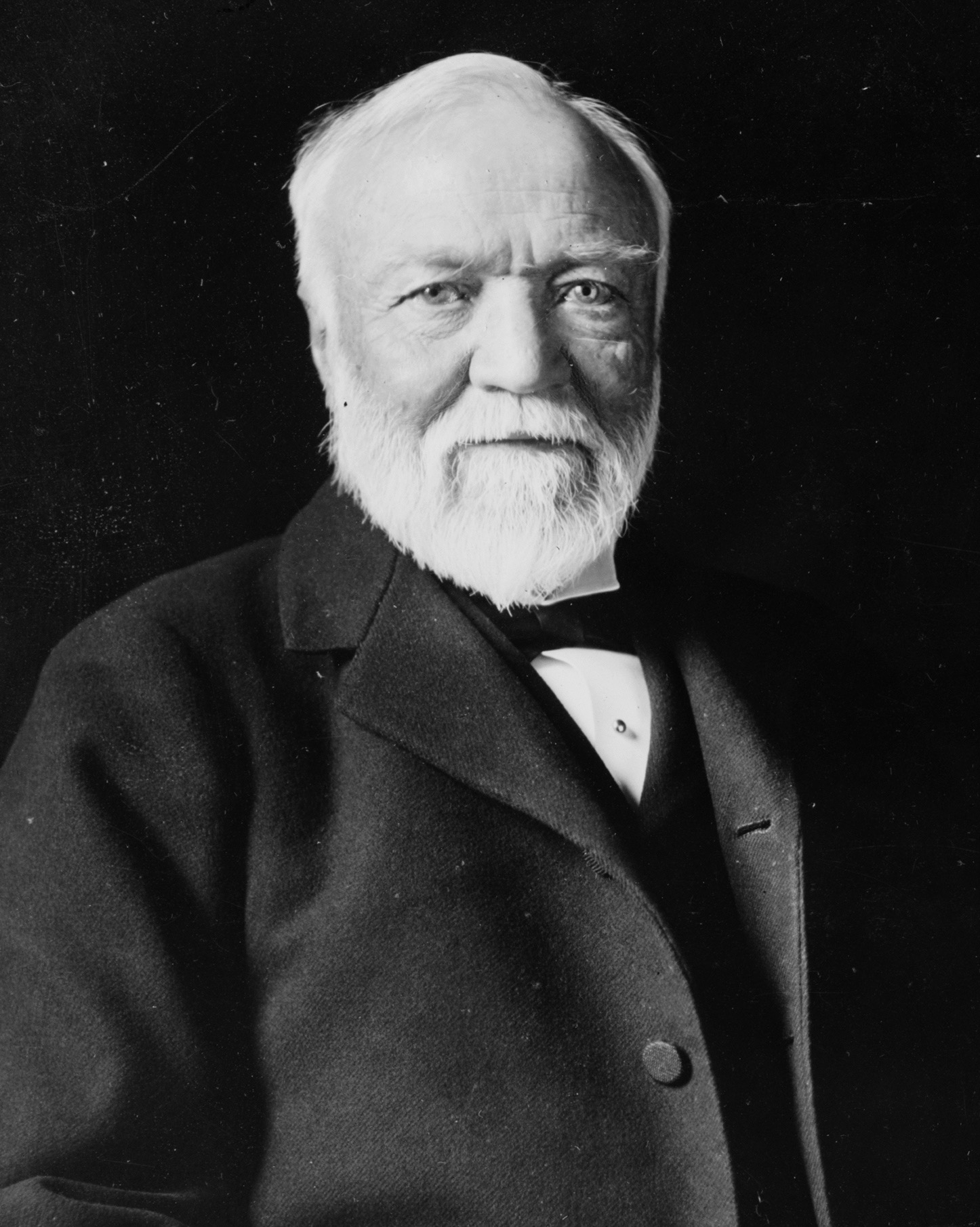
Founder, Carnegie Steel Company · b. 1835–1919 · Dunfermline, Scotland
Two calls made by hand, not formulas. how we score →
Summary
Emigrated at twelve when power looms destroyed his father's weaving trade, and started work as a bobbin boy for $1.20 a week.
A railroad mentor's stock tip, funded by his mother's mortgaged home, became his first capital. Decades of reinvesting it into a vertically integrated steel company, sold to J.P. Morgan in 1901, made him one of history's richest people.
How it happened
Born in Dunfermline, Scotland, in 1835 to William Carnegie, a handloom damask weaver who owned his own looms, and Margaret Morrison Carnegie. Power looms and factory production were destroying the hand-weaving trade through the 1840s, and by 1848 the family had decided to follow Margaret's two sisters, who had already emigrated to Allegheny, Pennsylvania. A family friend, Mrs. Henderson, advanced the twenty pounds still needed for passage, guaranteed by two uncles. Andrew was twelve.
His father found him a job as a bobbin boy in an Allegheny cotton mill at $1.20 a week, twelve-hour days starting before daylight; a second mill job running a steam engine paid $2. His mother took in shoe-binding work at home to add to the household income. In 1849 a family connection — his uncle had mentioned him to the local telegraph manager — got him a $2.50-a-week job as a messenger boy, over his father's initial objection. He memorized the city's business addresses and taught himself to read Morse code by ear, and was promoted to operator within about a year.
In 1853, at eighteen, Thomas A. Scott of the Pennsylvania Railroad hired him as his personal telegraph operator and secretary at $4 a week, then brought him along as he rose through the company. Scott taught him railroad cost accounting and capital management, and in 1855 tipped him toward ten shares of Adams Express Company stock. He did not have the $500; his mother mortgaged the family's small Allegheny home, worth about $700, to raise it. By December 1859, at twenty-four, he was superintendent of the railroad's Western Division.
The Adams Express dividends were followed by a stake in Theodore Woodruff's sleeping-car company and, in 1864, an investment in Columbia Oil that alone threw off over a million dollars in dividends across the 1860s. Rather than spend the money, he rolled it into iron and bridge-building partnerships — Keystone Bridge Works and what became Union Iron Mills — alongside ironmaster Andrew Kloman. He left the Pennsylvania Railroad in 1865, at thirty, to run these full time.
Keystone's steel for the 1874 Eads Bridge in St. Louis convinced him Bessemer steel could replace iron outright. In 1875 he opened the Edgar Thomson Works and committed to a strategy few rivals matched: own every stage of production — ore fields, coke ovens, railroads, and ships — so nothing was bought at a competitor's markup. He bought the rival Homestead Works outright in 1883 and, by 1889-90, gained control of Henry Clay Frick's coke empire, the input every steelmaker needed. By the late 1880s Carnegie Steel was the largest producer of pig iron, steel rails, and coke in the world.
In 1892 Carnegie was in Scotland when a wage dispute at the Homestead works, run in his absence by his partner Henry Clay Frick, turned violent. Frick brought in 300 Pinkerton agents to guard the plant against locked-out steelworkers; the resulting battle killed seven strikers and three Pinkertons. Carnegie was widely criticized in the press for having left the confrontation to Frick while continuing to present himself publicly as sympathetic to labor. The partnership soured further afterward; Carnegie tried to force Frick out on unfavorable terms, Frick sued, and the two men settled.
By 1900 he was ready to sell. J.P. Morgan bought Carnegie Steel in 1901 to form U.S. Steel, the first billion-dollar corporation, at an industry-wide price commonly put near $480 million once bond interest is counted; Carnegie's own share was paid as roughly $225.6 million in 5%, fifty-year gold bonds. He spent most of the next eighteen years giving nearly 90% of it away — some 2,500-3,000 libraries, the Carnegie Institution, Carnegie Mellon, the Carnegie Hero Fund, and the 1889 essay "Wealth," republished as "The Gospel of Wealth," arguing that the rich were obligated to distribute their fortunes before death. He died of bronchial pneumonia at his Massachusetts estate in 1919.
The coded evidence
Thirteen groups, every claim sourcedCoarse public-record coding; race is a noisy, interpretive category applied retrospectively to a 19th-century subject.
↗ en.wikipedia.org1.5-generation immigrant — born in Dunfermline, Scotland, emigrated to Allegheny, Pennsylvania at age 12 in 1848.
↗ gutenberg.orgnot established
His father and uncles were involved in Dunfermline's radical and dissenting religious circles and he later moved toward Herbert Spencer's evolutionary thought as an adult, but a clean denomination for his childhood religious upbringing is not established in the sources reviewed.
↗ en.wikipedia.orgEnglish (Scots dialect)
↗ gutenberg.orgNone in Scotland — the family emigrated already in debt for the passage itself. In Allegheny they lived with or near his mother's two sisters at first; the small home the family later bought was itself mortgaged in 1855 to raise his first investment capital, so it was not a cushion available if that investment failed.
↗ gutenberg.orgHis own wages (bobbin boy, then telegraph messenger and operator), his father's intermittent weaving and mill work, and his mother's shoe-binding earnings of about $4 a week. No income floor independent of the family's own labor is documented.
↗ gutenberg.orgHis mother, Margaret Carnegie, ran the household and simultaneously worked for wages (shoe-binding, later keeping a small shop), which freed her husband and son to work outside the home during the family's hardest years in Allegheny.
↗ gutenberg.orgnot established
He had no dependents of his own as a teenager; if anything the direction ran the other way — by his late teens his wages were supporting the household alongside his parents'.
↗ en.wikipedia.orgThe family left Scotland owing twenty pounds advanced for the Atlantic crossing by a family friend, Mrs. Henderson, guaranteed by two uncles. In 1855 his mother mortgaged the family's small Allegheny home (worth about $700) for roughly $500-600 to fund his first stock purchase — dischargeable, but the family's only asset was on the line for it.
↗ gutenberg.orgHis father's hand-weaving trade collapsed under industrialization before the family left Scotland, and Carnegie later wrote of periods as a boy when there was no new weaving order to be had and "the prospect of want had become to me a frightful nightmare." No documented homelessness once in Allegheny, but real, recurring income insecurity through his early teens.
↗ gutenberg.orgThe hardship was imposed, not chosen. There was nothing to fall back on.
Imposed, not chosen. The family had no standing home or income to fall back on; his father's trade was gone, and the household's poverty was the reason for emigrating in the first place, not a posture adopted against a safety net.
↗ gutenberg.orgFather William Carnegie was a handloom damask weaver who owned his own looms in Dunfermline, then worked in an Allegheny cotton mill after emigrating. Mother Margaret Morrison Carnegie bound shoes for wages at home in Allegheny and, per some secondary accounts, later kept a small shop selling provisions.
↗ en.wikipedia.orgA parent worked for themselves, the strongest known predictor of founding.
His father wove on his own looms as an independent tradesman in Scotland (before the trade collapsed), and his mother's shoe-binding and shop-keeping in Allegheny were informal self-employment rather than wage jobs for an employer.
↗ en.wikipedia.org1
Younger brother Thomas Morrison Carnegie, who became a business partner and died in 1886 at 43.
↗ en.wikipedia.orgUncle George Lauder Sr. mentored him in Scottish history and literature and co-guaranteed the family's emigration debt; another uncle's mention of him to a telegraph-office manager got him his second job. His mother's two sisters were already settled in Allegheny and gave the family a landing point and a reason to choose that city.
↗ gutenberg.orgnot established
He attended a free charity school in Dunfermline (a gift from local philanthropist Adam Rolland) rather than a school his parents paid for; his formal education ended around age 12-13 when the family emigrated.
↗ en.wikipedia.orgA family council debated whether he should take the telegraph messenger job; his father initially objected but the family approved it, and it became the position that led to the Pennsylvania Railroad.
↗ gutenberg.orgAs his father's weaving trade and health declined in the early 1850s, Andrew and his mother became the household's principal earners; his father died in 1855 when Andrew was not yet 20.
↗ en.wikipedia.org1
Formal schooling ended entirely at emigration (age 12); one clean break rather than repeated school changes.
↗ gutenberg.orgFather William Carnegie died in 1855, when Andrew was 19, after his weaving trade had already collapsed.
↗ en.wikipedia.orgDunfermline, Fife, Scotland, then Allegheny, Pennsylvania (now part of Pittsburgh) from age 12.
↗ en.wikipedia.orgFree charity school in Dunfermline funded by a local philanthropist; no further formal schooling in the United States.
↗ en.wikipedia.orgAllegheny/Pittsburgh was already a rail, telegraph, and iron hub when the family arrived in 1848 — the exact industries Carnegie would later enter and eventually dominate were operating within walking distance of where the family settled.
↗ en.wikipedia.orgOne transatlantic move, Dunfermline to Allegheny in 1848, initiated by the family in response to the father's trade collapsing and prompted by relatives already settled there.
↗ gutenberg.orgHis father had been a respected master weaver working his own looms in Scotland, a skilled trade being destroyed by power-loom mechanization. The family arrived in America as unskilled millhands — a real downgrade in trade status, though not the professional-to-working-class inversion seen in some 20th-century immigrant cases.
↗ en.wikipedia.orgThe family emigrated to Allegheny specifically because his mother's two sisters were already living there; they were, in his own words, "anxiously waiting to hear from us" and helped the family get settled.
↗ gutenberg.orgAn uncle mentioned him to David Brooks, the local telegraph-office manager, which produced his first white-collar job at 14. More consequentially, Thomas A. Scott of the Pennsylvania Railroad hired him as his personal telegraph operator at 18, then mentored him and steered him toward his first stock investment.
↗ gutenberg.orgThe Pennsylvania Railroad under Thomas Scott. It supplied management training, a rapid promotion track, and — through Scott's investment tip on Adams Express stock — the origin of his personal capital.
↗ en.wikipedia.orgCapital, Credibility, Network, Skill
↗ en.wikipedia.orgIronmaster Andrew Kloman was his working partner in the iron and bridge businesses that preceded Carnegie Steel; his brother Thomas Carnegie and Henry Phipps were also early partners.
↗ en.wikipedia.org18
His first paid work (bobbin boy) began at 12-13; his entry into the railroad and capital world that built his fortune was at 18, joining the Pennsylvania Railroad under Thomas Scott in 1853.
↗ en.wikipedia.org12
From joining the Pennsylvania Railroad (1853) to leaving it to run his own iron and bridge businesses full time (1865).
↗ en.wikipedia.orgRoughly twelve years inside the Pennsylvania Railroad under Thomas Scott, rising from personal telegraph operator to division superintendent, learning cost accounting and capital allocation directly from Scott and company president J. Edgar Thomson.
↗ en.wikipedia.orgThomas Scott personally promoted him rapidly within the Pennsylvania Railroad and gave him access to investment opportunities (the Adams Express tip, and later Woodruff sleeping-car shares) not available to ordinary employees.
↗ en.wikipedia.orgPersonal secretary and telegraph operator to Thomas Scott, who by the Civil War was Assistant Secretary of War; Carnegie served under him as superintendent of military railways and telegraph lines in the East.
↗ en.wikipedia.org1
One employer (Pennsylvania Railroad, 1853-1865) before he left to run his own iron, bridge, and later steel businesses.
↗ en.wikipedia.orgTelegraphy was a scarce, high-skill technology in the early 1850s; he taught himself to read Morse code by ear as a teenage messenger, ahead of most peers, which led directly to his promotion to operator.
↗ gutenberg.orgNone beyond a basic charity-school elementary education in Dunfermline, Scotland, ending around age 12-13.
↗ en.wikipedia.orgnot established
No institutional credentialing pathway; entered paid work directly at 12-13 and never returned to formal schooling.
↗ en.wikipedia.orgTen shares of Adams Express Company stock, purchased in 1855-56 for $500 on a tip from Thomas Scott.
↗ en.wikipedia.orgHis mother mortgaged the family's small Allegheny home (worth roughly $700) for about $500-600 to fund the Adams Express purchase — the family's only meaningful asset converted directly into his first capital.
↗ en.wikipedia.orgnot established
No meaningful inheritance is documented; his father died in 1855 with little property.
↗ en.wikipedia.orgIt paid its own way from the start. Revenue came before any outside money.
Carnegie Steel and its predecessor iron and bridge businesses were built on reinvested operating profit, never on an outside equity raise.
↗ en.wikipedia.orgThe family's small mortgaged Allegheny home, used to raise the $500 for his first stock purchase in 1855.
↗ en.wikipedia.orgPennsylvania Railroad salary plus dividends from the Adams Express, sleeping-car, and oil investments were reinvested into the iron and bridge partnerships that became Carnegie Steel.
↗ en.wikipedia.orgThomas Scott functioned less as a passive investor and more as an operator-mentor who directed capital opportunities toward Carnegie alongside career advancement — an early example of the mentored-insider path into capital rather than a cold outside check.
↗ en.wikipedia.orgCarnegie Steel was a private partnership financed through retained earnings and reinvested profit; it never took outside equity, and Carnegie held the dominant ownership share throughout.
↗ en.wikipedia.orgWealth compounded on his own reinvested capital across roughly 36 years (1865 iron partnerships to the 1901 sale), not on a fund, float, or other people's capital.
↗ en.wikipedia.orgNone documented before 20; his first investment (the $500 Adams Express stake) came right around his twentieth birthday in November 1855.
↗ en.wikipedia.orgReinvested dividends from Adams Express, sleeping cars, and Columbia Oil into iron and bridge-building partnerships rather than spending them, eventually buying out partners to consolidate control of Union Iron Mills and Keystone Bridge.
↗ en.wikipedia.orgBuilt and owned the full vertically integrated supply chain — ore fields, coke ovens, railways, and lake steamships — rather than buying inputs at market price from suppliers, the central strategic move of Carnegie Steel.
↗ en.wikipedia.orgPersonal industry experience. Supplying and part-owning the steel used in the 1874 Eads Bridge convinced him Bessemer steel could displace iron outright, and his railroad-management background shaped the vertical-integration strategy that followed.
↗ en.wikipedia.orgHeld straightforward majority economic ownership of a privately held company; no dual-class shares or proxy structure was needed since control and ownership were the same thing.
↗ en.wikipedia.org0
No major documented failed ventures before Carnegie Steel; his early investments through Scott's tips (Adams Express, sleeping cars, Columbia Oil) were consistently profitable.
↗ en.wikipedia.orgIn a private 1868 memorandum written to himself at 33, he proposed capping his income at $50,000 a year and retiring by 35 to spend the rest of his life distributing surplus wealth. He did not act on it for another 33 years, until the 1901 sale.
↗ en.wikipedia.org39
Age at the 1875 opening of the Edgar Thomson Works and the commitment to Bessemer steel and vertical integration.
↗ en.wikipedia.orgPost-Civil War industrial and rail-building expansion drove steel demand for decades; the era predated federal antitrust enforcement, income tax, and modern labor and securities law, which let a private partnership integrate an entire supply chain without regulatory constraint.
↗ en.wikipedia.orgPittsburgh, Pennsylvania, where he had already been running iron and bridge businesses for roughly a decade.
↗ en.wikipedia.orgPrimarily build — constructed the vertically integrated Edgar Thomson works from scratch — supplemented by targeted acquisition of the rival Homestead Works (1883) and control of Henry Clay Frick's coke empire (1889-90), which secured the input supply chain.
↗ en.wikipedia.org30
Age when he left the Pennsylvania Railroad in 1865 to run the iron and bridge partnerships as an owner-operator full time.
↗ en.wikipedia.org36
From leaving the Pennsylvania Railroad to become a full-time owner-operator (1865) to the sale of Carnegie Steel (1901).
↗ en.wikipedia.orgPersonal spending stayed modest relative to income for years, in keeping with the reinvestment strategy, before philanthropic spending scaled sharply after 1901.
↗ en.wikipedia.orgSteel manufacturing
↗ en.wikipedia.org225640000
His personal share of the 1901 U.S. Steel sale, paid in 5%, 50-year gold bonds; commonly cited as $225-226M, with the total industry price (including bond interest to other stakeholders) put near $480M. Inflation- and GDP-relative estimates of this fortune in today's terms range widely across secondary sources, from roughly $8.7 billion (pure CPI inflation) to $300-460 billion (share of GDP at the time) — the latter basis is how he is sometimes ranked the 4th-richest person in modern history. Both bases are estimates, not filings, and should not be treated as more precise than a log band.
↗ celebritynetworth.comJournalistic estimate
↗ celebritynetworth.com11282000
Approximate annual interest on the $225.64M in 5% U.S. Steel gold bonds received in 1901 — not a salary, but the era's largest personal income stream from a single source.
↗ en.wikipedia.orgJournalistic estimate
↗ en.wikipedia.orgThe 1901 sale converted his ownership stake into $225.64M in negotiable, income-bearing gold bonds — fully realized and liquid, not paper equity in a still-private company.
↗ en.wikipedia.orgAlmost entirely ownership and capital wealth; he was never a conventional salaried employee again after leaving the Pennsylvania Railroad in 1865.
↗ en.wikipedia.orgRoughly 2,500-3,000 libraries funded worldwide; founded the Carnegie Institution, Carnegie Institute of Technology (now Carnegie Mellon University), the Carnegie Hero Fund, and Carnegie Corporation of New York; his 1889 essay "Wealth" (republished as "The Gospel of Wealth") shaped the modern philanthropic-foundation model; served as Lord Rector of the University of St Andrews, 1901-1907.
↗ en.wikipedia.org9
From becoming a full-time owner-operator (1865, age 30) to the Edgar Thomson Works and the Bessemer/vertical-integration pivot (1875, age 39).
↗ en.wikipedia.orgUncapped
↗ en.wikipedia.orgnot established
No adjudicated regulatory or criminal action against Carnegie personally is established in the sources reviewed; the Sherman Antitrust Act (1890) was barely enforced in this period, and U.S. Steel's own 1911 antitrust case came after Carnegie had sold his stake.
↗ en.wikipedia.orgAfter the 1892 Homestead Strike, the Carnegie-Frick partnership broke down; Carnegie moved to force Henry Clay Frick out of the company on unfavorable terms, Frick sued over the valuation of his shares, and the two men settled. Source coverage does not spell out the settlement terms.
↗ en.wikipedia.orgnot established
No adjudicated labor finding against Carnegie personally — no such federal labor-law apparatus existed in 1892. The 1892 Homestead strike at his company turned violent; the plant manager Henry Clay Frick brought in Pinkerton agents and several workers and agents were killed. Carnegie, who was in Scotland at the time, was widely criticized for his role and for delegating the confrontation to Frick while publicly positioning himself as pro-labor.
↗ en.wikipedia.orgDuring
The Homestead strike (1892) and the Frick litigation (circa 1899-1900) both occurred after the 1875 vertical-integration pivot and before the 1901 sale.
↗ en.wikipedia.orgIncidental
Frick's wage cuts modestly aided short-term margins, but the fortune's actual engine — vertical integration, Bessemer scale, and decades of reinvestment — predated and did not depend on the Homestead conflict.
↗ en.wikipedia.orgCivil wrong
Refers to the settled Frick ownership-dispute lawsuit; the Homestead violence itself produced no legal proceeding against Carnegie personally.
↗ en.wikipedia.orgNone
The Frick dispute ended in a negotiated settlement, not a fine or liability finding. Homestead produced heavy public criticism of Carnegie but no legal consequence for him personally.
↗ en.wikipedia.orgDelegated the 1892 Homestead confrontation to Frick while abroad, then established a pension fund for former Homestead employees in 1901; commentators have contrasted his published pro-labor essays with his absence during the strike itself.
↗ en.wikipedia.orgruthless in business dealings, Self made, later recast as a model philanthropist
↗ en.wikipedia.orgPublic
↗ en.wikipedia.orgAfter
The Homestead-era reputation for ruthlessness formed after the 1875 vertical-integration pivot, during the operation of Carnegie Steel.
↗ en.wikipedia.orgMixed
An asset in financial and social circles (capital access, standing, institutional invitations); a liability specifically around Homestead, where he was widely criticized for leaving the 1892 confrontation to Frick while presenting himself publicly as sympathetic to labor.
↗ en.wikipedia.orgThe reputation was deliberately built, through books, press, and PR.
The "Gospel of Wealth" essay and the deliberate, sustained library and institution-building program functioned as an explicit, self-directed program to be remembered as a benefactor rather than only an industrialist.
↗ en.wikipedia.orgExtensive philanthropy after 1901 — libraries, universities, the Carnegie Institution, and "The Gospel of Wealth" itself — substantially rehabilitated his public reputation in his own lifetime, though labor historians have continued to weigh Homestead heavily against that record.
↗ en.wikipedia.orgStructural context
The cost-of-failure score comes from this person's own money and circumstances. But who they were in America carried its own weight, the same way their household or income did, and it shaped how hard the path was just as much. That part isn't in the cost-of-failure number. It's here instead.
Men founded the companies that took nearly all the venture funding and almost every top outcome, a tailwind that never shows up in one person's own circumstances.
↗ techcrunch.comWhite founders are heavily overrepresented among funded companies and top-tier wealth relative to their share of the population, an edge that has nothing to do with a person's own money.
↗ techcrunch.comImmigrants and their children are overrepresented among America's biggest companies, as founders and as senior leaders. They got there through the visa, credential, and network hurdles that make the path harder to even start down.
↗ forbes.comAmong the people recorded here — men: 115 · White subjects: 74. Representation here is who reached these outcomes, not equal odds of reaching them.
Controlled comparisons
Each holds one thing constant and varies another, so the difference is the point. A list of similar names wouldn't tell you anything.