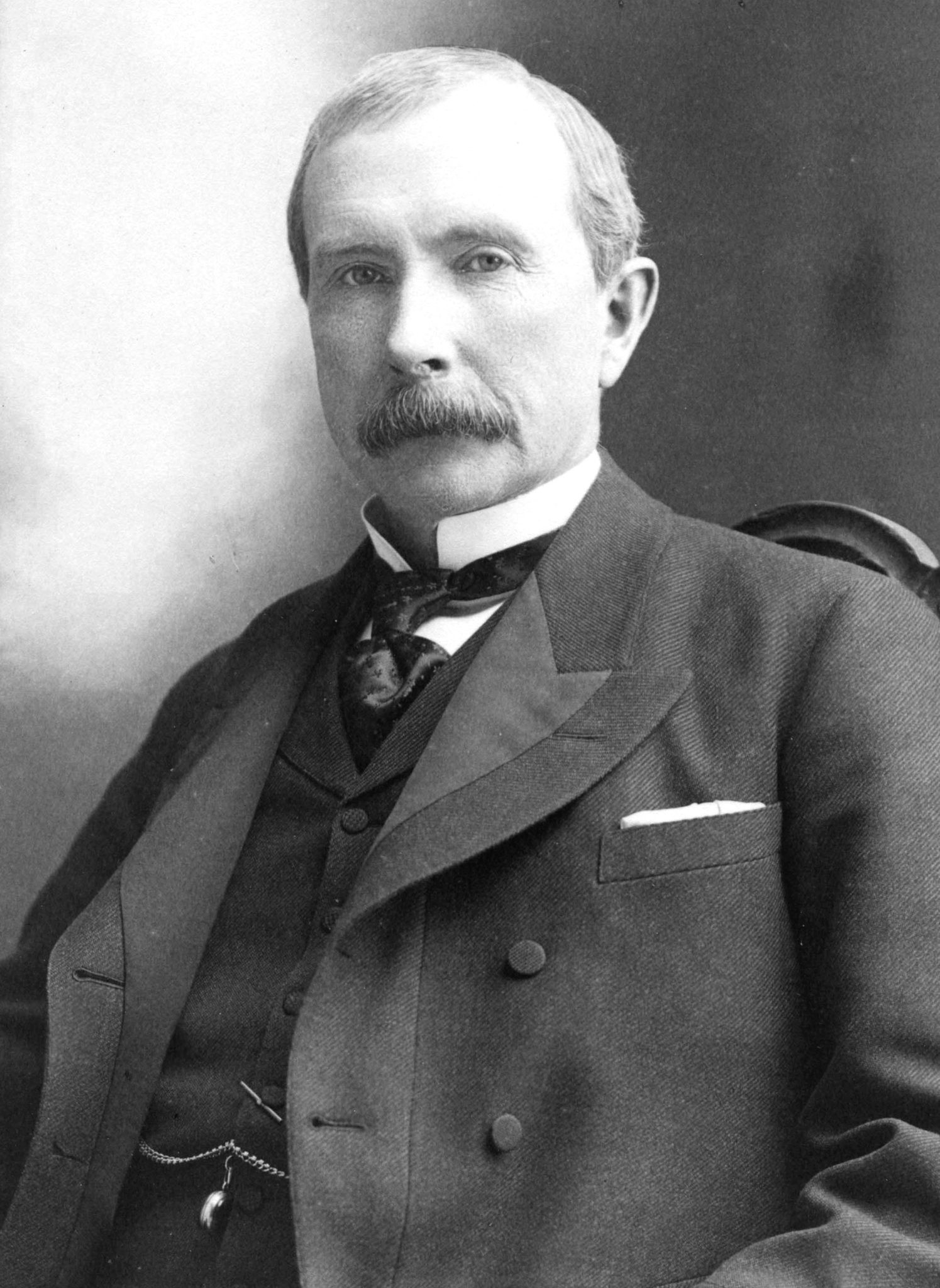
Tope Awotona
Founder and CEO, Calendly · b. 1981 · Lagos, Nigeria → Atlanta, Georgia
Two calls made by hand, not formulas. how we score →
Summary
He couldn't raise venture capital, so he had to build something profitable instead, and ended up keeping majority ownership of a $3B company, which founders who raise the normal way almost never do.
He's the clearest example of forced bootstrapping, and also of why that story needs a control group before anyone treats it as advice.
How it happened
A professional family in Lagos, with a microbiologist father and a central-bank pharmacist mother. He moved to Atlanta at fifteen, three years after watching his father get killed in a carjacking.
Turned down again and again by venture investors, he drained his 401(k) and maxed his credit cards. He didn't just spend his savings, he wiped out his own safety net to fund the attempt.
Calendly's scheduling link showed a new potential customer every time someone used it, so it grew with no marketing budget and turned a profit without raising more money.
A $3B company with majority ownership kept, something founders who raise the usual way almost never manage. But plenty of similar founders ran out of money first, and you never hear about them.
The coded evidence
Thirteen groups, every claim sourced1.5 generation, arrived at 15
↗ forbes.comnot established
Not established. He describes spending his entire savings and maxing credit cards without reference to any fallback. Absence of evidence.
↗ betaboom.comThe hardship was imposed, not chosen. There was nothing to fall back on.
↗ betaboom.comFather a microbiologist and entrepreneur; mother chief pharmacist at the Central Bank of Nigeria
↗ betaboom.comA parent worked for themselves, the strongest known predictor of founding.
↗ betaboom.comFather killed in a carjacking when the subject was 12; he witnessed it
↗ peopleofcolorintech.comA professional household in Lagos, a microbiologist and a central-bank pharmacist, then arriving in Atlanta in 1996. No US measure of his childhood would capture where the family actually stood.
↗ peopleofcolorintech.comEnterprise software sales, incl. EMC
↗ forbes.comSkill, Capital
Supplied skill and salary. No evidence it supplied credibility or network.
↗ forbes.comFreemium scheduling link exposes a new prospect on every use; the company gained paying customers with no marketing spend.
↗ vocal.mediaBA in management information systems, University of Georgia
↗ peopleofcolorintech.com$550,000 seed led by Atlanta Ventures, 2014
↗ futurefounders.comProfitable from 2016. No significant capital until a $350M round in 2021; majority stake retained at a $3B valuation.
↗ tryalma.comDrained his 401(k) and maxed credit cards; approximately $200,000 of personal savings into the venture.
Scored against D1 as a hardness event, not filed under "bootstrapped." The cushion was not spent, it was destroyed to fund the attempt.
↗ betaboom.comRepeatedly declined by venture investors. Attributed the pattern to race on the record: watched others fitting a different profile get funded.
↗ capitalism.comFirst product built by an outsourced development firm in Kyiv
↗ forbes.comSelf, from a sales salary
↗ forbes.comB2B software
↗ forbes.comJournalistic estimate
Derived from a private-company valuation with a discount applied. Not a filing. Band only, never use as a continuous value.
↗ vocal.mediaUncapped
↗ tryalma.comStructural context
The cost-of-failure score comes from this person's own money and circumstances. But who they were in America carried its own weight, the same way their household or income did, and it shaped how hard the path was just as much. That part isn't in the cost-of-failure number. It's here instead.
Men founded the companies that took nearly all the venture funding and almost every top outcome, a tailwind that never shows up in one person's own circumstances.
↗ techcrunch.comBlack-founded startups got roughly 0.5% of US venture funding in 2023, while Black Americans are about 14% of the population. That gap holds no matter where a founder personally started.
↗ techcrunch.comImmigrants and their children are overrepresented among America's biggest companies, as founders and as senior leaders. They got there through the visa, credential, and network hurdles that make the path harder to even start down.
↗ forbes.comAmong the people recorded here — men: 169 · Black subjects: 58. Representation here is who reached these outcomes, not equal odds of reaching them.
Controlled comparisons
Each holds one thing constant and varies another, so the difference is the point. A list of similar names wouldn't tell you anything.