Jorge Mas
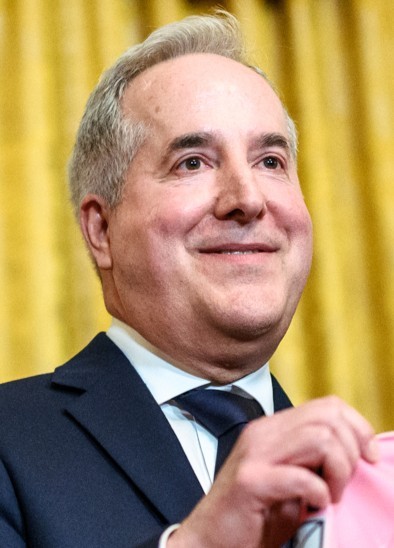
born Jorge Mas Santos
Chairman and largest individual shareholder of MasTec, Inc.; managing owner of Inter Miami CF · b. 1963 · Miami, Florida
Two calls made by hand, not formulas. how we score →
Summary
Jorge Mas was born in Miami in 1963 to a Cuban exile who had already built a struggling contractor into a multimillion-dollar business.
Jorge became president and CEO of the newly public MasTec in 1994, three years before his father died, then chaired it as it grew into a $14 billion infrastructure contractor. In 2018 he co-founded Inter Miami CF with his brother and David Beckham.
How it happened
Jorge Mas was born on February 28, 1963, in Miami, the son of Jorge Mas Canosa, a Cuban exile who had fled to Miami in 1960, and Irma Santos. His father took over a small telephone-cable contractor in 1971 for $50,000 and renamed it Church & Tower; by 1980, when Jorge was seventeen, the company was generating roughly $40 million a year. MasTec's own proxy statement lists Jorge as an employee of the company "or its predecessor" going back to 1979, when he would have been about sixteen, though it doesn't say what that early work involved.
He earned a bachelor's degree in business administration from the University of Miami in 1984 and a master's the following year, both close to home and, per every source reviewed, without any documented tuition debt.
In March 1994, Church & Tower merged with Burnup & Sims to form MasTec, Inc., which listed on Nasdaq. Jorge Mas, then thirty-one, was named the new public company's president and CEO — a title MasTec's proxy statement still credits him with today, alongside "Co-Founder." That made him the direct operator of the family company three years before his father died, not after. This is the structural event that put the platform producing his fortune under his own management, so it's coded as the pivot rather than his father's 1997 death, which came later and changed the family's public role more than it changed Jorge's job.
Jorge Mas Canosa, who founded the Cuban American National Foundation in 1981 and was one of the most nationally recognized Cuban-exile political and business figures in the country, died of lung cancer on November 24, 1997, with a net worth estimated at more than $100 million. Jorge succeeded him as the foundation's chairman and has described taking a more moderate position on Cuba policy than his father held.
Alongside running MasTec, he co-founded Neff Corporation in 1990, a construction and utility equipment rental business, which was sold in 2005 for a reported $510 million. His personal share of that sale isn't disclosed in sources reviewed.
MasTec restated its 2001-2003 financial statements in early 2004 after what the company described as intentional overstatements of revenue, inventory, and work in progress at its Canadian subsidiary PhaseCom. Shareholders filed a securities fraud class action naming Jorge Mas along with other officers and directors, alleging the company had fraudulently recorded revenue to meet analyst expectations in 2003; the case settled for $10 million in cash in 2006, with the court's final approval noting the matter closed with no finding of liability against any individual. The SEC had also opened a formal investigation into the same restatement; in February 2008 it notified MasTec the inquiry was complete and that it would not recommend enforcement action.
José Ramon Mas, nine years younger, became MasTec's CEO in March 2007; Jorge has chaired the board since 1998 and remains, in the company's own description, involved in "all phases" of its operations well beyond what a typical director does — consulting on government relations, acquisitions, and financing alongside his brother.
In 2018 Jorge and José Mas joined David Beckham, Marcelo Claure, and Masayoshi Son as the ownership group behind Miami's MLS expansion franchise, using an option Beckham had negotiated into his 2007 playing contract. In September 2021 Beckham and the Mas brothers bought out Claure's and Son's stakes; Jorge is now the club's managing owner and, with José, its majority owner. Inter Miami signed Lionel Messi in July 2023.
Jorge Mas remains MasTec's chairman and its largest individual shareholder, holding about 15% of the company as of the 2026 proxy statement, a stake Forbes puts his net worth against at roughly $3.4 billion as of September 2026. MasTec's revenue reached $14.3 billion in 2025.
The coded evidence
Thirteen groups, every claim sourcedSecond generation. Born in Miami in 1963, the son of a Cuban immigrant father; not an immigrant himself.
↗ en.wikipedia.orgLikely Spanish, given a Cuban-exile father and a Miami upbringing steeped in exile politics, though this is inferred rather than directly documented.
↗ en.wikipedia.org0
MasTec's proxy lists him as a continuous employee of the company or its predecessor since 1979.
↗ sec.govNo documented housing precarity at any point. His father's company was generating roughly $40 million a year by 1980, when Jorge was seventeen.
↗ en.wikipedia.orgEmployed by his father's company continuously from 1979 onward, per MasTec's own proxy disclosure. There is no record of him ever needing an income floor outside the family business.
↗ sec.govnot established
No documented debt of any kind, including education debt, in sources reviewed.
↗ en.wikipedia.orgnot established
No documented homelessness, job loss, or comparable instability at any stage.
↗ en.wikipedia.orgnot established
No period of visible poverty, chosen or imposed, appears anywhere in the record reviewed.
↗ en.wikipedia.orgFather Jorge Mas Canosa owned and ran a telecommunications infrastructure contractor (Church & Tower, later MasTec) and chaired the Cuban American National Foundation from 1981 until his 1997 death. Mother Irma Santos's occupation is not established in sources reviewed.
↗ en.wikipedia.orgA parent worked for themselves, the strongest known predictor of founding.
↗ en.wikipedia.org3
At least three siblings are named in MasTec's SEC filings: José Ramon Mas (the company's CEO), Juan Carlos Mas, and Patricia Mas. There may be others not named in the filings reviewed.
↗ sec.gov1
Inferred from ages given in the 2026 proxy statement — Jorge is listed as 63 and José as 54 — not from any direct statement of birth order.
↗ sec.govHis father's political network, built through the Cuban American National Foundation, connected the family to sitting U.S. administrations' Cuba policy from the early 1980s on.
↗ en.wikipedia.orgJorge Mas Canosa was one of the most nationally recognized Cuban-exile political and business figures in the country, with a net worth estimated above $100 million at his 1997 death. That gave his son a known family name and standing access to political and business rooms well before he'd accomplished anything of his own.
↗ en.wikipedia.orgnot established
No documented sacrifice or side income aimed at funding his schooling; a comfortably resourced household paid for it without apparent strain.
↗ en.wikipedia.orgMiami, Florida. No specific neighborhood documented.
↗ en.wikipedia.orgnot established
His K-12 schooling isn't documented in sources reviewed; only his University of Miami degrees are.
↗ en.wikipedia.orgGrew up around his father's own telecommunications-construction business in Miami, the same industry he would later run.
↗ en.wikipedia.orgHis father owned the company. MasTec's proxy lists Jorge as an employee of the company or its predecessor since 1979, around age sixteen — as direct a form of workplace access as exists.
↗ sec.govnot established
No documented incident of bias against him personally in sources reviewed.
↗ en.wikipedia.orgMiami's Cuban-exile business and political community, organized in large part around his father's Cuban American National Foundation, supplied contacts and credibility well beyond what the family's income alone would have provided.
↗ en.wikipedia.orgHis father, who owned the company outright, brought him on as an employee starting in 1979.
↗ sec.govChurch & Tower / MasTec — his father's own company, which he joined as a teenager and was running as president and CEO by age thirty-one.
↗ sec.govCapital, Credibility, Network
↗ en.wikipedia.org16
Based on the proxy statement's 1979 employment start date and a February 1963 birth date; the proxy doesn't describe what his role was at that age.
↗ sec.govnot established
↗ en.wikipedia.org1
His entire documented career has been at Church & Tower/MasTec, aside from co-founding Neff Corporation as a separate venture alongside it.
↗ sec.govMBA, University of Miami, 1985; BBA, University of Miami, 1984.
↗ sec.govnot established
MasTec's proxy places his employment start in 1979, five years before his 1984 undergraduate degree, which suggests some overlap, but the filing doesn't describe his hours or role during school.
↗ sec.govDirect — a local university, undergraduate straight into a graduate degree, no detour.
↗ sec.govnot established
No specific first-dollar event is documented; his working life began inside an already-operating family company.
↗ en.wikipedia.orgLeadership and, over time, substantial equity in an already-valuable family company. He was named president and CEO of MasTec at its 1994 formation. Today he holds roughly 15% of MasTec's shares through a mix of direct ownership, family trusts, and holding companies, per the 2026 proxy statement's beneficial-ownership table.
↗ sec.govHis father's estate isn't itemized in sources reviewed, so the precise mechanics of how Jorge's current MasTec stake was built up over three decades — versus what, if anything, passed directly from his father's 1997 estate — aren't fully documented. This is coded as inherited capital because he stepped into leadership of an already-built, family-owned, revenue-generating company rather than starting one, not because a specific bequest amount is on record.
Judgment call, flagged per the file's coding notes.
↗ en.wikipedia.orgMasTec is a public company (NYSE: MTZ) with no dual-class share structure; institutional holders BlackRock and Vanguard each own more than 6% of the stock. Jorge and José Mas together hold about 21% of shares outstanding as a family group, with Jorge individually at 15%, giving them influence through board tenure and a large minority stake rather than through weighted voting control.
↗ sec.govNeff Corporation, his co-founded equipment-rental venture, sold in 2005 for a reported $510 million; his personal share and what he did with the proceeds aren't disclosed in sources reviewed.
↗ en.wikipedia.orgMasTec itself owns the equipment, crews, and fleets that make it an infrastructure contractor; Jorge also co-founded Neff Corporation, a separate construction- and utility-equipment rental business, in 1990.
↗ en.wikipedia.orgFamily business — he joined and eventually ran the company his father built rather than starting from an independent idea.
↗ en.wikipedia.orgNo dual-class voting structure exists at MasTec. The family's influence runs through Jorge's chairmanship since 1998, his brother's CEO role since 2007, and a combined ~21% economic stake, not through any share class carrying extra votes.
↗ sec.govnot established
No documented failed venture. He moved from family employee to CEO of an existing, already-substantial company at thirty-one, and separately co-founded the successful Neff Corporation.
↗ en.wikipedia.orgnot established
↗ en.wikipedia.org31
Age at MasTec's March 1994 formation, when he became president and CEO, based on a February 1963 birth date.
↗ sec.govMasTec grew through the 1990s-2000s wireless and cable build-out and, later, the 2010s-2020s expansion of renewable-energy and utility infrastructure spending — favorable multi-decade conditions for an infrastructure-construction contractor.
↗ en.wikipedia.orgMiami/Coral Gables, Florida, where the company was and still is headquartered.
↗ en.wikipedia.orgNeither built from nothing nor bought as an outsider — he inherited operating leadership of an existing family company at the moment it went public.
↗ en.wikipedia.org32
From MasTec's 1994 formation to the 2026 proxy statement, with no break in his involvement.
↗ sec.govInfrastructure engineering and construction services, serving telecommunications, energy, and utility markets.
↗ en.wikipedia.org3400000000
Forbes real-time tracker figure as of September 20, 2026, based primarily on his disclosed MasTec shareholding.
↗ forbes.comPublic equity
Most of the figure traces to his disclosed 15% MasTec stake (a publicly traded NYSE company), which can be checked against the company's market capitalization, rather than to a private-company estimate.
↗ forbes.com2026
↗ forbes.com6222606
Sum of his disclosed 2025 compensation from the 2026 proxy statement: a $1,350,000 cash bonus, restricted stock valued at approximately $4,800,000, and smaller benefits (split-dollar life insurance imputed income, medical, disability, auto lease). This is his most recently disclosed figure, not necessarily his lifetime peak — earlier years' comparable detail wasn't reviewed.
↗ sec.govProxy statement
↗ sec.govMostly a paper stake in publicly traded MasTec stock. Part of it has been used as collateral: MasTec's 2026 proxy discloses a prepaid variable forward sale contract and a separate loan arrangement under which Jorge Mas has pledged shares, mechanisms that let him access liquidity against the position without selling it outright.
↗ sec.govHis wealth is almost entirely an appreciating ownership stake in a public company; his income is separate cash and stock compensation set by MasTec's compensation committee for his active, non-policymaking role.
↗ sec.govChairman of the Cuban American National Foundation; managing owner of Inter Miami CF, which signed Lionel Messi in July 2023; named among the 100 most influential Hispanics in the U.S. by Latino Leaders Magazine; past recipient of the Simon Wiesenthal Center's National Community Service Award and the Bravura Award.
↗ sec.govUncapped
↗ sec.govThe SEC opened a formal investigation into MasTec's restatement of its 2001-2003 financial statements. In a February 21, 2008 letter, SEC staff notified the company the investigation was complete and that it did not intend to recommend enforcement action.
Company-level regulatory matter during Jorge Mas's tenure as chairman; the letter is addressed to MasTec, not to him individually.
↗ sec.govA securities fraud class action (S.D. Fla., No. 04-cv-20886) named MasTec along with Jorge Mas and other officers and directors, alleging the company had fraudulently recorded revenue at its PhaseCom subsidiary and on construction change orders to meet analyst expectations in 2003, following a restatement the company attributed to "intentional overstatements of revenues, inventories, and work in progress." The case settled for $10 million in cash in 2006, with the court's final order treating the matter as closed; it did not include a finding of liability against any individual defendant.
Source is a plaintiffs'-firm case summary; the case number, filing allegations, and settlement figure are consistent with the underlying court record described. Rendered as reported allegations and a settlement, not as an established finding of fraud.
↗ blbglaw.comDuring
The restatement and litigation (2003-2006) fell within his tenure running and then chairing MasTec, not before it or after he'd left.
↗ blbglaw.comIncidental
A subsidiary accounting issue, not what produced his ownership stake or his family's control of the company.
↗ blbglaw.comFine absorbed
The $10 million settlement was paid by the company; no personal liability, fine, or admission by Jorge Mas is documented, and the SEC recommended no enforcement action.
↗ blbglaw.comInfluential, Well connected, civically engaged
Drawn from MasTec's own proxy bio (Latino Leaders Magazine recognition, Wiesenthal and Bravura awards) — a company-authored account, not independent press characterization.
↗ sec.govPublic
↗ forbes.comBefore
His standing as a prominent Miami businessman predates the Inter Miami/Messi chapter that made him more broadly known outside business and Cuban-American political circles.
↗ en.wikipedia.orgMixed
An asset in fundraising, government relations, and sports-ownership circles for most of his career; the 2003-2008 restatement and litigation period was a documented liability moment, resolved without personal consequence.
↗ blbglaw.comThe reputation was deliberately built, through books, press, and PR.
Active civic and philanthropic profile through the Cuban American National Foundation and industry award circuits.
↗ sec.govThe SEC's 2008 letter closing its investigation without recommending enforcement action functioned as a clean resolution; no lasting reputational damage from the 2003-2006 restatement and litigation is evident in later coverage reviewed.
↗ sec.govStructural context
The cost-of-failure score comes from this person's own money and circumstances. But who they were in America carried its own weight, the same way their household or income did, and it shaped how hard the path was just as much. That part isn't in the cost-of-failure number. It's here instead.
Men held about 90% of Fortune 500 CEO seats in 2023, and a wider majority of the rungs below. The ladder is widest for them the whole way up.
↗ forbes.comImmigrants and their children are overrepresented among America's biggest companies, as founders and as senior leaders. They got there through the visa, credential, and network hurdles that make the path harder to even start down.
↗ forbes.comAmong the people recorded here — men: 169 · Hispanic subjects: 1. Representation here is who reached these outcomes, not equal odds of reaching them.
Controlled comparisons
Each holds one thing constant and varies another, so the difference is the point. A list of similar names wouldn't tell you anything.