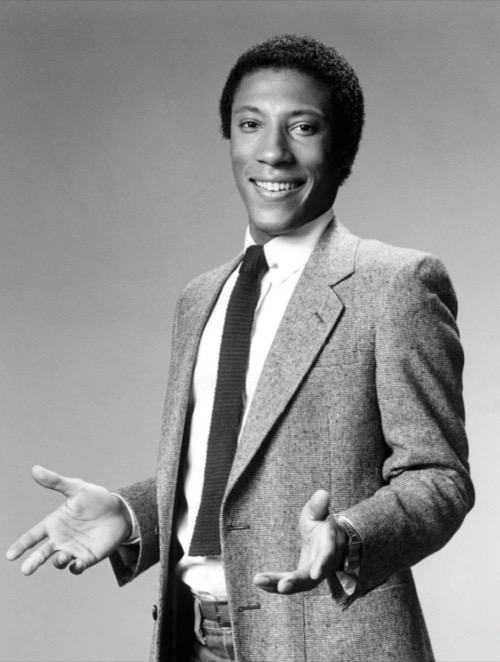
Gerald "Jerry" Lawson
Lead engineer, Fairchild Channel F; inventor of the video game cartridge system · b. 1940–2011 · Brooklyn, New York
Two calls made by hand, not formulas. how we score →
Summary
A self-taught engineer with no finished degree led the Fairchild team that built the first home console to run games from swappable ROM cartridges, a format every rival, including the far more successful Atari 2600, copied.
He was one of Silicon Valley's few Black engineers in the 1970s and was mostly forgotten within a decade. He changed an industry; he kept a salary.
How it happened
Born in Brooklyn in 1940 and raised in a federal housing project in South Jamaica, Queens. His father Blanton was a longshoreman who could make in three days what others made in six; his mother Mannings worked for the city, fought to get him into a better school across town using a false address, and later served as its PTA president. He got a ham radio license at thirteen after finding that housing-project stations were exempt from the permit his building's management wouldn't sign, then built the set himself from salvaged and purchased parts. He worked through Queens College and City College of New York without finishing a degree at either.
He repaired television sets for pay as a teenager, which is how he met his future wife Catherine, and later worked a run of engineering jobs in New York before moving his family to Palo Alto in 1968. He joined Fairchild Semiconductor in 1970 as a field applications engineer, helped a young Atari engineer named Al Alcorn with a chip for an early "Pong" board, and in his own garage built a coin-operated game called Demolition Derby that was later licensed commercially. None of it required a diploma anyone checked.
Fairchild had licensed a swappable-cartridge concept from a small company called Alpex and needed someone to turn it into a product. Lawson led the team that did it: solving the electrical problems that came with plugging and unplugging memory in a consumer device, passing it through FCC testing as the first microprocessor product ever subjected to that review, and designing the digital joystick and a pause button along the way. The Fairchild Channel F shipped in November 1976, the first home console anyone had built around interchangeable game cartridges.
Atari's 2600 arrived a year later with the same cartridge idea, better marketing, and a parent company with money behind it, and it buried the Channel F. Fairchild shut the console business down by 1979. Lawson left to start VideoSoft in 1980, building cartridges for the Atari 2600 until the 1985 industry crash closed the company too. He spent the years after mentoring students and working on a memoir he never finished. His own children didn't mention his role in the industry to their friends; his daughter later said they didn't think anyone would believe them.
Diabetes cost him the sight in one eye and the use of one leg in his last decade. In March 2011 the International Game Developers Association's Blacks in Gaming group finally honored him at the Game Developers Conference. He died a month later. The recognition that followed, a Google Doodle, a permanent exhibit at the World Video Game Hall of Fame, a scholarship fund bearing his name, came almost entirely after he was gone.
The coded evidence
Thirteen groups, every claim sourcedNo immigration in the documented family record. His paternal grandfather trained as a physicist in the segregated South and worked as a postmaster instead because of institutional racism; his father and mother were both American-born. Coded as domestic-born across at least three generations, not an immigrant or second-generation household.
↗ sfchronicle.comA stable, employed two-parent household in a Queens federal housing project. His father's longshoreman work was, by the family's own account, good if irregular pay, but there was no property, savings, or capital of any kind behind it.
↗ sfchronicle.comMet his wife Catherine while repairing her sister's television; they married in 1965. As his health declined in his final years, she learned to solder from him and worked alongside him in the garage.
↗ sfchronicle.comThe hardship was imposed, not chosen. There was nothing to fall back on.
The housing-project upbringing and later modest circumstances were not chosen.
↗ sfchronicle.comFather Blanton Lawson was a longshoreman on the New York docks. Mother Mannings worked for the city and later in education, and served as PTA president at the school she got him into.
↗ sfchronicle.comHis paternal grandfather trained as a physicist in the segregated South but worked as a postmaster because of institutional racism, one generation removed from the technical field his grandson would enter.
↗ sfchronicle.comnot established
No family money for schooling is documented; his mother's intervention was administrative (a false address to change his school assignment), not financial.
↗ sfchronicle.comHis mother vetted and fought for his schooling rather than steering him toward a safer path, getting him into a school she considered better, halfway across town, using a false address, and later serving as its PTA president.
↗ sfchronicle.comA federal housing project in South Jamaica, Queens.
↗ sfchronicle.comP.S. 50, a school roughly 99% white and considered stronger than his zoned school, which his mother got him into using a false address; the school was halfway across town from the housing project.
↗ sfchronicle.comBorn in Brooklyn, raised in Queens, then moved with his own family from New York to Palo Alto, California in 1968, arriving two years before joining Fairchild Semiconductor.
↗ sfchronicle.comAn African American subway motorman he met at a radio-parts shop began giving him free electronics parts from his own garage after Lawson got his ham radio license, an informal supply line into the hobby with no institutional counterpart.
↗ sfchronicle.comFairchild Semiconductor, which he joined in 1970 as a field applications engineering consultant.
↗ sfchronicle.comBuilt his first ham radio transmitter and later sold homemade walkie-talkies to neighborhood kids, entirely self-taught from salvaged and purchased parts, with no formal instruction behind either.
↗ sfchronicle.comAt thirteen, his housing project's management wouldn't sign the permit he needed to apply for an amateur radio license. He found that federally run housing-project stations were exempt from that requirement and got licensed through the loophole instead.
↗ sfchronicle.comnot established
No selective STEM school or formal pipeline is documented. Fairchild colleague Al Alcorn later said he didn't believe Lawson had a college degree at all, calling the path unusual for the industry at the time.
↗ sfchronicle.comNo completed degree. Attended Queens College and City College of New York but left both without finishing.
↗ en.wikipedia.orgRepaired televisions for pay as a teenager while still in school; that work is how he met his future wife.
↗ sfchronicle.comFCC amateur (ham) radio operator's license, earned through self-study at thirteen, years before any engineering job.
↗ sfchronicle.comnot established
No credentialed engineering pipeline. He moved through a run of engineering jobs, Grumman Aircraft, Federal Electric (ITT), PRD Electronics, then Kaiser Electronics, before Fairchild Semiconductor hired him in 1970.
↗ vintagecomputing.comSold homemade walkie-talkies to neighborhood kids as a teenager, his first income from technical work, well before any engineering job.
↗ sfchronicle.comHeld no patents and no ownership stake in the Channel F or its cartridge system; the intellectual property belonged to his employer, Fairchild. Colleagues who worked on the same console later received patents in their own names and went on to executive roles elsewhere in the industry. Lawson did not.
↗ sfchronicle.comThe interchangeable-cartridge concept was originated by Wallace Kirschner and Lawrence Haskel at Alpex Computer Corporation and licensed to Fairchild, whose existing prototype ran on an Intel 8080 chip. Lawson was brought in to evaluate it and led the team that rebuilt it around Fairchild's own F8 microprocessor into a product that could actually be sold: solving the electrical failures that came with plugging and unplugging memory repeatedly, and passing FCC testing as the first microprocessor consumer device ever put through it.
↗ sfchronicle.comSelf-funded the "Demolition Derby" arcade prototype in his own garage, on his own time and with his own money, using a Fairchild F8 chip, before Fairchild's video game division existed around him. Chicago Coin Machine Manufacturing licensed it commercially in 1977, but it never made him wealthy.
↗ sfchronicle.comA continuous run of salaried engineering jobs, Grumman Aircraft, Federal Electric (ITT), PRD Electronics, Kaiser Electronics, then Fairchild from 1970, meant no unemployed gap between his self-taught start and the Channel F assignment.
↗ vintagecomputing.comArcade video games had just proven there was a mass consumer market after "Pong" in 1972, and Fairchild, a chipmaker losing ground to competitors, was chasing consumer products to diversify. The home console business barely existed yet and had no established gatekeepers.
↗ sfchronicle.comFairchild's Silicon Valley operations. He had moved his family from New York to Palo Alto in 1968, two years before joining the company.
↗ sfchronicle.comBuilt. Fairchild licensed only the underlying cartridge concept from Alpex; the manufacturable system, cartridge shielding, the F8 chip integration, the joystick, the pause button, FCC compliance, was engineered from scratch by Lawson's team.
↗ sfchronicle.comConsumer electronics and video game hardware engineering
↗ en.wikipedia.orgnot established
No credible estimate exists anywhere in the record. He worked as a salaried engineer and later ran a small company that closed in 1985; family accounts describe modest later-life circumstances rather than wealth. His significance is to the industry he helped build, not to any personal fortune, and this record does not manufacture one.
↗ sfchronicle.comSalaried income throughout, with no equity or royalty stake in the Channel F or its cartridge patents. Those belonged to Fairchild, and the patents that came out of the project went to other engineers on his team, not to him.
↗ sfchronicle.comLed the engineering team that built the first home video game console to run games from interchangeable ROM cartridges, a format the Atari 2600 adopted a year later on its way to dominating the market, and which has defined how game consoles work ever since.
↗ museumofplay.orgCapped
A salaried engineer's compensation, with no equity upside from the invention.
↗ sfchronicle.comSelf taught, Inventive, Unassuming, Overlooked
↗ sfchronicle.comInsiders
For decades only a small circle of engineers and early hobbyists knew his role in detail; broad public recognition came much later.
↗ vintagecomputing.comAfter
Most public recognition formed from 2009 onward, and much of it after his 2011 death.
↗ sfchronicle.comMixed
His story is now an asset to diversity narratives in gaming and to posthumous honors, but during the working years when it could have compounded into money or standing, it functioned as neither.
↗ sfchronicle.comThe reputation accrued from behaviour rather than being manufactured.
He didn't promote the story himself. His daughter later said the family avoided mentioning his role to others because "we felt like people wouldn't believe us."
↗ sfchronicle.comColleagues who worked with him for years sometimes didn't know he was Black. A consultant who finally met him in person in 1996 told him: "I didn't know you were black! Al Alcorn, Nolan Bushnell, talked about you, all of them talked about you, but they never said you were black."
↗ vintagecomputing.comThe International Game Developers Association's Blacks in Gaming group honored him at the 2011 Game Developers Conference, about a month before he died. A Google Doodle marked his birthday in 2022, the World Video Game Hall of Fame at the Strong museum gave him a permanent exhibit, and the Gerald A. Lawson Fund, established by USC Games and Take-Two Interactive in 2021 and joined by Microsoft the same year, funds Black and Indigenous students in game design. Almost none of it arrived while he could see it land.
↗ en.wikipedia.orgStructural context
The cost-of-failure score comes from this person's own money and circumstances. But who they were in America carried its own weight, the same way their household or income did, and it shaped how hard the path was just as much. That part isn't in the cost-of-failure number. It's here instead.
Men held about 90% of Fortune 500 CEO seats in 2023, and a wider majority of the rungs below. The ladder is widest for them the whole way up.
↗ forbes.comJust eight Fortune 500 CEOs were Black in 2023, about 1.6%, against roughly 13% of the labor force. The ladder narrows sharply by race near the top.
↗ finance.yahoo.comAmong the people recorded here — men: 115 · Black subjects: 58. Representation here is who reached these outcomes, not equal odds of reaching them.
Controlled comparisons
Each holds one thing constant and varies another, so the difference is the point. A list of similar names wouldn't tell you anything.