Andy Grove
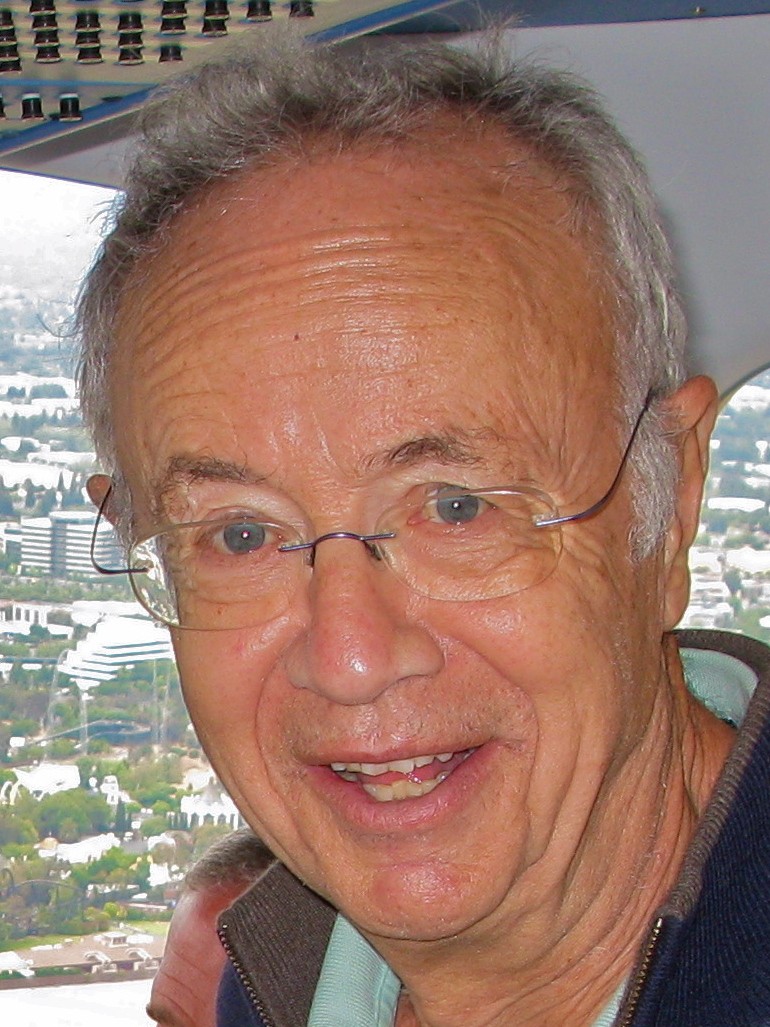
born Andrew Stephen Grove (born Gróf András István)
Intel's third employee and longtime CEO; the operational architect of its shift from memory chips to microprocessors · b. 1936–2016 · Budapest, Hungary
Two calls made by hand, not formulas. how we score →
Summary
A Hungarian Jewish refugee who survived the Nazi occupation as a child and fled the 1956 revolution alone at twenty with no money and little English.
He became Intel's third employee under founders Noyce and Moore, then the operator who forced its retreat from memory chips into microprocessors. His wealth came from decades of employee equity, not a founder's stake.
How it happened
Gróf András István was born in Budapest in September 1936, an only child in a middle-class Jewish family. His father, György, ran a dairy business and expanded it in 1938, the year the family moved to Pest. At about four he caught scarlet fever, nearly died, and came out of it with permanent partial hearing loss he would manage for the rest of his life, first by learning to read lips.
In 1944, when he was eight, Nazi Germany occupied Hungary and began deporting Jews to camps including Auschwitz. Grove has written in his memoir "Swimming Across" that he and his mother took on false identities and were sheltered by friends to avoid arrest. His father was conscripted into a forced-labor battalion and sent to the Eastern Front, then went missing; the family assumed he was dead. He turned up again in the fall of 1945, emaciated and in a ragged uniform, after the war had ended.
He was a university chemistry student in Budapest when the 1956 revolution broke out and Soviet tanks moved in. His parents told him to leave before the borders closed, and at twenty he crossed into Austria alone. He reached the United States in 1957 penniless and barely able to speak English, and anglicized his name to Andrew S. Grove.
City College of New York charged no tuition at the time, and he worked summer jobs, including as a busboy at a New Hampshire resort, where he met Eva Kastan, another refugee he would marry in 1958. He graduated top of his class in chemical engineering in 1960, then earned a PhD in the same field at UC Berkeley in 1963 and joined Fairchild Semiconductor as a researcher, rising to assistant director of development and co-writing a widely used textbook on semiconductor physics.
When Robert Noyce and Gordon Moore left Fairchild to found Intel in July 1968, they brought Grove with them as the company's third employee, not as a co-founder with a founder's stake. He put in no capital of his own; his pay was a salary, and later stock options granted the way any senior executive's were. That distinction defined the rest of his financial life, and it's the reason his eventual wealth, real as it was, never approached his co-founders'.
He became director of engineering, then vice president, then Intel's president in 1979. By the early 1980s Japanese competition had gutted the memory-chip business Intel was built on, and in 1985 Grove and Moore made the call to abandon it and bet the company on microprocessors instead, a decision Grove later built into the book "Only the Paranoid Survive." He took the CEO title in 1987, added chairman in 1997, and ran the company through the period that made Intel synonymous with the personal computer, a run Time recognized by naming him its 1997 Person of the Year.
Prostate cancer in 1995 and Parkinson's disease around 2000 slowed him without stopping him; he stepped down as CEO in 1998 and as chairman in 2004, then wrote the memoir "Swimming Across" about his first twenty years. He gave City College of New York $26 million in 2005, enough that its engineering school now carries his name, and spent his later years funding Parkinson's research and sitting on the board of the International Rescue Committee, which named him a distinguished refugee in 2010. He died at home in Los Altos on March 21, 2016, at 79.
The coded evidence
Thirteen groups, every claim sourcedBorn to a middle-class Jewish family in Budapest; the family's wartime experience under the 1944-45 Nazi occupation is documented in his own memoir.
↗ en.wikipedia.orgFirst-generation immigrant; arrived alone in the US at 20 in 1957 after fleeing Hungary.
↗ en.wikipedia.orgHungarian
His native language; he arrived in the US in 1957 "barely able to speak English" and learned it as a young adult.
↗ en.wikipedia.orgNone of substance. Relief organizations helped move him from Austria to New York, and distant relatives reportedly helped him get oriented once there, per a review of his memoir, but no family home, savings, or capital of any kind was available to him — he arrived, by his own account, penniless.
Coded as a genuinely hard landing: a refugee arrival with no money, minimal English, and no US-based family safety net, offset only by exceptional human capital — he was clearly a strong student and later earned a funded-in-practice public education. Hardness is coded 8 to reflect that combination rather than either extreme; it does not drop below 7 because the money and class landing itself was hard, not merely uncomfortable.
↗ knowledge.wharton.upenn.eduWorked summer jobs, including as a busboy at a resort in New Hampshire, while attending a public college that charged no tuition at the time. No family income floor, no partner income until his 1958 marriage, and no documented other support during his 1957-1963 education years.
↗ en.wikipedia.orgnot established
Not established for the 1957-1963 education years specifically; he married Eva Kastan in 1958 and their two daughters were born after he was established at Fairchild, per the sources reviewed.
↗ en.wikipedia.orgnot established
No debt is documented. City College charged no tuition to any student until 1976, well after Grove's 1960 graduation; how his Berkeley PhD was funded (assistantship or otherwise) is not established in the sources reviewed.
↗ en.wikipedia.orgDisplaced twice before adulthood: hidden under a false identity during the 1944-45 Nazi occupation, then a solo border crossing into Austria during the 1956 revolution at twenty, followed by emigration to a country where he had no guaranteed way to support himself.
↗ en.wikipedia.orgThe hardship was imposed, not chosen. There was nothing to fall back on.
Genuinely imposed. He fled a Soviet crackdown as a young adult and, as a child, Nazi occupation; there was no standing family home in Hungary or the US to fall back on if either attempt had failed.
↗ en.wikipedia.orgFather György (George) Gróf ran a dairy business in Budapest and expanded it in 1938, the year the family moved to Pest; mother Mária worked as a bookkeeping clerk.
↗ knowledge.wharton.upenn.eduA parent worked for themselves, the strongest known predictor of founding.
His father owned and ran the family dairy business.
↗ knowledge.wharton.upenn.eduContracted scarlet fever at about age four, which nearly killed him and caused permanent partial hearing loss. He managed it for the rest of his life, first by learning to read lips and decipher lecture notes with a dictionary, and later with hearing aids.
↗ ccny.cuny.eduGrove has written in his memoir "Swimming Across" that he and his mother took on false identities and were sheltered by friends to avoid deportation when Nazi Germany occupied Hungary in 1944 and began sending Jews to camps including Auschwitz. His father was conscripted into a forced-labor battalion on the Eastern Front, went missing, and was presumed dead by the family for roughly two years before returning, emaciated, after the war ended in 1945. Grove has also described leaving his parents behind and crossing alone into Austria during the 1956 Hungarian Revolution, then reaching the US penniless in 1957.
Attributed throughout to Grove's own published account. No third party beyond his immediate family is named or characterized; his father's ordeal is described only as Grove himself has recounted it.
↗ knowledge.wharton.upenn.eduBudapest, then the Pest district from 1938, when the family dairy business expanded — an urban, working commercial family, not a rural or elite address.
↗ knowledge.wharton.upenn.eduHungarian public schooling in Budapest, interrupted in 1944-45 while he lived under a false identity to avoid deportation. No elite or private schooling is documented.
↗ en.wikipedia.orgOne international move: crossed alone into Austria during the 1956 Hungarian Revolution at twenty, then emigrated to the United States in 1957 and settled in New York. No return migration to Hungary.
↗ en.wikipedia.orgA middle-class Hungarian family whose father owned and grew a dairy business arrived in the US with nothing that transferred — no capital, no recognized credential yet, and initially little English. Education (a tuition-free city college, then a Berkeley PhD) rebuilt the standing his family's Hungarian position couldn't carry across the Atlantic with him.
↗ en.wikipedia.orgA review of his memoir describes distant relatives helping him get oriented in New York after relief organizations aided his transit from Austria, though no financial support from them is documented; he supported himself through summer work and free public tuition.
Vague on specifics in the secondary account; not corroborated elsewhere in the sources reviewed.
↗ knowledge.wharton.upenn.eduRobert Noyce and Gordon Moore, his supervisors at Fairchild, brought him along as Intel's third employee when they left to found the company in July 1968 — a hire built on five years of direct exposure to his work, not a cold approach.
↗ en.wikipedia.orgFairchild Semiconductor, where he worked as a researcher from 1963 and was promoted to assistant director of development by 1967, co-authoring a widely used textbook on semiconductor physics. It supplied the technical standing and the direct five-year relationship with Robert Noyce and Gordon Moore that got him hired at Intel.
↗ en.wikipedia.orgCredibility, Skill, Network
↗ en.wikipedia.org26
First industry job at Fairchild Semiconductor in 1963, straight out of his Berkeley PhD.
↗ en.wikipedia.org5
From his 1963 entry into the semiconductor industry at Fairchild to joining Intel at its 1968 founding, as an early hire rather than a co-founder.
↗ en.wikipedia.orgFive years at Fairchild Semiconductor as a researcher and then assistant director of development, working alongside Noyce and Moore and co-writing a semiconductor-physics textbook still cited decades later, before Intel hired him.
↗ en.wikipedia.orgPhD, chemical engineering, UC Berkeley (1963); BS, chemical engineering, City College of New York (1960), graduating at the top of his class.
↗ ccny.cuny.edunot established
Not documented. City College charged no tuition to any student until 1976; his Berkeley PhD funding mechanism (teaching or research assistantship versus another arrangement) is not established in the sources reviewed.
↗ en.wikipedia.orgSummer jobs, including as a busboy at a resort in New Hampshire, where he also met his future wife, Eva Kastan, herself a refugee.
↗ en.wikipedia.orgA tuition-free public city college, chosen because it cost nothing to attend, then a public state university PhD program — no elite private undergraduate track, and no money for one if he had wanted it.
↗ en.wikipedia.orgnot established
Not applicable in the founder sense. He contributed no personal capital to Intel's July 1968 founding round, which came from Robert Noyce and Gordon Moore's own money, an investment from Grinnell College's endowment, and $2.5 million in outside financing Arthur Rock raised. Grove joined as a salaried employee.
↗ en.wikipedia.orgBuilt no ownership stake of his own. His wealth accrued entirely from decades of salary, annual bonus, and stock-option grants as an employee and then executive, not from a founder's equity position at Intel's start.
↗ sec.govJoined Intel on its July 1968 incorporation as its third employee, after only Noyce and Moore, years before the company had meaningful headcount or revenue. He received a salary and, over the following decades, standard executive stock-option grants rather than a founder's initial equity stake. By Intel's April 1998 proxy statement he beneficially held about 2,493,453 shares (under 1% of the company), against Gordon Moore's roughly 89,796,243 shares (5.5%) in the same filing — a fraction of a founder's position despite being there from day one.
SEC EDGAR, Intel Corp DEF 14A filed 1998-04-06 (fiscal year 1997), beneficial ownership table.
↗ sec.govHeld no structural control device — no dual-class shares, no board-entrenched voting block. His influence over Intel came from his operating role as president, then CEO, then chairman, not from an ownership stake.
↗ sec.gov0
No venture of his own, successful or failed; a continuous employed climb through Fairchild and then Intel.
↗ en.wikipedia.orgThe same late-1960s semiconductor boom that Noyce and Moore built Intel into, followed by early-1980s Japanese competition that forced the 1985 exit from memory chips, then the IBM PC boom that made Intel's microprocessors the industry standard on his watch as CEO.
↗ en.wikipedia.orgBuilt and rebuilt rather than acquired. Intel stayed a single continuously operating company; its defining strategic act on Grove's watch was an internal pivot — abandoning the memory-chip business for microprocessors in 1985 — not a merger or acquisition.
↗ en.wikipedia.org36
From joining Intel in 1968 to stepping down as chairman in 2004 (some sources say 2005); his Intel equity and reputation continued generating value until his 2016 death, 48 years after he joined.
↗ en.wikipedia.orgSemiconductors
↗ en.wikipedia.org400000000
Forbes reported Grove's net worth as about $400 million in a January 2008 profile, alongside his $22 million commitment to Parkinson's research and a pledged $40 million bequest to the Michael J. Fox Foundation. A separate aggregator estimate (CelebrityNetWorth, no disclosed methodology, low confidence) put it around $500 million at his 2016 death. Both figures sit far below Gordon Moore's founder-level fortune (roughly $7 billion) or aggregator estimates for Robert Noyce's estate — consistent with wealth built from decades of salary, bonus, and executive stock-option grants as an early hire, not a founder's stake. Never coded from Intel's market capitalization.
↗ forbes.comJournalistic estimate
↗ forbes.com2008
↗ forbes.com8394900
1997 disclosed compensation as Chairman and CEO, from Intel's 1998 proxy statement: $465,000 salary, $2,790,400 annual bonus, $384,000 in other compensation (retirement-plan contributions), plus a grant-date present value of $3,155,500 for 72,000 stock options awarded that April. Separately, in the same year, Grove exercised 648,000 previously granted options for a realized gain of $48,958,356 — see paperVsRealized.
↗ sec.govProxy statement
↗ sec.govHis disclosed 1997 salary-and-bonus compensation (about $3.6 million before the stock-option grant) was dwarfed by the $48,958,356 he actually realized that same year exercising older option grants — a reminder that a long-tenured executive's headline salary understates the real payout once years of option grants are cashed in.
↗ sec.govIncome from salary, bonus, and stock options earned across a 36-year career, not appreciation of a founder's ownership stake. His net worth sits roughly an order of magnitude below Gordon Moore's, the clearest measure of the gap between an early employee's equity and a founder's.
↗ sec.govTime Person of the Year, 1997, cited as "the guiding force behind the extraordinary growth of the semiconductor industry." Author of "High Output Management" (1983), "Only the Paranoid Survive" (1996), and the memoir "Swimming Across" (2001). Credited by venture capitalist John Doerr as the person who originated OKRs (objectives and key results), later adopted widely across Silicon Valley. IEEE Medal of Honor (2000). Longtime board member of the International Rescue Committee, named a distinguished refugee by the organization in 2010. His 2005 gift of $26 million led City College of New York to rename its engineering school the Grove School of Engineering.
↗ en.wikipedia.orgCapped
A salaried-executive path with real equity upside through option grants, but structurally bounded by grant size and board discretion rather than by raw founder ownership — the schema's "capped" side of the distinction, unlike Noyce's or Moore's uncapped founder equity.
↗ sec.govThe FTC sued Intel in June 1998 — the year Grove stepped down as CEO to become chairman — alleging the company withheld technical information from Digital Equipment, Intergraph, and Compaq to coerce them into licensing patents to Intel. The matter, covering conduct during Grove's active CEO tenure, was resolved by a consent order in March 1999 with no fine and no finding against Grove personally; Intel agreed to stop conditioning technical support on patent licensing disputes.
↗ ftc.govnot established
Not established. No documented charges or convictions against Grove personally.
↗ en.wikipedia.orgDuring
The conduct at issue dates to Grove's active years as CEO, with the suit filed at his transition to chairman.
↗ ftc.govIncidental
A function of Intel's market position built over decades, not conduct that produced Grove's personal wealth or his position at the company.
↗ ftc.govCivil wrong
↗ ftc.govNone
A behavioral consent order with no fine and no admission of liability; no personal action was taken against Grove.
↗ ftc.govAs CEO, Grove was known for a demanding, confrontational management style he called "constructive confrontation" and for requiring objective-setting at every level of the company, while working from an 8-by-9-foot cubicle rather than an executive suite — extending the anti-hierarchy, no-perks culture Noyce had set rather than reversing it once Grove ran the place.
↗ en.wikipedia.orgDemanding, Rigorous, self-described paranoid, Blunt
"Only the Paranoid Survive" was both his own description of his management style and the title of his best-known book.
↗ en.wikipedia.orgPress
↗ en.wikipedia.orgBefore
His operational reputation was set during Intel's early growth years, well before his 1987 CEO appointment.
↗ en.wikipedia.orgAsset
His reputation for rigor and vigilance against complacency is widely credited with driving Intel's 1985 pivot and its 1990s dominance; it culminated in Time naming him its 1997 Person of the Year.
↗ en.wikipedia.orgThe reputation was deliberately built, through books, press, and PR.
He wrote two influential management books and a memoir himself, and turned "Only the Paranoid Survive" and the OKR method into named, widely taught frameworks — a deliberately built thought-leadership reputation, not only an accrued one.
↗ en.wikipedia.orgStructural context
The cost-of-failure score comes from this person's own money and circumstances. But who they were in America carried its own weight, the same way their household or income did, and it shaped how hard the path was just as much. That part isn't in the cost-of-failure number. It's here instead.
Men held about 90% of Fortune 500 CEO seats in 2023, and a wider majority of the rungs below. The ladder is widest for them the whole way up.
↗ forbes.comWhite executives hold most Fortune 500 CEO seats relative to their share of the population, an edge that adds up at every rung of the climb.
↗ finance.yahoo.comImmigrants and their children are overrepresented among America's biggest companies, as founders and as senior leaders. They got there through the visa, credential, and network hurdles that make the path harder to even start down.
↗ forbes.comAmong the people recorded here — men: 169 · White subjects: 114. Representation here is who reached these outcomes, not equal odds of reaching them.
Controlled comparisons
Each holds one thing constant and varies another, so the difference is the point. A list of similar names wouldn't tell you anything.