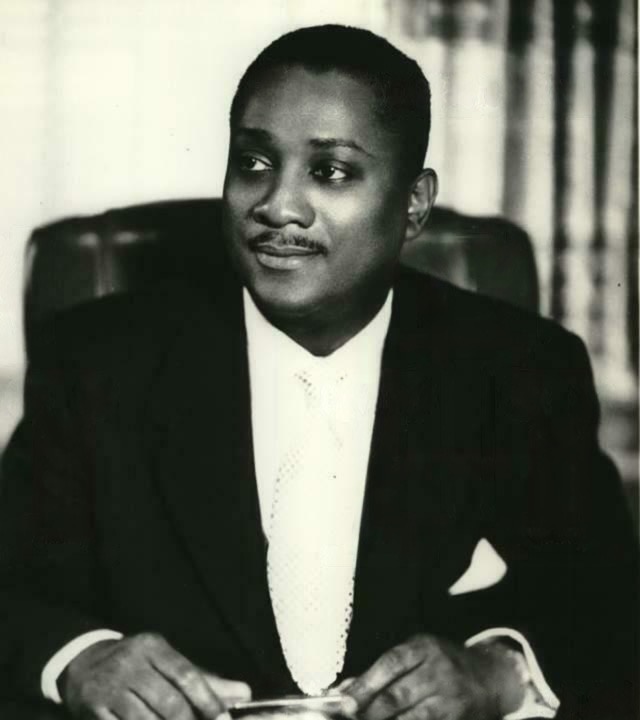
Juan Trippe
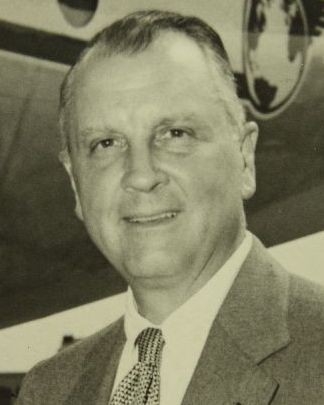
born Juan Terry Trippe
Founder of Pan American World Airways · b. 1899–1981 · Sea Bright, New Jersey
Two calls made by hand, not formulas. how we score →
Summary
His father was a Wall Street banker from an old Maryland family, so money was never the obstacle.
Hill School, Yale, and Skull and Bones gave him standing before he had a business. A single Key West-Havana airmail contract, backed by Yale classmates and the Whitney, Vanderbilt, and Rockefeller fortunes, became an exclusive international franchise. He spent decades betting ahead of the technology.
How it happened
Juan Terry Trippe was born June 27, 1899, in Sea Bright, New Jersey, to a Wall Street investment banker father and a mother from the Terry family. His paternal line had settled in Maryland from England in the 1660s; there is no Hispanic ancestry on either side. The first name came from his mother's side: his maternal grandmother's second husband was Juan Pedro Terry, an Irish-descended businessman based in Venezuela. "Juan" was a family-naming choice, not an ethnic marker, though it followed him his whole life and, later, gave him useful cachet in Latin American dealings. He preferred to go by "Terry" among friends.
He went to the Hill School, an elite Pennsylvania boarding school, then enrolled at Yale in 1917. When the United States entered World War I he left to train as a Navy pilot, was commissioned an ensign in the Naval Reserve in June 1918, and never saw combat before the armistice. He returned to Yale, graduated in 1921, and was tapped for Skull and Bones, the university's most exclusive secret society.
Trippe took a job as a bond salesman after graduating, expecting eventually to follow his father into banking, but found the work dull. In 1922 he bought a handful of surplus Navy seaplanes and started an air-taxi service for wealthy weekenders out of Rockaway Beach, Long Island, financing it by selling stock to Yale classmates. Long Island Airways folded by 1924, but Trippe stayed in aviation, buying into Colonial Air Transport, which won an early U.S. airmail contract on the Boston-New York route in 1925.
Trippe clashed with Colonial's board over how aggressively to expand and left in 1927 to start his own venture, the Aviation Corporation of the Americas, with backing from Cornelius Vanderbilt Whitney and aviator John Hambleton, and further capital from Percy Rockefeller and William H. Vanderbilt. With that money and those names behind him, he secured exclusive landing rights in Havana from Cuban president Gerardo Machado, then merged his company with two smaller rivals so that only one American carrier held the route. Pan American Airways flew its first flight, a hired Fairchild floatplane, from Key West to Havana on October 19, 1927, carrying nothing but the airmail needed to keep the government contract alive while Pan Am's own aircraft were still being readied. A single mail contract, run through connections most people don't have, became the seed of an international monopoly.
Through the 1930s Trippe pushed the airline outward using flying boats that didn't need paved runways: the Sikorsky S-42 opened routes across the Pacific, and the Martin M-130 "China Clipper" made Pan Am the first airline to fly the ocean, starting airmail service in November 1935 and passengers the following year. In 1939 the Boeing 314 "Yankee Clipper" opened transatlantic passenger service from Port Washington, New York, to Lisbon. Pan Am became a byword for glamour, and Trippe personally flew as a passenger on the German airship Hindenburg with his wife in 1936.
Washington effectively made Pan Am its "chosen instrument" for international civil aviation: the airline got exclusive rights to fly the flag abroad, and in exchange it never built a domestic U.S. route network. That arrangement held through World War II, when Pan Am's overseas network and personnel supported the war effort directly, and into the postwar years, when Trippe tried once to make the exclusive arrangement permanent by proposing a plan under which the federal government would own 49 percent of the airline's stock. Presidents Roosevelt and Truman both preferred competition among several U.S. carriers overseas, and the Civil Aeronautics Board let other domestic airlines onto international routes after the war, ending Pan Am's protected position for good. The absence of a domestic network, which the chosen-instrument deal had made an advantage, became a lasting weakness once the deal ended.
Trippe committed Pan Am to the jet age early, ordering 20 Boeing 707s and 25 Douglas DC-8s in 1955 for roughly $269 million before either plane had flown a commercial route. Pan Am opened the first scheduled transatlantic jet service, New York to Paris, on October 26, 1958. In the mid-1960s he went back to Boeing and asked Bill Allen to build something much bigger than the 707; Pan Am placed the launch order for 25 of the resulting Boeing 747s, at roughly $450 million, and flew the 747's first commercial flight from New York to London in January 1970.
Trippe retired as Pan Am's president on May 7, 1968, after 41 years running the company he had built from a single mail contract, and remained on the board until 1975. He suffered a stroke in September 1980 and a second, fatal one at his New York home on April 3, 1981, at 81. Pan Am outlived him by a decade before the 1973 oil shock, a costly 1979 acquisition of National Airlines, and 1978 deregulation that let domestic carriers fly overseas finally caught up with it; the airline he founded ceased operations in 1991.
The coded evidence
Thirteen groups, every claim sourcedCoarse public-record coding; race is a noisy, interpretive category applied retrospectively.
↗ en.wikipedia.orgCorroborated by a second, independent account (biographics.org) that likewise states he "is frequently and erroneously assumed to have been of Hispanic descent" and traces the name to the Terry side of the family, though the exact relative differs slightly between sources (grandmother's second husband vs. a great-uncle's wife); both agree the name is a family-naming quirk, not an ethnic marker.
↗ en.wikipedia.orgMulti-generation descendant; family present in the American colonies/United States since the 1660s, not an immigration story.
↗ en.wikipedia.orgEnglish
↗ en.wikipedia.orgNo move was made for a partner's career.
He married Elizabeth "Betty" Stettinius in 1928, after Pan Am was already founded and his career geography already set.
↗ panam.orgA well-off Wall Street banking family in Sea Bright, New Jersey; no housing insecurity is documented at any point in his life.
↗ smithsonianmag.comHis father's investment-banking wealth and standing gave him a secure floor throughout his twenties; his first venture, Long Island Airways, was financed by selling stock to wealthy Yale classmates rather than out of personal financial need.
↗ encyclopedia.comNo money was owed or sent outward during the build.
↗ en.wikipedia.orgnot established
No housing loss or comparable instability is documented at any stage of his life.
↗ en.wikipedia.orgHis father worked as a Wall Street investment banker; a family heirloom globe he later bequeathed to Juan is on display at the Smithsonian. His mother came from the Terry family, whose connections in Venezuela gave him his first name. His father's specific full name is reported in a few secondary genealogical sources but was not independently confirmed on any primary document consulted here, so it is left out rather than asserted.
↗ smithsonianmag.comnot established
Described as a banker; whether he was a partner/principal versus a salaried banker is not established.
↗ smithsonianmag.comHis mother's family, the Terrys, had a Venezuela-based branch (Juan Pedro Terry, his maternal grandmother's second husband) that supplied his first name; there is no documented evidence this branch supplied capital, mentorship, or business access, only the name and, later, useful standing in Latin American dealings.
↗ en.wikipedia.orgPaternal family present in Maryland since the 1660s, and a father established enough in Wall Street banking to leave his son a valuable family heirloom; this is inherited standing rather than a famous or titled name.
↗ smithsonianmag.comnot established
His Hill School and Yale education was paid from family wealth; no account of special parental sacrifice for tuition is documented.
↗ en.wikipedia.orgMixed: he was expected to follow his father into banking and took a Wall Street bond-sales job after Yale, but the family did not stop him from redirecting that expected path into aviation once he found banking dull.
↗ encyclopedia.comnot established
No custodial change is documented; raised by both parents throughout childhood.
↗ en.wikipedia.orgTrained as a Naval Aviator and commissioned an ensign in the Naval Reserve in June 1918, during World War I; the war ended before he saw combat. Service did not fund an education or credential he otherwise lacked — he returned to a Yale place his family was already paying for.
↗ en.wikipedia.orgSea Bright, New Jersey, then the Hill School in Pottstown, Pennsylvania, then Yale in New Haven, Connecticut.
↗ en.wikipedia.orgAn elite private boarding school (the Hill School) followed by Yale University.
↗ en.wikipedia.orgnot established
Not applicable; his childhood predates the 1930s HOLC maps by decades.
↗ en.wikipedia.orgNew York in the early 1920s was a center of both capital markets and the small, fashionable world of private aviation that Trippe's Long Island Airways catered to; his Yale classmates were themselves a concentration of exactly the kind of capital an aviation startup needed.
↗ encyclopedia.comHis father's Wall Street banking career gave him access to capital markets and moneyed social circles, but no direct link to the aviation industry he entered instead.
↗ smithsonianmag.comNew Jersey to Pennsylvania for boarding school, then to Connecticut for Yale, then to New York and Florida for his aviation ventures — all discretionary family or career moves, not moves driven by economic necessity.
↗ en.wikipedia.orgCornelius Vanderbilt Whitney, a Yale-connected heir to Vanderbilt wealth, backed Trippe's 1927 venture and helped bring in further capital from Percy Rockefeller and William H. Vanderbilt; that backing, not a job or an employer, opened the door to the Cuba contract.
↗ en.wikipedia.orgnot established
He founded his own ventures from the start rather than launching out of an employer; his brief Wall Street bond-sales job supplied neither capital nor a network he used in aviation.
↗ en.wikipedia.orgCapital, Network
Capital and network came from Yale classmates and the Whitney/Rockefeller/Vanderbilt backers, not from an employer.
↗ en.wikipedia.orgCornelius Vanderbilt Whitney and aviator John Hambleton co-founded the Aviation Corporation of the Americas with Trippe in 1927; Whitney supplied capital and social standing, Hambleton aviation experience.
↗ en.wikipedia.org1
Roughly a year on Wall Street as a bond salesman between his 1921 Yale graduation and the 1922 Long Island Airways founding.
↗ encyclopedia.comnot established
↗ en.wikipedia.org1
A single brief stint as a Wall Street bond salesman before founding his own ventures.
↗ encyclopedia.comnot established
His flight training came through the Navy rather than purchased private instruction.
↗ en.wikipedia.orgBachelor's degree, Yale University, 1921; member of the Skull and Bones society.
↗ en.wikipedia.orgnot established
Not established in the sources consulted; unlikely given family means.
↗ en.wikipedia.orgA direct, elite private-school-to-Ivy-League pathway, the Hill School then Yale, funded entirely by family wealth.
↗ en.wikipedia.orgYale, and Skull and Bones specifically, supplied both the Long Island Airways investor base in 1922 and, indirectly, the social world (Whitney was Yale-connected) that produced the 1927 Pan Am backing.
↗ en.wikipedia.orgBought several surplus U.S. Navy seaplanes in 1922 and financed Long Island Airways, an air-taxi service for wealthy weekend flyers, by selling stock to Yale classmates.
↗ encyclopedia.comnot established
No specific dollar figure for family capital into his ventures is documented, though his father's wealth and standing plainly stood behind him; one source describes his 1922 venture as financed in part by "inherited funds," but no amount or date of transfer is established.
↗ en.wikipedia.orgnot established
Not established in the sources consulted; his father's death date and any estate he left to Juan are not documented here.
↗ en.wikipedia.orgIt needed capital up front, before it earned anything.
Long Island Airways and the early Pan American Airways ran on outside investor capital and government airmail contracts, not on revenue generated before founding.
↗ encyclopedia.comThe 1927 Aviation Corporation of the Americas was capitalized by Cornelius Vanderbilt Whitney, Percy Rockefeller, and William H. Vanderbilt — three of the wealthiest names in American finance backing an airline with no aircraft of its own yet.
↗ en.wikipedia.orgCornelius Vanderbilt Whitney was an active officer of the company, not a passive investor, at times serving in its leadership alongside Trippe.
↗ en.wikipedia.orgFinanced early on by wealthy private backers rather than a bank loan or personal savings; Pan American Airways and its holding company went public and remained a publicly traded corporation for essentially all of Trippe's tenure, so his ownership was a meaningful but minority equity stake rather than sole ownership.
↗ en.wikipedia.orgAirmail revenue and early passenger income were reinvested into new aircraft and route expansion (the Clipper fleet, Latin American and Pacific routes) rather than taken out as personal income.
↗ en.wikipedia.orgPan Am built and owned its own seaplane bases, terminal facilities (including Pan American Field in Miami, opened 1929), and eventually a hotel subsidiary, InterContinental Hotels, rather than renting infrastructure from others.
↗ panam.orgPersonal fascination rather than a market study: Trippe had watched Wilbur Wright fly around the Statue of Liberty as a boy in 1909, and learned to fly himself as a teenager, years before he had any business plan.
↗ smithsonianmag.comRan Pan Am as president and, for most of the period, chairman for 41 years, but the company was publicly traded for essentially its whole life under him; he held real but not majority economic ownership, and his control rested on board and investor confidence rather than a dual-class share structure.
↗ en.wikipedia.org1
Long Island Airways, his 1922 air-taxi venture, folded in 1924, before he moved on to Colonial Air Transport and then his own Aviation Corporation of the Americas.
↗ encyclopedia.comTrippe and the Yale classmates who had bought stock in Long Island Airways absorbed the loss when it folded in 1924; no family bailout beyond the initial funding is documented.
↗ encyclopedia.comThe 1925 Kelly Act opened U.S. airmail contracting to private carriers, and the 1926 Air Commerce Act began federal regulation of civil aviation; both created the contracting and licensing framework Trippe's ventures depended on. Cheap surplus military aircraft after World War I also made his first venture, Long Island Airways, affordable to start.
↗ en.wikipedia.orgNew York and South Florida, where Pan Am's first Cuba route was based.
↗ en.wikipedia.orgThe 1935-36 China Clipper flights across the Pacific drew enormous press and newsreel attention and cemented Pan Am's public image as the glamorous frontier of air travel.
↗ en.wikipedia.orgThe postwar "chosen instrument" arrangement — exclusive U.S. international air routes granted to Pan Am in exchange for the airline staying out of the domestic market — was a government-granted competitive structure, not something available to a normal competitor. It closed once the Civil Aeronautics Board and Presidents Roosevelt and Truman decided several U.S. carriers, not one, should fly overseas after World War II.
↗ simpleflying.comA mix: built Long Island Airways and the original Pan American route network from nothing, but grew substantially through mergers and acquisitions of existing carriers and route rights — the 1927 three-way merger that created Pan Am, a stake in China National Aviation Corporation, and the 1950 merger with American Overseas Airlines.
↗ en.wikipedia.org23
Age at the 1922 founding of Long Island Airways, his first capital-generating venture; the sustained engine, Pan Am, began at 28 in 1927.
↗ encyclopedia.com53
From the 1922 founding of his first venture to his departure from the Pan Am board in 1975.
↗ panam.orgThe opposite of a deliberate-distance strategy: Pan Am was headquartered in New York City, then and now the American financial and media center, which gave Trippe continuous proximity to the capital markets and press that his growth depended on.
↗ en.wikipedia.orgnot established
A detailed personal consumption record relative to peak wealth is not established in the sources consulted.
↗ en.wikipedia.orgCommercial aviation and international air-travel infrastructure
↗ en.wikipedia.orgnot established
No credible personal net-worth figure at any point in his life or at his 1981 death was located in the sources consulted. Pan Am was a publicly traded company for essentially all of Trippe's tenure and he held a meaningful but non-majority equity stake alongside a salary as chairman/president, rather than owning the enterprise outright, which is exactly the kind of holding that rarely gets a clean, sourced personal-wealth figure. Magnitude here is coded from the documented scale of the company he built — roughly $1 billion in cash reserves and 150 jets serving 86 countries by 1970 — rather than from an unfound personal fortune number, and is deliberately conservative given that uncertainty.
↗ en.wikipedia.orgnot established
↗ en.wikipedia.orgnot established
No documented salary or compensation figure was located; public-company executive pay disclosure of the modern proxy-statement kind did not exist in its current form for most of his tenure.
↗ en.wikipedia.orgHis wealth, such as it was, sat in Pan Am stock in a publicly traded company rather than in a privately held enterprise; no record of a major personal cash-out is documented.
↗ en.wikipedia.orgA blend rather than a pure type: salary as chairman/president of a public company for 41 years, plus an equity stake dating to the 1927 founding that grew with the company rather than being cashed out.
↗ en.wikipedia.orgBuilt Pan American World Airways into the dominant U.S. international carrier for four decades; pioneered the "Clipper" flying-boat era, transpacific and transatlantic passenger service, tourist-class airfares, and the commercial jet age (707) and jumbo-jet era (747); founded InterContinental Hotels; received the Daniel Guggenheim Medal (1941) and the Wright Brothers Memorial Trophy (1966), was inducted into the National Aviation Hall of Fame (1970), and was posthumously awarded the Presidential Medal of Freedom (1985).
↗ en.wikipedia.org5
From the 1922 founding of Long Island Airways to the 1927 founding flight of Pan American Airways.
↗ en.wikipedia.orgUncapped
↗ en.wikipedia.orgPan Am's core competitive advantage for two decades was a government grant, not a violation: postwar, U.S. policy under Presidents Roosevelt and Truman shifted from a single "chosen instrument" airline to allowing several U.S. domestic carriers onto international routes, and the Civil Aeronautics Board implemented that shift, ending Pan Am's protected monopoly on U.S. international air travel. Trippe's own later proposal — federal part-ownership of Pan Am to entrench the chosen-instrument arrangement — was rejected rather than adopted.
↗ simpleflying.comnot established
↗ en.wikipedia.orgnot established
Unlike some founders, no documented ouster or founder litigation forced him out; he retired voluntarily in 1968 at 69.
↗ en.wikipedia.orgnot established
No adverse labor finding is documented; Pan Am under Trippe signed onto the Kennedy administration's Plans for Progress equal-employment-opportunity commitment in 1961.
↗ panam.orgDuring
The chosen-instrument arrangement was in force through the peak of Pan Am's growth under Trippe, and its postwar unwinding began well before his 1968 retirement.
↗ simpleflying.comProduced the advantage
The exclusive-route, no-domestic-competition structure is the same structure that made Pan Am dominant abroad for two decades.
↗ simpleflying.comLegal gray
A fully legal, government-granted competitive arrangement, criticized by later policymakers as anti-competitive rather than found unlawful in any proceeding against Trippe personally.
↗ simpleflying.comNone
No personal fine or liability; the cost was the loss of exclusivity itself, borne by the company over subsequent decades rather than by Trippe personally.
↗ simpleflying.comnot established
Not established in detail in the sources consulted, beyond the 1961 equal-employment-opportunity commitment noted above.
↗ en.wikipedia.orgvisionary industry-builder who thought in decades rather than quarters, the government's "chosen instrument" for American civil aviation abroad, credited as the father of tourist-class air travel
↗ en.wikipedia.orgPress
↗ en.wikipedia.org3
Wikipedia, the Smithsonian's account, and the Pan Am Historical Foundation each independently document parts of the same reputation.
↗ en.wikipedia.orgAfter
His public reputation as an aviation statesman formed over the course of building Pan Am from 1927 onward, not before it.
↗ en.wikipedia.orgAsset
His standing with government officials, aircraft manufacturers, and capital markets was a consistent advantage across four decades of expansion.
↗ en.wikipedia.orgThe reputation was deliberately built, through books, press, and PR.
Pan Am's glamorous public image, the Clipper name itself, celebrity passengers, heavy press coverage of ocean-crossing firsts, was a deliberately built brand, not an accidental byproduct.
↗ smithsonianmag.comPortrayed on screen twice: by Pat O'Brien in the 1936 film "China Clipper," made during his lifetime with Pan Am's cooperation, and by Alec Baldwin in Martin Scorsese's 2004 film "The Aviator," made after his death and centered on his rivalry with Howard Hughes rather than his own life story.
↗ en.wikipedia.orgStructural context
The cost-of-failure score comes from this person's own money and circumstances. But who they were in America carried its own weight, the same way their household or income did, and it shaped how hard the path was just as much. That part isn't in the cost-of-failure number. It's here instead.
Men founded the companies that took nearly all the venture funding and almost every top outcome, a tailwind that never shows up in one person's own circumstances.
↗ techcrunch.comWhite founders are heavily overrepresented among funded companies and top-tier wealth relative to their share of the population, an edge that has nothing to do with a person's own money.
↗ techcrunch.comAmong the people recorded here — men: 115 · White subjects: 74. Representation here is who reached these outcomes, not equal odds of reaching them.
Controlled comparisons
Each holds one thing constant and varies another, so the difference is the point. A list of similar names wouldn't tell you anything.