John H. Johnson
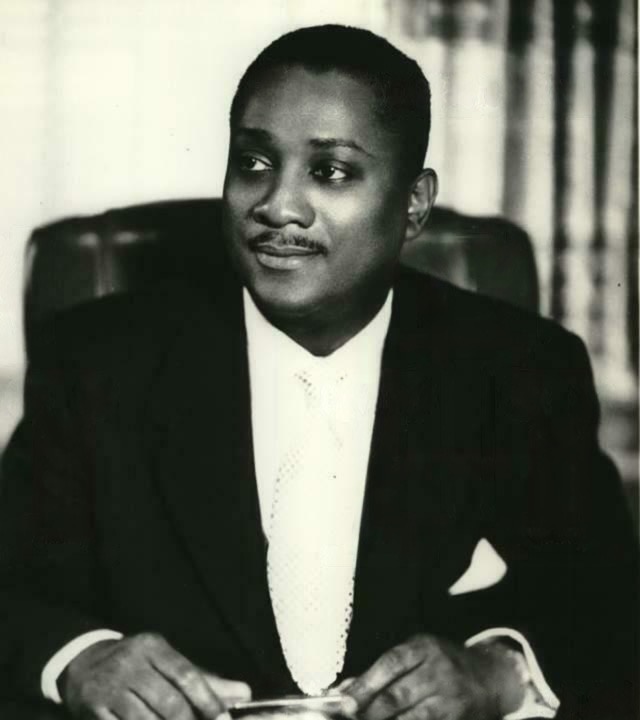
Founder, Johnson Publishing Company (Ebony, Jet) · b. 1918–2005 · Arkansas City, Arkansas
Two calls made by hand, not formulas. how we score →
Summary
He borrowed $500 against his mother's furniture to mail 20,000 subscription solicitations for a magazine modeled on the company newsletters he compiled at his day job.
Negro Digest paid for Ebony, which white advertisers refused for years until he out-maneuvered a hostile CEO into buying space. He never took outside money and never lost the company while he ran it.
How it happened
Born January 19, 1918, in Arkansas City, Arkansas, the grandson of enslaved people on both sides of his family. His father, Leroy Johnson, worked at a sawmill and died there in a workplace accident when John was eight. His mother, Gertrude, later remarried a man named James Williams.
Arkansas City had no public high school for Black students, so Johnson repeated the eighth grade for two extra years while his mother worked two jobs to save enough for the family to leave. They moved to Chicago in 1933, in the middle of the Depression, and lived on relief for close to two years before his mother and stepfather found steady work.
At DuSable High School he became class president and editor of the school paper, and a speech he gave at a 1936 Urban League banquet caught the attention of Harry Pace, president of Supreme Liberty Life Insurance Company. Pace hired him part time and helped arrange scholarship money for the University of Chicago. The job had him compiling a digest of news clippings for Pace to read, which is where the idea for a magazine came from. He dropped out of college in 1939 to work full time.
Every backer he approached in 1942 turned him down. His mother let him use her furniture as collateral for a $500 loan, and he spent most of it on postage to mail 20,000 of Supreme Life's own policyholders, asking each one to prepay two dollars for a subscription to a magazine that didn't exist yet. Enough said yes to cover the first print run of Negro Digest.
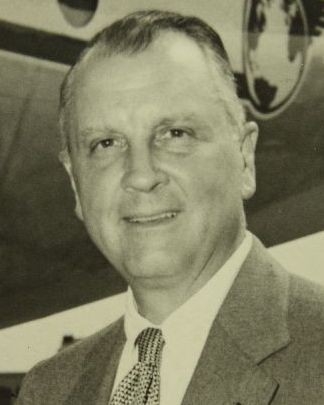
Negro Digest's circulation reached 50,000 within six months, funding the November 1945 launch of Ebony. White-owned companies mostly refused to advertise to Black consumers for years afterward. Zenith's Eugene McDonald agreed to a meeting on the condition that it not be about advertising; Johnson brought him a signed copy of a book by Matthew Henson, McDonald's hero, and left with Ebony's first major ad contract. Swift, Elgin, Armour, and Quaker Oats followed.
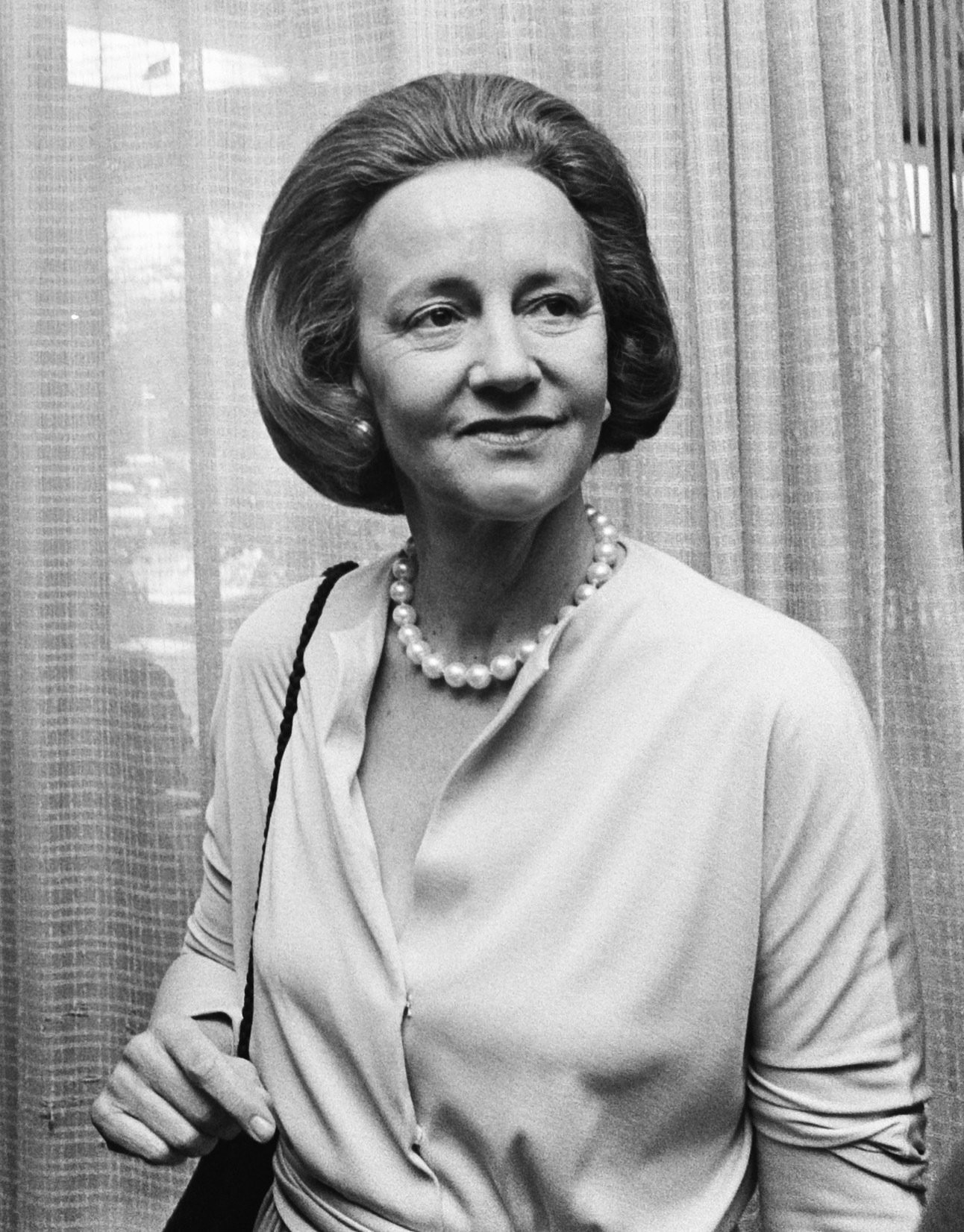
Jet launched in 1951 as a pocket-sized weekly. Its September 1955 issue ran unedited photographs of Emmett Till's body, at the insistence of his mother, Mamie Till, that the world see what had been done to him. Historians credit the coverage with helping galvanize the civil rights movement.
Johnson bought a building on Michigan Avenue in 1972, the first Black owner on that block, launched Fashion Fair Cosmetics in 1973 after Estée Lauder and Revlon turned down a partnership, and became the first African American on the Forbes 400 in 1982. He received the Presidential Medal of Freedom in 1996 and died in 2005, still chairman of the company he'd started with a pawned set of furniture. Run afterward by his daughter Linda Johnson Rice, Johnson Publishing sold Ebony and Jet in 2016, sold its photo archive during bankruptcy proceedings in 2019, and filed for Chapter 7 that same year.
The coded evidence
Thirteen groups, every claim sourcedDescendant of enslaved people; both his parents' families had been enslaved in Arkansas before emancipation.
↗ chicagoliteraryhof.orgNone beyond public relief. The family lived on welfare for close to two years after the 1933 move to Chicago, with no property or savings to fall back on.
↗ encyclopedia.comKept his salaried job at Supreme Liberty Life Insurance Company while launching Negro Digest in 1942; that job also supplied the policyholder mailing list he used to solicit the magazine's first subscribers.
↗ encyclopedia.com1
Married Eunice Walker in June 1941, about a year before founding Negro Digest; no children yet at that point.
↗ en.wikipedia.orgnot established
No pre-existing debt beyond the $500 loan taken to fund the venture itself is documented.
↗ en.wikipedia.orgnot established
No homelessness or comparable instability is documented during the 1942-45 founding period itself; the family's welfare years predate the venture and are captured under D2/D3.
↗ en.wikipedia.orgThe hardship was imposed, not chosen. There was nothing to fall back on.
Segregated schooling forced the move to Chicago and the relief years that followed; there was no family home or standing to return to.
↗ encyclopediaofarkansas.netFather Leroy Johnson worked at a sawmill in Arkansas City and died there in a workplace accident in 1926. His mother Gertrude worked multiple jobs after that to support the family and later remarried a man named James Williams, whose occupation is not established in the sources reviewed.
↗ en.wikipedia.orgNeither parent was self-employed.
↗ en.wikipedia.orgGrandson of enslaved people on both sides of his family.
↗ chicagoliteraryhof.orgHis mother worked two jobs to save enough money to move the family to Chicago after discovering there was no public high school for Black students in Arkansas City.
↗ chicagoliteraryhof.orgRather than let him leave school once no local high school was available to him, his mother had him repeat the eighth grade for two extra years and worked to fund the family's relocation so his education could continue.
↗ encyclopedia.comOne childhood relocation, from Arkansas City, Arkansas to Chicago, Illinois in 1933.
↗ encyclopediaofarkansas.net1
Repeated the eighth grade for two extra years because no public high school in Arkansas City admitted Black students, until the family could afford to move to one that did.
↗ encyclopedia.comFather died in a sawmill accident in 1926, when Johnson was eight years old.
↗ encyclopediaofarkansas.netLost his father to a workplace accident at age eight, then spent his early teenage years in a family on public relief after the move to Chicago.
↗ encyclopediaofarkansas.netArkansas City, a small, segregated town in Desha County, Arkansas, with no public high school open to Black students.
↗ encyclopedia.comFamily moved from Arkansas City, Arkansas to Chicago, Illinois in 1933, part of the Great Migration, driven by both the lack of local schooling for Black students and Depression-era economics.
↗ encyclopediaofarkansas.netBuilt a magazine and, later, a cosmetics line explicitly for a Black consumer market that mainstream publishers and advertisers had ignored or refused to serve; had to personally court individual white executives, one at a time, to break the advertising boycott rather than being courted by an existing industry.
↗ en.wikipedia.orgHarry Pace, president of Supreme Liberty Life Insurance Company, who noticed Johnson after a speech at a 1936 Urban League banquet and gave him a part-time job and scholarship assistance.
↗ encyclopedia.comRoughly 20,000 of Supreme Life's own policyholders, solicited directly by mail for a prepaid $2 subscription to a magazine that did not yet exist.
↗ en.wikipedia.orgSupreme Liberty Life Insurance Company, where his job compiling a news-clipping digest for Harry Pace gave him both the idea for a Reader's Digest-style magazine and access to the company's policyholder list.
↗ encyclopedia.comIdea, Network, Skill
↗ encyclopedia.comCold-mailed 20,000 strangers, his employer's customers rather than his own contacts, to fund a magazine before a single issue existed.
↗ en.wikipedia.orgBuilt a direct-subscription base by mail rather than seeking wholesale newsstand distribution or a publishing-house backer, both effectively closed to a Black-owned magazine at the time.
↗ en.wikipedia.orgBuilt Johnson Publishing's own subscriber base, printing capacity, and eventually its own Michigan Avenue headquarters rather than renting production or distribution from another company.
↗ en.wikipedia.orgEvery financial backer he approached in 1942 to fund Negro Digest turned him down before he resorted to the furniture-collateral loan.
↗ encyclopedia.comAttended the University of Chicago on scholarship assistance arranged by Harry Pace, with some coursework also reported at Northwestern University, but left without a degree in 1939 to work full time. Received numerous honorary doctorates later in life, including from Harvard.
↗ encyclopedia.com$500, borrowed against his mother's furniture as loan collateral in 1942; most of it went toward postage to mail subscription solicitations rather than production costs.
↗ en.wikipedia.orgNot a direct cash transfer: his mother supplied her own furniture as collateral so he could obtain a $500 commercial loan, since he had no assets or credit of his own.
↗ encyclopedia.comIt paid its own way from the start. Revenue came before any outside money.
Prepaid subscriptions were sold before the first issue of Negro Digest was printed.
↗ en.wikipedia.orgHis mother's household furniture, pledged against the $500 loan that funded Negro Digest's launch.
↗ en.wikipedia.orgNo outside investors at any point; wholly self-funded and family-owned throughout his lifetime.
↗ en.wikipedia.orgReinvested Negro Digest's early circulation revenue into launching Ebony three years later rather than drawing it down personally.
↗ en.wikipedia.orgBought a headquarters building at 820 S. Michigan Avenue in Chicago around 1972, reportedly the first Black-owned building on that stretch of Michigan Avenue; the company sold it to Columbia College Chicago in 2011, after his death.
↗ chicagoliteraryhof.orgPersonal work experience: compiling a digest of news clippings for Harry Pace at Supreme Liberty Life Insurance suggested the idea of a Reader's Digest-style magazine aimed at Black readers.
↗ encyclopedia.comRetained full ownership and operating control of Johnson Publishing throughout his lifetime; the company remained privately held.
↗ en.wikipedia.org0
Negro Digest was his first venture and it succeeded; no separate prior failed businesses are documented.
↗ en.wikipedia.orgHimself and his mother, whose furniture was put up as loan collateral.
↗ en.wikipedia.orgWartime paper and ink constraints, a growing urban Black population in Chicago following the Great Migration, and no existing mass-market magazine aimed at Black readers.
↗ en.wikipedia.orgChicago, Illinois
↗ en.wikipedia.orgBuilt the magazine, the sales model, and eventually the printing and real-estate infrastructure from nothing.
↗ en.wikipedia.org60
From the 1942 founding to his 2005 death; his daughter Linda Johnson Rice became CEO in 2002-03 while he remained chairman until he died.
↗ en.wikipedia.orgPublishing and media (Black consumer magazines and cosmetics)
↗ en.wikipedia.orgnot established
Widely reported as the first African American on the Forbes 400 (1982), with a commonly repeated but unsourced estimate around $150M at the time; no primary filing or disclosed-methodology figure was found in this research, and net worth for a privately held company of this era is inherently a rough estimate. Left null rather than repeating an untraceable number.
↗ chicagoliteraryhof.orgWealth held mostly in a wholly owned private company plus real estate (the Michigan Avenue headquarters, a Palm Springs home), not liquid cash. Company sales were reported over $388 million at multiple points in Johnson's lifetime and around $90 million by 2013, after his death, as the business contracted.
↗ en.wikipedia.orgFirst African American on the Forbes 400 (1982). NAACP Spingarn Medal (1966). Presidential Medal of Freedom (1996). Jet's 1955 photographs of Emmett Till are widely credited with helping galvanize the civil rights movement. The company's photo archive of roughly three million images was sold to a foundation consortium including the J. Paul Getty Trust during 2019 bankruptcy proceedings and later transferred to the Smithsonian in 2022.
↗ en.wikipedia.org7
Reported to have become a millionaire by age 31, around 1949, seven years after founding Negro Digest in 1942.
↗ chicagoliteraryhof.orgUncapped
↗ en.wikipedia.orgSelf made, Disciplined, a shrewd negotiator, Image conscious
Recurring characterizations across profiles and retrospectives rather than a single quoted source.
↗ chicagoliteraryhof.orgPublic
↗ chicagoliteraryhof.orgAfter
↗ en.wikipedia.orgAsset
↗ en.wikipedia.orgThe reputation was deliberately built, through books, press, and PR.
Deliberately framed his own rise as a demonstration of Black achievement, both through Ebony's founding editorial mission and his 1993 autobiography, "Succeeding Against the Odds."
↗ en.wikipedia.orgStructural context
The cost-of-failure score comes from this person's own money and circumstances. But who they were in America carried its own weight, the same way their household or income did, and it shaped how hard the path was just as much. That part isn't in the cost-of-failure number. It's here instead.
Men hold most of the ownership and gatekeeping across the creative and media industries, the default that recognition and deals flow toward.
↗ assets.uscannenberg.orgIn the creative and media industries, recognition comes far more easily to underrepresented creators than the ownership it should turn into. Among 2023's top-grossing film directors, for one measure, eight were Black.
↗ assets.uscannenberg.orgAmong the people recorded here — men: 115 · Black subjects: 58. Representation here is who reached these outcomes, not equal odds of reaching them.
Controlled comparisons
Each holds one thing constant and varies another, so the difference is the point. A list of similar names wouldn't tell you anything.