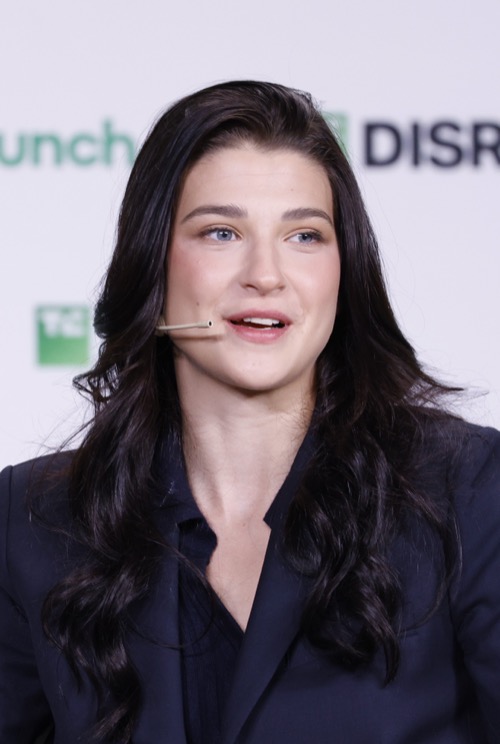
Arlan Hamilton
Founder, Backstage Capital · b. 1980 · Jackson, Mississippi → Dallas, Texas
Two calls made by hand, not formulas. how we score →
Summary
She taught herself venture capital from library books and YouTube while sleeping on the floor of the San Francisco airport, with no degree, no savings, and no one in the industry to call.
Backstage Capital went on to manage roughly $20-30M and back more than 200 founders — a real outcome, but a modest one next to the climb it took. The point of this case is the shape of the path, not its size.
How it happened
Born in Jackson, Mississippi, and raised in Dallas by her mother, Earline Butler Sims, a Dillard University graduate who worked in air traffic control and telecoms and could never quite get ahead. Hamilton started her first business in third grade, reselling candy her mother bought in bulk at Costco. She skipped college, telling interviewers later that leaving her family for school felt wrong given how tight things already were.
A decade-plus as a music-industry tour manager — for Kirk Franklin, CeeLo Green, Jason Derulo, Toni Braxton, Floetry, and others — paid the bills but built no capital and no path into tech. Around 2012, watching people like Ashton Kutcher and Troy Carter become Silicon Valley angel investors, she noticed something else: most of the founders she actually knew weren't getting anywhere near that kind of access. She quit music, moved back in with her mother in Texas, and taught herself venture capital at home, reading everything from Brad Feld's "Venture Deals" to library books she couldn't afford to buy.
A crowdfunded scholarship and help from investor Chris Sacca got her to a two-week Stanford pilot program on VC in 2015. When it ended she stayed in San Francisco with no plan and no money. Her savings ran out; she slept on the floor of San Francisco International Airport for months, on friends' couches, and in motels, riding trains each day to meetings so nobody would know. Her mother wired her $10 at a time when she could. A cold LinkedIn message to Sam Altman's brother led to a personal loan from Sam Altman himself, enough for a few weeks in Austin. On September 15, 2015, angel investor Susan Kimberlin wrote her a $25,000 check — the first money into what became Backstage Capital.
Backstage grew to a general fund plus a targeted $36 million fund for Black women founders, eventually reaching roughly $20-30M under management, more than 200 portfolio companies, and 56 exits by the end of 2024. She wrote "It's About Damn Time" in 2020 and stepped back from managing partner to chairperson and advisor in December 2024, as Backstage moved toward a planned $200 million fund with 360 Venture Collective. The fund's growth was real. Her own personal wealth was never the story — the industry she broke into rewards fund managers unevenly, and nothing in the record suggests she personally became rich from it.
The coded evidence
Thirteen groups, every claim sourcedDescendant
↗ blackpast.orgHer only family fallback was her mother's household in Dallas, which had no savings or capital to offer — her mother could send $10 at a time during the homeless months but, in Hamilton's words, "didn't have anything for me." Rather than return there, she stayed in San Francisco with nowhere to sleep.
Original CNBC URL cited; CNBC blocks direct fetch, retrieved via web.archive.org.
↗ cnbc.comNone. Her savings dried up during the year-plus she spent chasing investors; she has said her bank balance hit $12 at one point and called a positive balance "rare."
↗ cnbc.comnot established
No student debt (no college) or other overhang established in the record reviewed.
↗ cnbc.comHomeless for months in 2015 while actively building the fund — sleeping on the floor of San Francisco International Airport, on friends' couches, and in motels. She has said it was "pretty traumatic to sleep on the floor of the airport and hope that that's not illegal, because I didn't know at the time."
↗ blackpast.orgThe hardship was imposed, not chosen. There was nothing to fall back on.
Not chosen austerity against a comfortable fallback — the one fallback that existed, her mother's household, had no real cushion itself. That distinguishes this from the false-hardness pattern of visible poverty with a standing home behind it.
↗ cnbc.comRaised by a single mother, Earline Butler Sims, who worked as an FAA air traffic control trainee, a psychology technician at the FAA's academy in Oklahoma City, and later in telecommunications after graduating from Dillard University in 1971. Her father is not a substantial presence in the public record.
↗ dillard.eduHer mother holds a bachelor's degree in psychology from Dillard University, an HBCU, class of 1971.
↗ dillard.eduShe chose not to enroll in college, saying later that leaving her family given its financial hardships "felt wrong." Her mother's own psychology degree didn't translate into money to fund a comparable path for her daughter, but the household clearly valued education — the scholarship the two later endowed at Dillard requires a psychology major.
↗ advocate.comBorn in Jackson, Mississippi; raised in the Dallas, Texas area.
↗ dillard.eduMississippi to Dallas in childhood; later moved for music-industry work; in 2015 relocated to California on a one-way ticket for a two-week Stanford pilot program, then stayed in the Bay Area with no housing plan once it ended.
↗ cnbc.comSusan Kimberlin, an angel investor she met at the Stanford pilot program, became Backstage Capital's first investor with a $25,000 check on September 15, 2015.
↗ cnbc.comNo prior firm supplied capital, credibility, or network. She spent over a decade as a self-employed touring and production manager for musicians — income, but nothing transferable to venture investing.
↗ blackpast.orgBuilt her entire Silicon Valley network from nothing: a viral blog post addressed to "Dear White Venture Capitalists," direct engagement on Twitter, and a cold LinkedIn message to Sam Altman's brother that got forwarded to Sam Altman, who personally loaned her enough to cover a few weeks in Austin without asking for anything in return beyond repayment.
↗ money.comA two-week venture-investing pilot course at Stanford, run by 500 Startups, funded through a social-media-driven scholarship push and crowdfunding rather than an employer or family.
↗ cnbc.comNo college degree.
↗ advocate.comEntirely self-taught. She read investing books at Barnes & Noble she couldn't afford to buy, watched hundreds of hours of YouTube and Vimeo videos, and treated books like "Venture Deals" by Brad Feld and Jason Mendelson as, in her words, "my professors at this four-year college that I created for myself."
↗ cnbc.com$25,000 from angel investor Susan Kimberlin, closing September 15, 2015 — the first outside money into Backstage Capital.
↗ cnbc.comNo meaningful family capital. Her mother wired roughly $10 at a time during the homeless months, describing it as money she genuinely didn't have to spare.
↗ cnbc.comNone. No home, no co-signer, no assets of any kind.
↗ cnbc.comGrew from Kimberlin's initial $25,000 to a general fund reported at over $5 million by late 2018, alongside a separately announced $36 million fund targeting Black women founders.
↗ cnbc.comA fund vehicle raising outside LP capital, not an operating company with its own revenue — Backstage draws fees and carry on assets under management rather than owning equity outright in any single business.
↗ techcrunch.comBackstage Capital operated at roughly $20 million in assets under management by 2022, and remained near that level through 2024, when it had invested in more than 200 companies and recorded 56 exits. A planned $200 million fund with 360 Venture Collective was announced for 2025, with that firm acquiring a significant stake in Backstage's management entity.
↗ techcrunch.comGrew out of two observations made while still touring as a production manager around 2012: public figures like Ashton Kutcher and Troy Carter were becoming Silicon Valley angel investors, and the founders she actually knew personally — mostly not straight white men — weren't getting anywhere near that kind of access or capital.
↗ cnbc.comThere was no safety net to convert — no retirement account, no home equity, no meaningful credit line. The closest thing to a cushion was personal savings that ran down to a $12 bank balance.
↗ cnbc.comSpent more than a year pursuing Silicon Valley investors before her first check closed. She has attributed the broader pattern to race and gender directly, citing Project Diane data that Black women founders raised a median of $36,000 in seed funding against $1.2 million for white men, and built Backstage's entire thesis around that gap.
↗ cnbc.com0
Earlier projects (an indie magazine, a blog) weren't failed attempts at the same goal — this was one sustained run at the fund idea, not a series of restarts.
↗ blackpast.orgShe alone. Self-funded from drying personal savings, supplemented only by small, irregular transfers from her mother and one unsolicited personal loan from Sam Altman.
↗ cnbc.comNone in the conventional sense. She ran the year-plus pursuit on savings that fell to a $12 balance, occasional $10 wires from her mother, and a short-term loan from Sam Altman covering a few weeks in Austin.
↗ cnbc.comFounded in 2015, as VC's lack of racial and gender diversity was becoming a mainstream press subject, and as Twitter and Medium made it possible to build public legitimacy and reach investors without institutional gatekeepers.
↗ cnbc.com9
2015 founding to December 2024, when she stepped back from managing partner to chairperson.
↗ techcrunch.comVenture capital / financial services
↗ techcrunch.comnot established
No Forbes profile exists for her (checked directly — 404), and no credible, disclosed personal net-worth figure was found anywhere in the record reviewed. Fund AUM is not personal wealth and shouldn't be conflated with it; left honestly null rather than estimated.
↗ forbes.comnot established
No proxy statement or comparable disclosure exists for a private fund manager's personal draw or carry. Not established.
↗ techcrunch.comThe public figure that exists is fund assets under management, not personal wealth — roughly $20-30M by the early 2020s, with a planned $200 million fund announced for 2025. That is capital she manages and earns fees and carry on, not money she personally owns outright.
↗ techcrunch.comBackstage Capital invested in more than 200 companies and recorded 56 exits by the end of 2024. She published the book "It's About Damn Time" in 2020, made Fortune's 40 Under 40 in 2018, and was named to Fast Company's Queer 50 in 2021 and 2022.
↗ techcrunch.com1
Roughly one year from quitting music full time (2014) to the first check (September 2015).
↗ cnbc.comUncapped
A fund's fee and carry economics scale with AUM in principle, though in practice Backstage's own AUM growth stayed modest and its 2022 fundraising struggled.
↗ techcrunch.comOutspoken, Relentless, Self taught
↗ cnbc.comPress
↗ cnbc.comAsset
Her public candor and outsider story drew press, scholarship help, and her first believers. The persistent difficulty raising larger funds looks more like a structural industry pattern than a reputational liability specific to her — she said potential large LPs called the fund "too mature" or "too early" in the same breath.
↗ cnbc.comThe reputation was deliberately built, through books, press, and PR.
↗ cnbc.comStructural context
The cost-of-failure score comes from this person's own money and circumstances. But who they were in America carried its own weight, the same way their household or income did, and it shaped how hard the path was just as much. That part isn't in the cost-of-failure number. It's here instead.
Women ran 10.4% of Fortune 500 companies in 2023, an all-time high and still only a tenth of the seats. A 'broken rung' thins their numbers at every level below the top.
↗ forbes.comJust eight Fortune 500 CEOs were Black in 2023, about 1.6%, against roughly 13% of the labor force. The ladder narrows sharply by race near the top.
↗ finance.yahoo.comAmong the people recorded here — women: 54 · Black subjects: 58. Representation here is who reached these outcomes, not equal odds of reaching them.
Controlled comparisons
Each holds one thing constant and varies another, so the difference is the point. A list of similar names wouldn't tell you anything.