Phoebe Gates
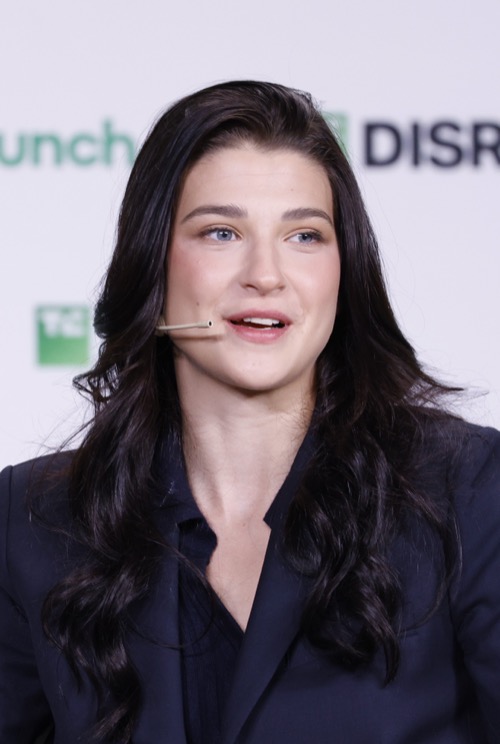
Co-founder, Phia · b. 2002 · Seattle, Washington
Two calls made by hand, not formulas. how we score →
Summary
The youngest child of Bill Gates and Melinda French Gates, privately schooled at Lakeside and then Stanford before co-founding a shopping app, Phia, in 2023 with Sophia Kianni.
Both founders say they didn't take her father's money; a venture fund and celebrity angels funded it instead. That choice didn't touch the surrounding net: zero personal cost if it failed, at every stage, before or since.
How it happened
Youngest of three children of Bill Gates and Melinda French Gates, born in Seattle in 2002. She attended Lakeside School, the same private Seattle school her father attended and where he first got hands-on computer access in 1968.
Stanford University, a Bachelor of Science in human biology with a minor in African studies, finished in three years in June 2024. Her mother delivered the commencement address that year. Her college roommate was Sophia Kianni, a climate activist who had already advised the UN Secretary-General on youth climate policy at 18.
In January 2023, while still an undergraduate, she and Kianni founded Phia, an app and browser extension that compares prices for clothing across tens of thousands of retail and resale sites. It raised an $8 million seed round led by Kleiner Perkins, with angel money from Michael Rubin, Sara Blakely, and Hailey Bieber; later reporting put total capital raised above $40 million. Both founders have said on the record that they specifically did not ask Bill Gates or Melinda French Gates to invest.
Phia launched in beta in late 2024 and picked up a run of press recognition through 2025 and early 2026: Time's Best Inventions, Time100 Next, Forbes 30 Under 30. Then, in July and August 2026, Bloomberg and TechCrunch reported allegations that the app's extension had been overriding other affiliates' referral codes to collect commissions it hadn't earned — a practice known as cookie stuffing — with later reporting alleging the founders had known internally for months. Phia said it had fixed the issue; it was suspended from the affiliate platform impact.com, lost close to half its staff, and began reversing affected transactions with partners. Whatever the company absorbed, nothing in the reporting has touched her personally.
The coded evidence
Thirteen groups, every claim sourcedDescendant, several generations settled in the Pacific Northwest
↗ en.wikipedia.orgnot established
Not established for Phoebe specifically. Her father was raised Congregational Christian; no record of her own upbringing's religious practice was found in this pass.
↗ en.wikipedia.orgA father whose net worth has been tracked above $100 billion and a mother who is separately wealthy from the same fortune. No plausible version of a failed venture would have touched her housing or income at any point.
↗ forbes.comNone established as a distinct figure, and none needed. She founded Phia as an undergraduate inside a family that could and did fund private school and an unfunded Stanford degree without strain.
↗ en.wikipedia.orgNone established.
↗ en.wikipedia.orgNone established during the 2023-2024 founding and beta period.
↗ en.wikipedia.orgThe hardship was imposed, not chosen. There was nothing to fall back on.
No period of chosen or imposed hardship appears anywhere in the record.
↗ en.wikipedia.orgFather Bill Gates, Microsoft co-founder and philanthropist; mother Melinda French Gates, former Microsoft executive and philanthropist. Parents divorced in 2021, when Phoebe was 19.
↗ en.wikipedia.orgLakeside School, the same elite private Seattle school her father attended, followed by Stanford University.
↗ en.wikipedia.orgNo owned media apparatus comparable to a production company. The platform was a Stanford social and founder network layered on top of lifelong visibility as a Gates child.
↗ en.wikipedia.orgNetwork, Credibility
Inferred from the investor roster a first-time, pre-revenue founder attracted (a top-tier venture fund plus celebrity angels), not from a documented introduction mechanism.
↗ forbes.comSophia Kianni, her Stanford roommate, who had already founded the climate-translation nonprofit Climate Cardinals and served on the UN Secretary-General's Youth Advisory Group on Climate Change from age 18, before they co-founded Phia together.
↗ en.wikipedia.org0
No outside employer is documented before Phia. She founded it while still an undergraduate, more than a year before graduating.
↗ en.wikipedia.orgNo large personal following predates the company; the audience that exists (podcast listeners, press profiles) was built alongside Phia, not before it. What did predate the company was a lifetime of media visibility as a Gates child, which is a different kind of asset than an earned following.
↗ en.wikipedia.orgBachelor of Science in human biology, minor in African studies, Stanford University, June 2024. Completed in three years.
↗ en.wikipedia.orgNone established. No indication of financial aid, loans, or need in the record; private-school and Stanford tuition sit inside a family of extreme wealth.
↗ en.wikipedia.orgNo personal-savings bootstrap phase is documented. The earliest capital on record is the seed round itself.
↗ forbes.comSophia Kianni's account, as reported, states the founders "specifically did not ask for investment from Gates's parents." No family capital into the company itself is documented.
A negative claim, reported rather than independently audited. It addresses only whether a family check was written into the company, not the surrounding safety net recorded in d1 and d5.
↗ en.wikipedia.org$8 million seed round led by Kleiner Perkins, with angel investors including retail executive Michael Rubin, Spanx founder Sara Blakely, and Hailey Bieber (Forbes). Separate 2026 reporting (TechCrunch, covering a Bloomberg investigation) describes total capital raised as "more than $40 million," with additional angels including Khloé Kardashian. The two figures are not reconciled in the public record available here, and likely reflect a later round not individually detailed.
↗ forbes.comGrew on outside venture and angel capital from the seed stage, not on revenue or a personal bootstrap phase. The "didn't take my father's money" framing concerns the source of that capital, not whether outside capital was needed at all.
↗ forbes.comNo venture-ending failure to date. The 2026 cookie-stuffing allegations were followed by a revenue drop and the departure of close to half the full-time staff, absorbed by the company rather than as a personal financial loss to Gates.
↗ techcrunch.comA mid-2020s window in which direct-to-consumer resale and AI-shopping tools were drawing venture interest, and celebrity angel rounds for young, media-visible founders had become a recognizable financing pattern.
↗ forbes.comBuilt a new app and browser extension rather than acquiring one, aggregating pricing data across more than 40,000 retail and resale sites rather than building original retail infrastructure.
↗ forbes.comShopping and fashion technology
↗ forbes.comnot established
No personal net-worth figure is disclosed or estimated for Phoebe Gates specifically. Her outcome here is a stake in an early, unprofitable startup, not a share of her father's fortune, and the two should not be conflated.
↗ forbes.comnot established
↗ forbes.comWhatever value she holds is illiquid, early-stage private equity in an unprofitable company now facing public allegations over its affiliate-tracking practices. It is not a wealth story of any established magnitude yet.
↗ forbes.comForbes 30 Under 30 (January 2026), Time100 Next rising stars list with Kianni, and Phia named to Time's Best Inventions of 2025 (October 2025).
↗ forbes.comUncapped
Structurally uncapped as venture equity, but the 2026 allegations make any near-term ceiling read especially uncertain.
↗ forbes.comDriven, Well connected, under scrutiny
↗ forbes.comPublic
↗ forbes.comAfter
↗ en.wikipedia.orgMixed
An asset through the 2025 run of press recognition, a liability once the cookie-stuffing reporting broke in mid-2026.
↗ techcrunch.comThe reputation was deliberately built, through books, press, and PR.
Active media presence including a podcast (The Burnouts) and press interviews.
↗ en.wikipedia.orgCovered partly as a serious young founder by Forbes and Time, and partly through the lens of being a Gates heir, a framing that intensified once the cookie-stuffing story broke.
↗ techcrunch.comStructural context
The cost-of-failure score comes from this person's own money and circumstances. But who they were in America carried its own weight, the same way their household or income did, and it shaped how hard the path was just as much. That part isn't in the cost-of-failure number. It's here instead.
Startups founded only by women have drawn about 2% of US venture capital, a share that has barely moved in a decade. Raising money as a woman was harder than any one record shows.
↗ techcrunch.comWhite founders are heavily overrepresented among funded companies and top-tier wealth relative to their share of the population, an edge that has nothing to do with a person's own money.
↗ techcrunch.comAmong the people recorded here — women: 68 · White subjects: 114. Representation here is who reached these outcomes, not equal odds of reaching them.
Controlled comparisons
Each holds one thing constant and varies another, so the difference is the point. A list of similar names wouldn't tell you anything.