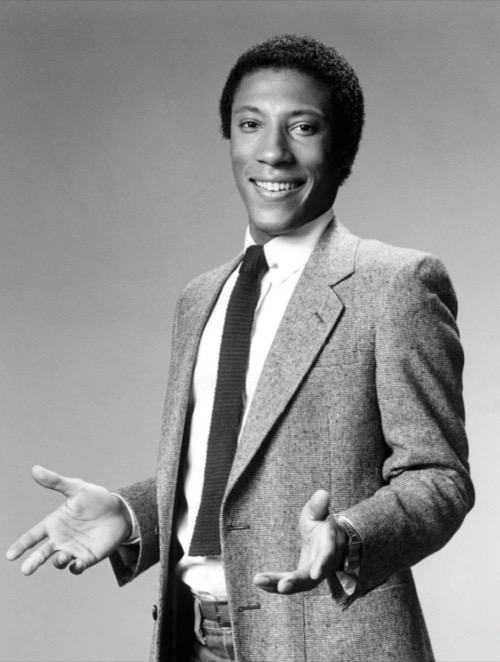
Robert Townsend
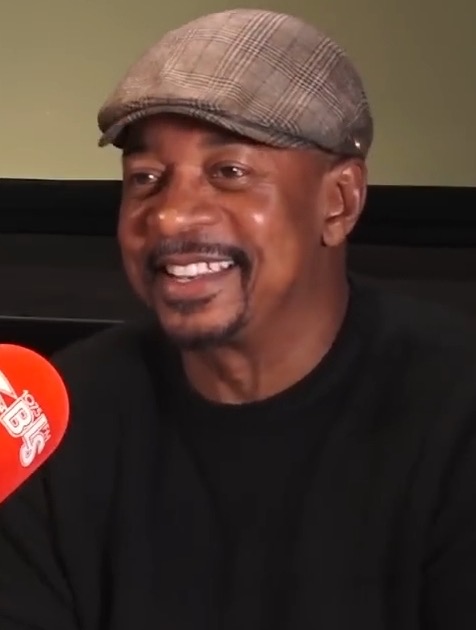
Actor, director, and writer; self-financed "Hollywood Shuffle" (1987) · b. 1957 · Chicago, Illinois
Two calls made by hand, not formulas. how we score →
Summary
He put his own acting savings and ten maxed-out credit cards into a movie about the parts Hollywood wouldn't give him, since no studio would finance it.
He shot it a few days at a time over two and a half years, sold it for enough to cover the debt, and used the opening it created to keep directing and producing his own work instead of just taking acting jobs.
How it happened
Born in Chicago in 1957, the second of four children raised by his mother Shirley, a postal worker, after his parents divorced. He grew up on the West Side dodging gangs and has said television was where he first saw a way out. He joined Chicago's Experimental Black Actors Guild at sixteen, its youngest member, and trained in improv at Second City before an uncredited role in "Cooley High" (1975) pointed him toward acting for good.
He studied under Stella Adler with New York's Negro Ensemble Company, worked stand-up clubs, and lost out to Eddie Murphy for a spot on "Saturday Night Live." A real film credit came with Norman Jewison's "A Soldier's Story" in 1984. Afterward, his own agent told him not to chase more roles like it, on the grounds that the industry "only do[es] one Black movie a year."
Rather than wait for the industry to make room, he financed a satire of the industry itself. Starting in 1984 he put in roughly $60,000 of his own savings from acting and stand-up, then charged another $40,000 across ten personal credit cards to cover the rest of "Hollywood Shuffle"'s $100,000 budget. He rented camera gear on a Thursday, claimed a Friday shoot, and returned it Monday, stretching one day's rental fee into three days of filming. It took twelve total shooting days spread across two and a half years, funded piecemeal whenever he had money again.
The Samuel Goldwyn Company bought it for distribution and released it in March 1987. When Townsend asked for money up front to cover his credit card bills, Goldwyn told him to make that the pitch instead of hiding it. The film grossed over $5 million against its $100,000 budget. That same year Eddie Murphy hired him to direct "Eddie Murphy Raw," and Townsend went on to write, direct, and produce "The Five Heartbeats" (1991) and "The Meteor Man" (1993), in which he also starred as one of the first Black superhero leads in a studio feature.
He kept working steadily across film, television, and stage rather than converting the early ownership model into a lasting asset base: directing "B*A*P*S" (1997), creating and directing the WB sitcom "The Parent 'Hood" (1995–1999), and running the Black Family Channel as president and CEO of production from 2004 to 2007 before the network folded. His estimated net worth today sits in the single-digit millions, a modest figure next to what the film that made him famous returned on its budget.
The coded evidence
Thirteen groups, every claim sourcedDescendant
↗ en.wikipedia.orgnot established
Not established. He was single and unmarried at the time of production (he married in 1990); no account of a family home or co-signer to fall back on appears in available sources.
↗ aol.comHis own irregular income from paid acting roles and stand-up sets between shooting days; no salary from the film itself, which produced no revenue until its 1987 release.
↗ yahoo.com0
Married in 1990, three years after the film's release; no children during production.
↗ en.wikipedia.orgAbout $40,000 in personal credit card debt from producing the film, carried with no guarantee of a distributor until the Samuel Goldwyn Company deal came through and let him ask for money up front to cover the bills.
↗ yahoo.comProduction stretched over roughly two and a half years and only twelve actual shooting days, stopping whenever the money ran out and resuming once he'd earned or borrowed more, with mounting personal debt and no guarantee the film would ever sell.
↗ en.wikipedia.orgThe hardship was imposed, not chosen. There was nothing to fall back on.
Necessity, not a chosen austerity narrative — there was no studio willing to finance a film like this, so self-funding on debt was the only route to making it at all.
↗ yahoo.comMother Shirley (née Jenkins) worked as a U.S. postal worker. Father's occupation is not established in available sources. Parents divorced during his childhood and he was raised primarily by his mother.
↗ encyclopedia.comChicago's West Side, a working-class Black neighborhood; he has described navigating past gangs there as a kid, with television as an early escape.
↗ encyclopedia.comAustin High School, a Chicago public school; graduated 1975.
↗ en.wikipedia.orgLeft Chicago for New York in the late 1970s to study acting and work stand-up clubs, then relocated to Los Angeles as his film and television career developed through the 1980s.
↗ en.wikipedia.orgHis own agent discouraged him from pursuing more dramatic film roles after "A Soldier's Story," telling him the industry "only do[es] one Black movie a year" — a direct statement of the ceiling Black actors faced at the time.
↗ yahoo.comTurned the industry's treatment of Black actors into the subject of the film itself. "Hollywood Shuffle" satirizes the narrow, stereotyped roles Black actors were sent out for, built directly from what he had personally experienced auditioning.
↗ en.wikipedia.orgAn uncredited role in "Cooley High" (1975), which he later said changed his life and pointed him toward acting as a career.
↗ en.wikipedia.orgWrote, financed, produced, and directed "Hollywood Shuffle" entirely outside the studio system, with no agent, studio backing, or industry sponsor behind the production itself.
↗ en.wikipedia.org16
Joined Chicago's Experimental Black Actors Guild at sixteen, its youngest member.
↗ encyclopedia.comSome visibility from stand-up, "Cooley High," and "A Soldier's Story," but no substantial pre-existing audience or fan base of the kind that guaranteed financing or distribution for the first film.
↗ encyclopedia.comTrained in improv at Chicago's Second City, then studied acting under Stella Adler through New York's Negro Ensemble Company.
↗ encyclopedia.comPassed over for "Saturday Night Live" in 1980–81 in favor of Eddie Murphy. The two later worked together anyway: Murphy hired Townsend to direct "Eddie Murphy Raw" the same year "Hollywood Shuffle" came out.
↗ en.wikipedia.orgJoined Chicago's Experimental Black Actors Guild at sixteen as its youngest member and trained in improv at Second City.
↗ encyclopedia.comNo completed degree. Attended Illinois State University for about a year studying radio-TV communications before leaving to pursue acting; one source describes further uncompleted coursework in New York.
Single-source detail on the exact institutions; not independently corroborated.
↗ encyclopedia.comNew York's Negro Ensemble Company, where he trained under Stella Adler, functioned as a network node for Black theater actors of his generation.
↗ encyclopedia.comRoughly $60,000 of his own savings from paid acting and stand-up work, put into producing "Hollywood Shuffle" starting in 1984.
↗ encyclopedia.comIt needed capital up front, before it earned anything.
Production was funded entirely from savings and debt; no revenue existed until the 1987 release.
↗ en.wikipedia.orgNo family assets or co-signer. Ten personal credit cards, obtained on his own credit as an intermittently working actor, covered the remaining $40,000 of the budget.
↗ yahoo.comThe entire $100,000 production budget came from his own acting and stand-up income plus credit card debt; no investors or studio money were involved.
↗ encyclopedia.comBorrowed additional money from friends to close the gap between his savings, his credit card charges, and the film's final costs.
↗ aol.comFully self-financed with no outside capital during production. The Samuel Goldwyn Company later paid an acquisition and distribution deal that covered the credit card debt once the finished film sold.
↗ yahoo.comUsed the money and visibility from "Hollywood Shuffle"'s success to keep directing and producing his own material — "The Five Heartbeats" and "The Meteor Man" as writer-director-producer — rather than only taking fee-for-hire acting work.
↗ en.wikipedia.orgSold the finished film to the Samuel Goldwyn Company for theatrical distribution in 1987. Whether Townsend retained the underlying copyright versus licensing or selling it outright is not clearly established in available public sources.
He participated in a 2022 Criterion Collection anniversary release and interview, consistent with some ongoing rights or creative involvement, but the deal terms themselves are not published.
↗ en.wikipedia.orgPersonal experience. Built directly from being sent out for stereotyped, demeaning roles, and from his agent telling him the industry made only one Black-cast film a year.
↗ yahoo.comRented film equipment claiming a one-day Friday shoot, then returned it the following Monday, stretching a single day's rental fee across three days of filming.
↗ en.wikipedia.orgSelf — funded from his own acting and stand-up income and his own credit card debt, with no family, investor, or employer backing.
↗ yahoo.comPaid acting and stand-up work between shooting days sustained him through the roughly two-and-a-half-year, stop-and-start production.
↗ en.wikipedia.orgLos Angeles, where he had relocated to pursue film and television work.
↗ en.wikipedia.orgBuilt. Wrote an original script from his own experience and produced it from nothing, rather than acquiring or remaking existing material.
↗ en.wikipedia.orgFilm and television
↗ en.wikipedia.org6000000
No filing or disclosed methodology exists for a private individual. Aggregator estimates cluster between roughly $5M and $8M as of 2026; band only, never treated as a precise figure.
↗ worthflux.comAggregator
↗ worthflux.com2026
↗ worthflux.comCareer income has come mainly from directing, producing, and acting fees across four decades rather than from a single owned, appreciating asset like a studio or content library.
↗ encyclopedia.comDirected and starred in "The Meteor Man" (1993), one of the first major studio features with a Black superhero lead. Later served as president and CEO of production for the Black Family Channel, a cable network aimed at Black family audiences, from 2004 to 2007.
↗ hunewsservice.com14
From joining the Experimental Black Actors Guild at 16 (c. 1973) to the 1987 release.
↗ en.wikipedia.orgCapped
Later career is mostly fee-for-work directing, producing, and acting rather than a durable owned asset base; he never converted the early ownership model of "Hollywood Shuffle" into a studio or library at the scale some peers reached.
↗ worthflux.comTrailblazer, independent filmmaker, a mentor to a generation of Black filmmakers
↗ yahoo.comPress
↗ yahoo.comAfter
The trailblazer reputation formed from "Hollywood Shuffle" itself, not before it.
↗ en.wikipedia.orgAsset
The reputation for independence and resourcefulness helped bring later directing work, including "Eddie Murphy Raw" the same year.
↗ en.wikipedia.orgStructural context
The cost-of-failure score comes from this person's own money and circumstances. But who they were in America carried its own weight, the same way their household or income did, and it shaped how hard the path was just as much. That part isn't in the cost-of-failure number. It's here instead.
Men hold most of the ownership and gatekeeping across the creative and media industries, the default that recognition and deals flow toward.
↗ assets.uscannenberg.orgIn the creative and media industries, recognition comes far more easily to underrepresented creators than the ownership it should turn into. Among 2023's top-grossing film directors, for one measure, eight were Black.
↗ assets.uscannenberg.orgAmong the people recorded here — men: 115 · Black subjects: 58. Representation here is who reached these outcomes, not equal odds of reaching them.
Controlled comparisons
Each holds one thing constant and varies another, so the difference is the point. A list of similar names wouldn't tell you anything.