William Boeing
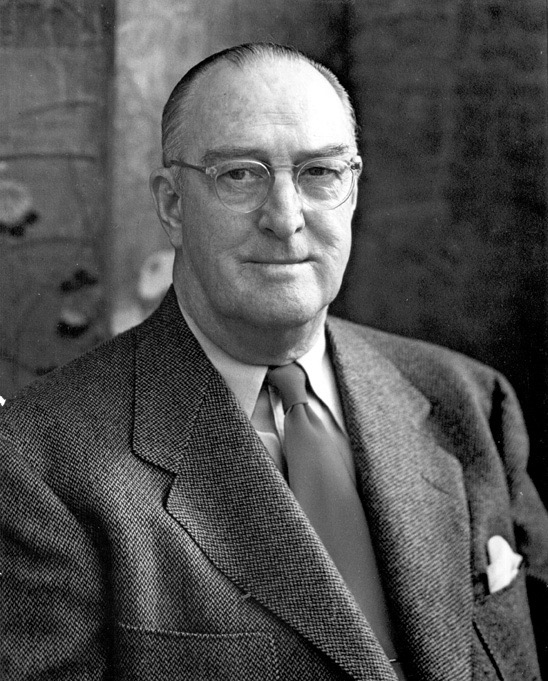
born William Edward Boeing
Founder of The Boeing Company · b. 1881–1956 · Detroit, Michigan
Two calls made by hand, not formulas. how we score →
Summary
His father, a German immigrant, had already turned Minnesota timber and iron rights into a fortune before dying when William was eight.
Private schools and two unfinished years at Yale cost him nothing he couldn't afford. He put that inheritance into a timber business, then a seaplane hobby that became an aircraft company, then watched a 1934 antitrust law force him out.
How it happened
Boeing was born in Detroit on October 1, 1881, to Wilhelm Böing, a German immigrant from Hohenlimburg who had arrived in the US in 1868 with letters of introduction but no money, and Marie Ortmann, daughter of a Viennese immigrant lumberman. Wilhelm went to work for his future father-in-law, married into the business, and built his own fortune in Minnesota timber and iron-ore mineral rights before branching into banking, manufacturing, and insurance. He died of influenza in 1890, when William was eight, leaving him a substantial inheritance. Marie remarried and later died in 1910, leaving an estate of close to $1 million, worth roughly $24 million in 2010 dollars, that added a second inheritance on top of the first.
After his father's death Boeing was sent to a boarding school in Vevey, Switzerland, then to St. Paul's School in Concord, New Hampshire for a preparatory year. He enrolled in Yale's Sheffield Scientific School as an engineering student in 1899 and left after about two years without a degree, in part, by some accounts, over friction with his stepfather. In 1903, at 22, he moved to Hoquiam, Washington, on Grays Harbor, where his father had already bought timberland, and went into the lumber business himself, later forming the Greenwood Timber Company. He did well enough shipping lumber east through the newly opened Panama Canal that by 1908 he'd relocated to Seattle and bought the Heath Shipyard on the Duwamish River, mainly to build and service his own yachts.
On July 4, 1915, pilot Terah Maroney took Boeing and Navy officer George Conrad Westervelt up for a ride over Lake Washington in a small homebuilt seaplane. Boeing was hooked, paid for flying lessons at Glenn Martin's school in Los Angeles that same year, and bought one of Martin's planes. When it turned out to be unreliable and slow to repair, he and Westervelt decided they could design something better themselves. Their B&W Model 1 flew for the first time in June 1916, and Boeing incorporated Pacific Aero Products Company that July, financing it out of his own timber fortune and building it in the shipyard building he already owned. When the US entered World War I in April 1917, he renamed it Boeing Airplane Company, and the Navy's order for 50 training planes brought in $575,000, close to $10 million in 2010 dollars, that funded the company's first real expansion.
Boeing's own pilot flew the first international airmail run into the US, from Vancouver, in 1919. After Congress opened commercial airmail to private contractors, he formed Boeing Air Transport in 1927 and won the San Francisco–Chicago route on an $800,000 bond; by 1928 the company was carrying roughly 30 percent of the country's airmail and passenger traffic. In 1929 he merged his manufacturing and airline interests with Frederick Rentschler's Pratt & Whitney into United Aircraft and Transport Corporation, a holding company that bought up smaller carriers and consolidated them into United Air Lines. By the end of the 1920s it was one of the largest industrial groupings in the country, spanning engines, airframes, and the airline itself.
A 1933–34 Senate investigation led by Hugo Black into how airmail contracts had been awarded turned into a public airing of the whole industry's structure, and Boeing was called before the committee and criticized for running a monopoly. He was not personally charged with a crime. But he was embittered by the hearings, and when the Air Mail Act of 1934 barred manufacturers from also owning airlines, he chose to leave rather than keep dealing with Washington. On September 18, 1934, at 52, he resigned as UATC's chairman and sold his stock; the conglomerate split into United Aircraft, United Air Lines, and Boeing Airplane Company. He received the Daniel Guggenheim Medal that same year and never held Boeing stock again.
Boeing spent his later years developing land north of Seattle, including what became Richmond Beach, Blue Ridge, and Innis Arden, and running Aldarra Farms, a working ranch near Fall City where he bred thoroughbred horses and raised cattle and sheep. The University of Washington's Seattle Civil Rights and Labor History Project has documented that deeds on Boeing's developments carried racially restrictive covenants barring sale or rental to anyone "not of the White or Caucasian race," a practice common among developers of that era; some of those covenants are still on the books in Innis Arden's homeowners-association bylaws today.
He died aboard his yacht Taconite off the Washington coast on September 28, 1956, three days short of his 75th birthday. His estate was valued at about $22 million, roughly $176 million in 2010 dollars, built almost entirely from real estate and other holdings rather than the company that carried his name.
The coded evidence
Thirteen groups, every claim sourcedCoarse public-record coding; race is a noisy, interpretive category applied retrospectively to a 19th-century subject.
↗ en.wikipedia.orgSecond generation — born in Detroit to a German immigrant father and a mother whose own father had immigrated from Vienna.
↗ immigrantentrepreneurship.orgnot established
Not established in the sources consulted; his father was active in Detroit's German immigrant community and helped fund the city's first art museum, but a specific denomination raised is not documented.
↗ en.wikipedia.orgnot established
His father maintained ties to Detroit's German-immigrant business network and collected a library of German literature, but whether German was spoken in the home is not established.
↗ immigrantentrepreneurship.orgNo move was made for a partner's career.
He married in 1921, well after his moves to Grays Harbor and Seattle were already driven by his own business interests.
↗ en.wikipedia.orgA wealthy family with a stately Detroit home and, after his father's death, a trust-funded inheritance; no housing insecurity is documented at any point in his life.
↗ immigrantentrepreneurship.orgHis own inherited capital and the profits of his timber business funded both his early ventures and, later, the operating losses of Pacific Aero Products/Boeing Airplane Company in its unprofitable first years.
↗ immigrantentrepreneurship.org0
Unmarried and without children through the 1903-1917 founding period; he married in 1921.
↗ en.wikipedia.orgNo money was owed or sent outward during the build.
↗ immigrantentrepreneurship.orgnot established
No personal debt is documented at any founding stage; his ventures ran on his own inherited and earned capital rather than borrowed money.
↗ immigrantentrepreneurship.orgnot established
No housing loss or comparable instability is documented at any stage of his life.
↗ en.wikipedia.orgFather Wilhelm Böing built a fortune in Minnesota timber and iron-ore mineral rights and later expanded into banking, manufacturing, and insurance. Mother Marie Ortmann Böing was the daughter of a Viennese immigrant lumberman and, after Wilhelm's death, ran the household and later remarried.
↗ immigrantentrepreneurship.orgA parent worked for themselves, the strongest known predictor of founding.
His father ran his own timber, mineral-rights, and later banking and manufacturing businesses.
↗ immigrantentrepreneurship.org2
Two sisters, Caroline and Marguerite, per genealogical and biographical accounts.
↗ immigrantentrepreneurship.orgMaternal grandfather Karl Ortmann, a Viennese immigrant lumberman in Detroit, employed and then took on Wilhelm Böing as a business partner and son-in-law, effectively the origin point of the family's timber fortune.
↗ immigrantentrepreneurship.orgHis father built substantial standing in Detroit's German immigrant business community — a fine home, a major private library, and funding for the city's first art museum in 1883 — though that standing was cut short by his death when William was eight.
↗ immigrantentrepreneurship.orgnot established
His schooling in Switzerland, New Hampshire, and at Yale was paid from family wealth and inheritance, not from any documented parental sacrifice or extra income aimed at tuition.
↗ immigrantentrepreneurship.orgnot established
His father died when he was eight, before any sanction of an unconventional path could apply; no comparable account involving his mother or stepfather is documented.
↗ en.wikipedia.orgNo formal change of guardian; raised by his mother after his father's 1890 death, and she remarried while he was still a boy. Some accounts attribute friction with his stepfather to his decision to leave Yale.
↗ immigrantentrepreneurship.orgFather Wilhelm Böing died of influenza in 1890, when William was eight.
↗ immigrantentrepreneurship.orgDetroit, Michigan, followed by boarding school in Vevey, Switzerland, a preparatory year at St. Paul's School in Concord, New Hampshire, and two years at Yale in New Haven, Connecticut, before relocating to Hoquiam, Washington in 1903.
↗ immigrantentrepreneurship.orgA boarding school in Switzerland, an elite New England preparatory school (St. Paul's), and Yale's Sheffield Scientific School.
↗ immigrantentrepreneurship.orgnot established
Not applicable; his childhood in Detroit predates the 1930s HOLC maps by decades.
↗ en.wikipedia.orgGrays Harbor was an active Pacific Northwest timber boom region when he arrived in 1903, and his father had already purchased land there; Seattle, where he later based both his shipyard and his aircraft company, was a growing industrial and shipbuilding hub.
↗ en.wikipedia.orgHis father's timber and mineral-rights business gave him a direct family template for the industry he himself entered at 22 — his father had already bought the Grays Harbor, Washington timberland William went on to work.
↗ en.wikipedia.orgSeveral domestic and international moves before adulthood — Detroit to Switzerland, then to New Hampshire, then to Connecticut for Yale, then to Hoquiam and later Seattle, Washington — all initiated by the family or by Boeing himself rather than by economic necessity.
↗ immigrantentrepreneurship.orgnot established
No single named individual opened a door for him into either the timber or aviation business; both followed from his own capital and initiative.
↗ en.wikipedia.orgHis own timber business, Greenwood Timber Company, run from 1903, supplied the capital and business experience that let him fund the aviation venture over a decade later; it was self-built rather than an employer's platform.
↗ immigrantentrepreneurship.orgCapital, Skill
↗ immigrantentrepreneurship.orgGeorge Conrad Westervelt, a US Navy officer and trained aeronautical engineer, co-designed the B&W Model 1 seaplane with Boeing after the two met through Boeing's flying-lesson circle in 1915-16.
↗ en.wikipedia.org0
He had no prior professional experience in aviation before founding the company; his entire background before 1915 was in timber and shipbuilding.
↗ en.wikipedia.orgnot established
↗ en.wikipedia.org0
He never worked as anyone else's employee as an adult; he went directly from Yale into his own timber business in 1903.
↗ en.wikipedia.orgPaid for flying lessons at Glenn L. Martin's flying school in Los Angeles in late 1915, and bought one of Martin's aircraft, before deciding he and Westervelt could design a better one themselves.
↗ en.wikipedia.orgOwning the Heath Shipyard on Seattle's Duwamish River from 1908, bought originally to build and service his own yachts, gave him manufacturing infrastructure most aspiring aircraft builders of the era did not have when he repurposed it to build the B&W seaplane.
↗ immigrantentrepreneurship.orgAttended Yale University's Sheffield Scientific School as an engineering student, 1899 to roughly 1901-02, but left without completing a degree.
↗ immigrantentrepreneurship.orgnot established
No debt is documented; his education was paid from family wealth and inheritance.
↗ immigrantentrepreneurship.orgnot established
Not established in the sources consulted; unlikely given his independent wealth.
↗ en.wikipedia.orgA direct, elite private-school-to-Ivy-League pathway — Swiss boarding school, an American preparatory school, then Yale — funded entirely by family and inherited wealth rather than merit-based admission or financial aid.
↗ immigrantentrepreneurship.orgHis inherited capital, from his father's 1890 estate and later his mother's 1910 estate, funded his 1903 move into the timber business at Grays Harbor and, later, the founding losses of Pacific Aero Products Company.
↗ immigrantentrepreneurship.orgInherited his father's estate on Wilhelm Böing's 1890 death, then a second inheritance of close to $1 million (about $24 million in 2010 dollars) on his mother Marie's death in 1910.
↗ immigrantentrepreneurship.orgTwo inheritances: his father's Minnesota timber and iron-ore fortune in 1890, and his mother's roughly $1 million estate in 1910. Both funded his business ventures directly rather than passing through a trust he had no access to.
↗ immigrantentrepreneurship.orgIt needed capital up front, before it earned anything.
Pacific Aero Products/Boeing Airplane Company ran at a loss in its first years, subsidized by Boeing's personal fortune, until wartime Navy contracts began generating real revenue in 1917.
↗ immigrantentrepreneurship.orgnot established
Not applicable; he funded ventures with cash from inheritance and timber profits rather than borrowing against collateral.
↗ immigrantentrepreneurship.orgPersonally covered the aircraft company's operating losses through its early unprofitable years from his own timber-business income and inherited capital.
↗ immigrantentrepreneurship.orgnot established
No outside investor round is documented at founding; the company was wholly self-financed by Boeing until wartime and later airmail revenue and the 1929 UATC consolidation.
↗ immigrantentrepreneurship.orgWholly personally financed from 1916 to roughly 1917-19, then funded increasingly by government contract revenue (Navy orders, then airmail bonds and routes) through the 1920s, before being folded into the publicly held United Aircraft and Transport Corporation in 1929.
↗ immigrantentrepreneurship.orgReinvested his mother's 1910 inheritance and his timber-business profits into the aviation venture rather than spending them, and later reinvested Boeing Air Transport's airmail earnings into the buildup that became United Aircraft and Transport Corporation.
↗ immigrantentrepreneurship.orgOwned the former Heath Shipyard building on the Duwamish River outright before ever building an airplane — bought in 1908 for his own yachts — and converted it directly into the company's first manufacturing plant, the "Red Barn."
↗ immigrantentrepreneurship.orgPersonal experience: a 1915 seaplane ride sparked his interest, and frustration with the unreliability of a Glenn Martin aircraft he bought and had to have serviced convinced him and Westervelt they could design something better.
↗ en.wikipedia.orgHeld straightforward majority ownership and control of his own company through the 1910s and 1920s; that changed with the 1929 UATC consolidation and ended completely in 1934, when the antitrust breakup and his own resignation left him with neither ownership nor control of any of the successor companies.
↗ en.wikipedia.org0
His earlier timber business was successful, not a failed attempt; no documented failed venture precedes Pacific Aero Products.
↗ immigrantentrepreneurship.orgBoeing personally absorbed the aircraft company's early operating losses from his own fortune rather than any investor, bank, or family member other than himself.
↗ immigrantentrepreneurship.orgWWI created sudden demand for military aircraft, funding the young company's first real growth; the 1925 Kelly Act and the 1927 Contract Air Mail program then opened commercial airmail to private carriers, the opportunity Boeing Air Transport was built to capture.
↗ immigrantentrepreneurship.orgSeattle, Washington, where he had already relocated for his shipyard and yachting interests before founding the aircraft company.
↗ en.wikipedia.orgThe 1927 airmail contract win and the 1929 UATC consolidation depended on a regulatory structure that let a single company own manufacturing, engines, and the airline itself; the 1934 Air Mail Act closed that structure permanently by barring the combination.
↗ en.wikipedia.orgBuilt Pacific Aero Products/Boeing Airplane Company from nothing starting in 1916; later grew United Aircraft and Transport Corporation substantially through acquisition, buying up smaller airlines and consolidating them into United Air Lines.
↗ immigrantentrepreneurship.org22
Age when he began operating his own capital-generating business, the Grays Harbor timber venture, in 1903 — distinct from the 1916 aviation founding at 34.
↗ immigrantentrepreneurship.org53
From the 1903 start of his own timber business to his 1956 death, across timber, aviation, and later real estate and horse breeding.
↗ immigrantentrepreneurship.orgBuilt and based the aircraft company in Seattle rather than moving to an established East Coast manufacturing or finance center, a deliberate choice that let Boeing Airplane Company grow into the dominant regional industrial employer rather than one of many competitors.
↗ en.wikipedia.orgSpent substantially on yachts (including the Taconite), a large working horse-breeding and cattle ranch (Aldarra Farms), and real-estate development in his later decades; a detailed consumption record relative to peak wealth is not established.
↗ immigrantentrepreneurship.orgAircraft manufacturing and commercial aviation; later real estate and thoroughbred horse breeding
↗ en.wikipedia.org22000000
Estate valuation at his 1956 death, reported at roughly $22 million ($176 million in 2010 dollars, and higher still in 2026 terms). This figure reflects his diversified late-life holdings — real estate and horse breeding — since he sold his last Boeing shares in 1934 and, per the same source, "did not own a single share of Boeing stock" at death. His paper position in United Aircraft and Transport Corporation at its late-1920s peak, before the 1934 forced breakup, was almost certainly larger but is not reliably quantified in the sources consulted; magnitude here is coded from the death-estate figure in inflation-adjusted context, not the unquantified 1920s peak.
↗ immigrantentrepreneurship.orgJournalistic estimate
↗ immigrantentrepreneurship.orgnot established
No credible peak-income figure is established in the sources consulted, for either his aviation-era or later real-estate-era earnings.
↗ en.wikipedia.orgHis wealth at death was realized and diversified — real estate and horse-breeding holdings — rather than paper equity in the aviation company, since the 1934 forced divestiture had already converted his Boeing/UATC stake to cash years earlier.
↗ immigrantentrepreneurship.orgAn ownership fortune throughout — inherited capital compounded first through timber, then through an aviation company and conglomerate he owned and ran outright, then through real estate and ranching once he no longer held aviation equity at all.
↗ immigrantentrepreneurship.orgFounded the company that became one of the largest aerospace manufacturers in history; received the Daniel Guggenheim Medal in 1934; posthumously inducted into the National Aviation Hall of Fame (1966) and the International Air & Space Hall of Fame (1984).
↗ en.wikipedia.org12
From the 1916 founding of Pacific Aero Products Company to Boeing Air Transport carrying roughly 30 percent of US airmail and passenger traffic by 1928.
↗ immigrantentrepreneurship.orgUncapped
↗ en.wikipedia.orgA 1933-34 Senate investigation chaired by Hugo Black into airmail contract awards led to the Air Mail Act of 1934, which barred a single company from owning both aircraft manufacturing and an airline. It forced the breakup of United Aircraft and Transport Corporation, which Boeing chaired, into three separate companies. Boeing was called before the committee and criticized as running a monopoly; he was not personally charged with, or convicted of, any crime.
↗ en.wikipedia.orgnot established
No criminal charges against Boeing personally are documented; a separate contempt-of-Congress conviction in the same hearings was against a Commerce Department official, William MacCracken, not Boeing.
↗ en.wikipedia.orgnot established
↗ en.wikipedia.orgnot established
↗ en.wikipedia.orgnot established
↗ en.wikipedia.orgDuring
The Black Committee hearings and the forced UATC breakup occurred in 1933-34, while the conglomerate he had built was still operating at scale, and directly ended that period of growth.
↗ en.wikipedia.orgProduced the advantage
The vertically integrated structure the committee called monopolistic — owning manufacturing, engines, and the airline together — is also what let UATC dominate the airmail and passenger market in the late 1920s; the regulatory response addressed the same structure that had produced the advantage.
↗ en.wikipedia.orgLegal gray
The manufacturer-airline holding-company structure was entirely legal when built in 1929; the 1934 Act barred it only going forward, and it was never the subject of a criminal or civil finding against Boeing personally.
↗ en.wikipedia.orgNone
No fine or personal financial liability is documented. The real cost was forced divestiture and the end of his direct involvement in the industry he founded, not a financial penalty; his personal fortune was unaffected by the breakup itself.
↗ en.wikipedia.orgaviation pioneer and visionary industrialist, accused by the 1933-34 Black Committee of running a "monopoly", embittered founder who chose to walk away from the industry rather than keep dealing with federal regulators
Separately, the University of Washington's Seattle Civil Rights and Labor History Project has documented that deeds on real-estate developments Boeing subdivided north of Seattle between 1935 and 1944 (including Richmond Beach and Innis Arden) carried racially restrictive covenants barring sale or rental to anyone "not of the White or Caucasian race" — a practice common among developers of that era, and one still reflected in some of those neighborhoods' HOA bylaws today. This is documented historical record about his own real-estate conduct, not a third-party allegation.
↗ en.wikipedia.orgPress
The "monopolist" characterization was formed in and spread through widely covered congressional hearings and contemporaneous press coverage.
↗ en.wikipedia.org3
Wikipedia's Air Mail scandal article, the Immigrant Entrepreneurship project entry, and the University of Washington covenants project each independently document separate parts of the record.
↗ en.wikipedia.orgAfter
The "monopolist" reputation formed specifically during the 1933-34 hearings, after nearly two decades of building the company and conglomerate.
↗ en.wikipedia.orgMixed
An asset for decades in raising capital and credibility as a builder of a major industrial enterprise; a liability specifically during the 1933-34 hearings, when the "monopolist" label helped end his direct industry involvement.
↗ en.wikipedia.orgThe reputation accrued from behaviour rather than being manufactured.
No deliberate image-building program (memoir, media campaign) is documented; his reputation largely emerged from press coverage of the company and later the hearings.
↗ en.wikipedia.orgReceived the Daniel Guggenheim Medal the same year as the forced breakup (1934), and was posthumously inducted into the National Aviation Hall of Fame (1966) and International Air & Space Hall of Fame (1984); the company that carries his name substantially outgrew the "monopolist" framing of 1934 in the longer historical record.
↗ en.wikipedia.orgStructural context
The cost-of-failure score comes from this person's own money and circumstances. But who they were in America carried its own weight, the same way their household or income did, and it shaped how hard the path was just as much. That part isn't in the cost-of-failure number. It's here instead.
Men founded the companies that took nearly all the venture funding and almost every top outcome, a tailwind that never shows up in one person's own circumstances.
↗ techcrunch.comWhite founders are heavily overrepresented among funded companies and top-tier wealth relative to their share of the population, an edge that has nothing to do with a person's own money.
↗ techcrunch.comImmigrants and their children are overrepresented among America's biggest companies, as founders and as senior leaders. They got there through the visa, credential, and network hurdles that make the path harder to even start down.
↗ forbes.comAmong the people recorded here — men: 115 · White subjects: 74. Representation here is who reached these outcomes, not equal odds of reaching them.
Controlled comparisons
Each holds one thing constant and varies another, so the difference is the point. A list of similar names wouldn't tell you anything.