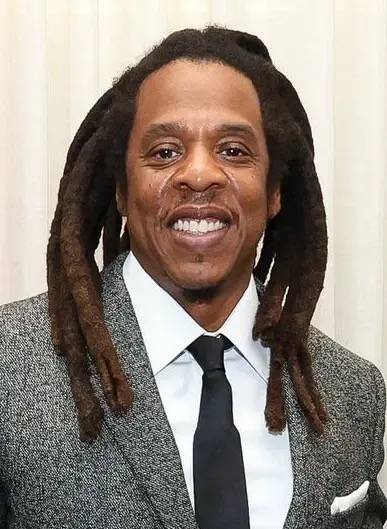
T. Boone Pickens

born Thomas Boone Pickens Jr.
Founder of Mesa Petroleum; oil magnate, 1980s corporate raider, and BP Capital Management hedge fund manager · b. 1928–2019 · Holdenville, Oklahoma
Two calls made by hand, not formulas. how we score →
Summary
His father leased mineral rights for Phillips Petroleum, a steady job that gave him a stable start in Depression-era Oklahoma.
A geology degree and three years at Phillips led to a $2,500 loan in 1954 that became Mesa Petroleum. He made his real fortune not by finding oil but by challenging bigger oil companies for their stock, then running a hedge fund on the same instinct.
How it happened
Pickens was born in Holdenville, Oklahoma, on May 22, 1928, the only child of Thomas Boone Pickens Sr., who leased mineral rights for Phillips Petroleum, and Grace Molonson Pickens, who ran local rationing programs during World War II. It was a working household but a stable one: his father had a salaried job inside the industry rather than a wildcat income of his own. When Oklahoma's oil boom went bust in the late 1930s, the family moved to Amarillo, Texas, where his father kept working the same trade.
He went to Texas A&M on a basketball scholarship, lost it after an elbow injury, and transferred to Oklahoma A&M College, now Oklahoma State University, where he earned a geology degree in 1951. Phillips Petroleum hired him as a field geologist, the same company his father worked for, but he found the bureaucracy stifling and left in 1954. He borrowed $2,500 and, with two Amarillo businessmen who each took a quarter interest in exchange for arranging a bank line of credit, started a small wildcatting outfit called Petroleum Exploration.
The company drilled steadily through the late 1950s and went public in 1964 as Mesa Petroleum. In 1969 he made his first big move, buying Hugoton Production Company, a gas producer roughly thirty times Mesa's size, on the argument that Hugoton's reserves were worth more than the market was paying for its stock. By the early 1980s Mesa's assets had passed two billion dollars, and Pickens had worked out that the same argument applied to companies far larger than his own.
Starting with a run at Cities Service in 1982, Pickens spent the decade going after oil companies many times Mesa's size: Gulf, General American, Phillips, Unocal. He rarely won control of any of them, but he usually made money anyway, either by selling his stake back at a premium once the target found a friendlier buyer or through the bidding war his interest set off. Critics called it greenmail; Pickens argued he was only doing what complacent boards should have done for shareholders themselves, and he later founded the United Shareholders Association to push for governance reforms, including a one-share-one-vote rule the SEC eventually adopted. Time put him on its cover during the 1984 Gulf Oil fight, and by mid-decade he was reportedly the highest-paid executive in the country.
Mesa itself struggled through the 1990s under debt from a bad bet on natural gas prices, and in 1996 Pickens was pushed out of the company he had built over four decades after investor Richard Rainwater took control of it. He started over the next year with BP Capital Management, an energy-focused hedge fund built on the same read of commodity markets rather than on drilling. It worked spectacularly for a while: Forbes put his net worth at roughly three billion dollars in 2007, after a fund that reportedly earned him close to a billion dollars the year before and considerably more in 2007 itself.
In 2008 he rolled out the Pickens Plan, a heavily promoted proposal to shift American trucking to natural gas and build out wind power across the Great Plains, spending tens of millions of dollars on ads before quietly dropping the wind piece once gas prices fell. He had also funded the 2004 Swift Boat Veterans ads questioning John Kerry's Vietnam record, one of the more contested episodes of his political giving. Natural gas turned on him again in 2008, and his fortune fell through the following decade; Forbes had him at around $500 million by 2016. He gave away more than a billion dollars over his life, including roughly $652 million to Oklahoma State University, and died in Dallas in September 2019 at ninety-one.
The coded evidence
Thirteen groups, every claim sourcedDescendant; family present in the American South and then Oklahoma for multiple generations before his birth, not an immigration story.
↗ en.wikipedia.orgEnglish; no indication of another home language.
↗ en.wikipedia.orgNo move was made for a partner's career.
Not documented either way; his geographic moves (Amarillo, then Dallas) tracked his own business, not a spouse's career, across five marriages.
↗ en.wikipedia.orgA stable, salaried father's household in Depression-era Oklahoma and then Texas gave him a home to return to throughout his youth; no housing insecurity is documented at any point in his life.
↗ en.wikipedia.orgEarned a geologist's salary at Phillips Petroleum from 1951 to 1954 before striking out on his own; his first company then ran on a bank line of credit arranged by two local partners rather than on his unsupported personal savings alone.
↗ tshaonline.orgnot established
Married in 1949 and had four children with his first wife, but the exact number of dependents at the time he left Phillips in 1954 is not established in the sources consulted.
↗ en.wikipedia.orgNo money was owed or sent outward during the build.
↗ en.wikipedia.orgNo personal recourse debt is documented at the 1954 startup; the company itself operated on a line of credit backed by his two partners, not on Pickens' personal liability.
↗ tshaonline.orgnot established
No housing loss or comparable instability is documented at any stage.
↗ en.wikipedia.orgnot established
No period of visible poverty is documented. The early wildcatting years carried real business risk on borrowed capital, but not personal hardship.
↗ en.wikipedia.orgFather Thomas Boone Pickens Sr. worked in Phillips Petroleum's mineral-lease and land-acquisition side of the business, described in some sources as a landman and in others as a company attorney; mother Grace Molonson Pickens managed the household and ran local rationing operations during World War II.
↗ tshaonline.orgNeither parent was self-employed.
His father was a salaried Phillips Petroleum employee, not self-employed.
↗ tshaonline.orgA great-great-grandfather, Ezekiel Pickens, served as lieutenant governor of South Carolina in the early nineteenth century, but no sustained family wealth, standing, or mentorship connects that distant lineage to his own start; his immediate family was middle-class.
↗ en.wikipedia.orgA distant, multigenerational political lineage on his father's side (a nineteenth-century South Carolina lieutenant governor) with no accompanying capital or introductions that reached him directly.
↗ en.wikipedia.orgNo account of active family sponsorship into an unconventional path; the expectation was an ordinary route of college and then steady work, and the basketball scholarship that got him out of Amarillo was his own doing rather than a family-financed one.
↗ tshaonline.orgHoldenville, Oklahoma, then Amarillo, Texas after the family relocated when the local oil boom went bust in the late 1930s.
↗ en.wikipedia.orgPublic schools; Amarillo High School, where he was a standout basketball player.
↗ tshaonline.orgGrew up in Oklahoma and Texas Panhandle oil country, with direct childhood exposure to the industry through his father's lease work.
↗ tshaonline.orgHis father's work leasing oil and gas rights for Phillips Petroleum put him around the industry from childhood, and Pickens went straight to work for the same company as a field geologist after college.
↗ tshaonline.orgOne domestic move as a child, from Holdenville to Amarillo, when Oklahoma's oil boom ended in the late 1930s; no international migration.
↗ en.wikipedia.orgnot established
No single named individual opened the door to Phillips or to his own company; both followed a fairly ordinary route.
↗ en.wikipedia.orgPhillips Petroleum gave him three years of field-geology experience and industry credibility, which made him a plausible operator when he left to start his own company; it did not supply him capital.
↗ tshaonline.orgCredibility, Skill
↗ tshaonline.orgTwo Amarillo businessmen, Eugene McCartt and John O'Brien, each took a quarter interest in the new company in exchange for arranging a bank line of credit; further Amarillo investors later put in capital so the firm could drill its own wells rather than only broker leases.
↗ tshaonline.org1
Phillips Petroleum was his only outside employer before becoming an owner-operator.
↗ tshaonline.orgBachelor's degree in geology, Oklahoma A&M College (now Oklahoma State University), 1951.
↗ tshaonline.orgPublic land-grant university, direct undergraduate degree; started on a basketball scholarship at Texas A&M, then transferred to Oklahoma A&M after an elbow injury ended the scholarship, and finished there by his own or family means, which is not itemized in the sources consulted.
↗ forbes.comBorrowed $2,500 in 1954 to start Petroleum Exploration Inc., his first wildcatting company, in Amarillo.
↗ tshaonline.orgnot established
No family capital transfer into the founding is documented; the founding loan and later credit line came from himself and outside partners.
↗ en.wikipedia.orgnot established
↗ en.wikipedia.orgIt paid its own way from the start. Revenue came before any outside money.
Early drilling generated direct revenue rather than depending on outside investment in the modern venture-capital sense.
↗ tshaonline.orgEugene McCartt and John O'Brien each took a quarter interest in Petroleum Exploration Inc. in exchange for arranging a bank line of credit, and additional Amarillo investors later supplied capital so the company could drill its own wells; it went public as Mesa Petroleum in 1964.
↗ tshaonline.orgMcCartt and O'Brien were local businessmen supplying a credit facility, not oil-industry operators; Pickens supplied the technical geology and ran the company himself from the start.
↗ tshaonline.orgMesa financed its 1960s-70s growth through the 1964 public listing and then, in the 1980s takeover campaigns, heavily through debt, including the junk-bond financing common to hostile bids of that era.
↗ tshaonline.orgBP Capital Management, the energy-focused hedge fund he founded in 1997 after leaving Mesa, became his main wealth engine in the 2000s, trading outside investors' capital on oil and gas price bets and collecting a share of the profits rather than drilling for reserves himself.
↗ en.wikipedia.orgReinvested Mesa's drilling profits into further acquisitions through the 1960s-80s rather than personal spending; the large 2006-07 BP Capital gains later funded both his largest philanthropic gifts and the loss-making Pickens Plan wind-power investment.
↗ en.wikipedia.orgRan Mesa as president and chairman from the 1950s until 1996, when the company's debt from a bad natural-gas bet and a change of control to investor Richard Rainwater forced him out of the company he had founded; he did not retain control of it to the end.
↗ tshaonline.orgnot established
Some accounts mention a separate, lightly documented venture, Altair Oil & Gas in Canada, around the same period as Petroleum Exploration; whether it should count as a failed prior attempt isn't established clearly enough to code.
↗ en.wikipedia.orgThe 1954 startup ran on borrowed personal money and a partner-backed line of credit, so early drilling risk sat mostly with the company's credit facility rather than with Pickens' unsupported personal savings.
↗ tshaonline.orgThe 1980s hostile-takeover boom ran on newly available junk-bond financing that let a company the size of Mesa credibly threaten targets many times its size, at a moment when a run of energy companies traded well below the value of their own oil and gas reserves after the early-1980s price decline.
↗ tshaonline.orgAmarillo, Texas, with Mesa later relocating its headquarters to Dallas.
↗ en.wikipedia.orgMixed: built Mesa from a small wildcatting startup through organic drilling in the 1950s-60s, then shifted overwhelmingly to buying stakes in, and bidding for, already-established and much larger oil companies from the late 1960s on.
↗ tshaonline.orgRan Mesa from Amarillo and then Dallas rather than relocating to Houston or New York, the conventional hubs for oil majors and Wall Street dealmaking.
↗ en.wikipedia.orgAcquired substantial personal real estate later in life, including the large Mesa Vista Ranch in the Texas Panhandle, alongside his major charitable giving; a detailed personal consumption record relative to peak wealth is not established.
↗ en.wikipedia.orgOil and gas exploration; later energy-focused hedge fund management
↗ en.wikipedia.org3000000000
Forbes' estimate roughly doubled to about $3 billion in 2007 (one contemporaneous account put it closer to $4 billion) as BP Capital's funds posted extraordinary returns during the 2007-08 commodities run-up. Forbes valued him at roughly $950 million in 2013 and around $500 million by 2016 after heavy losses on a wrong-way natural-gas bet in the 2008 crash and the wind-down of BP Capital; he died in 2019 having given away more than $1 billion to charity against a much smaller remaining fortune. Coded here at the 2007 peak, per the point-in-time convention for a person no longer living.
↗ forbes.comJournalistic estimate
↗ forbes.com2007
↗ forbes.com2700000000
Widely reported figure for his 2007 personal earnings from BP Capital's equity and commodity funds, the kind of number typically compiled by hedge-fund compensation surveys rather than a filing; treated as a rough, unaudited estimate.
↗ en.wikipedia.orgJournalistic estimate
↗ en.wikipedia.orgA mix of Mesa and BP Capital equity and fund positions plus substantial realized cash from 1980s stock-sale profits and the 2006-07 hedge-fund gains, much of which was later given away or lost in the 2008 natural-gas collapse rather than retained.
↗ en.wikipedia.orgA reported $20 million annual salary in the mid-1980s made him the highest-paid executive in the country even in years when his takeover bids failed to win control of the target; later, BP Capital's hedge-fund profit share drove the bulk of his peak net worth.
↗ tshaonline.orgFounded the United Shareholders Association (1986-1993), credited with helping push the SEC toward a one-share-one-vote rule; appeared on Time's cover during the 1985 Gulf Oil fight; launched the widely covered 2008 Pickens Plan energy campaign; gave roughly $652 million to Oklahoma State University and more than $1 billion in total lifetime philanthropy, and signed the Giving Pledge.
↗ si.comUncapped
↗ forbes.comNo SEC enforcement action against Pickens personally is documented. He was, however, at the center of Unocal Corp. v. Mesa Petroleum Co., a 1985 Delaware Supreme Court case that upheld Unocal's discriminatory self-tender defense against Mesa's bid, a landmark ruling that helped legitimize the poison-pill defenses raiders like Pickens were fighting; the case ran against Mesa as a corporate litigant, not against Pickens as an individual.
↗ tshaonline.orgnot established
No personal civil judgment against Pickens is documented; the Unocal litigation ran against Mesa as a corporate party.
↗ en.wikipedia.orgIn 1996, after Mesa had taken on roughly a billion dollars of debt from a bad natural-gas price bet, investor Richard Rainwater took control of the company; sources describe Rainwater's wife, Darla Moore, as the one who pushed Pickens out of the company he had founded and led for four decades.
↗ en.wikipedia.orgDuring
The raider-era tactics and characterizations occurred as part of the inflection itself, not before or long after it.
↗ tshaonline.orgProduced the advantage
The aggressive stock-accumulation and takeover-bid tactics directly produced the profits and reputation that defined the 1980s wealth peak, whatever their eventual outcome for control of any given target.
↗ tshaonline.orgLegal gray
Hostile tender offers and large stock accumulations were legal financial-market activity throughout, ethically contested and labeled "greenmail" by critics, but never the subject of a criminal or civil finding against Pickens personally.
↗ tshaonline.orgNone
No personal fine or liability is documented; the lasting consequence was legal precedent (Unocal) constraining future raiders, not a penalty on Pickens.
↗ tshaonline.orgcorporate raider, accused by critics of practicing "greenmail", self-styled shareholder-rights champion, later-life energy-policy advocate and philanthropist
↗ tshaonline.orgPress
Characterization is documented across business press and later obituaries rather than a single named source.
↗ tshaonline.org3
TSHA, encyclopedia.com, and CBS obituary coverage each independently characterize the raider/greenmail reputation.
↗ tshaonline.orgAfter
The "raider" and "greenmailer" characterizations solidified in press coverage as the 1982-85 bids played out, slightly after the Cities Service bid that opened the era.
↗ tshaonline.orgMixed
The raider reputation drew capital and fear from targets (an asset in deal-making) while functioning as a public-relations liability, particularly around the "greenmail" label.
↗ tshaonline.orgThe reputation was deliberately built, through books, press, and PR.
He wrote three books about his own career and philosophy (Boone, 1987; The Luckiest Guy in the World, 2001; The First Billion Is the Hardest, 2008) and ran an extensive, self-funded media campaign for the Pickens Plan, both deliberate image-shaping distinct from the raider reputation that arose from the deals themselves.
↗ en.wikipedia.orgTarget-company boards and much of the financial press cast him as a disruptive raider extracting greenmail; the shareholder-rights movement and many institutional investors saw him as a genuine governance reformer; a later, broader public came to know him mainly as an Oklahoma State booster and energy-policy advocate.
↗ tshaonline.orgHis public image recovered substantially in later decades through Oklahoma State philanthropy, the Pickens Plan campaign, and elder- statesman media appearances, though the 1980s raider and greenmail characterization remained a fixture of his obituaries.
↗ cbsnews.comStructural context
The cost-of-failure score comes from this person's own money and circumstances. But who they were in America carried its own weight, the same way their household or income did, and it shaped how hard the path was just as much. That part isn't in the cost-of-failure number. It's here instead.
Men held about 90% of Fortune 500 CEO seats in 2023, and a wider majority of the rungs below. The ladder is widest for them the whole way up.
↗ forbes.comWhite executives hold most Fortune 500 CEO seats relative to their share of the population, an edge that adds up at every rung of the climb.
↗ finance.yahoo.comAmong the people recorded here — men: 115 · White subjects: 74. Representation here is who reached these outcomes, not equal odds of reaching them.
Controlled comparisons
Each holds one thing constant and varies another, so the difference is the point. A list of similar names wouldn't tell you anything.