Gordon Moore
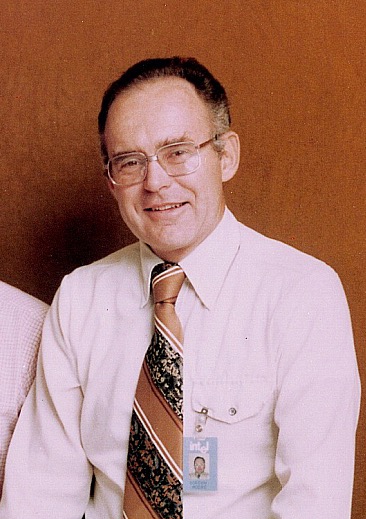
born Gordon Earle Moore
Co-founder of Intel; author of Moore's Law · b. 1929–2023 · San Francisco, California
Two calls made by hand, not formulas. how we score →
Summary
A deputy sheriff's son from a comfortable San Francisco Peninsula family, he went straight through a chemistry PhD at Caltech with no financial risk.
He spent a decade building technical standing at Fairchild before leaving a secure post to co-found Intel in 1968 on a $2.5 million venture-capital bet. Moore's Law made him famous; Intel's stock made him a billionaire.
How it happened
Gordon Earle Moore was born in San Francisco in January 1929 and spent his first decade in Pescadero, a small town on the San Mateo County coast where his father worked as a deputy sheriff and his mother's family ran the general store. When he was about ten the family moved to nearby Redwood City after his father was promoted to undersheriff. A chemistry set he got that Christmas turned into a lasting interest in the subject.
He started at San Jose State, transferred to UC Berkeley for a chemistry degree in 1950, and married Betty Whitaker that same year. A PhD in physical chemistry followed at Caltech in 1954, on a dissertation involving infrared spectroscopy. Two years doing research at Johns Hopkins' Applied Physics Laboratory convinced him he wanted off the East Coast and out of pure research.
William Shockley recruited him to Shockley Semiconductor Laboratory in 1956. Within a year Moore was one of eight engineers who quit over Shockley's management and, backed by Fairchild Camera and Instrument, started Fairchild Semiconductor. He ran research and development there for the next decade alongside the physicist Robert Noyce, while Fairchild's planar process became the industry's standard way of making transistors.
By 1968 Moore was a senior, well-paid technologist at an established company with nothing left to prove. He left anyway. He and Noyce each put in $245,000 of their own money, and Arthur Rock, the investor who had arranged Fairchild's original financing, raised another $2.5 million in convertible debentures to start Intel, betting on a market for semiconductor memory that barely existed yet.
In 1965, while still at Fairchild, he had written a short piece for Electronics magazine observing that the number of components on a chip was doubling roughly every year; it later got the name Moore's Law. At Intel he was executive vice president until 1975, then president, and from 1979 chief executive, steering the company's retreat from memory chips into microprocessors and approving the bet on the 386 that made Intel's chips the industry standard. He handed the CEO job to Andy Grove in 1987 and stayed on as chairman until 1997.
Moore remained chairman emeritus until he died in 2023, worth somewhere around $7 billion. He and Betty had set up the Gordon and Betty Moore Foundation in 2000 with a gift of Intel stock worth roughly $5 billion, and by the time he died it had funded hundreds of millions of dollars in gifts to Caltech, Bay Area conservation, and basic science, on top of the couple's Giving Pledge commitment to give away half their fortune.
The coded evidence
Thirteen groups, every claim sourcedDescribed as descending from "one of California's oldest Anglo-American families," with a great-grandfather who settled in California in 1847.
↗ sciencehistory.orgMulti-generation descendant; his family had been established in California since the 1840s.
↗ sciencehistory.orgEnglish
Inferred; a multi-generation California family with no documented other home language.
↗ en.wikipedia.orgA stable government-employee household: his father held a continuously salaried post as a county deputy sheriff and later undersheriff, and his mother's family owned the general store in Pescadero. No housing precarity or financial instability is documented at any point in his childhood.
Coded as a comfortable, secure middle-class start rather than a hard one: stable public-sector income, an intact household, and (per d6) a fully completed education, but no family wealth or capital transfer. Hardness is coded 3 to reflect that middle ground rather than either extreme.
↗ computerhistory.orgWhen he co-founded Intel in 1968 he was a senior, well-compensated research-and-development director at an established company, with more than a decade of industry standing and immediate re-employability if the new venture failed. He also had enough personal savings to buy $245,000 of Intel's founding stock outright.
↗ en.wikipedia.orgThe hardship was imposed, not chosen. There was nothing to fall back on.
No period of visible austerity, chosen or imposed, is documented at any point in his life.
↗ sciencehistory.orgFather Walter Harold Moore was a deputy sheriff and later undersheriff of San Mateo County. Mother Florence Almira "Mira" Williamson was a homemaker whose own family owned and ran the general store in Pescadero.
↗ en.wikipedia.orgNeither parent was self-employed.
His parents themselves were not self-employed (a salaried county law-enforcement job and homemaking); the general store belonged to his mother's extended family rather than his parents directly.
↗ en.wikipedia.orgHis mother's family ran the general store in Pescadero, a modest local business that gave him childhood exposure to commerce, though nothing documented ties it to capital, mentorship, or access into his eventual field.
↗ en.wikipedia.orgPublic schools in Pescadero, then in Redwood City after the family's move around 1938-39; no selective or private schooling is documented.
↗ computerhistory.orgOne domestic move in childhood, from Pescadero to Redwood City around 1938-39, following his father's promotion to undersheriff. No international migration.
↗ forbes.comArthur Rock, the investor who had helped arrange Fairchild Semiconductor's original 1957 financing, organized the $2.5 million in convertible-debenture financing that started Intel in 1968 — backing Moore and Noyce on the strength of more than a decade of direct exposure to their work, not a cold pitch.
↗ en.wikipedia.orgFairchild Semiconductor, where he spent 1957 to 1968 as head of research and development. It supplied the technical standing, the co-founder relationship with Robert Noyce, and the connection to investor Arthur Rock that together made Intel possible.
↗ en.wikipedia.orgCredibility, Network, Skill
↗ en.wikipedia.orgRobert Noyce, a physicist and fellow member of the "traitorous eight" who left Shockley Semiconductor together in 1957 to start Fairchild, then left Fairchild together again in 1968 to start Intel.
↗ en.wikipedia.org27
Joined Shockley Semiconductor Laboratory in 1956, his first industry job after two years of postdoctoral research.
↗ sciencehistory.org12
From his 1956 entry into the semiconductor industry (Shockley) to the 1968 Intel founding.
↗ en.wikipedia.orgEleven years at Fairchild Semiconductor building semiconductor research-and-development leadership, including the planar process that became the industry's manufacturing standard, before founding Intel.
↗ en.wikipedia.orgPhD, physical chemistry, Caltech (1954), dissertation involving infrared spectroscopy; BS, chemistry, UC Berkeley (1950), after two years at San Jose State.
↗ sciencehistory.orgnot established
Not documented, but plausibly minimal to none given the low in-state public tuition of the era and the likelihood of graduate assistantship support for the Caltech PhD, which is the basis for coding credentialFunding as scholarship above (low confidence, inferred from era norms rather than a documented figure).
↗ sciencehistory.orgA low-cost public-university path — two years at San Jose State before transferring to UC Berkeley for the bachelor's degree — rather than a private or elite undergraduate track.
↗ sciencehistory.orgAt Intel's July 1968 founding, Moore personally bought 245,000 of the company's initial 500,000 shares at $1 each — $245,000 of his own money, matched by Noyce's identical purchase.
↗ en.wikipedia.orgThat $245,000 came from more than a decade of senior technical and management salary at Fairchild Semiconductor, not from inherited money or family capital.
↗ computerhistory.orgArthur Rock raised a further $2.5 million in convertible debentures from private investors, convertible into stock at $5 a share — a genuine outside venture-capital bet on top of the founders' own money.
↗ en.wikipedia.orgRock was not a cold check-writer: he had personally arranged Fairchild Semiconductor's original 1957 financing and had more than a decade of direct exposure to Moore's and Noyce's judgment before backing Intel.
↗ computerhistory.orgGrew on a mix of founder equity and one outside venture round rather than pure bootstrapping. A single class of common stock; no dual-class or super-voting structure was used or needed.
↗ en.wikipedia.orgIntel built and owned its own semiconductor fabrication plants from early on rather than relying on contract manufacturing.
↗ en.wikipedia.orgGrew out of his own prior employer and expertise: Moore and Noyce bet that semiconductor memory, an area Fairchild had not fully exploited, would displace magnetic-core memory in computers.
↗ computerhistory.orgAt founding, Moore's 245,000 shares were 49% of the initial 500,000 shares outstanding — control through raw ownership rather than any structural device, before the convertible-debenture financing later diluted the founders on conversion.
↗ en.wikipedia.org0
No venture of his own before Intel; a continuous employed climb through Shockley and Fairchild.
↗ en.wikipedia.orgA late-1960s semiconductor boom, with Fairchild's success having already proven the integrated-circuit business model to investors, and magnetic-core computer memory reaching its practical limits — opening a window for semiconductor memory that Intel was built to fill.
↗ computerhistory.orgBuilt. Intel was a new company rather than an acquisition, though it carried over technical expertise and approaches from Fairchild's research and development work.
↗ en.wikipedia.org55
From Intel's 1968 founding to his 2023 death. His direct operating role ended in 1987 (CEO) and his board role in 1997 (chairman), but his equity and the Moore Foundation's holdings kept compounding for decades after he stepped back operationally.
↗ en.wikipedia.orgSemiconductors
↗ forbes.com7000000000
Estimates at the time of his March 2023 death ranged from about $6.8 billion (Forbes, April 2023) to about $7 billion (widely cited contemporaneous figure); $7B used as the band-appropriate round figure. Band only.
↗ forbes.comJournalistic estimate
By the time of his death his wealth was diversified well beyond a single, cleanly disclosed Intel equity position after decades of giving through the Moore Foundation.
↗ forbes.com2023
↗ forbes.comnot established
Not established. Predates the modern proxy-statement compensation disclosure regime available for later tech CEOs; his fortune is overwhelmingly founder equity rather than salary.
↗ forbes.comOverwhelmingly wealth, not income: his fortune is almost entirely the appreciation of his founder equity in Intel over more than five decades, not compensation.
↗ forbes.comAuthor of "Moore's Law," which became standard shorthand for the pace of computing progress. Recipient of the National Medal of Technology and Innovation (1990), the Presidential Medal of Freedom (2002), the IEEE Medal of Honor (2008), and induction into the National Inventors Hall of Fame (2009). Received the Andrew Carnegie Medal of Philanthropy in 2009 and joined the Giving Pledge with Betty Moore in 2012.
↗ en.wikipedia.orgUncapped
↗ en.wikipedia.orgIntel drew antitrust scrutiny from multiple regulators in the 2000s over practices in the x86 processor market, most substantially a €1.06 billion European Commission fine in May 2009 for offering computer makers rebates conditioned on buying almost all their CPUs from Intel, covering conduct from 2002 to 2007. Japanese, South Korean, and U.S. regulators pursued related inquiries in the same period. None of this named Moore personally; it followed both his 1987 exit as CEO and his 1997 move to chairman emeritus.
↗ ec.europa.euAfter
The conduct at issue dates to 2002-2007, decades after Intel's 1968 founding and years after Moore's own operating role ended.
↗ ec.europa.euIncidental
A function of Intel's later market dominance, not conduct that produced Moore's founding or his personal wealth.
↗ ec.europa.euCivil wrong
↗ ec.europa.euFine absorbed
A corporate fine on Intel; no personal liability for Moore, who by then held no operating role.
↗ ec.europa.eunot established
Not established. No documented personal labor disputes or findings on record.
↗ en.wikipedia.orgUnderstated, Self effacing, Methodical
Widely described, including in obituaries and tributes, as soft-spoken and modest relative to more publicly prominent colleagues like Noyce and later Intel CEO Andy Grove.
↗ computerhistory.orgBefore
His technical reputation was established at Fairchild before Intel's 1968 founding.
↗ en.wikipedia.orgAsset
His understated, technically credible reputation helped make Moore's Law an industry-wide planning benchmark (via the Semiconductor Industry Association's Technology Roadmap) rather than one company's marketing claim.
↗ computerhistory.orgThe reputation accrued from behaviour rather than being manufactured.
↗ computerhistory.orgStructural context
The cost-of-failure score comes from this person's own money and circumstances. But who they were in America carried its own weight, the same way their household or income did, and it shaped how hard the path was just as much. That part isn't in the cost-of-failure number. It's here instead.
Men founded the companies that took nearly all the venture funding and almost every top outcome, a tailwind that never shows up in one person's own circumstances.
↗ techcrunch.comWhite founders are heavily overrepresented among funded companies and top-tier wealth relative to their share of the population, an edge that has nothing to do with a person's own money.
↗ techcrunch.comAmong the people recorded here — men: 115 · White subjects: 74. Representation here is who reached these outcomes, not equal odds of reaching them.
Controlled comparisons
Each holds one thing constant and varies another, so the difference is the point. A list of similar names wouldn't tell you anything.