Robert Noyce
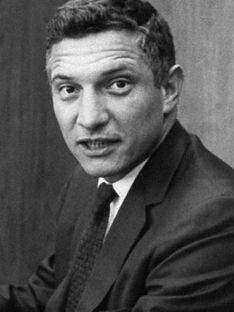
born Robert Norton Noyce
Co-inventor of the integrated circuit; co-founder of Fairchild Semiconductor and Intel · b. 1927–1990 · Burlington, Iowa
Two calls made by hand, not formulas. how we score →
Summary
A minister's son from small-town Iowa, secure rather than poor, who got early hands-on access to some of the first transistors made anywhere through a college professor.
He helped invent the integrated circuit at Fairchild, then left a senior post there in 1968 to co-found Intel on his own savings and a venture bet, and ran it without the usual executive trappings until his death in 1990.
How it happened
Robert Norton Noyce was born in Burlington, Iowa, in December 1927, the third of four sons of a Congregational minister who worked for the Iowa Conference of Congregational Churches. In 1939 the family moved to Grinnell, Iowa, when his father took a new post there, and they lived in a church-owned house. Nothing about the household was rich, but nothing about it was precarious either: a steady clergy income, a family home that came with the job, and four sons who were all, by every account, strong students.
He enrolled at Grinnell College and studied under Grant Gale, the physics department chair, who in 1948 got hold of two of the first transistors made anywhere and built what's said to be the first college-level course on solid-state electronics in the country around them. Noyce, a physics and math major, was one of the students who got to handle the devices years before most working engineers had seen one. He graduated Phi Beta Kappa in 1949 and went on to a physics PhD at MIT, finished in 1953.
He spent three years at Philco in Philadelphia working on germanium transistors, then in 1956 William Shockley recruited him to Shockley Semiconductor Laboratory in Mountain View. Within a year Noyce was one of eight engineers who quit over Shockley's management and, with financing arranged entirely by Sherman Fairchild of Fairchild Camera and Instrument, started Fairchild Semiconductor in 1957. He was 29 and effectively running the place. In 1959 he worked out how to put multiple components on a single silicon chip, connected without individual wires — the monolithic integrated circuit. Jack Kilby at Texas Instruments had built a working integrated circuit a few months earlier using germanium and hand wiring; the two companies fought over the patent for years before settling into cross-licensing in 1966, and both men are credited as co-inventors today. Kilby got the Nobel Prize for it in 2000, ten years after Noyce died; the Nobel isn't awarded posthumously.
By 1968 Fairchild had grown from a startup into a subsidiary run at a distance by its corporate parent, and Noyce, restless under that structure, left to co-found Intel with Gordon Moore. He put in about $245,000 of his own money from his Fairchild years, Moore matched it, and Grinnell College's endowment invested roughly the same amount alongside them. Arthur Rock, who had arranged Fairchild's original financing a decade earlier, raised another $2.5 million from outside investors. It was a bet on semiconductor memory at a moment when almost no one was buying it yet.
As Intel's first CEO, he got rid of reserved parking, private offices, and most of the other trappings that came with rank, and pushed decision -making down toward whoever was actually doing the work. Under him the company built the first commercial microprocessor in 1971, went public that October, and grew from a few thousand dollars in revenue to a billion in sales within about fifteen years. He handed the CEO title over in 1975 and moved to chairman.
He spent his later years as an industry statesman, chairing the Semiconductor Industry Association and lobbying Washington over Japanese competition, which is where he picked up the nickname "the Mayor of Silicon Valley." In 1988 he took the CEO job at Sematech, a government-industry consortium in Austin built to close the manufacturing gap with Japan, and died there of a heart attack in June 1990 at 62. His family set up the Noyce Foundation the same year to fund K-12 math and science education, and his estate later endowed a scholarship and a science chair at Grinnell.
The coded evidence
Thirteen groups, every claim sourcedCoded from a multi-generation white Midwestern family with an English surname and no documented recent-immigration history; not a self-declared category.
↗ encyclopedia.comMulti-generation descendant; no documented recent immigration in the family.
↗ en.wikipedia.orgHis father's ministry came with a church-owned house in Grinnell, Iowa, so the family's housing was tied to steady clergy employment rather than owned outright, but no housing instability of any kind is documented at any point in his childhood.
Coded as a secure, comfortable middle-class start: a stable salaried household, an intact family, and a fully funded path through a liberal-arts college and an elite PhD program, but no family wealth or capital transfer of any kind. Hardness is coded 2 to reflect that security rather than either a hard or a wealthy extreme.
↗ encyclopedia.comBy the time he left Shockley to co-found Fairchild in 1957, financing was already arranged by Sherman Fairchild before the group departed, so there was no unfunded gap. By 1968, when he left Fairchild to co-found Intel, he was a senior, well-compensated executive with more than a decade of industry standing and immediate re-employability if the new venture had failed.
↗ en.wikipedia.org4
Four children with his first wife, Elizabeth Bottomley, born across the 1950s and 1960s; the exact count living at home during the 1957 and 1968 foundings specifically is not established.
↗ en.wikipedia.orgThe hardship was imposed, not chosen. There was nothing to fall back on.
No period of visible austerity, chosen or imposed, is documented at any point in his life.
↗ en.wikipedia.orgFather Ralph Brewster Noyce was a Congregational minister who worked for the Iowa Conference of Congregational Churches; mother Harriet May Norton Noyce is described in biographical sources as an intelligent, strong-willed homemaker.
↗ en.wikipedia.orgNeither parent was self-employed.
A salaried denominational ministry post, not self-employment.
↗ encyclopedia.comnot established
Not established beyond his father's ministerial training; his mother's education level is not documented in the sources reviewed.
↗ en.wikipedia.org3
Three brothers — Donald Sterling, Gaylord Brewster, and Ralph Harold Noyce; Robert was the third of the four sons.
↗ en.wikipedia.orgBurlington, Iowa, then Grinnell, Iowa from 1939 — small, non-industrial Midwestern towns.
↗ en.wikipedia.orgPublic schools in Burlington and then Grinnell, Iowa; no selective or private schooling is documented before college.
↗ encyclopedia.comOne domestic move in childhood, from Burlington to Grinnell around 1939, following his father's new ministry post. No international migration.
↗ en.wikipedia.orgArthur Rock, who had helped arrange Fairchild Semiconductor's original 1957 financing, organized the $2.5 million in convertible-debenture financing that started Intel in 1968 — backing Noyce and Moore on more than a decade of direct exposure to their work.
↗ en.wikipedia.orgFairchild Semiconductor, where he was effectively the company's leader from its 1957 founding until 1968, first as an independent startup and then as a subsidiary of Fairchild Camera and Instrument. It supplied the technical standing, the co-founder relationship with Gordon Moore, and the connection to investor Arthur Rock that together made Intel possible.
↗ en.wikipedia.orgCredibility, Network, Skill
↗ en.wikipedia.orgGordon Moore, a chemist and fellow member of the "traitorous eight" who left Shockley Semiconductor with him in 1957 to start Fairchild, then left Fairchild together again in 1968 to start Intel.
↗ en.wikipedia.org25
First industry job at Philco in Philadelphia in 1953, working on germanium transistors, straight out of his MIT PhD.
↗ encyclopedia.comEleven years at Fairchild Semiconductor, taking it from a startup to a company with roughly $130 million in annual sales and about 12,000 employees, and inventing the monolithic integrated circuit along the way, before founding Intel.
↗ encyclopedia.com3
Philco, Shockley Semiconductor, and Fairchild Semiconductor, before co-founding Intel.
↗ en.wikipedia.orgAs a Grinnell College undergraduate around 1948, his physics professor Grant Gale obtained two of the first transistors made anywhere and built what is described as the first college-level course on solid-state electronics in the country around them. Noyce got direct, hands-on exposure to the technology years before it was commercially available to most working engineers.
↗ encyclopedia.comPhD, physics, MIT (1953); BA, physics and mathematics, Grinnell College (1949), Phi Beta Kappa.
↗ en.wikipedia.orgnot established
Not documented either way. No scholarship or loan is specifically named in the sources reviewed.
↗ encyclopedia.comDirect — a small liberal-arts college straight into an elite physics PhD program, with no community-college or military detour.
↗ en.wikipedia.orgAt Intel's July 1968 founding, Noyce personally put in about $245,000 of his own money, drawn from his Fairchild-era compensation and equity, matching an identical investment from Gordon Moore.
Some sources round this to $250,000 per founder and add that Grinnell College's endowment invested a roughly equal amount alongside them.
↗ encyclopedia.comThat stake came from over a decade of senior technical and executive compensation and equity at Fairchild Semiconductor, not from family money or inheritance.
↗ encyclopedia.comArthur Rock raised a further $2.5 million in convertible debentures from outside investors to start Intel, on top of the founders' own money and an investment from Grinnell College's endowment.
↗ en.wikipedia.orgRock was not a cold check-writer: he had personally arranged Fairchild Semiconductor's original 1957 financing and had more than a decade of direct exposure to Noyce's and Moore's judgment before backing Intel.
↗ en.wikipedia.orgGrew on a mix of founder equity and one outside venture round, then a 1971 public offering. A single class of common stock; no dual-class or super-voting structure was used.
↗ en.wikipedia.orgIntel built and owned its own semiconductor fabrication plants from early on rather than relying on contract manufacturing.
↗ en.wikipedia.orgGrew out of his own prior employer and frustration with it: by 1968 Fairchild had become a distantly managed subsidiary, and Noyce and Moore bet that semiconductor memory, an area Fairchild had not fully exploited, would displace magnetic-core memory in computers.
↗ encyclopedia.comFounder control came from raw ownership at the start rather than any structural device, and was progressively diluted through the 1971 IPO and later financings and stock-option grants to employees.
↗ en.wikipedia.org0
No venture of his own failed before Intel; a continuous employed and founding climb through Philco, Shockley, and Fairchild.
↗ en.wikipedia.orgA late-1960s semiconductor boom, with Fairchild's success having already proven the integrated-circuit business model to investors, and magnetic-core computer memory reaching its practical limits — opening a window for semiconductor memory that Intel was built to fill.
↗ en.wikipedia.orgBuilt. Intel was a new company rather than an acquisition, carrying over technical expertise from Fairchild's research work.
↗ en.wikipedia.org22
From Intel's 1968 founding to his death in June 1990. His direct operating role ended in 1975 (CEO) and he moved toward industry and public-policy roles after, but his equity kept compounding until his death, far short of the multi-decade run his co-founder Gordon Moore had.
↗ en.wikipedia.orgSemiconductors
↗ en.wikipedia.orgnot established
No credible, methodology-disclosed figure exists. Aggregator sites (CelebrityNetWorth and clones) put his 1990 net worth anywhere from about $1.5 billion to $3.7 billion with no disclosed basis, while Leslie Berlin's biography "The Man Behind the Microchip" characterizes him more modestly, as a wealthy multimillionaire with several homes and airplanes rather than a documented billionaire. He died in 1990, well before Forbes-style methodical tracking of private semiconductor fortunes was mature, and no SEC filing or probate figure was located. Treated as not established at band resolution; the $100M-$1B magnitude band below reflects his estate's documented scale — a $10 million posthumous gift to Grinnell College was a fraction of it, and the family funded a foundation from it — without endorsing any specific aggregator number.
↗ celebritynetworth.comnot established
Not established. Predates the modern proxy-statement compensation disclosure regime available for later tech executives.
↗ en.wikipedia.orgOverwhelmingly wealth from founder equity in Fairchild and then Intel, not salary — though a shorter compounding period than co-founders who lived decades longer, since he died just 22 years after Intel's founding.
↗ en.wikipedia.orgCo-inventor of the monolithic integrated circuit (US Patent 2,981,877, 1961), independently of Jack Kilby's earlier germanium version; the two companies cross-licensed in 1966 and both men are credited as co-inventors, though Kilby alone received the Nobel Prize for it in 2000, ten years after Noyce's death (the Nobel is not awarded posthumously). Known as "the Mayor of Silicon Valley" for his industry advocacy. Recipient of the National Medal of Science (1979/1980), the IEEE Medal of Honor (1978), the National Medal of Technology (1987), and the Draper Prize (1989, shared with Kilby). Founder of the egalitarian, no-executive-perks management culture widely credited with shaping later Silicon Valley norms. Held 16 patents.
↗ en.wikipedia.orgUncapped
↗ en.wikipedia.orgnot established
No personal regulatory action against Noyce is documented. Intel's later antitrust matters (notably the 2009 European Commission fine) occurred nearly two decades after his 1990 death and named the company, not him.
↗ en.wikipedia.orgAs Fairchild's de facto head and then Intel's first CEO, he deliberately reformed rather than reproduced the top-down, hierarchical management he'd chafed under at Shockley: no reserved parking, no private offices, an open floor plan, and stock options extended to employees rather than confined to executives. The approach is widely credited as a founding template for Silicon Valley workplace culture.
↗ encyclopedia.comVisionary, Charismatic, Egalitarian, Risk tolerant
Investor Arthur Rock described the founding pairing as "Noyce: the visionary, born to inspire; Moore: the virtuoso of technology." Writer Tom Wolfe's 1983 Esquire profile credited him with creating "an ethical universe within an inherently amoral setting." On the integrated circuit itself, the historical record treats Noyce and Jack Kilby as co-inventors who reached the idea independently and close together in time; the priority dispute was resolved by cross-licensing rather than a court ruling on originality, and it is a documented attribution question rather than a conduct allegation.
↗ encyclopedia.comPress
↗ en.wikipedia.orgBefore
His technical and leadership reputation was established at Fairchild before Intel's 1968 founding.
↗ en.wikipedia.orgAsset
His personal credibility and egalitarian reputation helped him raise Intel's founding capital quickly and recruit talent from more established, better-funded competitors.
↗ encyclopedia.comThe reputation accrued from behaviour rather than being manufactured.
↗ encyclopedia.comStructural context
The cost-of-failure score comes from this person's own money and circumstances. But who they were in America carried its own weight, the same way their household or income did, and it shaped how hard the path was just as much. That part isn't in the cost-of-failure number. It's here instead.
Men founded the companies that took nearly all the venture funding and almost every top outcome, a tailwind that never shows up in one person's own circumstances.
↗ techcrunch.comWhite founders are heavily overrepresented among funded companies and top-tier wealth relative to their share of the population, an edge that has nothing to do with a person's own money.
↗ techcrunch.comAmong the people recorded here — men: 169 · White subjects: 114. Representation here is who reached these outcomes, not equal odds of reaching them.
Controlled comparisons
Each holds one thing constant and varies another, so the difference is the point. A list of similar names wouldn't tell you anything.