Alexandr Wang
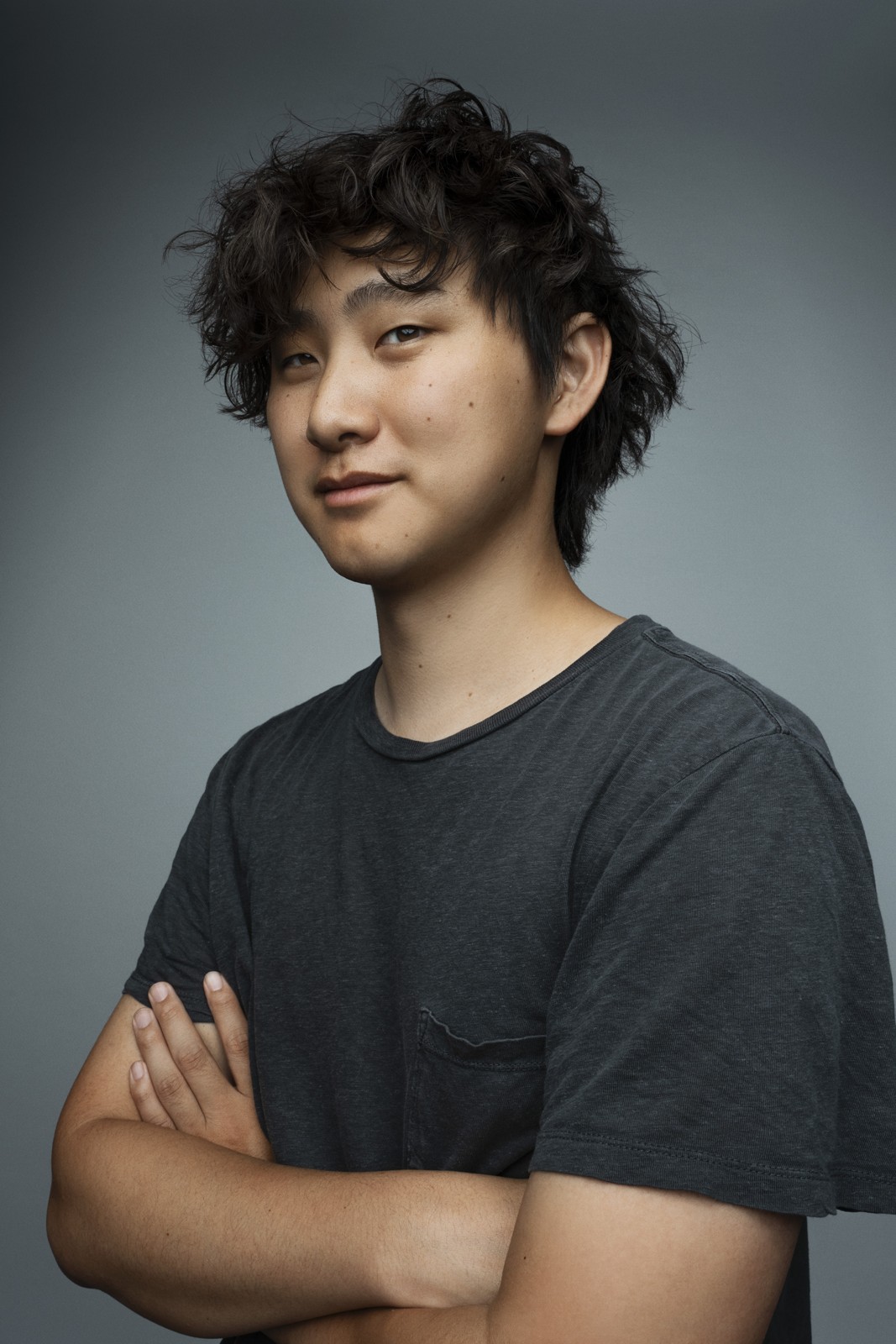
Co-founder and former CEO of Scale AI; Chief AI Officer at Meta, leading Meta Superintelligence Labs · b. 1997 · Los Alamos, New Mexico
Two calls made by hand, not formulas. how we score →
Summary
Born in Los Alamos to two physicist parents at the national lab, a secure scientific household that fed a math-olympiad pipeline into MIT.
He dropped out at nineteen to found Scale AI via Y Combinator in 2016; data labeling for self-driving cars, then language models, made him a billionaire by twenty-four. Meta's 2025 stake in Scale and his move to lead its AI lab reshaped his position again.
How it happened
Alexandr Wang was born in January 1997 in Los Alamos, New Mexico, the company town built around Los Alamos National Laboratory, to Chinese immigrant parents who both worked there as physicists. He attended Los Alamos High School and competed on the national math and science circuit as a teenager — the Math Olympiad Program in 2013, the US Physics Team in 2014, and a USACO (USA Computing Olympiad) finalist in both 2012 and 2013 — the kind of selective pipeline that reliably feeds elite technical universities.
He enrolled at MIT to study computer science but left after a short time without finishing a degree. Before founding his own company he held paid technical roles: a software engineer at the financial-data firm Addepar, programming work connected to Quora, and an internship at the quantitative trading firm Hudson River Trading — the kind of resume that kept him employable if nothing else worked out.
In 2016, at nineteen, he co-founded Scale AI with Lucy Guo, whom he had met while both were working at Quora, going through Y Combinator to get it started. The company built a human-labeling pipeline — first annotating sensor data for autonomous-vehicle makers, then, as the generative-AI boom took off, labeling and evaluating data to train and test large language models. Guo left the company in 2018; Wang has said little publicly about the circumstances. Founders Fund led a $100 million round in August 2019 that pushed Scale past unicorn status, and later backers included Accel, Tiger Global, Dragoneer, Amazon, and eventually Meta itself.
By a July 2021 financing round, Scale AI was valued at roughly $7 billion; Wang's disclosed stake of about 15% made him, at 24, one of the youngest self-made billionaires in the world. The company kept raising — a March 2024 round put it near $13 billion, and a further round that May, with Amazon and Meta both participating, pushed the valuation to about $14 billion.
In June 2024 he published a company memo coining "MEI" — merit, excellence, and intelligence — as an explicit alternative to corporate diversity, equity, and inclusion programs, drawing public praise from Elon Musk and other DEI critics and pushback from researchers who called it a mischaracterization of how discrimination in hiring actually works. He also testified before a House Armed Services subcommittee on AI adoption in 2023, as Scale AI built a growing book of Pentagon contracts for testing and evaluating military AI systems. Scale's underlying labor model — Remotasks and Outlier, which route data-labeling work to low-paid contractors, many overseas — drew its own criticism: a 2022 Oxford Internet Institute study found the platform met only one of ten fair-work criteria it assessed, and several lawsuits filed in late 2024 and early 2025 alleged wage theft and psychological harm from exposure to disturbing content.
In June 2025 Meta bought a 49% non-voting stake in Scale AI for roughly $14.3 billion, valuing the company at about $29 billion — one of the largest AI-industry investments to date, widely described in the press as a de facto acquisition of Wang himself rather than a conventional funding round. He stepped down as Scale's CEO, handing the role to chief strategy officer Jason Droege, and joined Meta as Chief AI Officer to lead its new Meta Superintelligence Labs, while staying on Scale's board. Forbes put his net worth at $3.6 billion that April, before the deal closed, and at $3.2 billion by September 2026 — a large fortune either way, though not a simple straight-line rise from the transaction.
The coded evidence
Thirteen groups, every claim sourcedCoarse public-record coding; race is a noisy, interpretive category.
↗ en.wikipedia.orgSecond-generation — born in the United States (Los Alamos, New Mexico) to two Chinese immigrant parents who worked as physicists at Los Alamos National Laboratory.
↗ en.wikipedia.orgA stable, comfortably professional two-parent household in Los Alamos, New Mexico; no housing precarity is documented at any point in his life.
↗ en.wikipedia.orgHeld paid technical jobs — software engineer at Addepar, programming work connected to Quora, and an internship at Hudson River Trading — immediately before founding Scale AI at nineteen, and could have returned to a financially secure family home in Los Alamos if the venture had failed.
↗ en.wikipedia.orgnot established
No period of documented hardship, chosen or imposed, appears in the record.
↗ en.wikipedia.orgBoth parents were physicists at Los Alamos National Laboratory. Neither parent's specific research area is independently well-documented beyond that.
↗ en.wikipedia.orgNeither parent was self-employed.
Salaried research positions at a federal laboratory, not self-employment.
↗ en.wikipedia.orgBoth parents held physics careers at a national laboratory, implying at minimum graduate-level scientific training; neither parent's specific degree is documented in the sources reviewed.
↗ en.wikipedia.orgAn immigrant professional-scientist family — two physicist parents at a federal research laboratory — with no documented multigenerational wealth or institutional standing beyond their own scientific credentials.
↗ en.wikipedia.orgnot established
No specific second job or sacrifice aimed at tuition is documented.
↗ en.wikipedia.orgLos Alamos, New Mexico — a small company town built around Los Alamos National Laboratory, with an unusually high concentration of PhD scientists among its residents.
No Chetty/Opportunity Insights mobility-percentile join located for this ZIP; described qualitatively from the Forbes profile's characterization of the town.
↗ forbes.comLos Alamos High School, a public school in a town built around the national laboratory.
↗ en.wikipedia.orgGrowing up as the child of two Los Alamos National Laboratory physicists put him in daily proximity to one of the highest-density concentrations of research scientists and computational specialists in the country — adjacent to, though not identical with, the AI industry he later entered.
↗ en.wikipedia.orgLeft Los Alamos for MIT in Cambridge, Massachusetts, then dropped out and moved to the San Francisco Bay Area around 2016 to found Scale AI through Y Combinator.
↗ en.wikipedia.orgnot established
Not applicable in the usual sense — this field tracks his immigrant parents' generation, and no downgrade in their professional standing on arrival in the US is documented; they held stable federal laboratory research positions.
↗ en.wikipedia.orgnot established
No documented instance of personally experienced discrimination becoming a business thesis.
↗ en.wikipedia.orgnot established
No single named door-opener is documented for Scale AI's founding; access ran through Y Combinator's standard application process and his own competitive-programming and coding record.
↗ en.wikipedia.orgY Combinator, whose 2016 program supplied the seed funding and structure to launch Scale AI.
↗ en.wikipedia.orgCapital, Credibility, Network
↗ en.wikipedia.orgLucy Guo, whom he met while both were working at Quora, co-founded Scale AI with him in 2016; she left the company in 2018.
↗ en.wikipedia.org18
Approximate — first paid technical work (Addepar, Quora-linked programming, Hudson River Trading) preceded the 2016 Scale AI founding at 19.
↗ en.wikipedia.orgnot established
No public platform or following documented before founding Scale AI.
↗ en.wikipedia.org3
Addepar, Quora-linked work, and Hudson River Trading, not counting Scale AI itself or Meta.
↗ en.wikipedia.orgCompetitive math and science circuit: Math Olympiad Program (2013), US Physics Team (2014), and a USA Computing Olympiad (USACO) finalist in 2012 and 2013 — a selective pipeline into elite technical universities.
↗ en.wikipedia.orgSome college. Enrolled at MIT to study computer science and dropped out without completing a degree, around 2016, to found Scale AI.
↗ forbes.comHeld technical jobs — software engineer at Addepar, programming work connected to Quora — around the time he was enrolled at MIT, before leaving to found Scale AI.
↗ en.wikipedia.orgDirect — a public high school in Los Alamos into MIT, though he left before completing the degree to found a company.
↗ en.wikipedia.orgMIT and the national math-and-coding-olympiad circuit connected him to a technical peer network; Y Combinator's 2016 program supplied the startup-specific network that got Scale AI funded.
↗ en.wikipedia.orgScale AI's initial capital came through Y Combinator's standard seed investment for its 2016 program; no source documents Wang putting personal savings in ahead of that.
↗ en.wikipedia.orgnot established
Not clearly established whether meaningful revenue (from early autonomous-vehicle customers) preceded or followed the first institutional funding.
↗ en.wikipedia.orgFounders Fund led a $100 million round in August 2019 that pushed Scale AI past a $1 billion valuation; earlier investors included Index Ventures, Dragoneer Investment Group, and Tiger Global Management.
↗ en.wikipedia.orgScale AI raised across multiple rounds: past $1 billion valuation in August 2019, about $7 billion in July 2021 (Greenoaks, Dragoneer, Tiger Global), nearly $13 billion in a March 2024 Accel-led round, and about $14 billion in a May 2024 round with Amazon and Meta participating. In June 2025, Meta bought a 49% non-voting stake for roughly $14.3 billion, valuing the company at about $29 billion.
↗ en.wikipedia.orgGrew out of the practical problem of labeling large volumes of sensor data for autonomous-vehicle companies, then generalized to data labeling and model evaluation for the broader machine-learning and, later, large-language-model industry.
↗ en.wikipedia.orgMeta's June 2025 purchase of a 49% non-voting stake left Scale AI formally independent, with Wang retaining a personal equity position and a board seat, but he stepped down as CEO in the same transaction and moved to lead a Meta division — control of the company he founded passed to new leadership even though he was not fully bought out.
Widely characterized in press coverage as a de facto "acquihire" structured to avoid a formal acquisition; coded ownershipRetained as false above on that basis, though the underlying equity position was not fully liquidated.
↗ en.wikipedia.org0
No documented failed venture prior to Scale AI; his prior work (Addepar, Quora, Hudson River Trading) was salaried employment, not a founded venture.
↗ en.wikipedia.orgFounded in 2016 during the autonomous-vehicle data boom, when self-driving programs at Cruise, Waymo-adjacent firms, and others needed large volumes of human-labeled sensor data; the business later rode a second, larger wave as generative AI and large-language-model training created enormous demand for human data labeling and evaluation.
↗ en.wikipedia.orgSan Francisco Bay Area, after moving from MIT to go through Y Combinator.
↗ en.wikipedia.orgBuilt — Scale AI was created from scratch as a new company, not acquired.
↗ en.wikipedia.org9
From the 2016 founding to the June 2025 Meta transaction and his move off the CEO role.
↗ en.wikipedia.orgBuilt from inside the San Francisco Bay Area technology cluster, not at a remove from it.
↗ en.wikipedia.orgArtificial intelligence infrastructure — human data labeling, model evaluation, and RLHF for training and testing AI systems (Scale AI); now AI research and development leadership at Meta.
↗ en.wikipedia.org3200000000
Forbes real-time tracker figure as of September 23, 2026. Forbes had him at $3.6 billion in April 2025, before the Meta transaction closed; the September 2026 figure is lower than that pre-deal estimate, reflecting how the deal's structure and subsequent valuation adjustments moved his personal stake rather than a simple markup. He reached billionaire status earlier, around July 2021, when a roughly $7 billion Scale AI valuation and his disclosed ~15% stake put him over $1 billion at age 24.
↗ forbes.comJournalistic estimate
Scale AI is privately held; Forbes derives the figure from reported funding-round valuations and his disclosed ownership stake rather than a public filing.
↗ forbes.com2026
↗ forbes.comnot established
No disclosed salary figure for either his Scale AI or Meta role; Scale AI is private and Meta does not disclose his individual compensation.
↗ forbes.comHis wealth is almost entirely illiquid — equity in the privately held Scale AI, plus whatever compensation package accompanied his move to Meta, neither of which has a disclosed realized-cash breakdown.
↗ forbes.comNo public salary or compensation filing exists for him at either Scale AI or Meta; his fortune is entirely equity-derived.
↗ forbes.comLeads Meta Superintelligence Labs as Meta's Chief AI Officer; Scale AI became a major supplier of AI training and evaluation data across the industry, including a growing book of US Department of Defense contracts; he testified before a House Armed Services subcommittee on AI adoption in 2023 and has been named to Forbes 30 Under 30 (2018, 2021) and Time's AI 100 list.
↗ en.wikipedia.org1
From his first documented technical job (around 2015) to founding Scale AI in 2016.
↗ en.wikipedia.orgUncapped
Equity ownership in a company that reached a roughly $29 billion valuation, rather than a salaried or credentialed ceiling.
↗ en.wikipedia.orgScale AI's data-labeling subsidiaries, Remotasks and Outlier, have been reported to pay some annotation workers, many overseas, very low per-task rates; a 2022 Oxford Internet Institute study found the platform met only one of ten fair-work criteria it assessed. Several lawsuits filed in late 2024 and early 2025 alleged wage theft and psychological harm from exposure to disturbing content during moderation and labeling work; those allegations had not been adjudicated as of the sources reviewed. The criticism concerns Scale AI's labor model and contractor workforce, not any personal conduct by Wang.
↗ en.wikipedia.orgDuring
The labor model operated continuously through Scale AI's growth from founding through the 2025 Meta transaction.
↗ en.wikipedia.orgIncidental
Scale's core advantage was aggregating a large distributed labeling workforce at all; the specific allegations about underpayment and working conditions describe how that workforce was treated, not the structural source of the company's market position.
↗ en.wikipedia.orgCivil wrong
↗ en.wikipedia.orgnot established
Lawsuits were unresolved as of the sources reviewed; no settlement or fine is documented.
↗ en.wikipedia.orgtechnical prodigy and early industry-recognized founder, polarizing for the 2024 "MEI" (merit, excellence, intelligence) anti-DEI hiring stance, central figure in the buildout of AI training-data infrastructure
↗ fortune.comPress
↗ en.wikipedia.org5
Wikipedia (Alexandr Wang, Scale AI, Lucy Guo), Forbes profile, and Fortune's MEI coverage, among others reviewed.
↗ en.wikipedia.orgAfter
His broad public reputation as an AI-industry leader and polarizing commentator formed well after Scale AI's 2016 founding, mostly during its 2021-2025 scale-up and the 2024 MEI memo.
↗ en.wikipedia.orgMixed
An asset in fundraising, government-contracting, and talent circles; a liability among labor-practice critics and some DEI researchers.
↗ en.wikipedia.orgThe reputation was deliberately built, through books, press, and PR.
Congressional testimony, a widely shared company memo, and extensive press profiles built a deliberate public leadership image alongside the underlying business record.
↗ en.wikipedia.orgThe June 2024 "MEI" memo split reception sharply: praised by Elon Musk, Sequoia's Shaun Maguire, and Coinbase's Brian Armstrong as a stand against corporate DEI programs, and criticized by DEI researchers as mischaracterizing how hiring discrimination works. The 2025 Meta deal drew a similar split — celebrated in parts of the tech press as a landmark AI talent deal, and described by others as a structure built to sidestep the scrutiny a formal acquisition would draw.
↗ fortune.comStructural context
The cost-of-failure score comes from this person's own money and circumstances. But who they were in America carried its own weight, the same way their household or income did, and it shaped how hard the path was just as much. That part isn't in the cost-of-failure number. It's here instead.
Men founded the companies that took nearly all the venture funding and almost every top outcome, a tailwind that never shows up in one person's own circumstances.
↗ techcrunch.comImmigrants and their children are overrepresented among America's biggest companies, as founders and as senior leaders. They got there through the visa, credential, and network hurdles that make the path harder to even start down.
↗ forbes.comAmong the people recorded here — men: 169 · Asian (Chinese) subjects: 2. Representation here is who reached these outcomes, not equal odds of reaching them.
Controlled comparisons
Each holds one thing constant and varies another, so the difference is the point. A list of similar names wouldn't tell you anything.