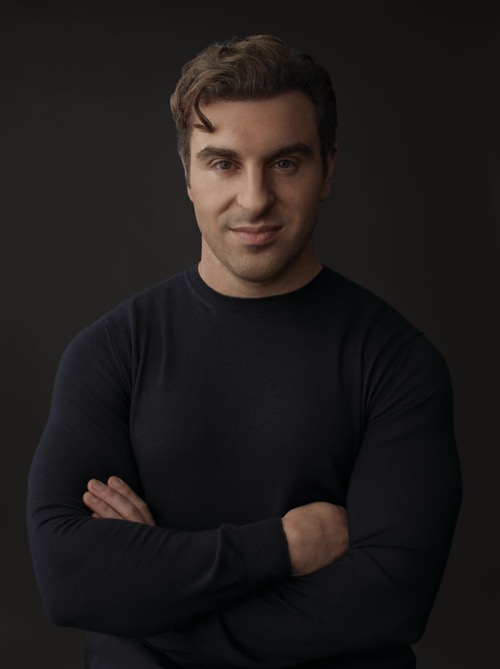
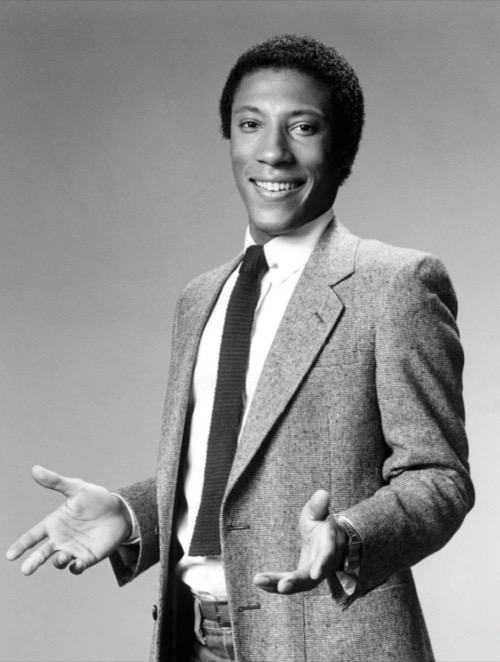
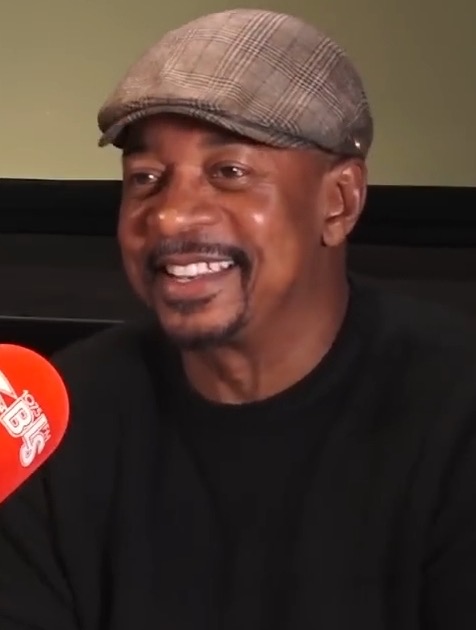
KevOnStage
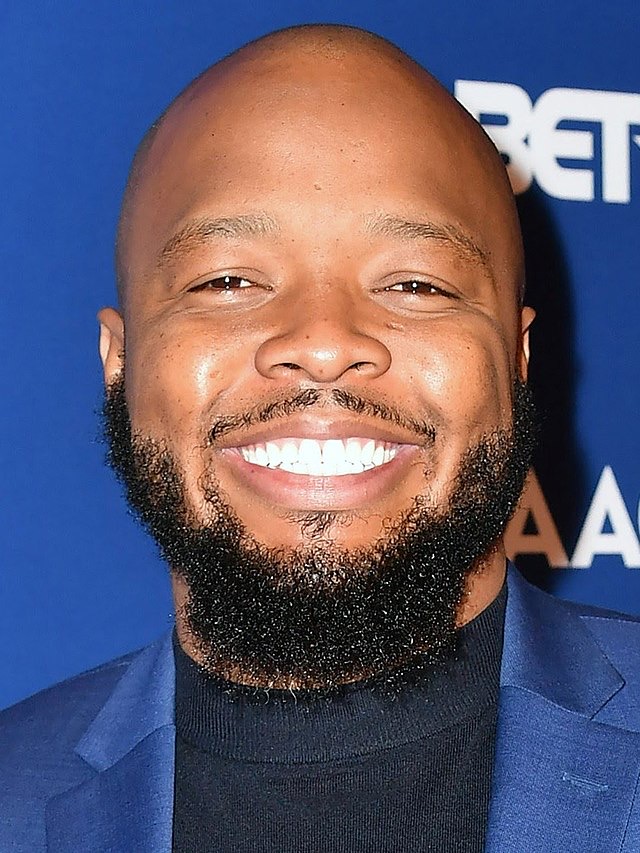
born Kevin Fredericks
Comedian, YouTuber, and founder of KevOnStage Studios; creator of BET+'s "Churchy" · b. 1983 · El Paso, Texas
Two calls made by hand, not formulas. how we score →
Summary
He built an audience for free on the church circuit and then YouTube while working a bank job and, later, Boeing.
When he had enough saved from that work and from brand deals, he shot an entire season of "Churchy" himself before showing it to anyone. That meant BET was buying a finished show instead of financing one, so nobody but him got a vote on what it became.
How it happened
Working the Spanaway, Washington branch of Key Bank around 2009, he told his branch manager in a one-on-one that his real dream was to be an entertainer. He was put on a performance improvement plan the following Monday and fired ninety days later. He has said since that it wasn't a wise thing to say out loud, but he'd already told his wife the same thing the Friday before.
With his older brother Jason Fredericks and a friend, Anthony Davis, he started a group called The Playmakers, staging gospel plays for Christian audiences in Tacoma and Seattle, trying to do what Tyler Perry, David E. Talbert, and Je'Caryous Johnson were doing further south. Washington State didn't have the audience for it. Some nights they drew 68 people.
He started watching YouTube comedians who had fans "everywhere" and realized the ceiling wasn't talent, it was the size of the local Black-theater market he was trying to sell tickets in. He and his collaborators shifted from staging plays to posting sketches online, and kept their day jobs going while they built an audience that wasn't capped by geography.
He and his wife Melissa both worked at Boeing in Seattle for a stretch. On the set of a small film where their son Isaiah had a role, he watched a sound tech taking a break on his phone and realized he didn't need to be famous, he just wanted work with breaks like that. He called his wife and told her they had to move.
In Los Angeles, he built a following through stand-up and All Def Comedy, then used money saved from brand deals and commercial work to shoot eight episodes of "Churchy" before pitching it anywhere. When BET bought it, there was no note-giving to be done on the front end because the show already existed the way he wanted it.
"Churchy" ran two seasons on BET+. He and Melissa co-own KevOnStage Studios, a production company built as, in its own description, a home for creators outside traditional Hollywood, and both have written New York Times bestselling books. He now says his real strategy is just volume — posting everywhere, every day, until the audience decides for itself that he's unavoidable.
The coded evidence
Thirteen groups, every claim sourcedCoarse public-record coding from a low-quality biography aggregator; race is a noisy, interpretive category.
↗ thecityceleb.comDescendant (no immigration in the subject's own generation)
↗ thecityceleb.comWikipedia states he "was raised in a Christian household." His own comedy career began by staging plays for church audiences, consistent with a Christian upbringing, though denomination isn't established.
↗ en.wikipedia.orgHe and his wife Melissa both held salaried jobs (Key Bank, then Boeing in Seattle) through the years he was building an audience via church plays and, later, YouTube — a working household income floor rather than savings or family money.
↗ wbur.orgMelissa Fredericks worked alongside him at Boeing, then became a co-owner of KevOnStage Studios and a co-host on several of the couple's podcasts and a co-author of their book "Marriage Be Hard" — a business partner throughout rather than a separate career track.
↗ essence.com2
Two sons, Isaiah and Josiah. WBUR names Isaiah directly (cast in "Little Rascals Save The Day" after a viral video at age 5); the second son is documented on lower-quality biography sites.
↗ wbur.orgnot established
Being fired from Key Bank did not produce a documented gap in household income; he has said he moved on to other salaried work (Boeing) rather than describing any period of housing or income instability.
↗ face2faceafrica.comnot established
No documented period of poverty or imposed austerity. The plays that drew small crowds were a business underperforming, not a hardship story — he and his wife held salaried jobs throughout.
↗ latimes.comnot established
Described only as "a military family"; specific parental occupations are not established in reliable public reporting.
↗ thecityceleb.comnot established
Exact sibling count not established. At least one older brother, Jason Fredericks, co-founded his first comedy venture (The Playmakers) with him and reportedly died in 2022 — corroborated on a second low-quality biography aggregator, but no higher-tier source confirms either the relationship detail or the death.
↗ washingtonindependent.org3
Reported as attending three different high schools over four years, consistent with a military family that relocated during his adolescence. Single low-quality source.
↗ thecityceleb.comReported childhood moves consistent with a military family, from Texas through at least one other posting before the family settled in Washington State, where he attended college and started his first comedy venture; he later relocated to Los Angeles as an adult to pursue entertainment full time.
↗ washingtonindependent.orgAfter moving to Los Angeles, he became a recurring cast member on All Def Digital / All Def Comedy, where he met comedians Tony Baker and Tahir Moore, both of whom became long-running collaborators on his later podcast and sketch-show work.
↗ en.wikipedia.orgHis first paying audience was a touring, church-going Black audience in Washington State that he reached directly through The Playmakers' gospel-play circuit, before he had any industry relationship.
↗ latimes.comNo family or industry connections into entertainment are established. He adopted the "KevOnStage" handle around 2009 mainly to avoid being identified and fired over jokes on Twitter, and built his following from that account with no institutional backing.
↗ latimes.comBy the time he pitched "Churchy" to BET, he had already spent roughly a decade building a following of several million across YouTube, Instagram, and other platforms through sketches, stand-up clips, and commentary — the audience the network was buying access to.
↗ en.wikipedia.orgRather than trying to break into film and TV through agents or studio development deals, he built a direct online audience through sketches and commentary videos that traditional Hollywood development wasn't chasing, then brought a finished, funded product to networks later.
↗ en.wikipedia.orgOwns his direct following across YouTube, Instagram, and other platforms, and co-owns KevOnStage Studios, a Los Angeles production and distribution company he describes as a home for creators outside traditional Hollywood, rather than renting audience access from a single platform.
↗ face2faceafrica.comBachelor's degree in sociology, University of Washington (reported 2001–2005)
Single lower-quality biography source; no higher-tier confirmation found. The degree does not appear to have been instrumental to his later comedy or media career.
↗ washingtonindependent.orgPersonal wage income from Key Bank and, later, Boeing, plus paid brand deals (he has cited Spectrum commercials specifically) funded his early plays and, years later, the first season of "Churchy."
↗ latimes.comIt paid its own way from the start. Revenue came before any outside money.
Reported (citing AfroTech) that his comedy fees started around $30 a show and rose to $50, $100, then $500 — paid from very early on, no capital raised.
↗ face2faceafrica.comUsed savings from salaried jobs and brand deals to shoot eight episodes of "Churchy" in full before pitching the finished show to BET, rather than seeking a development deal or outside financing to make it.
↗ latimes.comNo outside investment in KevOnStage Studios or his content ventures is documented; projects are financed from operating income (comedy fees, brand deals, licensing revenue) and then licensed to platforms such as BET+ and Tubi.
↗ face2faceafrica.comBecause "Churchy" was already fully produced when BET acquired it, the network had no creative-control leverage on the front end; he has described his approach across "Churchy," "The Hospital," and "Safe Space" as paying for the work himself and then licensing or partnering afterward — "he who pays says."
↗ latimes.comHis signature material grew out of his own life — church culture, marriage, and parenting — rather than an acquired format or an employer's IP.
↗ en.wikipedia.org1
His ownership stakes (studio, shows, books, tours, podcasts) sit inside one industry — comedy and media — rather than being traded across unrelated categories like apparel or spirits.
↗ latimes.comnot established
Not a series of discrete separate ventures; The Playmakers' staged plays were one ongoing venture that underperformed for years (some nights drew only 68 people) before being abandoned in favor of online video. See relaunchCount.
↗ latimes.comSelf, from wage income at Key Bank and later Boeing, while the plays underperformed.
↗ latimes.comSalaried day jobs (Key Bank, then Boeing) funded the years The Playmakers' plays were unprofitable, before the shift to online video.
↗ wbur.org41
Approximate. "Churchy," the clearest ownership-and-distribution inflection point, premiered on BET+ in 2024; born 1983. His broader digital audience was built over the preceding decade-plus rather than at a single moment.
↗ en.wikipedia.orgBuilt his following during the YouTube/social-video creator boom of the 2010s, then reached television via BET+ and Tubi, both platforms actively buying finished, creator-owned content rather than only commissioning development deals.
↗ en.wikipedia.orgComedy and digital media
↗ en.wikipedia.org5000000
Celebrity-net-worth-style aggregator figure with no disclosed methodology; treat as a rough band only. Other aggregator sites cite figures ranging as high as $112 million, which is not corroborated anywhere and looks implausible for a private creator business at this scale — a clear illustration of how unreliable this category of source is below the billion-dollar level.
↗ alittledelightful.comAggregator
↗ alittledelightful.comA mix of licensing income (BET+, Tubi, tour promoters, publishers) and owned assets — the studio company, the content library, and the subscriber/follower base itself — rather than a salary or a single equity stake.
↗ face2faceafrica.comTwo New York Times bestselling books ("Marriage Be Hard," co-written with his wife, and the solo "Successful Failure," 2025); a 2023 NAACP Image Award nomination for Outstanding Social Media Personality; and, in February 2026, a hosting slot at the NAACP Image Awards' Creative Honors ceremony.
↗ latimes.comUncapped
Income comes through owned equity (the studio company, retained rights to his shows) rather than only fee-for-work, though the scale remains far below the venture or platform archetypes in this set.
↗ face2faceafrica.comProlific, Relatable, unavoidable (his own term)
↗ latimes.comPublic
↗ latimes.comBefore
His reputation as a family/church-comedy voice was established online well before any television deal.
↗ en.wikipedia.orgAsset
↗ latimes.comThe reputation was deliberately built, through books, press, and PR.
He describes his own strategy explicitly — posting three to five videos daily across seven platforms specifically to make himself "culturally inescapable" — a deliberately constructed public presence rather than one that simply accrued.
↗ latimes.comStructural context
The cost-of-failure score comes from this person's own money and circumstances. But who they were in America carried its own weight, the same way their household or income did, and it shaped how hard the path was just as much. That part isn't in the cost-of-failure number. It's here instead.
Men hold most of the ownership and gatekeeping across the creative and media industries, the default that recognition and deals flow toward.
↗ assets.uscannenberg.orgIn the creative and media industries, recognition comes far more easily to underrepresented creators than the ownership it should turn into. Among 2023's top-grossing film directors, for one measure, eight were Black.
↗ assets.uscannenberg.orgAmong the people recorded here — men: 115 · Black subjects: 58. Representation here is who reached these outcomes, not equal odds of reaching them.
Controlled comparisons
Each holds one thing constant and varies another, so the difference is the point. A list of similar names wouldn't tell you anything.