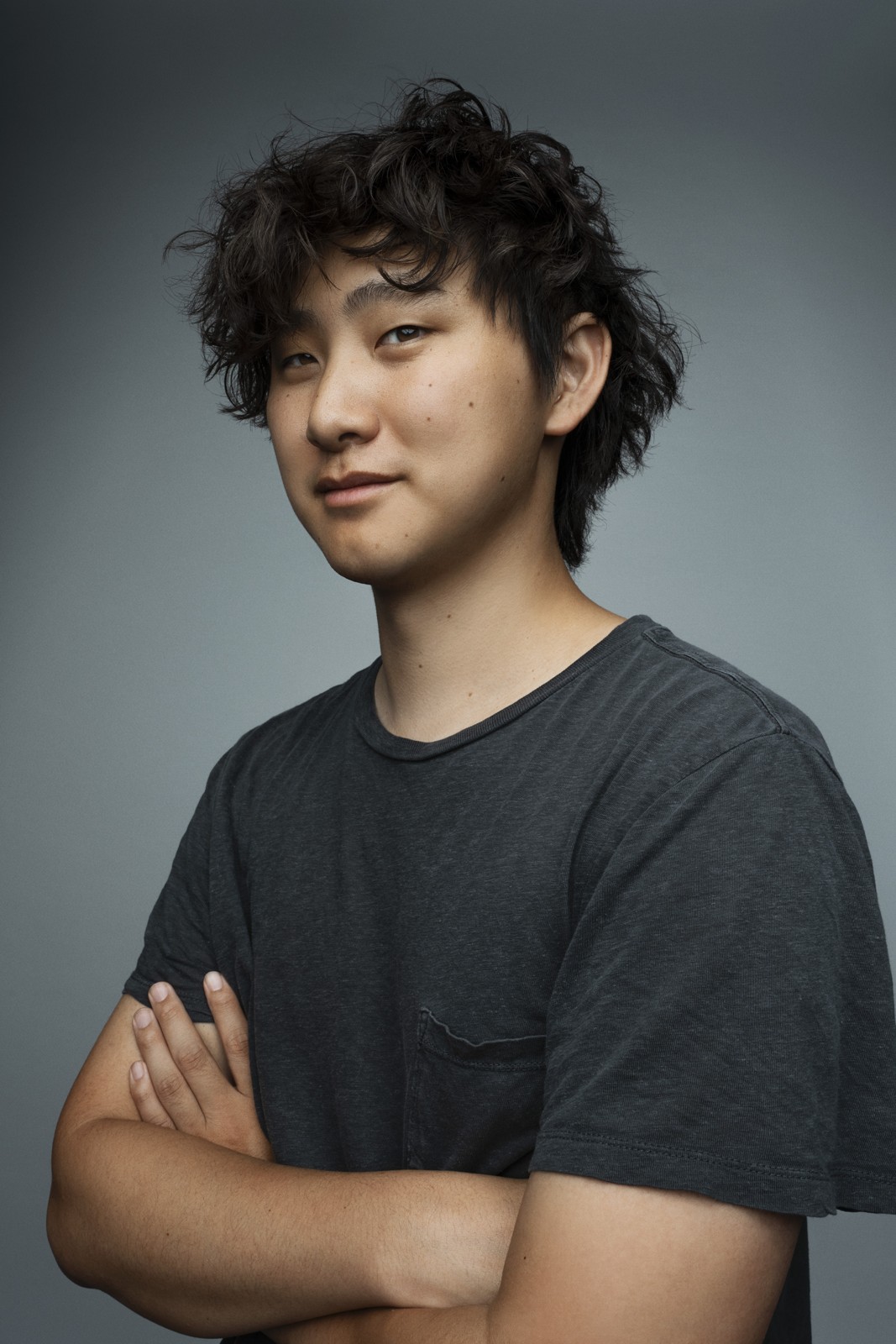
Jerry Sanders
born Walter Jeremiah Sanders III
Co-founder, President and CEO, Advanced Micro Devices (AMD) · b. 1936 · Chicago, Illinois
Two calls made by hand, not formulas. how we score →
Summary
Raised on Chicago's South Side by his grandparents, he survived a gang beating at eighteen that left him comatose and given last rites.
A scholarship funded his engineering degree. Fired from Fairchild in 1968, he co-founded AMD in 1969 on $1.5 million raised from investors and ran it 35 years, betting the company on a 1982 deal that let it make Intel-compatible chips.
How it happened
Walter Jeremiah "Jerry" Sanders III was born September 12, 1936, in Chicago. His parents divorced, and his paternal grandparents raised him on the South Side. No family wealth or business connection to engineering or electronics is documented in his childhood.
At eighteen, he stepped in to help a friend being attacked in a street fight. The friend got away and the gang turned on Sanders instead, beating him badly enough that a neighbor rushed him to the hospital, where he lay comatose for three days and a priest was called to administer last rites before he recovered. He has said the experience taught him the value of loyalty. No family financial or medical cushion beyond a neighbor's intervention is documented for the incident.
He earned a Bachelor of Science in electrical engineering from the University of Illinois Urbana-Champaign in 1958, funded by a scholarship from the Pullman railroad car company rather than family money. It was a portable, stranger-verifiable credential that got him into engineering regardless of what his household could pay for.
He worked briefly at Douglas Aircraft Company and Motorola, then joined Fairchild Semiconductor in 1961 as a sales engineer and rose through marketing and management into one of Silicon Valley's most visible salesmen. In 1968, new leadership under C. Lester Hogan clashed with his outspoken, flamboyant style and fired him. "My whole life has been about treating people fairly, and I wasn't treated fairly," he said of it later.
In May 1969, eight Fairchild colleagues — Sanders, Ed Turney, John Carey, Sven Simonsen, Jack Gifford, Frank Botte, Jim Giles, and Larry Stenger — founded Advanced Micro Devices in Sunnyvale, California. Sanders agreed to join only on the condition that he be made president. The group raised roughly $1.5 million from private investors, including friends and family, to launch it — an outside capital raise, not a savings bootstrap — and gave every employee stock options from the start, unusual for the time. AMD went public in September 1972.
AMD spent its first decade as a niche, undercapitalized also-ran next to Intel. In October 1981, formally executed in February 1982, Sanders negotiated a ten-year technology exchange agreement making AMD a second-source manufacturer of Intel's x86 chips, in exchange for reciprocal licenses to Intel. It was the single deal that let AMD legally build Intel-compatible processors for the next two decades, and it is what turned a struggling second-tier chipmaker into Intel's one durable rival — the founding got him into the business, but this deal is what defined the business he ended up in.
Intel later disputed the scope of the 1982 agreement after AMD reverse-engineered code for its 8086-family chips, and the two companies fought it out in litigation and arbitration through the 1980s and into the 1990s over AMD's right to keep making x86-compatible parts — corporate contract and IP litigation, with no personal liability recorded against Sanders, and AMD's right to compete survived it. He ran AMD as CEO from 1969 to 2002 and as chairman until April 2004, thirty-five years in total, known across Silicon Valley for a flamboyant, combative style and lines like "real men have fabs." He married Tawny Sanders in 1990. No reliable net worth figure or Forbes listing was located; his wealth came from decades of AMD salary, bonus, and equity split across eight founders and diluted by a 1972 IPO and decades of broad-based employee stock grants, not a retained founder-scale ownership stake. He recruited Héctor Ruiz as his successor in 2000; AMD's later turnaround under Lisa Su, who became CEO in 2014, came a decade after Sanders left the chairmanship.
The coded evidence
Thirteen groups, every claim sourcednot established
A specific ethnic ancestry beyond "white American" is not documented in the sources consulted; coded.ethnicities carries only the low-confidence "European American" bucket for the facet.
↗ en.wikipedia.orgMulti-generational domestic. No immigration is documented in the family; his grandparents and parents were in Chicago.
↗ en.wikipedia.orgEnglish; no indication of another home language.
↗ en.wikipedia.orgNo documented family financial or housing cushion. Raised by grandparents after his parents' divorce, with no family wealth on record. At eighteen, when he was beaten nearly to death, it was a neighbor — not family resources, insurance, or savings — who got him to a hospital; he received last rites before recovering. Nothing in the record suggests a family home or capital he could have fallen back on if the beating, or later the 1968 Fairchild firing, had gone worse.
↗ dfarq.homeip.netA continuous salaried income (Douglas Aircraft, Motorola, Fairchild) through 1968, then the presidency of AMD itself from 1969 — he was paid as an executive of the company he was building, not funding it from an outside job or personal savings.
↗ dfarq.homeip.netnot established
Marital and dependent status at the 1969 founding is not established; he married Tawny Sanders in 1990, well after AMD's founding.
↗ en.wikipedia.orgnot established
No student debt is documented — his degree was scholarship-funded — and no personal debt at the 1969 founding is established; AMD's founding capital came from outside investors rather than a loan against his own assets.
↗ en.wikipedia.orgnot established
No housing loss or comparable instability is documented during the years he built AMD; the severe instability in his life — the gang beating — predates the venture and is coded under D1's housing fallback and D3/D4 childhood fields instead.
↗ en.wikipedia.orgThe hardship was imposed, not chosen. There was nothing to fall back on.
A child raised by grandparents after a parental divorce, with no documented family wealth, had no standing home of comfort to return to; the hardship reads as imposed rather than a chosen austerity.
↗ dfarq.homeip.netnot established
His parents' occupations are not established in the sources consulted; what is documented is that they divorced and his paternal grandparents raised him.
↗ en.wikipedia.orgHis paternal grandparents were the extended-kin node that actually raised him after his parents' divorce — not a supplementary source of capital or exposure, but the primary household itself.
↗ en.wikipedia.orgnot established
↗ en.wikipedia.orgnot established
No documented family standing, name recognition, or inherited capital.
↗ en.wikipedia.orgnot established
His engineering degree was funded by an outside scholarship rather than family income directed at schooling.
↗ en.wikipedia.orgnot established
Not established; he was raised by grandparents rather than parents.
↗ en.wikipedia.orgRaised by his paternal grandparents on Chicago's South Side after his parents divorced. Age at the transfer and its exact circumstances are not established in the sources consulted.
↗ en.wikipedia.orgnot established
No documented moves or housing loss beyond the custodial transfer to his grandparents' household.
↗ en.wikipedia.orgnot established
↗ en.wikipedia.orgnot established
↗ en.wikipedia.orgnot established
Not established; his parents' divorce, not death, is what is documented.
↗ en.wikipedia.orgnot established
↗ en.wikipedia.orgnot established
↗ en.wikipedia.orgnot established
↗ en.wikipedia.orgAt eighteen he was beaten nearly to death by a street gang in Chicago after intervening to help a friend, was comatose for three days, and received last rites before recovering. This is community violence he survived rather than childhood abuse, assault by an intimate partner, or neglect, so it does not map cleanly onto the site's trauma facet tags; it is coded here and reflected in the hardness score rather than tagged in coded.trauma.
↗ dfarq.homeip.netChicago's South Side, Illinois.
↗ en.wikipedia.orgnot established
↗ en.wikipedia.orgnot established
His Chicago-area K-12 schooling is not documented in the sources consulted.
↗ en.wikipedia.orgnot established
↗ en.wikipedia.orgnot established
No documented childhood proximity to electronics or engineering employers; his path into the field ran through a general-purpose EE degree, not local industry exposure.
↗ en.wikipedia.orgnot established
↗ en.wikipedia.orgnot established
↗ en.wikipedia.orgMoved from Chicago to California as an adult for work — first Douglas Aircraft and Motorola, then Fairchild Semiconductor in 1961 — placing him in the nascent Silicon Valley semiconductor industry years before AMD's founding. This was a career move made as an already-credentialed engineer, not a childhood family migration.
↗ dfarq.homeip.netnot established
↗ en.wikipedia.orgnot established
↗ en.wikipedia.orgnot established
↗ en.wikipedia.orgnot established
↗ en.wikipedia.orgnot established
↗ en.wikipedia.orgnot established
↗ en.wikipedia.orgSeven former Fairchild Semiconductor colleagues approached him in 1969 to join their planned startup; he agreed only on condition that he be made president rather than a subordinate.
↗ dfarq.homeip.netnot established
↗ en.wikipedia.orgFairchild Semiconductor (1961-1968), where he rose from sales engineer to a star of Silicon Valley marketing and management, and where he built the working relationships with the seven engineers who became AMD's other co-founders.
↗ dfarq.homeip.netSkill, Network, Credibility
Fairchild supplied sales and marketing skill, the co-founder network, and a reputation as a top Silicon Valley salesman; it did not supply capital.
↗ dfarq.homeip.netnot established
↗ en.wikipedia.orgEight Fairchild colleagues altogether: Sanders plus Ed Turney, John Carey, Sven Simonsen, Jack Gifford, Frank Botte, Jim Giles, and Larry Stenger, all recently departed from Fairchild Semiconductor.
↗ en.wikipedia.org22
First job at Douglas Aircraft Company following his 1958 University of Illinois graduation.
↗ en.wikipedia.orgnot established
↗ en.wikipedia.orgnot established
↗ en.wikipedia.orgnot established
↗ en.wikipedia.orgnot established
↗ en.wikipedia.orgnot established
↗ en.wikipedia.orgnot established
↗ en.wikipedia.orgFired from Fairchild Semiconductor in 1968 after new leadership under C. Lester Hogan clashed with his outspoken style. Within a year, former colleagues recruited him to co-found AMD, where he negotiated the presidency as a condition of joining — the firing that looked like the end of his career became the opening for the venture that defined it.
↗ dfarq.homeip.netnot established
↗ en.wikipedia.orgnot established
↗ en.wikipedia.orgnot established
↗ en.wikipedia.orgnot established
↗ en.wikipedia.org3
Douglas Aircraft, Motorola, and Fairchild Semiconductor, before he co-founded AMD rather than joining a fourth employer.
↗ dfarq.homeip.netnot established
↗ en.wikipedia.orgnot established
↗ en.wikipedia.orgnot established
↗ en.wikipedia.orgBachelor of Science, electrical engineering, University of Illinois Urbana-Champaign (1958).
↗ en.wikipedia.orgnot established
No debt figure is documented; the degree was scholarship-funded rather than debt-financed.
↗ en.wikipedia.orgnot established
↗ en.wikipedia.orgDirect academic track — a public state-university engineering degree funded by an external scholarship, straight into industry with no gap.
↗ en.wikipedia.orgnot established
The Pullman company scholarship that funded his degree is documented only generically; whether it bundled anything beyond tuition (an internship, an employer commitment) is not established.
↗ en.wikipedia.orgnot established
↗ en.wikipedia.orgnot established
His personal first-dollar earnings are not separately documented from his salaried engineering and sales career.
↗ en.wikipedia.orgnot established
No family capital transfer is documented; a grandparent-raised household with no recorded wealth had nothing to transfer.
↗ en.wikipedia.orgnot established
↗ en.wikipedia.orgIt needed capital up front, before it earned anything.
AMD launched on an outside capital raise rather than existing revenue.
↗ dealroom.conot established
↗ en.wikipedia.orgnot established
No evidence he self-funded AMD from prior salary; the founding raise came from outside investors.
↗ en.wikipedia.orgRoughly $1.5 million raised in 1969 from private investors, including friends and family of the founding group, to launch AMD — the company's founding capital, not personal savings. AMD went public on the strength of that base in September 1972.
The exact fundraising timeline and the specific split between "friends and family" and other private investors is not established in the sources consulted.
↗ dealroom.conot established
↗ en.wikipedia.orgOutside-capital-financed from the 1969 founding, public since September 1972. Ownership was split across eight co-founders from the start, and AMD extended stock options broadly to employees from its earliest days, which diluted any single founder's stake further as the company grew over decades.
↗ dfarq.homeip.netnot established
An operating semiconductor company, not a fund or holding-company compounding vehicle.
↗ en.wikipedia.orgnot established
↗ en.wikipedia.orgnot established
Not applicable; he was a founder, not a later hire into founder-like equity.
↗ en.wikipedia.orgnot established
↗ en.wikipedia.orgnot established
Not applicable; no media or IP-licensing rights deal of this kind is involved.
↗ en.wikipedia.orgAMD owned its own semiconductor fabrication plants for most of Sanders's tenure — captured in his line "real men have fabs" — rather than relying solely on outside foundries, a capital-intensive infrastructure bet distinct from a fabless model.
↗ dfarq.homeip.netnot established
↗ en.wikipedia.orgThe company and its team came directly out of the founders' shared prior employer, Fairchild Semiconductor, rather than from a personal trauma, an observed market gap discovered independently, or a family business.
↗ dfarq.homeip.netHe led AMD as president, CEO, and chairman for 35 years without ever holding majority ownership; control ran through the executive and board roles he held, not through a dual-class share structure or a dominant equity stake, which was split from the outset among eight founders and diluted further by the 1972 IPO and decades of employee stock grants.
↗ dfarq.homeip.netnot established
Not established. There is no record of Sanders personally liquidating savings or a retirement account to fund AMD; the founding capital came from outside investors.
↗ en.wikipedia.orgnot established
↗ en.wikipedia.orgnot established
↗ en.wikipedia.orgOutside investors, including friends and family of the founding group, absorbed the founding-stage risk through the 1969 equity raise; Sanders drew a salary as an officer of the company rather than funding it personally.
↗ dealroom.conot established
↗ en.wikipedia.orgnot established
↗ en.wikipedia.orgnot established
↗ en.wikipedia.orgnot established
↗ en.wikipedia.orgnot established
↗ en.wikipedia.orgnot established
↗ en.wikipedia.org45
Age at the 1982 Intel technology exchange agreement (born September 1936; agreement executed February 1982).
↗ en.wikipedia.orgThe early-1980s IBM PC-driven boom made x86 compatibility extraordinarily valuable, and large computer makers of the era typically required a second-source supplier before committing to a chip architecture — the condition that made Intel willing to license AMD as a second source in the first place.
↗ en.wikipedia.orgSunnyvale, California, where AMD was founded and headquartered.
↗ en.wikipedia.orgnot established
↗ en.wikipedia.orgnot established
↗ en.wikipedia.orgBuilt organically from a 1969 founding, expanded through decades of in-house chip development, rather than growing primarily through acquisition.
↗ en.wikipedia.org35
Continuous leadership from the 1969 founding as president/CEO through his April 2004 resignation as chairman.
↗ en.wikipedia.orgnot established
AMD was built inside Silicon Valley itself (Sunnyvale), not deliberately outside the hub.
↗ en.wikipedia.orgnot established
↗ en.wikipedia.orgSemiconductors
↗ en.wikipedia.orgnot established
No current net-worth figure is documented; a Forbes profile URL for him could not be located (unlike his successor Lisa Su, he does not appear to be tracked as a billionaire). Magnitude is coded from the best-supported basis available — 35 years of salary, bonus, and equity as a public-company CEO/chairman, split across eight co-founders from the outset and diluted by a 1972 IPO and decades of broad-based employee stock grants, rather than a retained founder-scale ownership stake — placing him well below billionaire scale but plausibly in the hundreds of millions. Treat the magnitude band as a genuine estimate under real uncertainty, not a disclosed figure.
↗ en.wikipedia.orgnot established
No disclosed filing or credible journalistic estimate was located within the research budget.
↗ en.wikipedia.orgnot established
↗ en.wikipedia.orgnot established
No specific proxy-statement compensation figure was located within the research budget; SEC executive-compensation disclosure was far less detailed for most of his tenure than it became after 1992.
↗ en.wikipedia.orgnot established
↗ en.wikipedia.orgnot established
↗ en.wikipedia.orgSalary, bonus, and equity compensation as a long-tenured executive of a company he co-founded but never controlled a majority of — closer to a well-compensated leader's wealth than a founder's concentrated ownership stake.
↗ dfarq.homeip.netnot established
No specific honors, awards, or institutional positions were located within the research budget beyond his corporate role.
↗ en.wikipedia.orgCapped
An executive-compensation-and-diluted-equity ceiling rather than an uncapped, majority-owned founder stake — he ran the company for decades without ever holding control of it outright.
↗ dfarq.homeip.netnot established
No government regulatory finding against Sanders personally is documented.
↗ en.wikipedia.orgnot established
↗ en.wikipedia.orgAfter AMD reverse-engineered microcode for Intel's 8086-family chips under the 1982 technology exchange agreement, Intel disputed the scope of AMD's rights, and the two companies were reported to have fought it out in litigation and arbitration through the 1980s and into the 1990s over AMD's right to keep producing x86-compatible parts — a corporate contract and intellectual-property dispute between the two companies, not a personal-misconduct finding against Sanders, and AMD's stock reportedly reflected it as a serious threat to the company at points along the way.
Framed here as reported business history per the source's own characterization; specific case names, dates, and the ultimate legal resolution were not confirmed within the research budget.
↗ en.wikipedia.orgnot established
No co-founder or investor ownership dispute among AMD's own founders is documented.
↗ en.wikipedia.orgnot established
↗ en.wikipedia.orgnot established
↗ en.wikipedia.orgDuring
The Intel dispute unfolded across the 1980s, during AMD's rise as an x86 competitor.
↗ en.wikipedia.orgProduced the advantage
Defending AMD's contractual and IP rights to make x86-compatible chips was central to the company's decades-long position; coded as reported dispute history, not an adjudicated finding of wrongdoing by Sanders.
↗ en.wikipedia.orgCivil wrong
A contract and intellectual-property dispute between two corporations, not a criminal matter.
↗ en.wikipedia.orgNone
A corporate dispute absorbed by the company; no personal liability for Sanders is documented.
↗ en.wikipedia.orgResisted layoffs during AMD's harder years — during a 1979 downturn he asked staff to work Saturdays to accelerate product launches rather than cut headcount — and distributed profits broadly, including a $100 bonus to every employee on AMD's first $1 million quarter and a recurring cash profit-sharing program; every AMD employee received stock options from the company's founding, unusual for the era.
↗ dfarq.homeip.netFlamboyant, Boisterous, Combative, one of the best salesmen Silicon Valley had ever seen
↗ dfarq.homeip.netPress
Characterizations come from industry press and analyst commentary (the New York Times, trade coverage) rather than a single named source.
↗ dfarq.homeip.netnot established
Not precisely counted within the research budget, though multiple outlets (NYT, CNET, trade press) independently characterize him similarly.
↗ en.wikipedia.orgBefore
His reputation as Silicon Valley's most flamboyant salesman was established at Fairchild, before AMD's 1969 founding.
↗ dfarq.homeip.netAsset
His salesmanship and showmanship are consistently described as central to AMD's ability to compete against a much larger Intel.
↗ dfarq.homeip.netThe reputation was deliberately built, through books, press, and PR.
A deliberately maintained public persona over decades — quotable lines like "real men have fabs," a combative posture toward Intel and competitors, and sustained press visibility as AMD's public face.
↗ dfarq.homeip.netnot established
↗ en.wikipedia.orgnot established
↗ en.wikipedia.orgnot established
↗ en.wikipedia.orgnot established
Not applicable; no documented reputational collapse requiring recovery.
↗ en.wikipedia.orgStructural context
The cost-of-failure score comes from this person's own money and circumstances. But who they were in America carried its own weight, the same way their household or income did, and it shaped how hard the path was just as much. That part isn't in the cost-of-failure number. It's here instead.
Men founded the companies that took nearly all the venture funding and almost every top outcome, a tailwind that never shows up in one person's own circumstances.
↗ techcrunch.comWhite founders are heavily overrepresented among funded companies and top-tier wealth relative to their share of the population, an edge that has nothing to do with a person's own money.
↗ techcrunch.comAmong the people recorded here — men: 169 · White subjects: 114. Representation here is who reached these outcomes, not equal odds of reaching them.
Controlled comparisons
Each holds one thing constant and varies another, so the difference is the point. A list of similar names wouldn't tell you anything.