Michael Jackson
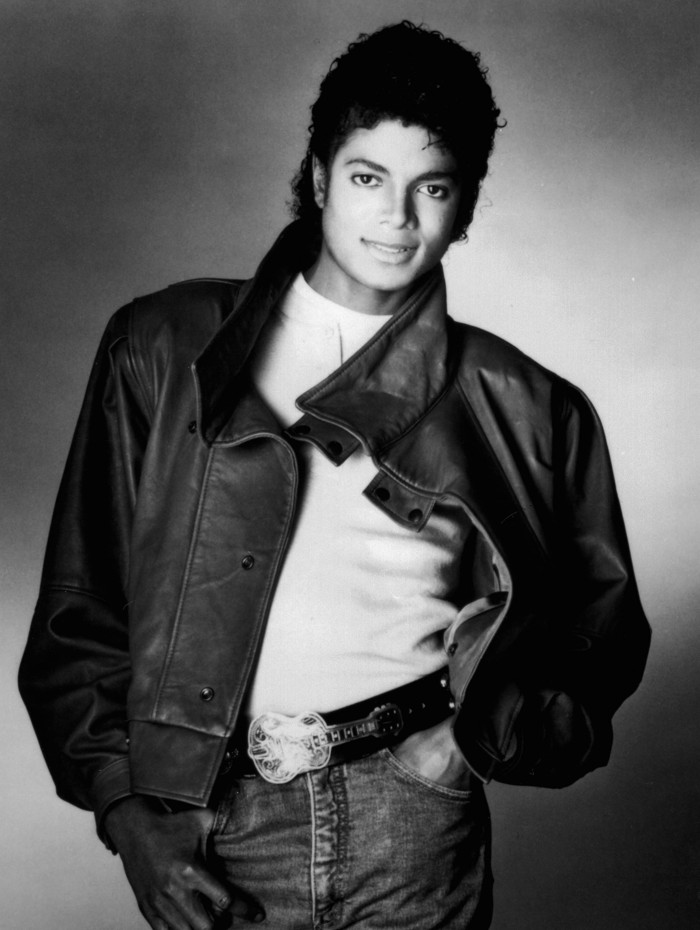
Singer and songwriter; owner of the ATV/Sony music publishing catalog · b. 1958–2009 · Gary, Indiana
Two calls made by hand, not formulas. how we score →
Summary
He grew up in a working-class Black family in a steel town, then crossed into a segregated pop and video culture through Motown and MTV.
In 1985 he used his Thriller-era earnings to buy the Beatles' publishing catalog instead of just collecting royalties. He died in 2009 reportedly hundreds of millions in debt, but the catalog he assembled has since made his estate worth billions.
How it happened
Born August 29, 1958, in Gary, Indiana, the eighth of ten children of Joe Jackson, a crane operator at Inland Steel whose own family had moved north from Arkansas, and Katherine Jackson, a Jehovah's Witness who played piano and clarinet. Joe organized his sons into a family act and drilled them through rehearsals in Gary while they were still in grade school.
The Jackson 5 won amateur night at the Apollo Theater in 1967, and Motown signed them in 1969 on the strength of a recommendation from Bobby Taylor and public sponsorship from Diana Ross. Four straight number-one singles put Michael, still a child, at the center of the label's biggest act, with Motown handling the songwriting, production, choreography, and publicity around him.
With Quincy Jones producing, Off the Wall (1979) established him as an adult solo star, and Thriller (1982) became the best-selling album ever made. MTV initially would not air the "Billie Jean" video because network executives felt Black artists did not fit its rock format; CBS Records president Walter Yetnikoff threatened to pull all CBS product from the channel, and MTV put the video into rotation on March 10, 1983.
He had started buying smaller song catalogs two years earlier, after learning how much Paul McCartney made from owning other artists' publishing rights. In August 1985, using money from Thriller and outbidding a rival offer, he bought ATV Music Publishing for $47.5 million, acquiring the rights to nearly 4,000 songs, including most of the Lennon-McCartney Beatles catalog. It turned a touring and record-royalty career into an asset-owning one.
He spent heavily on Neverland Ranch, a 2,700-acre property he turned into a private amusement park, and borrowed against his half of Sony/ ATV Music Publishing, formed in 1995 when he merged the ATV catalog with Sony's, to cover the costs. He defaulted on a Neverland loan in 2008, and his executors later told a court he was more than $500 million in debt when he died.
Jackson died on June 25, 2009, from an overdose of the anesthetic propofol administered by his physician. His executors spent years working out the debt, and the Sony/ATV stake turned out to be what saved the estate: Sony bought out its half in 2016 for $750 million, and the estate sold half of what remained of the publishing and masters catalog to Sony for another $600 million in 2024. Forbes has ranked the estate the top-earning dead celebrity in most years since 2009, putting its cumulative earnings at roughly $3.5 billion.
The coded evidence
Thirteen groups, every claim sourcedDescendant. His father Joe Jackson's family relocated from Fountain Hill, Arkansas to East Chicago/Gary, Indiana in the 1940s as part of the Great Migration, before Michael was born.
↗ encyclopediaofarkansas.netHis parents owned a small two-bedroom home on Jackson Street in Gary, bought in January 1950; the family remained there through his childhood and early Motown years rather than facing any housing instability.
↗ encyclopediaofarkansas.netHis father's crane-operator wages at Inland Steel, plus his moonlight earnings playing guitar in a local R&B band, supported the family while the sons rehearsed and played local venues before any record deal existed.
↗ en.wikipedia.orgnot established
No homelessness or comparable instability is documented during his childhood or the Motown years.
↗ en.wikipedia.orgFather Joe Jackson was a crane operator at Inland Steel Company in East Chicago/Gary and did not finish high school; he also played guitar in a local blues/R&B band, the Falcons. Mother Katherine Jackson (née Scruse) worked part-time (including retail) and played piano and clarinet.
↗ en.wikipedia.orgNeither parent was self-employed.
Wage employment at Inland Steel; the band work was a side pursuit rather than a business.
↗ en.wikipedia.org9
Eighth of ten children; a twin brother, Brandon, died at birth. Living siblings: Rebbie, Jackie, Tito, Jermaine, La Toya, Marlon, Randy, Janet.
↗ en.wikipedia.orgHis father organized his sons into a family musical act starting in the early 1960s, ran an intensive rehearsal schedule, and secured the group's first bookings and record deal (Steeltown Records, 1967, then Motown, 1969). Michael was performing professionally as a child under his father's direction rather than through a school or hobby track.
↗ en.wikipedia.orgSpoke on the record, including in a 1993 interview with Oprah Winfrey, about a punitive childhood rehearsal regime under his father — he described whippings, name-calling, and loneliness. His father acknowledged using switches and belts as punishment but denied random beatings, and some family members disputed the characterization.
His own on-record account, attributed to him; the father's partial acknowledgement and the family dispute are noted rather than adjudicated.
↗ en.wikipedia.orgA working-class, majority-Black neighborhood in Gary, Indiana, a U.S. Steel company town that drew Black families north from the South during the Great Migration for mill work.
↗ en.wikipedia.orgCame up inside the Midwest R&B talent-show and club circuit (Gary and nearby Chicago) in the mid-1960s, alongside other young acts chasing the same touring and amateur-night pipeline that fed Motown.
General industry-cluster context; no specific named peers documented at that age.
↗ en.wikipedia.orgHis father's family moved from Fountain Hill, Arkansas to East Chicago/Gary, Indiana in the 1940s, before Michael was born, part of the broader Great Migration of Black families to Midwest steel and auto-industry cities.
↗ encyclopediaofarkansas.netEarly MTV, launched in 1981, effectively excluded videos by Black artists on the stated logic that they did not fit its rock-format programming; the "Billie Jean" video only aired after CBS Records threatened to pull all of its content from the channel.
↗ en.wikipedia.orgBobby Taylor, a Motown recording artist, brought the Jackson 5 to the label's attention; Diana Ross publicly sponsored and introduced the group, helping Motown market them as her discovery.
↗ en.wikipedia.orgMotown Records signed the Jackson 5 in March 1969 and built the group's songwriting, production, choreography, and publicity around them; he later moved to Epic/CBS Records for his adult solo career.
↗ en.wikipedia.orgCapital, Credibility, Network, Skill
↗ en.wikipedia.org8
Performing with his brothers' group from the mid-1960s, several years before the 1969 Motown signing.
↗ en.wikipedia.orgHis Jackson 5/Jacksons fame from age 11 onward carried directly into his adult solo career; Off the Wall and Thriller were released to an audience that already knew him.
↗ en.wikipedia.orgDid not himself bypass a gatekeeper; instead his label used leverage against one. CBS Records president Walter Yetnikoff pressured MTV into airing "Billie Jean" by threatening to withdraw all CBS programming from the channel, breaking MTV's early pattern of excluding Black artists from rotation.
↗ en.wikipedia.orgQuincy Jones produced Off the Wall, Thriller, and Bad and shaped his adult sound; entertainment attorney John Branca negotiated the 1985 ATV Music purchase and later served as a co-executor of his estate.
↗ en.wikipedia.orgNo college. Educated primarily by private tutors while touring and filming from childhood; no evidence of a completed traditional high school diploma track.
↗ en.wikipedia.orgThrough the 1990s and 2000s he repeatedly borrowed against his 50% Sony/ATV stake to fund personal spending and cover shortfalls, at times on unfavorable, high-interest terms, ultimately contributing to more than $500 million in debt at his death.
↗ investmentnews.comIn 1995 he merged the ATV catalog with Sony's music-publishing catalog to form Sony/ATV Music Publishing, taking a 50% stake and a cash payment rather than selling outright, keeping an ownership position in a much larger combined asset.
↗ en.wikipedia.orgSplit between two very different uses: reinvesting Thriller-era earnings into buying song catalogs, which became the durable asset behind his family's later wealth, and spending heavily and continuously on Neverland's operation, jewelry, art, and travel, which court testimony later cited as a major driver of his debt.
↗ investmentnews.comIn August 1985 he bought ATV Music Publishing for $47.5 million, acquiring the publishing rights to nearly 4,000 songs, including most of the Lennon-McCartney Beatles catalog, after Paul McCartney himself had declined to buy it. He had already begun buying smaller catalogs (Sly Stone, Len Barry, Dion) starting around 1983.
↗ en.wikipedia.orgBought Neverland Ranch, a 2,700-acre property in Santa Barbara County, in March 1988 (reported price ranging from roughly $19.5M to $30M) and built it into a private estate with rides, a zoo, and a four-acre lake, rather than renting or leasing comparable space.
↗ en.wikipedia.orgSaid he began pursuing music-catalog ownership after learning that Paul McCartney earned tens of millions a year from owning other artists' publishing rights, and decided to own rather than only perform.
↗ en.wikipedia.org1
Music-catalog ownership (ATV, then Sony/ATV) is the one documented case of converting his fame and earnings into an ownership stake rather than a fee; endorsement deals (Pepsi, LA Gear) were paid spokesperson arrangements, not equity.
↗ en.wikipedia.org0
No documented failed venture; his career ran as a continuous act from childhood rather than a series of separate attempts.
↗ en.wikipedia.orgBought the ATV catalog in 1985, before song-publishing catalogs were widely recognized by investors as appreciating financial assets; the market for buying up rights to older catalogs at scale developed substantially only in later decades.
↗ en.wikipedia.orgBought an existing asset, the ATV catalog of nearly 4,000 songs, rather than building a publishing company of his own from new work.
↗ en.wikipedia.org41
From the 1985 ATV purchase through 2026; the catalog has kept generating value both during his life and, since 2009, for his estate.
↗ blackenterprise.comPersonal spending, especially on Neverland Ranch's operation and staff, jewelry, art, and travel, ran persistently ahead of even his very large income through the 1990s and 2000s, according to later court testimony, and is cited as a central driver of his debt.
↗ investmentnews.comMusic (recording artist and songwriter; music-publishing catalog ownership)
↗ en.wikipedia.org2000000000
A genuinely divergent figure depending on the date. At his June 2009 death, executors later told a court he was more than $500 million in debt (an earlier 2010 AP estimate put it near $400 million), against a 2007 AP analysis that had found roughly $567.6M in assets against $331M in debts (net ~$236.6M positive) two years before he died. His estate has since paid off the debt and, per a June 2024 court filing, is worth an estimated $2 billion, built almost entirely on the Sony/ATV and successor publishing and masters interests he assembled starting in 1985. Forbes puts the estate's cumulative earnings since his death at roughly $3.5 billion. Coded here from the fuller, later-realized outcome rather than the balance sheet at death.
↗ investmentnews.comJournalistic estimate
↗ investmentnews.comnot established
No single filing-based peak-year income figure for his lifetime earnings is established in the sources reviewed; his posthumous annual earnings (e.g. an estimated $105M in 2025) are well documented but are estate income, not his personal peak while alive.
↗ blackenterprise.comMuch of the value was illiquid and leveraged for most of his life; the Sony/ATV stake was only substantially realized after his death, first through the 2016 buyout ($750M) and again through the 2024 partial catalog sale ($600M).
↗ blackenterprise.comTwo very different income streams ran side by side: large but volatile fee income from records, touring, and endorsements, and a slower-building but ultimately much larger wealth base in the ATV/ Sony catalog he owned outright.
↗ en.wikipedia.org13 competitive Grammy Awards; Thriller remains the best-selling album ever (approximately 70 million copies); two Rock and Roll Hall of Fame inductions (with the Jackson 5 and as a solo artist); Songwriters Hall of Fame induction.
↗ en.wikipedia.orgUncapped
↗ en.wikipedia.orgnot established
No adjudicated civil finding against him concerning his own business or creative conduct is established in the sources reviewed.
↗ en.wikipedia.orgPerfectionist, Visionary, Reclusive, Showman
↗ en.wikipedia.orgPublic
↗ en.wikipedia.orgBefore
His reputation as a meticulous, visionary performer formed with the Jackson 5 and Off the Wall/Thriller era, before the ATV purchase and later catalog wealth.
↗ en.wikipedia.orgAsset
His name and creative reputation drove album sales, touring demand, and endorsement deals (Pepsi) that funded the catalog purchases central to his later wealth.
↗ en.wikipedia.orgStructural context
The cost-of-failure score comes from this person's own money and circumstances. But who they were in America carried its own weight, the same way their household or income did, and it shaped how hard the path was just as much. That part isn't in the cost-of-failure number. It's here instead.
Men hold most of the ownership and gatekeeping across the creative and media industries, the default that recognition and deals flow toward.
↗ assets.uscannenberg.orgIn the creative and media industries, recognition comes far more easily to underrepresented creators than the ownership it should turn into. Among 2023's top-grossing film directors, for one measure, eight were Black.
↗ assets.uscannenberg.orgAmong the people recorded here — men: 115 · Black subjects: 58. Representation here is who reached these outcomes, not equal odds of reaching them.
Controlled comparisons
Each holds one thing constant and varies another, so the difference is the point. A list of similar names wouldn't tell you anything.