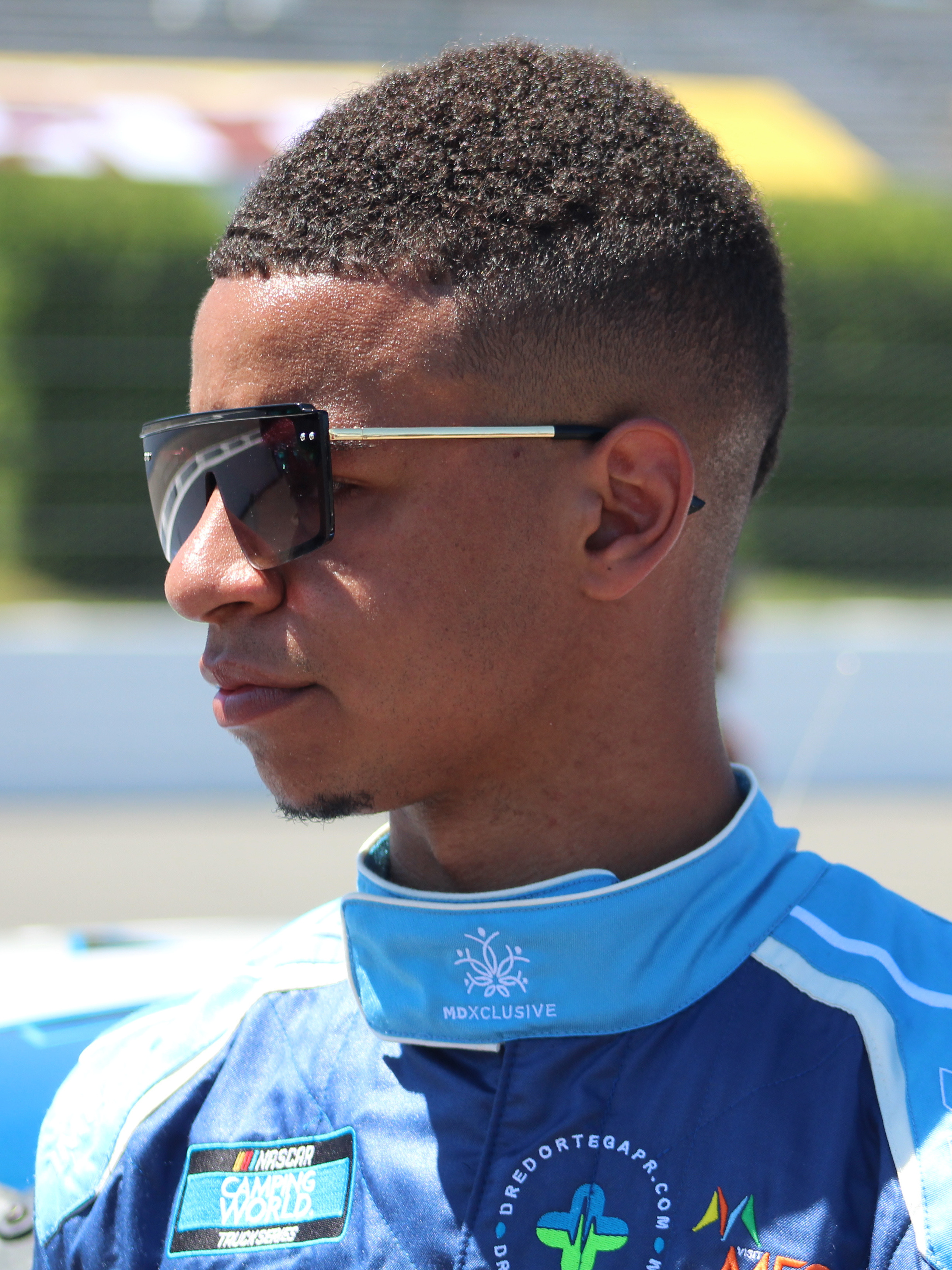
Shahid Khan
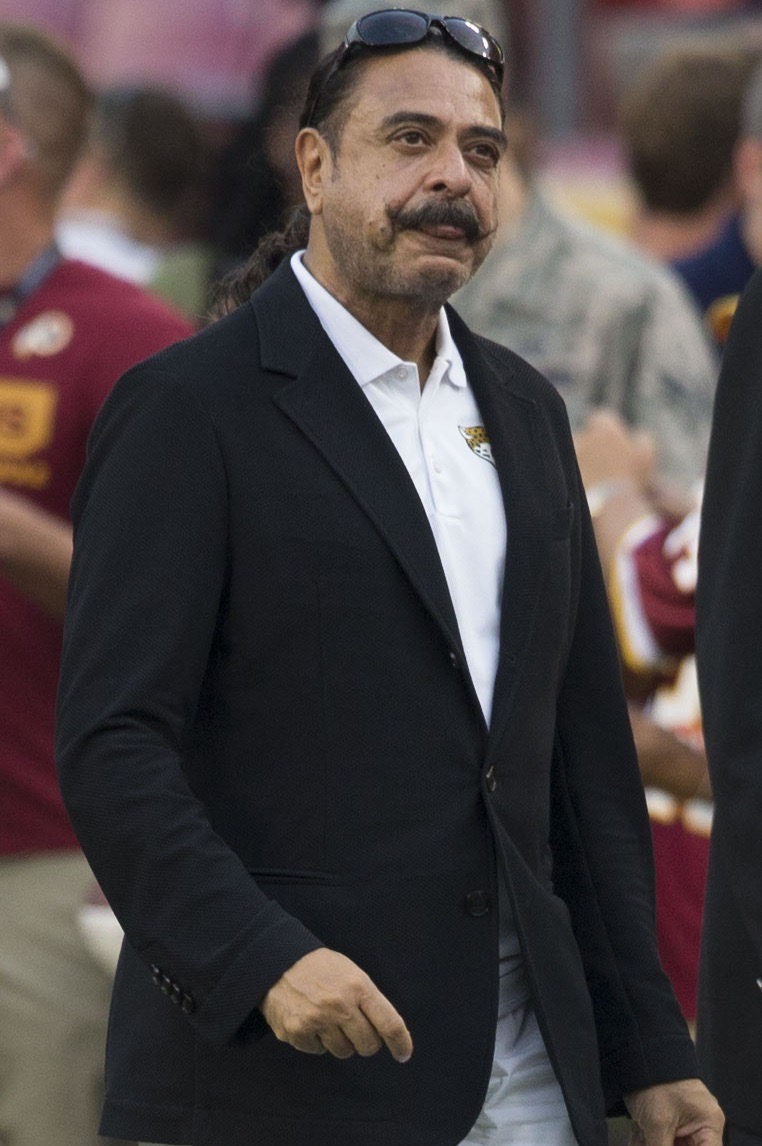
Owner of Flex-N-Gate, the Jacksonville Jaguars, and Fulham FC · b. 1950 · Lahore, Punjab, Pakistan → Urbana-Champaign, Illinois
Two calls made by hand, not formulas. how we score →
Summary
Khan arrived from Lahore in 1967 at sixteen with about $500, spent his first night in a two-dollar YMCA room, and washed dishes for $1.20 an hour the next morning.
He studied engineering, helped invent Flex-N-Gate's one-piece truck bumper as an employee, then bought the company outright in 1980 and rode a Toyota supply deal into an auto-parts empire, an NFL team, and a Premier League club.
How it happened
Born in Lahore in 1950, Khan grew up comfortably by Pakistani standards: his father ran a shop selling surveying and drafting equipment, and his mother taught mathematics. None of that money was reachable from Urbana, Illinois, where he landed alone in 1967 at sixteen to study engineering. He spent his first night in a two-dollar room at the university YMCA, and rather than burn through the roughly $500 he'd arrived with, he took a dishwashing job the next morning at $1.20 an hour. He later said the wage alone put him ahead of nearly everyone he'd known back home.
He earned an industrial engineering degree from the University of Illinois in 1971 and went to work as engineering director at Flex-N-Gate, a small Illinois auto-parts maker. While there he helped develop what became one of the industry's first one-piece truck bumpers, lighter and more rust-resistant than the stamped-steel bumpers it replaced.
In 1978 he left to start his own shop, Bumper Works, funded with $16,000 of his own savings and a $50,000 loan backed by the Small Business Administration. It made replacement and custom bumpers for pickup trucks and body shops.
In 1980, around age thirty, he bought Flex-N-Gate outright from its owner, Charles Gleason Butzow, for a reported $800,000, and folded Bumper Works into it. Flex-N-Gate began supplying Toyota pickup bumpers in 1984 and became Toyota's sole US bumper supplier by 1989, after Khan adopted Toyota's own lean-manufacturing methods on his shop floor. That relationship, more than the founding of Bumper Works itself, is what turned a small parts shop into a global supplier.
Revenue went from roughly $17 million to about $2 billion by 2010 and $8.9 billion by 2020, with parts on roughly two-thirds of vehicles sold in America and dozens of plants across the US, Mexico, China, and Europe. Khan became a naturalized US citizen in 1991 and has kept the company privately held and family-controlled ever since. The manufacturing business has also drawn wage-and-hour and workplace-safety litigation over the decades, including a 2026 class-action settlement over unpaid overtime covering more than 11,000 hourly workers, and a 2012 chemical-release incident at an Illinois plant that a jury later awarded damages over.
He bought the Jacksonville Jaguars for $770 million in 2011, becoming the first member of an ethnic minority to own an NFL franchise, then bought England's Fulham FC in 2013. He later became lead investor in All Elite Wrestling, where his son Tony Khan is president. Forbes put his net worth at $14.8 billion in mid-2026, built almost entirely on an auto-parts company most football and soccer fans have never heard of.
The coded evidence
Thirteen groups, every claim sourcedCoarse public-record coding; race is a noisy, interpretive category.
↗ en.wikipedia.orgFirst-generation immigrant; arrived in the US alone at 16 to study, naturalized as a US citizen in 1991.
↗ en.wikipedia.orgnot established
Likely Urdu or Punjabi given the Lahore household, but not explicitly confirmed in any source reviewed. Not established.
↗ en.wikipedia.orgnot established
No US family or co-signer is documented at any point after arrival. His parents remained in Lahore, and a 1967 wire of family money from Pakistan to a teenager in Illinois was not a realistic rescue plan even though the family itself was not poor. Absence of evidence, not confirmed absence.
↗ cbsnews.comA dishwashing job at $1.20 an hour, taken the morning after he arrived, while he carried a full engineering course load.
↗ cbsnews.com0
Unmarried and without children during the 1967-1980 arrival-to-buyout stretch; he married Ann Carlson in 1977, whom he'd met as a student in 1967.
↗ en.wikipedia.orgThe most severe documented instability is the first night in a $2 YMCA room on arrival; no ongoing homelessness or housing instability is described for the university years that followed.
↗ cbsnews.comThe hardship was imposed, not chosen. There was nothing to fall back on.
Imposed, not chosen. He took the dishwashing job specifically because he was afraid of running through the roughly $500 he had; there was no family money reachable in the US if he'd let it run out. This is the reasoning behind coding hardness at 5 rather than lower: origin class (a business-owning father, a mathematics-professor mother) was genuinely middle class and not destitute, but none of it could reach him during the years he was washing dishes and studying in Illinois, so the US landing itself was as capital-less as a born-poor case even though the family back in Lahore was not.
↗ cbsnews.comFather, Rafiq Khan, owned a shop selling surveying and drafting equipment in Lahore; mother, Zakia Khan, taught mathematics.
↗ en.dailypakistan.com.pkA parent worked for themselves, the strongest known predictor of founding.
His father owned and ran the surveying-equipment shop.
↗ en.dailypakistan.com.pk1
A younger brother, Faran Khan, is documented as a businessman in Pakistan; no other siblings are mentioned in sources reviewed.
↗ en.wikipedia.orgLahore, Punjab, Pakistan.
↗ en.wikipedia.orgOne international move: Lahore to Urbana-Champaign, Illinois, in 1967, alone, at 16, to attend university.
↗ en.wikipedia.orgHis household in Lahore was comfortably middle class: a father who owned his own shop, a mother with a university-level teaching post. He arrived in Illinois with about $500, slept his first night in a $2 YMCA room, and was washing dishes for $1.20 an hour by the next morning, a real step down before the University of Illinois degree and, later, Flex-N-Gate turned it back into a step up.
↗ cbsnews.comHe entered the Detroit-area auto-parts supply chain in the 1970s and 80s, then dominated by white, often family-run manufacturers, as a Pakistani-born, Muslim-raised immigrant with a name and accent that marked him as an outsider in that world. Decades later, buying the Jacksonville Jaguars in 2011 was reported as making him the first member of an ethnic minority to own an NFL franchise, itself a marker of how closed that ownership circle had remained.
No source reviewed documents a specific incident of exclusion or bias against him personally; this is read from the demographic and industry context rather than a named episode, which is why headwinds is coded at a moderate 4, not higher. It is coded as an identity headwind distinct from, and on top of, the class-based hardness scored separately in d1.
↗ en.wikipedia.orgFlex-N-Gate, where he worked as engineering director after graduating and helped develop what became one of the industry's first one-piece truck bumpers, before he ever owned the company.
↗ en.wikipedia.orgSkill, Idea
The engineering skill and the bumper concept both came out of his time as an employee there, before Bumper Works or the 1980 purchase.
↗ en.wikipedia.orgnot established
No co-founder is documented for either Bumper Works or the Flex-N-Gate purchase; he appears to have financed and run both alone.
↗ en.wikipedia.org1
Flex-N-Gate, as an employee, is the only employer documented before he founded Bumper Works in 1978.
↗ en.wikipedia.orgBS in Industrial Engineering, University of Illinois at Urbana-Champaign, 1971.
↗ en.wikipedia.orgWorked as a dishwasher for $1.20 an hour starting the morning after he arrived, while carrying a full course load.
↗ cbsnews.com$16,000 of his own savings from his Flex-N-Gate salary, combined with a $50,000 loan backed by the Small Business Administration, capitalized Bumper Works in 1978.
↗ books.google.comThe $16,000 personal-savings portion of the Bumper Works capitalization came from wages earned as Flex-N-Gate's engineering director.
↗ books.google.comBought Flex-N-Gate outright in 1980 and has kept it privately held and family-controlled through decades of growth to roughly $8.9 billion in 2020 revenue; no public listing or outside equity is documented at any point.
↗ en.wikipedia.orgA $50,000 Small Business Administration-backed loan supplied most of Bumper Works' 1978 startup capital, alongside his own savings.
Coded originCapital as wage-savings rather than a loan category because his own savings and labor built the base that made the SBA loan possible; the loan itself is a government-backed program rather than family or investor money. How the larger 1980 Flex-N-Gate purchase (reported at $800,000) was financed is not documented in any source reviewed.
↗ books.google.comThe one-piece truck bumper he helped develop as a Flex-N-Gate employee, which he later owned outright and scaled through a Toyota supply relationship.
↗ cbsnews.comSelf, through personal savings and a personally obtained SBA-backed loan; no family or investor capital is documented.
↗ books.google.com29
Approximate. Born July 1950; the 1980 Flex-N-Gate purchase is dated only to the year, so his exact age at the transaction (29 or 30) is not established.
↗ en.wikipedia.orgFlex-N-Gate's 1984-1989 rise to sole Toyota bumper supplier coincided with Toyota's expanding US manufacturing footprint (its NUMMI joint venture opened in 1984), as Japanese automakers were taking US market share from the Big Three and pushing domestic suppliers toward leaner manufacturing.
↗ en.wikipedia.orgBought an existing small manufacturer, Flex-N-Gate, in 1980 rather than building a new one from scratch, and folded his own earlier startup, Bumper Works, into it.
↗ en.wikipedia.org46
1980 purchase to 2026; the company remains under his family's control and the engine has not stopped running.
↗ en.wikipedia.orgAutomotive parts manufacturing, with ownership stakes in professional sports (NFL's Jacksonville Jaguars, the Premier League's Fulham FC) and entertainment (All Elite Wrestling).
↗ forbes.com14800000000
Forbes real-time tracker, last updated by Forbes on 2026-07-15; ranked #210 globally as of the 2026-08-26 retrieval. Journalistic estimate, not a filing; band only.
↗ forbes.comJournalistic estimate
↗ forbes.com2026
↗ forbes.comnot established
No salary-based figure is documented; his wealth is almost entirely privately held equity, not earned pay. Not established.
↗ forbes.comWealth held almost entirely as equity in privately held Flex-N-Gate plus appreciating sports-franchise values, not as salary or realized cash.
↗ forbes.comBecame, in 2011, the first member of an ethnic minority to own an NFL franchise; also owns Fulham FC and is lead investor in All Elite Wrestling, where his son Tony Khan is president and CEO. Received the Carnegie Corporation's Great Immigrant Award in 2025.
↗ en.wikipedia.orgUncapped
↗ forbes.comA Champaign County jury awarded $724,000 to a former Flex-N-Gate employee in a suit over a July 2012 incident at the company's Guardian West plant in Urbana, Illinois, in which hydrochloric acid being delivered reacted with sulfuric acid already on site and released harmful fumes inside the plant.
Detail drawn from search-indexed coverage of this local-news article; the underlying page could not be directly fetched to confirm the verdict date, so treat the $724,000 figure and incident date as reported rather than independently re-verified.
↗ news-gazette.comA class-action wage-and-hour lawsuit alleged Flex-N-Gate and affiliated entities failed to properly pay overtime to hourly production workers at plants in Oklahoma, Illinois, Indiana, Michigan, and Ohio; the parties agreed to a $3 million settlement covering roughly 11,516 current and former workers, with a fairness hearing scheduled for August 2026.
Sourced from a settlement-notice administrator site rather than a court filing directly; details are specific and internally consistent but not independently verified against the docket.
↗ claimdepot.comAfter
↗ claimdepot.comIncidental
Ordinary large-manufacturer labor and safety exposure, not the mechanism that produced the fortune; the one-piece bumper and the Toyota supply relationship did that.
↗ claimdepot.comCivil wrong
↗ claimdepot.comFine absorbed
Settlement and jury award paid by the company; no personal criminal liability for Khan is documented anywhere reviewed.
↗ claimdepot.comAs an employer he has run a multi-billion-dollar manufacturer that has drawn repeated wage-and-hour and plant-safety litigation over the decades, including a 2026 overtime settlement covering more than 11,000 hourly workers and a 2012 chemical-release jury award. No criminal charges or personal liability for Khan are documented in connection with any of it.
↗ claimdepot.comSelf made, unassuming and private despite his wealth, the "face of the American Dream"
The last phrase is drawn from Forbes' 2012 cover framing of him, as described secondhand in other coverage.
↗ cbsnews.comPress
↗ cbsnews.comBefore
His reputation as a self-made manufacturing owner predates the 2011 Jaguars purchase that made him nationally famous.
↗ en.wikipedia.orgAsset
The immigrant-success narrative has been consistently positive in mainstream coverage since at least the 2011 Jaguars purchase.
↗ cbsnews.comThe reputation accrued from behaviour rather than being manufactured.
↗ cbsnews.comStructural context
The cost-of-failure score comes from this person's own money and circumstances. But who they were in America carried its own weight, the same way their household or income did, and it shaped how hard the path was just as much. That part isn't in the cost-of-failure number. It's here instead.
Men held about 90% of Fortune 500 CEO seats in 2023, and a wider majority of the rungs below. The ladder is widest for them the whole way up.
↗ forbes.comImmigrants and their children are overrepresented among America's biggest companies, as founders and as senior leaders. They got there through the visa, credential, and network hurdles that make the path harder to even start down.
↗ forbes.comAmong the people recorded here — men: 115 · Asian (South Asian) subjects: 1. Representation here is who reached these outcomes, not equal odds of reaching them.
Controlled comparisons
Each holds one thing constant and varies another, so the difference is the point. A list of similar names wouldn't tell you anything.