Arnold Schwarzenegger
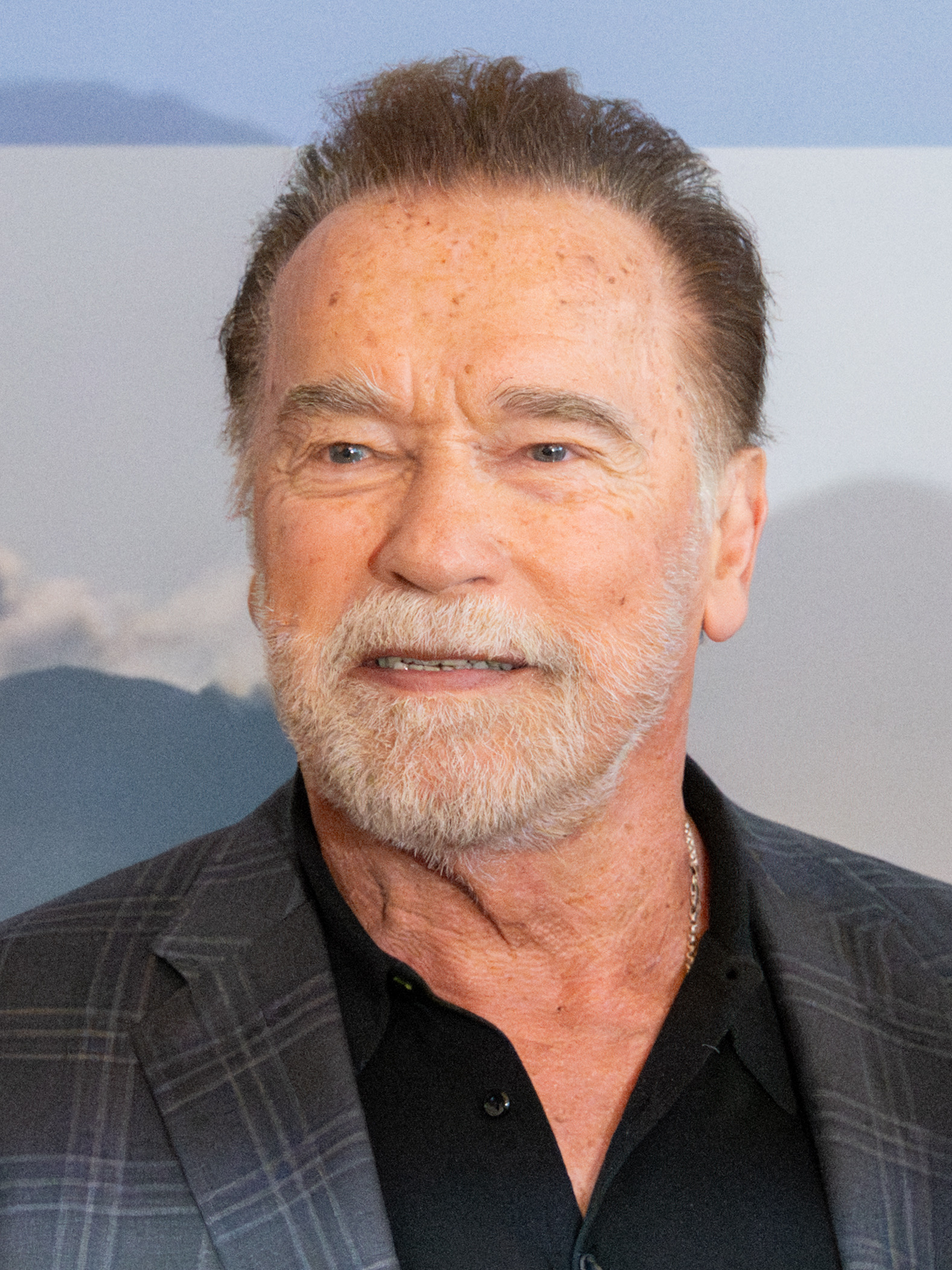
Bodybuilder, actor, businessman, and 38th Governor of California · b. 1947 · Thal, Styria, Austria
Two calls made by hand, not formulas. how we score →
Summary
A police chief's son from rural postwar Austria, he left at 21 with little English and no network, then built financial independence in reverse order: bricklaying profits into a mail-order fitness catalog, then real estate traded up over a decade, until he was already a millionaire before Hollywood paid him a dime — which let him choose roles, then a governorship, from strength rather than need.
How it happened
His father Gustav was the village police chief, a former member of the Nazi Party and the SA who had served as a military policeman on three fronts in the war. The household was strict by his own account: "if we did something bad or we disobeyed our parents, the rod was not spared." He has said his hair was pulled and he was hit with belts, calling it "what would now be called child abuse." The family was not poor by local standards — a police chief's salary was steady — but there was no money to speak of and no path out that anyone in Thal had already walked.
He decided at fourteen he wanted to be rich and had dreamed of America since he was ten. He served his mandatory year in the Austrian army in 1965, went AWOL from basic training to compete in a bodybuilding contest, and spent a week in a military prison for it. He won Mr. Universe as an amateur in 1967, then emigrated to the United States in October 1968 at twenty-one, speaking little English, with no family already there and no job waiting.
Long before any studio paid him, he and fellow bodybuilder Franco Columbu ran a bricklaying business that took off after the 1971 San Fernando earthquake drove up demand, then rolled those profits into a mail-order business selling bodybuilding equipment and instructional tapes. He put the proceeds, together with contest winnings, into his first property — an apartment building bought for $10,000 — and kept trading up into larger buildings through the 1970s. By his own account he did not rely on acting to make a living; the real estate and businesses came first and gave him the room to be choosy about which films he took and, decades later, to run for office without needing the salary.
Seven Mr. Olympia titles (1970-1975, then 1980) built a name inside bodybuilding, but Hollywood was a different room. He has said agents and casting people told him his body was "too weird," his accent was funny, and his name was too long — his 1970 debut, "Hercules in New York," had his lines dubbed by another actor. It took until "Stay Hungry" (1976) for a real notice, "Pumping Iron" (1977) to make the bodybuilder persona bankable, and "Conan the Barbarian" (1982) to make him a movie star, followed by "The Terminator" in 1984.
He became a naturalized US citizen in 1983, married Maria Shriver in 1986, and was elected Governor of California in the 2003 recall election, serving until 2011. He apologized publicly during the campaign, saying he had "behaved badly sometimes," and revisited that in a 2023 documentary, saying he had been "totally wrong." He has also publicly acknowledged fathering a son years earlier with a member of the household staff, which came to light after his 2011 separation from Shriver. His business holdings by then spanned real estate, an early equity stake in Dimensional Fund Advisors, and production and publishing companies built on his own name.
The coded evidence
Thirteen groups, every claim sourcedFirst-generation immigrant: emigrated from Austria to the United States in October 1968 at age 21, speaking little English; naturalized US citizen September 17, 1983, while retaining Austrian citizenship under a special dispensation.
↗ en.wikipedia.orgGerman; arrived in the US in 1968 speaking little English.
↗ en.wikipedia.orgNo US fallback documented — he arrived with no family already there and no job waiting. In Austria, his parents' home in Thal remained a standing fallback had the emigration failed; there is no record he ever needed it.
↗ en.wikipedia.orgNone from family in the US. Early income came from his own labor: training and competing, gym work, then the bricklaying and mail-order businesses he ran with Franco Columbu.
↗ en.wikipedia.orgNo documented homelessness, eviction, or comparable instability during his twenties in Los Angeles. He trained at Gold's Gym in Venice under Joe Weider's patronage from soon after arrival, which supplied both income and a base.
↗ en.wikipedia.orgnot established
Not clearly established either way from reachable sources; no account of a lean period followed by a documented fallback or its absence.
↗ en.wikipedia.orgFather Gustav Schwarzenegger was the local police chief in Thal; he had joined the Nazi Party in 1938 and the SA in 1939, and served as a military policeman in Poland, France, and the Soviet Union during WWII, was wounded and contracted malaria, and was discharged in 1944. Mother Aurelia (née Jadrny, 1922-1998) kept the household; no occupation for her is documented in reachable sources.
Gustav's Nazi-era history is well documented and has been discussed publicly by Arnold himself, including commissioning outside researchers to examine his father's wartime record; it is presented here as the father's documented biography, not a claim against Arnold.
↗ en.wikipedia.org1
One older brother, Meinhard, who died in a drunk-driving accident on May 20, 1971.
↗ en.wikipedia.orgMixed to negative. His father reportedly favored Meinhard and ridiculed Arnold's bodybuilding ambitions rather than facilitating them; the drive to leave and to train came from Arnold himself, not family backing.
↗ biography.comNo childhood moves documented; he grew up in the same house in Thal until leaving for military service and then the US at 21.
↗ en.wikipedia.orgFather Gustav died December 13, 1972, when Arnold was 25 and already living in the US; he has said he did not return for the funeral.
↗ en.wikipedia.orgHas said on the record that he has dyslexia and has spoken about how he manages it.
Self-disclosed. Coded as a small headwind input alongside the immigrant/accent penalty, per the dyslexia guidance for a white man.
↗ menshealth.comHas described a strict, harsh household on the record: "if we did something bad or we disobeyed our parents, the rod was not spared," and separately, "My hair was pulled. I was hit with belts. So was the kid next door," adding that this "would now be called child abuse." The account is his own, attributed to interviews and his memoir; his father, the disciplinarian named, is deceased and the history is not disputed.
Self-disclosed corporal punishment in a stable, two-parent household, not a caregiving or survival crisis; weighted accordingly against headwinds rather than treated as severe, chronic abuse.
↗ en.wikipedia.orgThal, Styria, Austria — a small village outside Graz.
↗ en.wikipedia.orgOne decisive move: Austria to the United States in October 1968, at 21, self-initiated and self-funded, with no relative or sponsor already established there.
↗ en.wikipedia.orgJoe Weider, the bodybuilding publisher and promoter, brought him to the US and supported him early at Gold's Gym in Venice, California — an industry-specific sponsor rather than a family or general network connection.
↗ en.wikipedia.orgBy the time he moved into acting, he already carried name recognition from bodybuilding, though it initially worked against him with casting: he has said agents told him his physique was "too weird" for film.
↗ en.wikipedia.orgTold by agents and casting people that his body, accent, and name would keep him out of leading roles; his 1970 debut, "Hercules in New York," was dubbed by another actor because his accent was judged too strong. He kept working through smaller roles until "Stay Hungry" (1976, Golden Globe for New Star of the Year) and "Pumping Iron" (1977) before "Conan the Barbarian" (1982) made him a lead.
↗ en.wikipedia.orgnot established
No specific agent or manager credited with the ownership pivot in reachable sources.
↗ en.wikipedia.orgCompetitive bodybuilding circuit: amateur Mr. Universe (1967), professional Mr. Universe (1968-1970), then seven Mr. Olympia titles (1970-1975, 1980).
↗ en.wikipedia.orgBA in business administration and marketing, University of Wisconsin-Superior, awarded May 1980 via correspondence coursework completed while he was already competing and working in the US.
↗ en.wikipedia.orgCommunity-college and extension coursework (Santa Monica College, West Los Angeles College, UCLA extension) followed by a correspondence degree, completed alongside his bodybuilding and early business income rather than before it.
↗ en.wikipedia.orgContest winnings and wages from gym work after arriving in the US in 1968, followed by profits from a bricklaying business he ran with fellow bodybuilder Franco Columbu, which grew after the 1971 San Fernando earthquake increased demand for repair work.
↗ en.wikipedia.orgIt paid its own way from the start. Revenue came before any outside money.
Every venture — bricklaying, mail order, real estate — was funded from prior income, not outside capital.
↗ en.wikipedia.orgSelf-funded throughout the early build: no outside investors in the bricklaying, mail-order, or early real-estate ventures. Later holdings (Planet Hollywood, Dimensional Fund Advisors, Easton Town Center) were personal-capital stakes in others' operating businesses rather than ventures he ran himself.
↗ en.wikipedia.orgRolled bricklaying profits into a mail-order business selling bodybuilding equipment and instructional tapes with Columbu, then put those proceeds and contest winnings into his first real-estate purchase, an apartment building bought for $10,000, before reinvesting each sale's proceeds into larger buildings through the 1970s.
↗ en.wikipedia.orgOwns Oak Productions, Inc. (his film production company) and Fitness Publications (publishing, with Simon & Schuster), rather than working purely for hire.
↗ en.wikipedia.orgPersonal experience: the bricklaying and mail-order businesses grew directly out of his own bodybuilding practice and networks; the real estate strategy came from his own observation that Americans rented rather than built equity, unlike the norm he knew from Austria.
Sourced to a celebrity-net-worth aggregator with no disclosed methodology; treated as directional color, not a hard figure.
↗ celebritynetworth.com3
Distinct categories where his name converted to an ownership or founder-level stake rather than a pure fee: restaurants (Planet Hollywood, exited 2000), sports nutrition (Ladder, co-founded with LeBron James in 2018, sold to Openfit in 2020), and commercial real estate/fund equity (Easton Town Center; a stake in Dimensional Fund Advisors acquired in 1996).
↗ en.wikipedia.org1
A documented early misstep: he and Franco Columbu put bricklaying profits into a parcel of desert land that did not pan out, per widely-repeated biographical accounts traced to his own retelling; no count of business failures beyond this is established.
↗ en.wikipedia.orgSelf — no family or outside investor is documented as absorbing losses at any stage.
↗ en.wikipedia.org34
Age at "Conan the Barbarian" (1982), the film that made him a leading man; born July 1947.
↗ en.wikipedia.orgCame up through 1970s bodybuilding as it moved from a niche pursuit toward mainstream visibility (helped by "Pumping Iron," 1977), then into 1980s action cinema, a genre built around exactly his physical profile.
↗ en.wikipedia.org21
Real estate and small-business income began almost immediately after arrival in the US in 1968, well before the film career that later dominates his public story.
↗ en.wikipedia.org58
From the first real-estate purchase in the early 1970s to the present (2026); his Dimensional Fund Advisors stake alone, acquired in 1996, has compounded for roughly three decades.
↗ en.wikipedia.orgFilm, real estate and business investment, and politics
↗ en.wikipedia.org1200000000
Forbes's profile page put this at roughly $1.1-1.2B as of August 2026, citing lifetime film earnings near $500M pretax plus a minority stake in Dimensional Fund Advisors (acquired 1996), a stake in Easton Town Center (Columbus, OH), a Waldorf Astoria Los Angeles stake, and personal real estate. Other outlets estimate far lower — celebrity-net- worth aggregators commonly cite figures from roughly $400M to $850M — and none of these figures, Forbes included, discloses a full, independently verifiable methodology for a private individual's holdings. Coded conservatively given that spread; see coded.magnitude.
↗ forbes.comAggregator
No public filing underlies this figure; it is a journalistic/aggregator estimate for a private individual's real estate and business holdings.
↗ forbes.com2026
↗ forbes.comnot established
No single-year peak income figure with a disclosed basis was found; his per-film fees rose from roughly $1M in the mid-1980s to a reported $15-20M plus profit points by "Terminator 2" and "Terminator 3," but these are journalistic estimates rather than a filed or contracted annual figure.
↗ en.wikipedia.orgA mix: large per-film fees plus profit participation on his biggest titles, run alongside an independent, self-funded real-estate and equity portfolio built well before the film money arrived and reportedly maintained deliberately apart from acting income.
↗ en.wikipedia.orgSeven Mr. Olympia titles; Golden Globe, New Star of the Year (1976); elected Governor of California in the 2003 recall and re-elected in 2006, serving 2003-2011; naturalized US citizen in 1983.
↗ en.wikipedia.orgUncapped
Real estate, equity stakes, and profit participation on films are all uncapped relative to a pure salary.
↗ en.wikipedia.orgIn May 2011 he publicly acknowledged, after separating from Maria Shriver, that he had fathered a child with a member of their household staff fourteen years earlier — conduct reported at the time and confirmed by him rather than adjudicated in any proceeding.
↗ en.wikipedia.orgAfter
Occurred years after his film-career and gubernatorial success were already established.
↗ en.wikipedia.orgDriven, Self made, controlling of his own brand, politically pragmatic
↗ en.wikipedia.orgPublic
↗ en.wikipedia.orgBefore
His public "self-made strongman" reputation predates both the film career and the governorship.
↗ en.wikipedia.orgMixed
Largely an asset commercially and politically, but the 2003 allegations and the 2011 disclosure both damaged his public standing at the time, by his own and press accounts.
↗ en.wikipedia.orgHe apologized in 2004 for the 2003 allegations and was elected and re-elected regardless; the 2023 Netflix documentary "Arnold" and a continued public and social-media presence suggest a broadly recovered reputation, though he has said he regrets his earlier, more qualified apology.
↗ en.wikipedia.orgStructural context
The cost-of-failure score comes from this person's own money and circumstances. But who they were in America carried its own weight, the same way their household or income did, and it shaped how hard the path was just as much. That part isn't in the cost-of-failure number. It's here instead.
Men hold most of the ownership and gatekeeping across the creative and media industries, the default that recognition and deals flow toward.
↗ assets.uscannenberg.orgWhite creators hold most of the ownership and catalog control relative to their share of the population. Recognition turns into ownership most reliably for them.
↗ assets.uscannenberg.orgImmigrants and their children are overrepresented among America's biggest companies, as founders and as senior leaders. They got there through the visa, credential, and network hurdles that make the path harder to even start down.
↗ forbes.comAmong the people recorded here — men: 115 · White subjects: 74. Representation here is who reached these outcomes, not equal odds of reaching them.
Controlled comparisons
Each holds one thing constant and varies another, so the difference is the point. A list of similar names wouldn't tell you anything.