Ava DuVernay
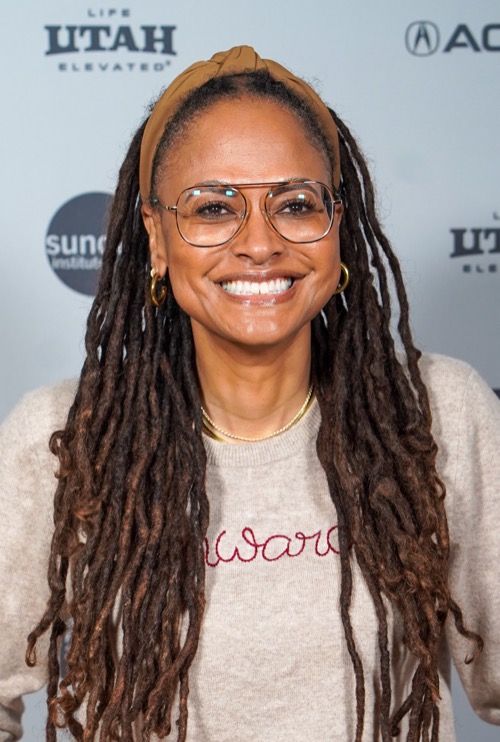
Director, "Selma" and "13th"; founder, ARRAY · b. 1972 · Long Beach, California
Two calls made by hand, not formulas. how we score →
Summary
She spent over a decade as a Hollywood publicist before she started making her own films, self-financing her early shorts and features from her agency income because no one was going to hand a Black woman director that money.
"Selma" made her bankable. Rather than just take the bigger paychecks that followed, she used the leverage to build ARRAY, a distribution company she owns outright.
How it happened
Raised in Lynwood, with strong ties to Compton and Inglewood, by her mother Darlene, an educator, and stepfather Murray Maye; summers were spent near Selma, Alabama, at her stepfather's childhood home. Her aunt, Denise Sexton, was a formative influence and later the direct inspiration for her first narrative feature; DuVernay cared for her through the final year and a half of her life. She studied English literature and African-American studies at UCLA.
A CBS News internship covering the O.J. Simpson trial in the mid-1990s left her cold on journalism, so she moved into film publicity instead — junior agency jobs, then her own firm, The DuVernay Agency, founded in 1999, doing marketing for other people's films: "Lumumba," "Spy Kids," "Shrek 2," "Collateral," "Dreamgirls."
She has said plainly that she didn't expect financing to come looking for her: "I knew that as a Black woman in this industry, I wouldn't have people knocking down my door to give me money for my projects, so I was happy to make them on the side while working my day job." She put $6,000 into a 2005 short, then $50,000 into "I Will Follow" (2010), then found her way to Sundance with "Middle of Nowhere" (2012, roughly $200,000), which won her the festival's U.S. directing award — the first Black woman to do so — while she was still running the agency.
"Selma" (2014), made for about $20 million, brought a Best Picture Oscar nomination and made her the first Black woman nominated for a Best Director Golden Globe. In 2018, "A Wrinkle in Time" made her the first Black woman to direct a live-action film budgeted over $100 million — and then underperformed badly enough at the box office that Deadline calculated a loss north of $130 million against combined production and marketing costs, a fact her record carries alongside the milestone rather than around it.
In parallel, she founded what became ARRAY — first the African- American Film Festival Releasing Movement in 2010, rebranded ARRAY in 2015 — specifically to distribute films by and about people traditional studios were passing on. It now runs its own distribution arm, a production arm, a creative campus, and a nonprofit grants and education wing, infrastructure she owns rather than a pipeline she rents access to.
"13th" (2016) and "When They See Us" (2019) extended the record on Netflix; her company Forward Movement signed a reported $100 million multi-year film-and-television deal with Warner Bros. in 2018 — a company production commitment, not a personal payout. Published net worth estimates sit in the tens of millions, not the nine-figure range some of her studio deals might suggest.
The coded evidence
Thirteen groups, every claim sourcedDescendant
No immigration event appears in her family record; her father's family carries Louisiana Creole ancestry.
↗ en.wikipedia.orgRaised by her mother, an educator, and a stepfather in a stable two-parent household that paid tuition to send her to a private Catholic high school — a modest but real financial floor rather than documented fallback wealth.
↗ en.wikipedia.orgRan her own PR agency throughout her twenties and into her late thirties and financed her first short and features from that income while keeping the business running, in her own words making them "on the side while working my day job."
↗ en.wikipedia.orgnot established
No spouse or children are documented in the public record reviewed.
↗ en.wikipedia.orgThe hardship was chosen. There was a home to go back to if it failed.
No period of imposed poverty or housing instability is documented at any point in her build; the early films were funded from a working income, not from debt or precarity.
↗ en.wikipedia.orgMother Darlene (née Sexton) worked as an educator. Stepfather Murray Maye's occupation is not established in the record reviewed. Biological father Joseph Marcel DuVernay III, of Louisiana Creole descent, is not a presence in accounts of her upbringing.
↗ en.wikipedia.orgHer aunt, Denise Sexton, was a formative influence and later the direct inspiration for DuVernay's first narrative feature, "I Will Follow"; DuVernay served as Sexton's caregiver through the final year and a half of her life, after a stage-four cancer diagnosis.
Her own account credits Sexton's influence directly enough to build a film around it; a more specific "introduced her to the arts" framing recurs in interviews but isn't independently corroborated in the sources reviewed here.
↗ en.wikipedia.orgAttended Saint Joseph High School, a private Catholic school in Lakewood, California, rather than the local public school.
↗ en.wikipedia.orgGrew up in Lynwood, California, with strong ties to Compton and Inglewood — working- to middle-class Black neighborhoods in southern Los Angeles County she later drew on directly for "Middle of Nowhere."
↗ en.wikipedia.orgSaint Joseph High School, a private Catholic high school in Lakewood, California (graduated 1990), then UCLA.
↗ en.wikipedia.orgHer own public-relations agency, The DuVernay Agency (DVAPR), founded in 1999, doing marketing and publicity for studio films including "Lumumba," "Spy Kids," "Shrek 2," "The Terminal," "Collateral," and "Dreamgirls." It supplied years of steady income and insider proximity to how films actually get made and sold, with no directing credibility attached to it.
↗ en.wikipedia.org23
Entered the entertainment industry via a CBS News internship covering the O.J. Simpson trial in the mid-1990s, before moving into film publicity; the internship, not directing, was her first paid industry work.
↗ en.wikipedia.orgFounded what became ARRAY — first the African-American Film Festival Releasing Movement (AFFRM) in 2010, rebranded ARRAY in 2015 with an expanded focus on women filmmakers — specifically to distribute films by and about people traditional studios and distributors were passing on.
↗ arraynow.comARRAY runs its own distribution arm (ARRAY Releasing), production arm (ARRAY Filmworks), a creative campus, and a nonprofit grants and education wing (ARRAY Alliance) — infrastructure she owns and controls rather than a pipeline she rents access to.
↗ arraynow.comnot established
Held junior publicist roles at multiple agencies, reportedly including 20th Century Fox and Savoy Pictures, before founding her own firm in 1999; an exact employer count isn't established.
↗ en.wikipedia.orgBA, English literature and African-American studies, UCLA.
↗ en.wikipedia.orgDirect. Public university straight after Catholic high school; no transfer or military route.
↗ en.wikipedia.org$6,000 of her own money, over the 2005 Christmas holiday, to make her first short film, "Saturday Night Life," while running her PR agency full time.
↗ en.wikipedia.orgSelf-financed her narrative debut "I Will Follow" ($50,000, 2010, shot in 11 days) and her Sundance-winning "Middle of Nowhere" (roughly $200,000, shot in 19 days in 2011) rather than raising investor or studio money.
The budget figures are well documented; that PR-agency income specifically funded these projects is a reasonable inference from her own "day job" account rather than a line-itemed disclosure.
↗ en.wikipedia.orgBuilt ARRAY specifically to hold distribution and ownership on work by herself and others outside the studio system, rather than negotiating retroactively for rights project by project.
↗ arraynow.comARRAY grew directly out of her own experience as a Black woman director unable to get early work picked up or seen through traditional distribution.
↗ arraynow.com"I knew that as a Black woman in this industry, I wouldn't have people knocking down my door to give me money for my projects, so I was happy to make them on the side while working my day job."
↗ en.wikipedia.org0
No failed prior ventures are documented before her directing career; her first short and features were modestly budgeted and self-financed rather than large bets that could visibly fail.
↗ en.wikipedia.orgKept running her PR agency through her first decade of filmmaking, using its income to sustain herself and fund early projects rather than depleting savings or drawing on family support.
↗ en.wikipedia.org42
"Selma" (2014) is the inflection that made her a bankable studio director; an earlier, smaller inflection came at 39 when "Middle of Nowhere" won the Sundance U.S. directing award in 2012.
↗ en.wikipedia.org"Selma" released for the 50th anniversary of the 1965 Selma marches, with Oprah Winfrey and Brad Pitt's Plan B attached as producers; "13th" and "When They See Us" rode Netflix's build-out of prestige documentary and limited-series programming later in the decade.
↗ en.wikipedia.orgBuilt. ARRAY was assembled from nothing as a distribution and advocacy operation rather than an acquired company.
↗ arraynow.comFilm and television directing; film distribution and advocacy (ARRAY)
↗ en.wikipedia.org60000000
Aggregator estimate with no disclosed filing or methodology. Treat as a rough band only. She is a hugely successful filmmaker, not a billionaire; this figure is not inflated to suggest otherwise.
↗ celebritynetworth.comAggregator
↗ celebritynetworth.com"A Wrinkle in Time" (2018), budgeted around $100-130 million, took in $133 million worldwide against combined production and marketing costs of roughly $250 million — a loss Deadline calculated at over $130 million. The record-setting budget and the commercial failure are the same event.
↗ en.wikipedia.orgA mix of director and producer fees on studio projects ("A Wrinkle in Time," "Selma") and an equity stake in her own company, Forward Movement, which signed a reported $100 million multi-year film-and-television deal with Warner Bros. in 2018 — a company production commitment, not a personal payout.
↗ celebritynetworth.comFirst Black woman to direct a Best Picture Oscar nominee ("Selma") and the first to direct a live-action film with a production budget over $100 million ("A Wrinkle in Time," 2018); first Black woman nominated for a Best Director Golden Globe; two Primetime Emmys; Academy of Motion Picture Arts and Sciences board of governors from 2020.
↗ en.wikipedia.orgUncapped
Owns ARRAY outright and holds a production deal with backend participation rather than being purely salaried, though a large share of her income is still directing and producing fees.
↗ arraynow.comStructural context
The cost-of-failure score comes from this person's own money and circumstances. But who they were in America carried its own weight, the same way their household or income did, and it shaped how hard the path was just as much. That part isn't in the cost-of-failure number. It's here instead.
Across film, music, and digital, ownership and control stay in far fewer women's hands than men's. For one measure, women directed only about 12% of 2023's top-grossing films.
↗ assets.uscannenberg.orgIn the creative and media industries, recognition comes far more easily to underrepresented creators than the ownership it should turn into. Among 2023's top-grossing film directors, for one measure, eight were Black.
↗ assets.uscannenberg.orgAmong the people recorded here — women: 68 · Black subjects: 58. Representation here is who reached these outcomes, not equal odds of reaching them.
Controlled comparisons
Each holds one thing constant and varies another, so the difference is the point. A list of similar names wouldn't tell you anything.