Chris Gardner
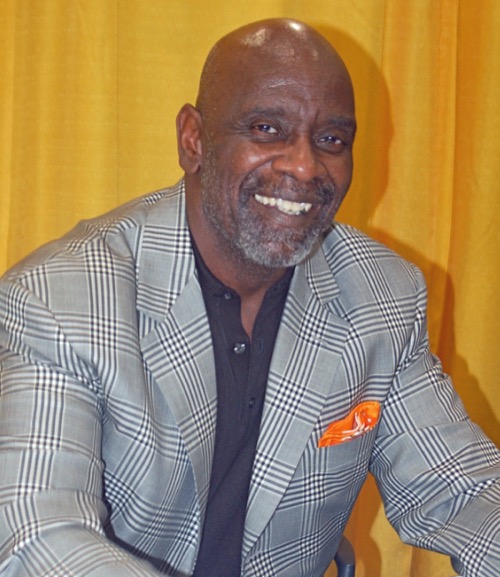
Founder, Gardner Rich & Co. · b. 1954 · Milwaukee, Wisconsin
Two calls made by hand, not formulas. how we score →
Summary
While enrolled in an unpaid trainee program at Dean Witter Reynolds, he and his toddler son spent nearly a year homeless in San Francisco, sleeping some nights in a locked BART station bathroom.
He kept making two hundred calls a day, passed his broker's exam on the first try, and five years later opened his own institutional brokerage in Chicago with ten thousand dollars and one desk.
How it happened
Milwaukee, 1954, in a working-class Black family with no one in finance and no college in the plan. He joined the Navy out of high school, trained as a hospital corpsman at Camp Lejeune, and left the service in 1974 for a research-lab job at UCSF. A stranger's red Ferrari in a hospital parking lot reset the direction of his life: he asked the owner what he did for a living, got the answer "stockbroker," and decided on the spot to become one.
It took him ten months of cold applications to land a trainee spot at Dean Witter Reynolds in San Francisco, paying about $1,000 a month. Soon after, he became his infant son's sole caregiver, and the rooming house he lived in didn't allow children. For close to a year he and his son slept in cheap hotels, in his office after hours, in parks, and at least once in a locked bathroom at a BART station, while he kept showing up for work. A shelter at Glide Memorial Church, run by Reverend Cecil Williams, gave them a bed on the worst nights.
In 1982 he passed the Series 7 exam on the first try and became a full broker. Bear Stearns recruited him not long after, and he spent about three years there learning the institutional side of the business before deciding to go out on his own.
In 1987 he started Gardner Rich & Co. in Chicago with $10,000 of his own savings and a single desk, in his apartment, that doubled as the family dinner table. He named it for commodities trader Marc Rich, a man he'd never met, because he considered him one of the best in the business. The firm ran on commissions from institutional clients, not outside investors.
A 2002 local-news segment about his volunteer work at Glide led to a 2003 appearance on ABC's "20/20," which is how the film producers found him. He published his memoir in May 2006 and sold his stake in Gardner Rich that same year in a deal reported in the multimillions, then started a new holding company. "The Pursuit of Happyness," starring Will Smith, opened that December and made over $300 million worldwide.
The coded evidence
Thirteen groups, every claim sourcedDescendant
↗ en.wikipedia.orgnot established
Not established. He turned to a church-run shelter as an adult out of need, which isn't evidence of how he was raised.
↗ en.wikipedia.orgNone established. He was homeless with his son while working a paying job; no family home or co-signer is documented as available to him.
↗ web.archive.orgHis own roughly $1,000-a-month trainee pay at Dean Witter Reynolds, and nothing else. His son's mother had left, so there was no partner income.
↗ web.archive.orgAbout $1,200 in unpaid parking tickets caught up with him right before his final Dean Witter interview; he was jailed for 10 days and showed up to the interview in the same clothes he'd been arrested in.
↗ web.archive.orgClose to a year homeless with his toddler son while working the Dean Witter trainee job: cheap hotels in West Oakland, a church shelter in the Tenderloin, his office after hours, parks, and at least one night locked in a BART station bathroom.
↗ web.archive.orgThe hardship was imposed, not chosen. There was nothing to fall back on.
No fallback home is documented. He has described it as the lowest point of his life, not a chosen austerity.
↗ web.archive.orgHis biological father, Thomas Turner, lived apart from the family in Louisiana and is documented as absent; Gardner says he met him only twice. His mother's occupation isn't established.
↗ en.wikipedia.orgA maternal uncle, Henry, gave him his first positive model of a working man and inspired the Navy enlistment, but drowned when Gardner was nine.
↗ en.wikipedia.orgAn immediate family member was incarcerated.
His mother was incarcerated during his childhood.
↗ en.wikipedia.orgNo criminal record established. Jailed for 10 days over unpaid parking tickets shortly before his final Dean Witter interview; a civil debt matter, not a conviction.
↗ web.archive.orgHas said on the record, including in his memoir, that his stepfather was physically abusive toward him, his mother, and his sisters, and that the resulting instability landed him in foster care twice as a child.
His own on-record account, via his memoir and interviews. The stepfather is named in the sequestered field but not here.
↗ en.wikipedia.orgU.S. Navy, hospital corpsman, stationed at Camp Lejeune, North Carolina, for about four years; discharged in 1974. Did not fund a degree.
↗ web.archive.orgWorking-class Black neighborhoods in Milwaukee, Wisconsin.
↗ en.wikipedia.orgnot established
One 2005 profile states he was born in Louisiana and that his family's car broke down in Milwaukee en route to Canada before he turned one, which is where they settled. That conflicts with the more commonly cited record of Milwaukee as his birthplace. Single-sourced; not used to set the coded value.
↗ web.archive.orgNo named sponsor into finance. A stranger driving a red Ferrari outside San Francisco General Hospital told him, in passing, that he was a stockbroker, and that one exchange set the goal.
↗ web.archive.orgDean Witter Reynolds' San Francisco broker-trainee program, followed by about three years at Bear Stearns before he founded his own firm.
↗ en.wikipedia.orgCredibility, Skill
The training program supplied the Series 7 license and Wall Street credibility; it did not supply capital, and it paid barely enough to live on.
↗ web.archive.orgCold applications with no introduction. It took about ten months of repeatedly showing up before Dean Witter gave him a trainee slot.
↗ web.archive.orgNo college degree. Passed the Series 7 general securities exam in 1982, on the first try.
↗ en.wikipedia.orgSeries 7 general securities representative license, earned 1982.
↗ en.wikipedia.orgAn employer-run trainee program substituted for a college pipeline into finance.
↗ web.archive.org$10,000 to start Gardner Rich & Co. in 1987, from his own savings as a broker.
↗ en.wikipedia.orgIt paid its own way from the start. Revenue came before any outside money.
An institutional brokerage earning commissions on client trades from the start.
↗ web.archive.orgThe founding capital came from his own broker income at Dean Witter and Bear Stearns, not from investors.
↗ en.wikipedia.orgBuilt on commissions with no outside venture funding at founding. A 2006 profile, published the same year he sold a stake, describes him as owning 75% with the rest held by a hedge fund; a separate account describes the 2006 sale itself as a "minority stake." The exact timing and structure of the hedge fund's position isn't established.
Sources conflict on the precise ownership split around the 2006 sale; both are cited rather than resolved.
↗ web.archive.orgSold his stake in Gardner Rich in 2006, in a deal reported in the multimillions, and used the proceeds and the attention from the memoir and film to found Christopher Gardner International Holdings rather than stepping back.
↗ en.wikipedia.orgPersonal exposure rather than a researched market gap. A stranger's answer to "what do you do for a living" set the goal, and the firm grew directly out of his own brokerage career.
↗ web.archive.orgHimself. He kept working through the year of homelessness with no family or investor backstop absorbing any of it.
↗ web.archive.orgAbout a year of income insecurity on roughly $1,000 a month before the Dean Witter job converted into a stable full income.
↗ web.archive.org33
Founded Gardner Rich in 1987, born 1954. The hardness peak came earlier, at 28, during the homeless year while a Dean Witter trainee.
↗ en.wikipedia.orgChicago. Most accounts place the 1987 founding there directly out of his broker career; one 2005 account has him working in New York for Bear Stearns first and dates the Chicago founding to 1989. The 1987 Chicago account is the more widely repeated one.
Founding-date discrepancy (1987 vs. 1989) not resolved across sources.
↗ web.archive.orgBuilt. Founded Gardner Rich from a single desk in his own apartment rather than acquiring an existing brokerage.
↗ en.wikipedia.orgInstitutional brokerage and finance
↗ en.wikipedia.org70000000
Aggregator estimate with no disclosed methodology or as-of date. Band only; not comparable to filing-based figures.
↗ celebritynetworth.comAggregator
↗ celebritynetworth.comnot established
The aggregator doesn't disclose an as-of year for its estimate.
↗ celebritynetworth.comRealized at least in part. He sold his stake in Gardner Rich for cash in a 2006 deal reported in the multimillions, rather than holding it indefinitely.
↗ en.wikipedia.orgWealth in an owned brokerage stake and, after 2006, a privately held holding company built on the memoir and film. No large disclosed salary anywhere in the record.
↗ en.wikipedia.orgHis 2006 memoir and the Will Smith film built on it, which grossed over $300 million worldwide, made him broadly known and launched a motivational-speaking and media career.
↗ en.wikipedia.org5
From entering Dean Witter's trainee program in 1982 to founding Gardner Rich in 1987.
↗ en.wikipedia.orgUncapped
↗ en.wikipedia.orgPersistent, Self made, Resilient, a natural pitchman
↗ web.archive.orgPublic
↗ web.archive.orgAfter
The public reputation formed after the 2002-03 news coverage, roughly two decades into his career.
↗ en.wikipedia.orgAsset
↗ web.archive.orgThe reputation was deliberately built, through books, press, and PR.
By 2006 he had a literary agent, a publicist, a speaking agency, and a company formed specifically to build "Chris Gardner" as a brand.
↗ web.archive.org"The Pursuit of Happyness" was made with his direct involvement; he's credited as an associate producer and met with Will Smith to be studied for the role, so the film reflects a story he helped shape rather than one told about him without his input.
↗ en.wikipedia.orgStructural context
The cost-of-failure score comes from this person's own money and circumstances. But who they were in America carried its own weight, the same way their household or income did, and it shaped how hard the path was just as much. That part isn't in the cost-of-failure number. It's here instead.
Men founded the companies that took nearly all the venture funding and almost every top outcome, a tailwind that never shows up in one person's own circumstances.
↗ techcrunch.comBlack-founded startups got roughly 0.5% of US venture funding in 2023, while Black Americans are about 14% of the population. That gap holds no matter where a founder personally started.
↗ techcrunch.comAmong the people recorded here — men: 168 · Black subjects: 58. Representation here is who reached these outcomes, not equal odds of reaching them.
Controlled comparisons
Each holds one thing constant and varies another, so the difference is the point. A list of similar names wouldn't tell you anything.