Tracee Ellis Ross
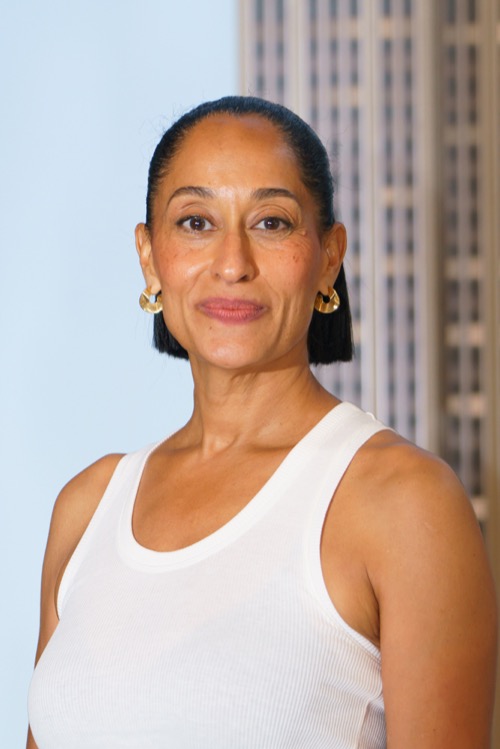
Actress, "Black-ish"; Founder and CEO, Pattern Beauty · b. 1972 · Los Angeles, California
Two calls made by hand, not formulas. how we score →
Summary
Diana Ross's daughter grew up with elite schools, a Swiss boarding school, and doors most actors never get near.
She still had to audition her way onto two network shows and spend a decade building a hair-care line before anyone backed it. The safety net was total. The work on top of it was still hers, and Girlfriends is where she proved that.
How it happened
Born in Los Angeles in 1972 to Diana Ross, already one of the most famous entertainers alive, and Robert Ellis Silberstein, her manager and a music-business executive. Her parents divorced when she was five and she was raised mainly by her mother, moving between the Dalton School in Manhattan, Riverdale Country School, and Institut Le Rosey, a Swiss boarding school known for the children of royalty and industrialists. There was no financial floor to worry about, ever.
She earned a theatre degree at Brown, then spent years modeling and working as a contributing fashion editor at Mirabella and New York magazine before serious acting work came. It was not a fast or guaranteed climb, even with the name attached to it.
In 2000 she was cast as Joan Clayton on the UPN sitcom Girlfriends, a role she won through ordinary casting rather than inherited. The show ran eight seasons and won her two NAACP Image Awards. It's the credit that made her a working lead actor on her own account, not an extension of her mother's career.
"Black-ish" cast her as Dr. Rainbow Johnson in 2014, and by 2016 she'd earned the first Emmy nomination for a Black woman in that comedy-lead category in thirty years. She won the Golden Globe for the role in January 2017 and used the speech to talk about whose stories get treated as worth telling.
She spent roughly a decade developing Pattern Beauty, a line for curly and coily hair, before launching it in 2019. She's said she was advised not to fund it herself and didn't have the capital to anyway, so she brought in outside business partners for the money and kept majority ownership and creative control. It's a real business, but still a small piece next to what the acting career built.
Reported net worth sits in the high seven to low eight figures, most of it a fee-for-work film and television career rather than an appreciating asset she owns outright. Pattern Beauty is the exception — a company she runs and holds the majority of, in an industry where celebrity endorsement deals are far more common than celebrity ownership.
The coded evidence
Thirteen groups, every claim sourcedBlack, biracial (Black and white/Jewish)
Coarse public-record coding; race is a noisy, interpretive category.
↗ en.wikipedia.orgAfrican American (mother) and Ashkenazi Jewish (father)
Mother Diana Ross is African American; father Robert Ellis Silberstein is described as Jewish. Recorded separately from race.
↗ en.wikipedia.orgDescendant; no immigration on either side within living memory of the record
↗ en.wikipedia.orgnot established
Mother's family background is Baptist; father is Jewish. No single denomination or religious practice in the household is established in the public record.
↗ en.wikipedia.orgEnglish
↗ en.wikipedia.orgTotal. Her mother was already a major recording and film star by the time Tracee was born in 1972, and remained one of the wealthiest entertainers in the country throughout her childhood. There is no point in the record where housing, schooling, or income were at risk.
Inferred from Diana Ross's well-documented career and wealth in this period rather than a single itemized source.
↗ en.wikipedia.orgFamily wealth covered every stage of her education (Dalton, Riverdale, Institut Le Rosey, Brown) and the years she spent modeling and working in fashion editing before acting paid steadily.
↗ en.wikipedia.orgNone documented. No indication of student debt or other non-dischargeable debt at any career stage.
↗ en.wikipedia.orgnot established
No period of imposed or chosen scarcity is documented anywhere in the public record.
↗ en.wikipedia.orgMother Diana Ross, singer and actress, one of the most successful entertainers of the 20th century. Father Robert Ellis Silberstein, a music-business manager who also managed his wife's career during their marriage.
↗ en.wikipedia.orgA parent worked for themselves, the strongest known predictor of founding.
Both parents worked in self-directed entertainment-industry careers.
↗ en.wikipedia.org4
Full sister Chudney Ross, half-sister Rhonda Ross Kendrick (Diana Ross's first daughter), and half-brothers Ross Naess and Evan Ross from Diana Ross's later marriage to Arne Naess Jr.
↗ en.wikipedia.orgRaised inside Motown and Hollywood's upper tier from birth — family friends, industry access, and name recognition that had nothing to do with anything she had done herself yet.
↗ en.wikipedia.orgnot established
No sacrifice was required; tuition at Dalton, Riverdale, Le Rosey, and Brown was well within family means.
↗ en.wikipedia.orgParents divorced in 1977, when she was around five. She was raised primarily by her mother afterward; her father remained in her life.
↗ en.wikipedia.orgAffluent circles in Los Angeles and Manhattan, with time at a Swiss boarding school; no fixed working- or middle-class ZIP code applies.
↗ en.wikipedia.orgThe Dalton School (Manhattan), Riverdale Country School (the Bronx), and Institut Le Rosey (Switzerland), an elite boarding school whose student body has historically included European royalty and the children of major industrialists.
↗ en.wikipedia.orgEntertainment industry proximity from birth through her mother's career, independent of anything she built herself.
↗ en.wikipedia.orgMotown and Hollywood social and professional circles through her mother; Ivy League alumni network through Brown.
↗ en.wikipedia.orgnot established
No single named door-opener is documented for her acting break; her major roles came through ordinary audition and casting processes, not a family placement.
↗ en.wikipedia.orgnot established
Not applicable in a clean sense; her early income was modeling and fashion-editorial work rather than a founded venture.
↗ en.wikipedia.orgPublic name recognition as Diana Ross's daughter existed well before her own acting career, independent of anything she had done.
↗ en.wikipedia.orgnot established
Not a single-employer career; roles across television, film, and theater rather than one firm.
↗ en.wikipedia.orgBA in theatre, Brown University (1994)
↗ en.wikipedia.orgNone. Family-funded throughout.
↗ en.wikipedia.orgDirect, private K-12 education into an Ivy League degree.
↗ en.wikipedia.orgnot established
No founding venture at the start of her career; income built gradually through modeling, fashion editing, and acting work.
↗ en.wikipedia.orgIt paid its own way from the start. Revenue came before any outside money.
Acting career was fee-for-work from the start; no capital was raised for it.
↗ en.wikipedia.orgPattern Beauty took outside capital from business partners rather than being self-funded, but she retained majority ownership and full creative control.
↗ finance.yahoo.comPersonal experience with her own curly, textured hair, developed over roughly a decade of research and relationship-building with chemists and potential partners before launch.
↗ finance.yahoo.comnot established
She's said she was advised not to self-fund and didn't have sufficient capital to anyway, but no specific rejection history is documented; she has framed the outside-partner route as a choice made from a position of strength, having lined up retail partners first.
↗ finance.yahoo.com1
Hair care is the one industry where she holds an ownership stake rather than only a fee. Her larger income remains fee-for-work acting.
↗ finance.yahoo.com0
No documented venture or career failures; a steady climb through modeling, fashion editing, and increasingly prominent television roles rather than discrete failed attempts.
↗ en.wikipedia.orgPattern Beauty launched into a growing market for curly- and textured-hair products following the broader natural-hair movement of the 2010s.
↗ finance.yahoo.comTelevision and film acting; consumer beauty (Pattern Beauty)
↗ en.wikipedia.org16000000
Aggregator estimate; other outlets cite figures as high as $30M. No filing or disclosed valuation exists for a private individual. Band only.
↗ celebritynetworth.comJournalistic estimate
↗ celebritynetworth.com4400000
Aggregator-reported per-episode rate of $200,000 for "Black-ish" after a contract renegotiation, extrapolated across a roughly 22-episode season. Not a filed or contractually disclosed figure.
↗ celebritynetworth.comJournalistic estimate
↗ celebritynetworth.comMostly income, not equity. The bulk of her documented wealth is fee-for-work acting income rather than an appreciating asset she owns. Pattern Beauty is the one place she holds an ownership stake, and it is not yet a large share of her reported net worth.
↗ finance.yahoo.comFirst Emmy nomination for a Black woman in the comedy lead-actress category in thirty years (2016); Golden Globe, Best Actress in a Television Series Musical or Comedy (2017); named a Disney Legend (2022); Time100 (2021).
↗ en.wikipedia.orgCapped
The dominant engine, salaried acting work, is capped. Pattern Beauty ownership is uncapped in principle but has not produced a disclosed liquidity event.
↗ en.wikipedia.orgAuthentic, Outspoken, a fashion and beauty tastemaker
↗ en.wikipedia.orgPublic
↗ en.wikipedia.orgAsset
↗ en.wikipedia.orgThe reputation was deliberately built, through books, press, and PR.
Sustained media and brand presence (interviews, awards campaigns, Pattern Beauty marketing) suggests deliberate cultivation typical of an A-list actor turned founder, though no single source states this explicitly.
↗ en.wikipedia.orgStructural context
The cost-of-failure score comes from this person's own money and circumstances. But who they were in America carried its own weight, the same way their household or income did, and it shaped how hard the path was just as much. That part isn't in the cost-of-failure number. It's here instead.
Across film, music, and digital, ownership and control stay in far fewer women's hands than men's. For one measure, women directed only about 12% of 2023's top-grossing films.
↗ assets.uscannenberg.orgAmong the people recorded here — women: 68 · Black, biracial (Black and white/Jewish) subjects: 1. Representation here is who reached these outcomes, not equal odds of reaching them.
Controlled comparisons
Each holds one thing constant and varies another, so the difference is the point. A list of similar names wouldn't tell you anything.