Abigail Johnson
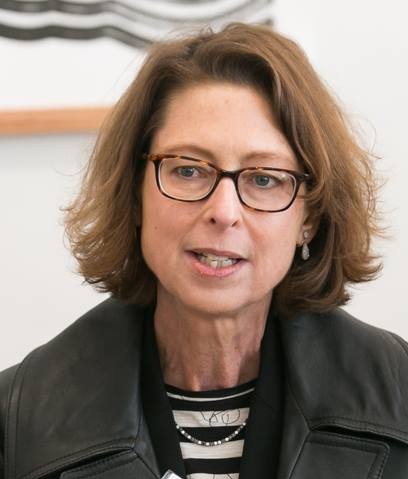
born Abigail Pierrepont Johnson
Chairman, CEO, and President of Fidelity Investments (FMR LLC); third-generation leader of the Johnson family's Fidelity dynasty · b. 1961 · Boston, Massachusetts
Two calls made by hand, not formulas. how we score →
Summary
Abigail Johnson was born into the family that founded, and still privately controls, Fidelity Investments.
An elite Cambridge day school and a Harvard MBA preceded a 1988 entry as an ordinary analyst at the family firm. Twenty-six years, one failed attempt to push her own father out, and three promotions later, she became CEO in 2014 and chairman in 2016, and has since pushed Fidelity into crypto.
People in this set who share a company with Abigail Johnson.
Where they worked
How it happened
Born December 19, 1961, in Boston, Massachusetts, the eldest of three children of Edward C. "Ned" Johnson III and granddaughter of Edward C. Johnson II, who built Fidelity Investments into a Boston mutual-fund house (commonly dated to 1946, growing out of the Fidelity Fund incorporated in 1930). Her father joined the firm in 1957, ran its flagship Magellan Fund from 1963 to 1977, and became chairman and CEO in 1977 — meaning Abigail was raised from early childhood inside a family that already owned and ran one of the country's largest financial institutions. She attended Buckingham Browne & Nichols, a private day school in Cambridge, Massachusetts; no source consulted documents any financial hardship, housing instability, or fallback need at any point in her life.
She earned a B.A. in art history from Hobart and William Smith Colleges in 1984, then an MBA from Harvard Business School in 1988 — the same year she married Christopher J. McKown, with whom she later had two daughters. No source consulted documents any student debt at completion of either degree.
She joined Fidelity in 1988 — the same entry point her own father had used 31 years earlier — as a research analyst and portfolio manager, not as an executive. She spent more than a decade in investment roles before taking on management responsibility, becoming president of Fidelity Asset Management in 2001 and head of the firm's retail, workplace, and institutional businesses in 2005.
In 2001, by Wikipedia's account, Johnson unsuccessfully tried to orchestrate a board vote to remove her own father as CEO over disagreements about his business decisions. The attempt failed and Ned Johnson remained chairman and CEO for another decade and a half. It is the one documented episode suggesting her rise within the firm was contested terrain inside the family, not a simple, friction-free handoff.
She was named president of Fidelity Investments in 2012, became CEO in 2014, and took over as chairman in December 2016 when her father retired, completing a succession that made her the third generation of her family to run the firm. This is the structural move that defines her as an operator rather than only an heir: the ownership stake was hers by birth, but the authority to run a multi-trillion- dollar institution came only after 26 years inside it and was exercised, not simply inherited passively — including holding onto it through the one internal challenge her own push against her father represented in reverse.
Under her leadership Fidelity built out Fidelity Digital Assets starting in 2018, giving institutional clients access to bitcoin and ether trading and custody, later launching the Wise Origin Bitcoin Fund and, more recently, its own stablecoin on the Ethereum network — a deliberate modernization push into an asset class much of the traditional asset-management industry was still avoiding.
Forbes put her personal net worth at $41.6 billion as of October 2, 2026, ranking her 47th in the world, built on an estimated roughly 29% personal ownership stake in privately held FMR LLC; the Johnson family and its affiliates together hold roughly 40% of the company, with current and former executives holding most of the rest. That figure is her own inherited and appreciating ownership position — a distinct thing from Fidelity's $7.1 trillion in discretionary assets under management (as of December 2025) and $19.9 trillion in assets under administration (as of June 2026), which are client money she manages, not wealth she owns. The firm employs roughly 80,000 people.
The coded evidence
Thirteen groups, every claim sourcedCoded headwind (3) is gender-based: asset management and institutional finance remain heavily male at the executive-suite level, and women have historically held a small share of CEO roles at major asset managers, including the specific friction of being read as "the founder's granddaughter" rather than a credible operator until she had spent years building her own record. This is distinct from, and does not include, her family wealth or class position, which is coded separately and in the opposite direction, in hardness.
↗ en.wikipedia.orgMulti-generational American on both sides of the family; her father and grandfather were both US-born Boston businessmen, so this is coded as no migration-linked headwind.
↗ en.wikipedia.orgnot established
Not established in sources consulted; presumed English given a multi-generation US-born Boston family.
↗ en.wikipedia.orgnot established
No documented career interruption; she had two daughters while already an executive at Fidelity, with no reported gap in her role.
↗ en.wikipedia.orgNo move was made for a partner's career.
No relocation for a partner's career is documented; she has remained in the Boston area, where Fidelity is headquartered, throughout her career.
↗ en.wikipedia.orgRaised in an affluent Boston family that already owned and ran one of the country's largest financial institutions; no source documents any financial hardship or need for a fallback at any point in her life.
↗ en.wikipedia.orgJoined the family firm directly as an analyst in 1988, drawing a normal entry-level salary inside an already enormous, profitable company rather than building anything from nothing or bearing personal financial risk at any stage of her climb.
↗ en.wikipedia.orgnot established
No source documents her husband's labor as financially or operationally necessary to her career.
↗ en.wikipedia.orgnot established
She and Christopher McKown have two daughters, born after she was already an executive at Fidelity; not a documented factor in her climb.
↗ en.wikipedia.orgnot established
No student or personal debt is documented at any point, consistent with an already-wealthy family funding an elite education outright.
↗ en.wikipedia.orgnot established
No housing, income, or comparable instability is documented at any point in her life.
↗ en.wikipedia.orgThe hardship was imposed, not chosen. There was nothing to fall back on.
No period of chosen austerity is documented; every stage was funded by an already-wealthy family and run inside an already-enormous company.
↗ en.wikipedia.orgFather Edward C. "Ned" Johnson III was chairman and CEO of Fidelity Investments from 1977 until his 2016 retirement; grandfather Edward C. Johnson II founded the firm. Mother's occupation is not established in sources consulted.
↗ en.wikipedia.orgA parent worked for themselves, the strongest known predictor of founding.
Owner-operator of the privately held family firm, not a salaried employee of an outside company.
↗ en.wikipedia.orgFather Edward Johnson III attended Milton Academy and Tabor Academy before earning a bachelor's degree from Harvard College in 1954 — the same elite-prep-to-Ivy pattern Abigail herself would later follow with Harvard Business School.
↗ en.wikipedia.org2
Sister Elizabeth L. Johnson and brother Edward Johnson IV, who runs family-owned Pembroke Real Estate.
↗ en.wikipedia.orgnot established
Listed first among the three children in sources consulted, but exact birth order isn't explicitly stated.
↗ en.wikipedia.orgGrandfather Edward C. Johnson II, founder of Fidelity Investments, whose company was the entire platform both her father and she herself joined, climbed, and eventually ran.
↗ en.wikipedia.orgThree generations of named family standing in Boston finance: founder grandfather, chairman-CEO father, and now Abigail herself — a degree of multi-generational institutional standing well beyond simple family wealth.
↗ en.wikipedia.orgFamily wealth funded an elite private day school (Buckingham Browne & Nichols) and a liberal-arts college; no debt is documented at completion of either her undergraduate degree or her Harvard MBA.
↗ en.wikipedia.orgHer father ran the firm she eventually joined and, by Wikipedia's account, she clashed with him directly in 2001 over how it should be run — suggesting sanction of her path was real but not unconditional; she had to build standing inside the firm rather than simply being handed authority.
↗ en.wikipedia.orgBoston, Massachusetts — headquarters city of the family's own asset-management firm, and the center of the US mutual-fund industry her family helped build.
↗ en.wikipedia.orgPrivate day school (Buckingham Browne & Nichols, Cambridge, Massachusetts).
↗ en.wikipedia.orgGrew up in the headquarters city of her own family's financial- services firm, inside the Boston mutual-fund industry cluster her grandfather had helped establish.
↗ en.wikipedia.orgDirect entry into her father's company as an analyst in 1988, inside a firm her family had founded and still controlled — about as strong a workplace-access vector as exists.
↗ en.wikipedia.orgOld Boston financial and social establishment networks, plus the Harvard Business School alumni network from her 1988 MBA.
↗ en.wikipedia.orgHer family's own company was the door: a research-analyst role in 1988 at the firm her grandfather founded and her father ran, with no competitive hiring process standing between her and the job.
↗ en.wikipedia.orgFidelity Investments itself — an already multi-decade-old, highly profitable mutual-fund company that supplied capital, credibility, and an existing client base before she ever had to build any of that herself.
↗ en.wikipedia.orgCapital, Credibility, Network
↗ en.wikipedia.org26 years across investment and management roles inside Fidelity — analyst, portfolio manager, business-unit head, president — before taking the CEO title, rather than being installed at the top immediately.
↗ en.wikipedia.orgPromoted to president of Fidelity Asset Management (2001), head of retail, workplace, and institutional business (2005), president of the firm (2012), and CEO (2014) — all under her own father's chairmanship, despite the two having clashed in 2001 over his leadership.
↗ en.wikipedia.orgB.A. in art history, Hobart and William Smith Colleges, 1984; MBA, Harvard Business School, 1988.
↗ en.wikipedia.orgElite private day school, then a liberal-arts college, then a Harvard MBA, straight into the family firm — a continuous, unbroken elite pipeline with no need to prove creditworthiness or find funding at any step.
↗ en.wikipedia.orgHarvard Business School's alumni and finance-industry network, on top of the far stronger network supplied by her own family's firm.
↗ en.wikipedia.orgAn elite private-school and liberal-arts-college education, and very likely the Harvard MBA as well, funded by family wealth; no source consulted documents any other funding source.
↗ en.wikipedia.orgHolds an estimated roughly 29% personal ownership stake in privately held FMR LLC (Fidelity Investments), inherited as a function of being the founder's granddaughter and the chairman's daughter rather than built from an outside stake or a founding round.
Forbes' journalistic estimate for a privately held company; no public filing discloses the exact figure.
↗ forbes.comFMR LLC has remained privately held across three generations of Johnson-family leadership; the Johnson family and affiliates hold roughly 40% of the company, with current and former executives holding most of the remainder, and it has never taken outside equity or gone public.
↗ en.wikipedia.orgFidelity operates its own brokerage, custody, fund-management, and, since 2018, digital-asset infrastructure (Fidelity Digital Assets) rather than relying on third-party platforms for its core business.
↗ en.wikipedia.orgRuns the company as chairman, CEO, and president with full operating control, on top of — not purely because of — her roughly 29% personal stake; her 2001 attempt to have her own father removed as CEO shows that authority inside the firm had to be actively contested and won, not merely received.
↗ en.wikipedia.org0
No failed personal venture preceded her rise; her one documented setback is the failed 2001 attempt to have her father removed as CEO, an internal governance dispute rather than a business failure.
↗ en.wikipedia.orgnot established
No personal financial risk or cost is documented at any stage of her career.
↗ en.wikipedia.orgTook over as CEO in 2014, five years into the post-2008 recovery, as the asset-management industry faced an accelerating shift toward low-cost passive investing and index funds that pressured active managers like Fidelity; she later pushed the firm into cryptocurrency starting in 2018, well ahead of most traditional asset managers.
↗ en.wikipedia.orgBoston, Massachusetts, where Fidelity is headquartered.
↗ en.wikipedia.orgNeither built from nothing nor acquired by purchase: she took over operating control of an already-built, inherited institution and has since organically grown and modernized it, most notably through the 2018 move into digital assets, rather than through acquisitions of other companies.
↗ en.wikipedia.orgAsset management and financial services
↗ forbes.com41600000000
Forbes real-time billionaires-tracker figure as of 2026-10-02, a journalistic estimate of her roughly 29% personal stake in privately held FMR LLC — not a filed or audited figure, and distinct from Fidelity's $7.1 trillion in assets under management or $19.9 trillion in assets under administration, both of which are client money, not her own wealth.
↗ forbes.comJournalistic estimate
FMR LLC is privately held; no public filing establishes her exact stake or net worth.
↗ forbes.com2026
↗ forbes.comnot established
No proxy-statement-level compensation figure exists for a privately held company; not established in sources consulted.
↗ forbes.comAlmost entirely unrealized, illiquid ownership value in a company that has never gone public and has no market-traded shares.
↗ forbes.comOverwhelmingly inherited and appreciating ownership wealth in a privately held company, not salary.
↗ forbes.comChair of Fidelity International as well as CEO of the US business; built out Fidelity Digital Assets starting in 2018, giving institutional clients bitcoin and ether access and later launching the Wise Origin Bitcoin Fund; has appeared on Forbes' World's 100 Most Powerful Women list every year since 2015, ranking as high as 5th in 2022.
↗ en.wikipedia.orgUncapped
↗ forbes.comnot established
No personal regulatory action against Abigail Johnson is documented in sources consulted; Fidelity operates as a heavily regulated broker-dealer and asset manager generally, but no specific enforcement action naming her personally was found.
↗ en.wikipedia.orgHer 2001 attempt to have her father removed as CEO was an internal board and family governance dispute, not litigation, and no legal proceeding is documented as having resulted from it.
↗ en.wikipedia.orgPrivate, Disciplined, Data driven, Modernizing
She is widely described in business press as unusually private and media-shy for the head of a firm this large, and as having pushed Fidelity's technology and digital-asset strategy more aggressively than peers.
↗ en.wikipedia.orgPress
↗ en.wikipedia.orgBefore
Her reputation as a capable operator was built over 26 years inside Fidelity, before she became CEO in 2014.
↗ en.wikipedia.orgAsset
No documented personal-conduct controversy; coverage treats her as a credible, competent operator who has expanded and modernized a firm her family has controlled for three generations.
↗ en.wikipedia.orgThe reputation accrued from behaviour rather than being manufactured.
She is reported to avoid media appearances rather than seek them, consistent with a reputation that functions more as a byproduct of her work than a deliberately cultivated public image.
↗ en.wikipedia.orgStructural context
The cost-of-failure score comes from this person's own money and circumstances. But who they were in America carried its own weight, the same way their household or income did, and it shaped how hard the path was just as much. That part isn't in the cost-of-failure number. It's here instead.
Women ran 10.4% of Fortune 500 companies in 2023, an all-time high and still only a tenth of the seats. A 'broken rung' thins their numbers at every level below the top.
↗ forbes.comAmong the people recorded here — women: 73 · white subjects: 24. Representation here is who reached these outcomes, not equal odds of reaching them.
Controlled comparisons
Each holds one thing constant and varies another, so the difference is the point. A list of similar names wouldn't tell you anything.

Related companies
Companies connected to Abigail Johnson through the profiled people they worked with. Each card says who the link runs through.