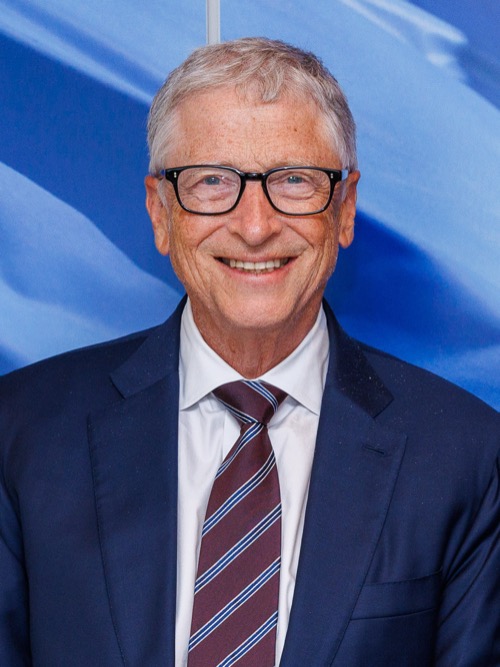
Harold Hamm
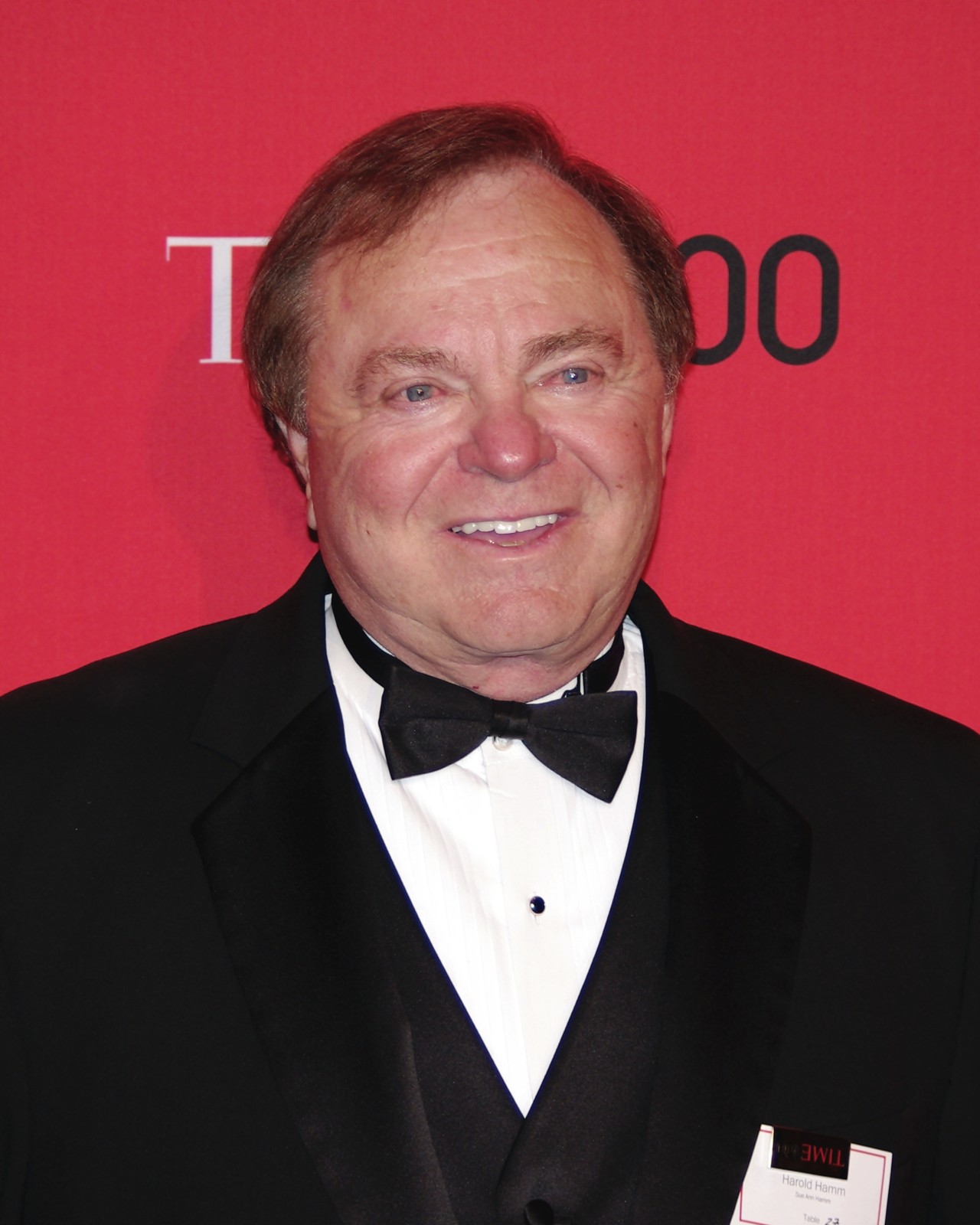
born Harold Glenn Hamm
Founder and Executive Chairman, Continental Resources · b. 1945 · Lexington, Oklahoma
Two calls made by hand, not formulas. how we score →
Summary
The youngest of thirteen children of Oklahoma cotton sharecroppers, he picked cotton as a child and never went to college.
A gas-station job led to oilfield labor, then his own hauling truck, then decades of self-funded wildcatting. Betting early on horizontal drilling and fracking in the Bakken shale turned that outfit into Continental Resources, which his family took fully private again in 2022.
How it happened
Harold Hamm was born December 11, 1945, in Lexington, Oklahoma, the youngest of thirteen children of cotton sharecroppers Leland and Jane Hamm. The family moved with the cotton harvest, staying in whatever housing a landowner provided, sometimes tents, and picking until the first snow before the school year could really start. Hamm has said the family didn't have much and that the struggle taught him hard work.
At sixteen he pumped gas to help support the family, then worked long hours at Potter Oil Company during high school and mucked out oil tanks at a refinery. He graduated Enid High School in 1964 with no money for college, started a small water-hauling and trucking outfit for local oil operators, and in 1967, at 21, founded Shelly Dean Oil Company on borrowed money. He learned geology by doing the work rather than studying it in a classroom, and a 1971 bank loan financed his first well.
Shelly Dean became Continental Resources in 1990. The company drilled its first Bakken wells in 2003 and, in 2004, completed the first well in North Dakota's Bakken shale that combined horizontal drilling with hydraulic fracturing, a technical bet most of the industry hadn't made yet on a formation most operators had already written off. It worked, and it turned Continental into one of the largest independent oil producers in the country.
Continental went public on the NYSE in May 2007; Hamm sold about $300 million of his own shares in the offering but kept control. The company grew further with a $3.25 billion Permian Basin acquisition in 2021, and in November 2022 Hamm and his family took it fully private again in a $4.3 billion buyout, ending its fifteen years as a public company.
Forbes puts his net worth at roughly $19 billion as of September 2026, though it moves with oil prices and a private company has no market price to check it against. His 2014 divorce from Sue Ann Arnall, his second wife, ended in a court-ordered settlement; she cashed a $974.8 million check in January 2015, one of the largest divorce payouts on record. He has also spent two decades as one of the oil industry's biggest political donors and its most visible opponent of renewable-energy tax credits, fundraising for Romney and then Trump.
The coded evidence
Thirteen groups, every claim sourcednot established
A specific ethnic ancestry beyond "white American" is not established in the sources consulted.
↗ en.wikipedia.orgMulti-generational domestic; his parents were Oklahoma sharecroppers, not immigrants, and no international migration is documented in the family.
↗ en.wikipedia.orgEnglish; no indication of another home language.
↗ en.wikipedia.orgNo stable family home to fall back on in any real sense. The family lived in a small, unpainted house with no indoor toilet, and during cotton season moved to whatever housing a landowner offered, at times tents, following the harvest.
Direct fetch of this page was blocked; content corroborated via search snippet quoting the organization's own biography and cross-confirmed by newson6.com's account of the same childhood.
↗ horatioalger.orgNone from family. His own wages as a teenage gas-station attendant and oilfield laborer, and later the cash flow of a self-financed trucking and water-hauling outfit, were the entire income floor behind the 1967 founding of Shelly Dean Oil Company.
↗ forbes.comnot established
Marital and dependent status at the exact 1967 founding is not established; his first marriage, to Judith Ann, ended in divorce in 1987 with three children from that marriage.
↗ en.wikipedia.orgnot established
Not established in the sources consulted for the venture-building years.
↗ en.wikipedia.orgFinanced his early trucking equipment and, in 1971, his first well on borrowed money rather than family capital — real personal and business debt exposure, though no student debt, since there was no college.
↗ forbes.comnot established
No housing loss or comparable adult-life instability is documented during the years he built the company; the severe instability was in childhood, coded under d3/d4.
↗ en.wikipedia.orgThe hardship was imposed, not chosen. There was nothing to fall back on.
A sharecropping family with thirteen children and no land of its own had nowhere else to go; the poverty was imposed, not a chosen period of austerity with a home to return to.
↗ horatioalger.orgCotton sharecroppers, Leland Albert Hamm and Jane Elizabeth (Sparks) Hamm.
↗ en.wikipedia.orgNeither parent was self-employed.
Sharecropping is not employment in the ordinary sense, but it is not the kind of self-employment that builds equity either — the family worked land it did not own, for a share of the crop.
↗ en.wikipedia.orgnot established
↗ en.wikipedia.orgnot established
No documented family standing, name recognition, or inherited capital.
↗ en.wikipedia.orgnot established
No evidence of income directed toward schooling; the opposite pattern is documented — children's labor was needed for the family's survival, and cotton season delayed the start of school.
↗ horatioalger.orgNo account of family sponsorship into an unconventional path exists, because there was no slack in the household to sponsor anything; the family's constraint was survival, not steering a child toward a high-variance career.
↗ horatioalger.orgnot established
As the youngest of thirteen, a sibling-caregiving role is not documented and seems structurally unlikely.
↗ en.wikipedia.orgSeasonal migrant housing as a child — the family moved to wherever the cotton was, staying in landowner-provided housing, sometimes tents, through the harvest.
↗ horatioalger.orgnot established
An exact count of schools attended isn't established, but the cotton-harvest schedule is documented as pushing the start of each school year later than his peers'.
↗ horatioalger.orgHas type 2 diabetes; the University of Oklahoma's Harold Hamm Diabetes Center, funded by him and his foundation, is named for the condition. Age at diagnosis and whether it affected him during the years he built the company are not established.
Publicly known via the named philanthropy rather than a direct first-person account; not coded as a headwind given no documented bias or barrier tied to it.
↗ en.wikipedia.orgnot established
Childhood poverty is severe and well documented but is coded under hardness and origin (D1/D2/D3 material-insecurity fields), not as trauma in the schema's specific sense (abuse, assault, violence, neglect, bereavement, displacement) — none of which is established here.
↗ en.wikipedia.orgLexington, Oklahoma, later Enid, Oklahoma, where he attended high school.
↗ en.wikipedia.orgRural and small-town public schools; graduated Enid High School in 1964.
↗ en.wikipedia.orgnot established
Rural agricultural area; HOLC grading is not applicable or established.
↗ en.wikipedia.orgGrew up in Oklahoma farm country with no family connection to the state's oil industry — his father sharecropped cotton, not oil-patch work — a contrast with oil-family peers who inherited industry access through a parent's job.
↗ en.wikipedia.orgnot established
His father's sharecropping work had no connection to the oil industry.
↗ en.wikipedia.orgSeasonal movement with the cotton harvest as a child within Oklahoma; no international migration in the family.
↗ horatioalger.orgnot established
↗ en.wikipedia.orgnot established
↗ en.wikipedia.orgnot established
↗ en.wikipedia.orgnot established
↗ en.wikipedia.orgnot established
↗ en.wikipedia.orgnot established
↗ en.wikipedia.orgnot established
↗ en.wikipedia.orgnot established
No single named individual opened a door for him into the industry.
↗ en.wikipedia.orgLocal Oklahoma oil operators who needed water hauled to and from well sites.
↗ newson6.comWorked 50-60 hours a week at Potter Oil Company during high school, which put him around oilfield operations before he ever owned anything of his own.
↗ newson6.comnot established
↗ en.wikipedia.orgnot established
Shelly Dean Oil Company is documented as his own founding, without a co-founder.
↗ en.wikipedia.org3
Roughly from his 1964 high-school graduation and early trucking outfit to the 1967 founding of Shelly Dean Oil Company.
↗ en.wikipedia.orgnot established
↗ en.wikipedia.orgnot established
↗ en.wikipedia.orgnot established
↗ en.wikipedia.orgnot established
↗ en.wikipedia.orgNo formal apprenticeship — years of gas-station, refinery, and Potter Oil Company labor functioned as an informal, on-the-job education in how the oilfield worked before he ran his own crews.
↗ newson6.comnot established
↗ en.wikipedia.orgnot established
↗ en.wikipedia.orgnot established
↗ en.wikipedia.orgnot established
↗ en.wikipedia.orgnot established
↗ en.wikipedia.orgnot established
↗ en.wikipedia.orgnot established
At least a gas station and Potter Oil Company are documented as employers before he went into business for himself; an exact count isn't established.
↗ en.wikipedia.orgnot established
He is described as self-taught in geology rather than formally instructed.
↗ en.wikipedia.orgnot established
↗ en.wikipedia.orgnot established
↗ en.wikipedia.orgNo college degree. Graduated Enid High School in 1964; after he had already struck oil, he attended but did not complete a degree at Phillips University in Enid.
↗ forbes.comWorked 50-60 hours a week at a gas station and Potter Oil Company while still attending high school.
↗ newson6.comnot established
No professional geology license or comparable credential is documented; he is described as self-taught.
↗ en.wikipedia.orgnot established
Direct entry from high school into oilfield labor, with no community-college, military, or apprenticeship pathway documented.
↗ en.wikipedia.orgnot established
↗ en.wikipedia.orgnot established
↗ en.wikipedia.orgWages as a teenage gas-station attendant, then a small water-hauling and trucking outfit for oilfield operators financed on borrowed money shortly after high school.
↗ forbes.comnot established
No family capital transfer is documented; a family of sharecroppers had nothing to transfer.
↗ en.wikipedia.orgnot established
↗ en.wikipedia.orgIt paid its own way from the start. Revenue came before any outside money.
The trucking and water-hauling business generated revenue before any oil production; drilling itself ran on bank debt and reinvested cash flow, not outside equity, until the 2007 IPO forty years later.
↗ en.wikipedia.orgnot established
What, if anything, secured the 1971 loan for his first well is not established.
↗ forbes.comDecades of drilling were financed through his own operating cash flow and bank debt rather than outside investors, from the 1967 founding until the company's 2007 initial public offering.
↗ en.wikipedia.orgContinental's only major outside-capital event before the 2022 take-private was its May 2007 initial public offering on the NYSE, in which Hamm himself sold roughly $300 million of his own shares while the company raised additional capital.
↗ en.wikipedia.orgPrivately debt- and cash-flow-financed for its first forty years, public on the NYSE from 2007 to 2022, then taken fully private again in a $4.3 billion buyout by Hamm and his family, who now own it entirely through Harold Hamm Family LLC.
↗ en.wikipedia.orgnot established
An operating oil and gas company, not a fund or holding-company compounding vehicle.
↗ en.wikipedia.orgnot established
No capital as a minor; his labor as a child supported the family rather than accumulating anything of his own.
↗ en.wikipedia.orgnot established
↗ en.wikipedia.orgIPO proceeds and Bakken cash flow were reinvested into further drilling and, in 2021, a $3.25 billion Permian Basin acquisition, rather than large-scale personal spending.
↗ en.wikipedia.orgOklahoma's oil and gas industry, Continental included, receives substantial state tax incentives — a reduced production tax rate and rebates for unprofitable wells estimated at more than $600 million a year statewide — even as Hamm has publicly campaigned against comparable incentives for wind power.
↗ en.wikipedia.orgThe horizontal-drilling-plus-fracking approach to the Bakken grew out of Continental's own drilling data, following the company's 1995 Cedar Hills discovery and its first Bakken wells in 2003.
↗ en.wikipedia.orgAs of the April 2022 proxy statement, Hamm individually held 184,851,901 shares, 50.91% of Continental's common stock — much of it via trusts and irrevocable proxies over his children's holdings — and Hamm plus family members together owned more than 50%, qualifying Continental as a controlled company under NYSE rules. He took the whole company private later that year.
↗ sec.govnot established
Not applicable — there was no savings, retirement account, or credit cushion to convert. The hardness here is structural absence of a net from the start, not a net that was destroyed.
↗ en.wikipedia.orgnot established
↗ en.wikipedia.orgnot established
Wildcatting inherently involves a high rate of dry holes, but no specific count of failed wells or ventures before his success is documented.
↗ en.wikipedia.orgEarly drilling risk sat with Hamm himself and his small company, financed through bank loans rather than outside investors.
↗ forbes.comnot established
↗ en.wikipedia.orgnot established
↗ en.wikipedia.orgnot established
↗ en.wikipedia.orgnot established
↗ en.wikipedia.orgnot established
↗ en.wikipedia.orgnot established
↗ en.wikipedia.org58
Approximate age at the 2004 first horizontally drilled, hydraulically fractured Bakken well.
↗ en.wikipedia.orgAdvances in 3D seismic imaging, horizontal drilling, and hydraulic fracturing matured through the 2000s alongside high oil prices, making the previously uneconomic Bakken shale commercially viable for the first time.
↗ en.wikipedia.orgEnid, Oklahoma; Continental's headquarters later moved to Oklahoma City in 2012.
↗ en.wikipedia.orgnot established
↗ en.wikipedia.orgnot established
↗ en.wikipedia.orgBuilt primarily through organic drilling, with one major acquisition late in the company's life: $3.25 billion for Permian Basin acreage from Pioneer Natural Resources in 2021.
↗ en.wikipedia.orgBuilt and ran the company from Enid and then Oklahoma City rather than relocating to Houston, the conventional US oil-industry capital.
↗ en.wikipedia.orgnot established
A detailed personal consumption record relative to peak wealth is not established.
↗ en.wikipedia.orgOil and natural gas exploration and production, unconventional shale
↗ en.wikipedia.org19000000000
Forbes real-time estimate as of September 25, 2026 (#145 globally). This figure swings with oil prices and rests on a private-company valuation for the majority of it since Continental left public markets in 2022 — a band estimate, not a precise number.
↗ forbes.comJournalistic estimate
↗ forbes.com2026
↗ forbes.comnot established
No separate peak-annual-income figure is established; his wealth is driven by equity ownership, not salary.
↗ en.wikipedia.orgnot established
↗ en.wikipedia.orgThe 2022 take-private converted a publicly traded, mark-to-market equity stake into a wholly private one, so most of his current net worth is a private appraisal rather than a market price. Separately, following his 2012-2014 divorce from Sue Ann Arnall, she cashed a court-ordered settlement check for $974,790,317.77 in January 2015 — one of the largest divorce payouts on record in the US and a large, realized, one-time reduction to his personal wealth distinct from the company's value.
↗ en.wikipedia.orgnot established
Not applicable; wealth is driven by equity ownership rather than a salary.
↗ en.wikipedia.orgErnst & Young "Entrepreneur of the Year" (2007); Oklahoma Hall of Fame (2011); Time's "World's 100 Most Influential People" (2012); energy advisor to Mitt Romney's 2012 presidential campaign; considered for US Energy Secretary in 2016; a prominent seat at Trump's second inauguration in 2025; and philanthropic gifts including the Harold Hamm Diabetes Center at the University of Oklahoma and named schools at the University of North Dakota and University of Mary.
↗ en.wikipedia.orgUncapped
↗ en.wikipedia.orgnot established
No SEC enforcement action or major environmental regulatory penalty against Hamm personally is documented in the sources consulted, beyond the ordinary state-level oil-and-gas regulatory oversight any producer in North Dakota and Oklahoma operates under.
↗ en.wikipedia.orgnot established
No business-related adverse civil judgment (fraud, misrepresentation, contract) is documented. His 2014 divorce settlement is a domestic-relations matter of public record, not business conduct, and is addressed under d10's wealth-composition fields rather than here.
↗ en.wikipedia.orgnot established
No co-founder or investor ownership dispute is documented; he remained sole controlling owner throughout.
↗ en.wikipedia.orgnot established
No major documented labor-practice controversy at Continental Resources.
↗ en.wikipedia.orgself-made wildcatter, shale and fracking pioneer, aggressive fossil-fuel advocate, major Republican donor, polarizing figure on climate and energy policy
↗ en.wikipedia.orgPress
↗ en.wikipedia.org4
Wikipedia's own citation set spans Forbes, Reuters, Bloomberg, Washington Post, and trade press (Hart Energy, Oil & Gas Journal), independently characterizing him along similar lines.
↗ en.wikipedia.orgAfter
The "pioneer wildcatter" and political-donor reputations solidified after the Bakken breakthrough and 2007 IPO made him nationally known.
↗ en.wikipedia.orgMixed
An asset in political and capital-markets access; a liability among climate advocates and in Oklahoma's wind-energy policy fight, which he has led against.
↗ en.wikipedia.orgThe reputation was deliberately built, through books, press, and PR.
Founded the Windfall Coalition in 2016 as a deliberate, sustained advocacy campaign against wind-power tax incentives, and has been a consistent, self-directed presence in energy-policy and political media for over a decade.
↗ en.wikipedia.orgWithin the oil industry and Republican donor circles, seen as a pioneering wildcatter and energy statesman; among clean-energy advocates, seen as one of the industry's most active opponents of renewable-energy policy.
↗ en.wikipedia.orgnot established
Not applicable; no documented reputational collapse requiring recovery.
↗ en.wikipedia.orgStructural context
The cost-of-failure score comes from this person's own money and circumstances. But who they were in America carried its own weight, the same way their household or income did, and it shaped how hard the path was just as much. That part isn't in the cost-of-failure number. It's here instead.
Men founded the companies that took nearly all the venture funding and almost every top outcome, a tailwind that never shows up in one person's own circumstances.
↗ techcrunch.comWhite founders are heavily overrepresented among funded companies and top-tier wealth relative to their share of the population, an edge that has nothing to do with a person's own money.
↗ techcrunch.comAmong the people recorded here — men: 169 · White subjects: 114. Representation here is who reached these outcomes, not equal odds of reaching them.
Controlled comparisons
Each holds one thing constant and varies another, so the difference is the point. A list of similar names wouldn't tell you anything.