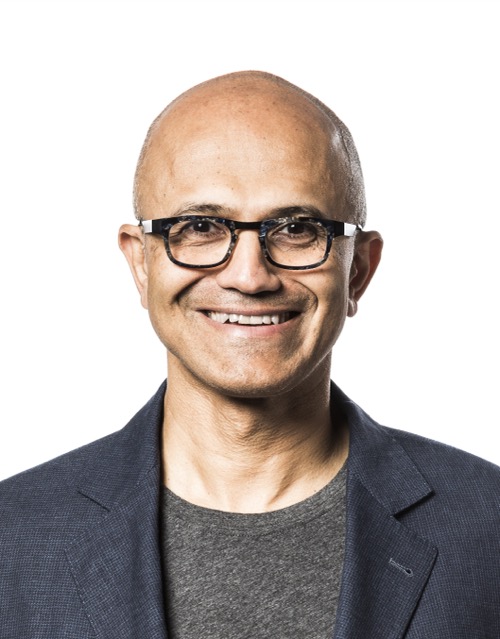
Roberto Goizueta
Chairman and CEO, The Coca-Cola Company (1981–1997) · b. 1931–1997 · Havana, Cuba
Two calls made by hand, not formulas. how we score →
Summary
He grew up wealthy in Havana on Jesuit and Yale schooling, paid outright.
Castro's revolution took the family's sugar and real-estate fortune anyway, and he landed in Miami in 1960 with next to no cash. What survived was the Yale degree and a Coca-Cola job. Sixteen years after he became CEO, the company was worth $150 billion instead of $4 billion.
How it happened
His father, Crispulo Goizueta, was an architect and real-estate investor. His mother's father owned a profitable sugar mill, and the family lived in his mansion. Goizueta attended Colegio de Belén, an elite Jesuit school in Havana, then Cheshire Academy in Connecticut to learn English, then Yale, graduating in 1953 with a degree in chemical engineering. None of it was financed by scholarship or debt; the family paid for all of it.
He went home to work in the family's sugar business, then answered a newspaper ad and joined Coca-Cola's Havana bottler as a chemist in July 1954, earning $500 a month. By his mid-twenties he was chief technical director overseeing five Cuban bottling plants.
After Castro nationalized private industry in 1959–60, the family's real-estate and sugar-milling wealth was gone. Goizueta left for Miami in 1960 with his wife, their children, and cash that different sources put between $40 and $200, plus 100 shares of Coca-Cola stock he never sold. He arrived with no property, no business, and no cushion in the United States. He also arrived with a Yale degree and a Coca-Cola job already in hand, which the revolution had no power to touch. Coca-Cola reassigned him within its Caribbean and Latin American operations rather than let him go, so the disruption cost the family everything it owned and cost him nothing about his employment.
Atlanta headquarters in 1964, then vice president of technical research at 35, the youngest in company history. Legendary former chairman Robert W. Woodruff took an interest in him and became his mentor. By 1979 he was one of six vice chairmen in line for the top job, and in August 1980 he was named president. He never worked anywhere but Coca-Cola in his 43-year career.
Named chairman and CEO in March 1981, he inherited a company Fortune had described as sluggish. He ran it afterward on a small number of hard rules: return on capital over volume, buybacks over cash hoarding, and no business that couldn't clear its cost of capital (shrimp farming and a wine division were both shut down). Diet Coke launched in 1982. The 1986 restructuring that created Coca-Cola Enterprises moved slow-margin bottling operations off the parent's balance sheet while keeping control of concentrate and pricing. Under that strategy, Coca-Cola's market value rose from roughly $4 billion in 1981 to around $150 billion by 1997, and Goizueta's own Coca-Cola stock and options made him a billionaire without his ever founding a company.
In 1985 the company reformulated its flagship drink and pulled the original recipe from shelves. Consumer backlash was immediate; within three months the original formula returned as Coca-Cola Classic, and the reformulation was later discontinued. Sales and attention afterward reportedly exceeded what New Coke's own launch had drawn.
He died of complications from lung cancer on October 18, 1997, still chairman and CEO, having smoked for most of his life. He remains the first person of Hispanic origin to run a Fortune 500 company. His estate and foundation gave tens of millions of dollars to education, and Emory University's business school carries his name.
The coded evidence
Thirteen groups, every claim sourcedCoarse public-record coding; ethnicity is a noisy, interpretive category.
↗ georgiaencyclopedia.orgFirst-generation immigrant. Left Cuba in 1960 as an adult in his late twenties; naturalized as a U.S. citizen in 1969.
↗ encyclopedia.comSpanish as a first language; sent to Cheshire Academy in Connecticut specifically to learn English before Yale.
↗ encyclopedia.comBefore 1960, extensive family real estate and his maternal grandfather's sugar-mill wealth. After the family's Cuban assets were nationalized, none of that carried into the United States — but Coca-Cola reassigned him within the company rather than leave him unemployed, so his U.S. income floor was intact even though the family fallback was gone.
↗ encyclopedia.comA continuous Coca-Cola salary from 1954 in Havana through reassignment to Miami and then Nassau after 1960, with no gap in employment across the move.
referenceforbusiness.com returned a 404 on the date checked; corroborated instead by encyclopedia.com and the New Georgia Encyclopedia, both of which describe direct reassignment rather than a job search after arrival.
↗ referenceforbusiness.com3
Three children (Roberto S., Olga M., Javier C.) at the time the family left Cuba.
↗ businesshalloffame.orgnot established
Not established either way. His parents' own fate after 1960 isn't detailed in available sources.
↗ en.wikipedia.orgnot established
No debt is documented at any stage; his education was paid outright by family wealth.
↗ encyclopedia.comThe family arrived in Miami in 1960 with cash that different accounts put between $40 and $200 and no U.S. property or business. No homelessness or food insecurity is documented — the Coca-Cola paycheck continued without interruption, which is the detail that separates this from a typical refugee arrival.
↗ encyclopedia.comThe hardship was imposed, not chosen. There was nothing to fall back on.
The loss of the family's Cuban assets was imposed by nationalization, not chosen.
↗ georgiaencyclopedia.orgFather Crispulo Goizueta was an architect and real-estate investor; mother Aída Cantera was the daughter of Marcelo Cantera, who owned a profitable Cuban sugar mill that Crispulo later helped run.
↗ en.wikipedia.orgA parent worked for themselves, the strongest known predictor of founding.
Real estate and architecture on the father's side, a sugar mill on the mother's.
↗ en.wikipedia.orgGrew up in his maternal grandfather's mansion; that grandfather's sugar mill was a significant source of the family's wealth and standing in Havana.
↗ encyclopedia.comGrandparents on both sides emigrated from Spain's Basque Country to Cuba in the late 1800s and built the real-estate and sugar wealth that defined the household he was born into.
↗ en.wikipedia.orgnot established
No sacrifice is documented because none was needed — Jesuit secondary school, a Connecticut prep school, and Yale were paid outright from family wealth.
↗ encyclopedia.comHavana, Cuba, in his maternal grandfather's household.
↗ encyclopedia.comColegio de Belén, a selective Jesuit prep school in Havana, then Cheshire Academy, a private boarding school in Connecticut, before Yale.
↗ encyclopedia.comLeft Havana for Miami in 1960 after the revolution and the nationalization of the family's holdings; reassigned within Coca-Cola to Nassau in the Bahamas soon after, then to Atlanta headquarters in 1964.
↗ georgiaencyclopedia.orgThe family's occupational and social standing inverted sharply at the moment of migration — a locally prominent architecture, real-estate, and sugar-milling family arrived with cash reported as low as $40 and no U.S. assets. What did not invert was his own professional standing: the Yale credential and the Coca-Cola job traveled with him intact, which is why his personal trajectory reads very differently from the family's asset loss.
Source URL returned 404 on the date checked; the underlying facts are corroborated by encyclopedia.com and the New Georgia Encyclopedia.
↗ referenceforbusiness.comHe became the first person of Hispanic origin to run a Fortune 500 company, a role with no American precedent for someone with his background and accent. No specific documented instance of bias against him personally is established in available sources.
↗ en.wikipedia.orgnot established
No evidence he drew on a Cuban-American business or community network for capital or introductions.
↗ en.wikipedia.orgRobert W. Woodruff, Coca-Cola's long-retired but still-influential former chairman, took a personal interest in Goizueta after his 1964 move to Atlanta and became his mentor.
↗ encyclopedia.comCoca-Cola itself. He joined the Havana bottler as a chemist in 1954 and never worked for another employer; the job was the platform that survived the revolution when the family's other assets didn't.
↗ encyclopedia.comCredibility, Network
The employer supplied continued income, an internal reputation built over decades, and eventual access to Woodruff — not capital in any direct sense.
↗ encyclopedia.comRobert Woodruff's mentorship functioned as sponsorship rather than ordinary mentoring — a founder-generation figure with enormous standing inside the company backed Goizueta's rise through the executive ranks in the 1970s.
↗ encyclopedia.comBachelor's degree in chemical engineering, Yale University, 1953.
↗ en.wikipedia.orgNone documented. Secondary school and Yale were paid for outright by family wealth, not financed through scholarship, work-study, or debt.
↗ encyclopedia.comDirect: Jesuit secondary school to an American prep school to Yale to a chemistry job at Coca-Cola's Cuban bottler, with no community college, military service, or transfer route involved.
↗ en.wikipedia.orgYale supplied a credential that meant something to strangers on both sides of the Florida Straits. It is arguably the one asset the revolution could not touch, and it is doing real work in this record — most people who fled Cuba in 1960 had no comparable paper to carry with them.
↗ en.wikipedia.orgNot applicable in the founder sense — he never started a company. His entire adult income came from a Coca-Cola salary, bonus, and later stock and option grants.
↗ sec.govHis wealth compounded through Coca-Cola's own share price and annual option grants over a 43-year single-employer career, not through any investment vehicle he personally controlled.
↗ sec.govHe did not diversify out of Coca-Cola stock. Per the company's 1997 proxy statement, he had not sold any shares of Coca-Cola common stock in more than twenty years, holding roughly 14.7 million shares personally (restricted stock, thrift-plan holdings, and exercisable options) as of early 1997, on top of options and grants received annually.
↗ sec.govHe held substantial personal equity but no special voting structure — his authority came from the CEO title and board confidence, not from dual-class shares or a control block. Economic stake and operating control moved together for him, unlike founders who separate the two.
↗ sec.govA single uninterrupted Coca-Cola salary carried him from the Havana bottling plant in 1954 through the disruption of leaving Cuba in 1960 and all the way to the chairmanship in 1981. The revolution disrupted the family's assets, not his employment.
↗ encyclopedia.comTook over a company Fortune had described as sluggish and diversified into unrelated ventures. His return-on-capital, shareholder-value strategy rode the broader 1980s–90s bull market and the era's rising pressure on American managers to justify capital allocation to Wall Street.
↗ encyclopedia.comConsumer packaged goods and beverages
↗ encyclopedia.com1300000000
Reported by Newsweek at roughly $1.3 billion, described there as the wealthiest Hispanic person in the United States. Roughly consistent with his disclosed personal Coca-Cola holdings — about 14.7 million shares of restricted stock, thrift-plan shares, and exercisable options per the 1997 proxy statement, worth well over $700 million at the 1996 fiscal-year-end share price alone, before the further run in 1997.
↗ encyclopedia.comJournalistic estimate
↗ encyclopedia.com7249027
1996 total disclosed compensation from Coca-Cola's 1997 proxy statement: $1,713,333 salary, $3,500,000 annual incentive, $1,848,054 long-term incentive payout, and $187,640 in other compensation. This excludes the value of unexercised stock options, which the same filing put at roughly $112.9 million exercisable and $21.2 million unexercisable at fiscal-year-end 1996 prices — the real scale of his equity position, separate from cash pay.
↗ sec.govProxy statement
↗ sec.govFormally a salaried employee's compensation — salary, bonus, and grants voted by a compensation committee, not an ownership stake he created. In practice the stock and option components dwarfed the cash pay so completely that the outcome functioned like ownership: by 1996 his unexercised options alone were worth roughly 65 times his salary.
↗ sec.govFirst person of Hispanic origin to serve as CEO of a Fortune 500 company. Named Chief Executive magazine's Chief Executive of the Year in 1996.
↗ en.wikipedia.orgUncapped
He was a salaried hired executive, which would ordinarily code as capped — but Coca-Cola paid him overwhelmingly in stock and options tied to share price with no upper bound, and he held the shares rather than selling. His realized wealth behaved like a founder's equity, not like a fixed paycheck, which is the reasoning for coding this uncapped despite the employment relationship.
↗ sec.govDecisive, Disciplined, relentless about shareholder returns
↗ time.comPress
Warren Buffett called him "a great leader and a great gentleman"; analyst Martin Romm said he "did more in 16 years than most people could hope to do in a millennium." Business press coined the phrase "poster boy for shareholder value" to describe him.
↗ time.comAfter
His reputation as a disciplined, shareholder-focused operator was confirmed by the results of the strategy he ran as CEO, not established beforehand.
↗ time.comThe reputation accrued from behaviour rather than being manufactured.
Reputation accrued from the company's financial results rather than from a deliberate media campaign.
↗ time.comNew Coke was withdrawn within about three months of its April 1985 launch and replaced by Coca-Cola Classic. The episode produced a wave of free publicity and did not dent his standing; several retrospective accounts credit it with reinforcing the original formula's market position rather than damaging the company.
↗ businesshalloffame.orgStructural context
The cost-of-failure score comes from this person's own money and circumstances. But who they were in America carried its own weight, the same way their household or income did, and it shaped how hard the path was just as much. That part isn't in the cost-of-failure number. It's here instead.
Men held about 90% of Fortune 500 CEO seats in 2023, and a wider majority of the rungs below. The ladder is widest for them the whole way up.
↗ forbes.comImmigrants and their children are overrepresented among America's biggest companies, as founders and as senior leaders. They got there through the visa, credential, and network hurdles that make the path harder to even start down.
↗ forbes.comAmong the people recorded here — men: 115. Representation here is who reached these outcomes, not equal odds of reaching them.
Controlled comparisons
Each holds one thing constant and varies another, so the difference is the point. A list of similar names wouldn't tell you anything.