George Lopez
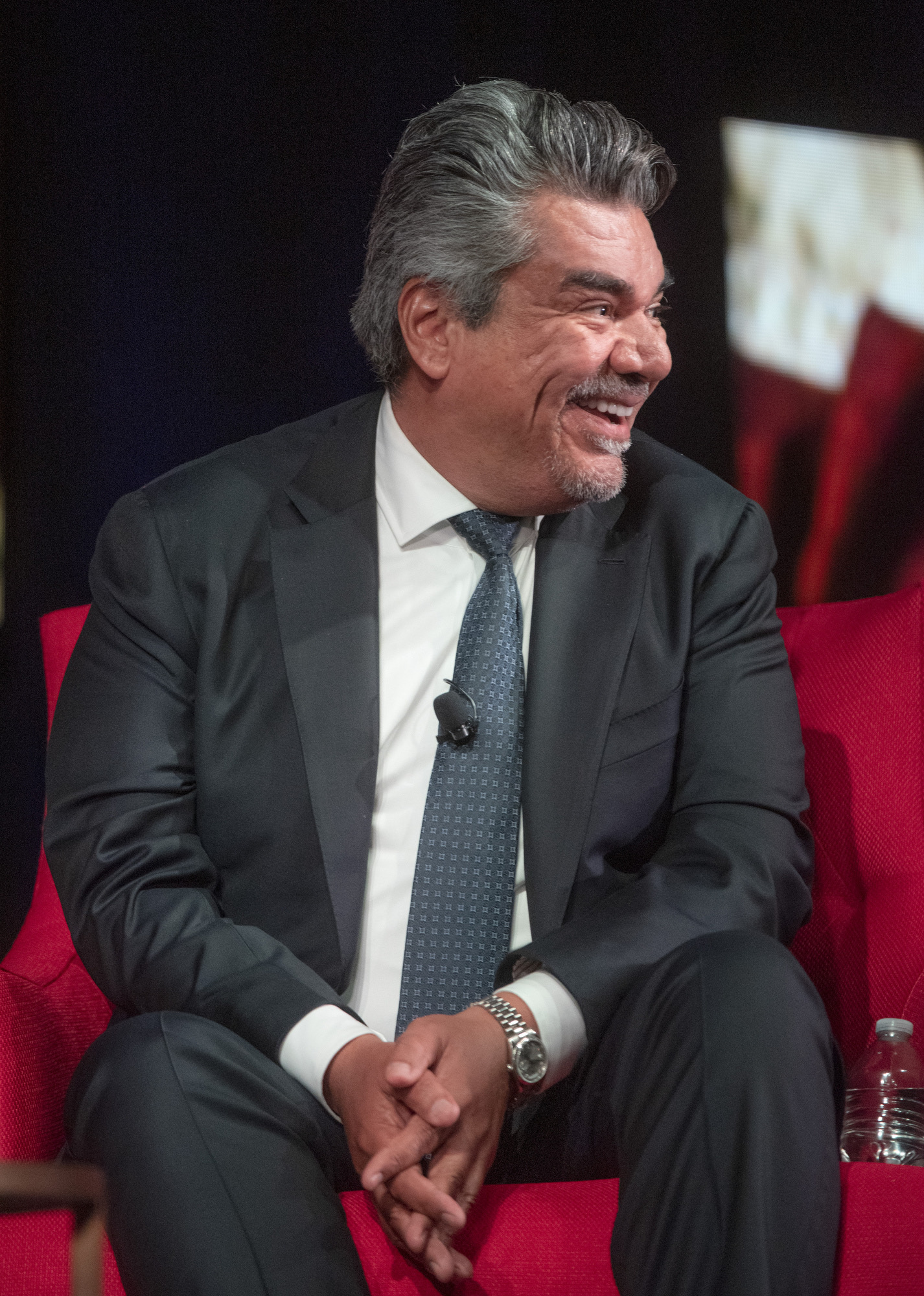
Stand-up comedian; co-creator and star, "George Lopez" · b. 1961 · Mission Hills, Los Angeles, California
Two calls made by hand, not formulas. how we score →
Summary
His father left when he was two months old and his mother left around age ten, and by his own account the grandparents who took him in afterward paid him little attention.
He worked a factory job after high school while building a stand-up act at night. In 2002 he co-created and starred in the first Mexican-American-led network sitcom in almost three decades.
How it happened
His father left the family when George was two months old. His mother, by his account, left when he was around ten. He has said in his 2004 memoir "Why You Crying?" — the title comes from his grandmother's flat response whenever he cried as a boy — that he was raised afterward in the San Fernando Valley by his maternal grandmother Benita, a factory worker, and her second husband Refugio, a construction laborer, and that neither paid him much attention. He has said in interviews that he found comedy partly as a way to be noticed at home.
After graduating San Fernando High School in 1979, he took a job in the same factory that employed his grandmother while working the Los Angeles club circuit at night, inspired in part by watching Freddie Prinze, one of the only Latino stand-ups to reach network television before him. He started performing regularly in 1983, got early television spots on "Comedy Club" (1987) and "The Arsenio Hall Show" (1989), and hosted an LA morning radio show through part of the 1990s — nearly two decades of club work without a national breakthrough.
In August 2000, Sandra Bullock caught his set at the Brea Improv and approached him afterward about producing a sitcom built around his stand-up material, pointing to how rarely a Latino family had led a network show. "George Lopez" premiered on ABC in March 2002 with Lopez credited as co-creator, writer, and star — one of the only Mexican-American leads on network television since "Chico and the Man" ended in 1978.
He has said in interviews that a genetic kidney condition, diagnosed around 2004 while the show was in its third season, required a transplant. His then-wife, Ann Serrano, donated one of her own kidneys to him in 2005. He has spoken about the transplant publicly many times since, including in his stand-up act.
ABC canceled the show in 2007 after six seasons; Lopez said the network "dealt with us from the bottom of the deck," pointing to ratings that outperformed comedies ABC did renew. The show went on to a long run in syndication, and aggregator estimates credit him with a percentage of that revenue on top of his salary. He hosted "Lopez Tonight" on TBS from 2009 to 2011, becoming the first Mexican-American to host a late-night network talk show, and has continued producing and starring in television into the 2020s, including "Lopez vs. Lopez" alongside his daughter, Mayan.
The coded evidence
Thirteen groups, every claim sourcedCoarse public-record coding; race is a noisy, interpretive category.
↗ en.wikipedia.orgnot established
His father is described in the public record as a Mexican migrant laborer, but whether he was foreign-born or US-born isn't independently established, and his father left before George was three months old.
↗ en.wikipedia.orgHad stable, if unaffectionate, housing throughout childhood once his mother left — his maternal grandmother Benita, a factory worker, and her second husband Refugio, a construction laborer, took him in in the San Fernando Valley. He has described the household as providing shelter without much warmth or attention.
↗ biography.comnot established
No family income floor is documented during his stand-up years; he supported himself on factory wages and club pay.
↗ en.wikipedia.orgWorked a factory job after high school — the same plant that employed his grandmother — while building a stand-up act on the LA club circuit at night through the 1980s and into the 1990s, roughly two decades before the 2002 sitcom breakthrough.
Britannica blocks direct fetch; accessed via search synthesis of its published biography, corroborated by his own stand-up material about factory work.
↗ britannica.comThe hardship was imposed, not chosen. There was nothing to fall back on.
Both the childhood household and the post-high-school factory work were imposed, not chosen.
↗ biography.comFather Anatasio Lopez is described in the public record only as a Mexican migrant laborer; his mother's occupation before she left the family isn't reliably established.
↗ en.wikipedia.orgnot established
No account of family encouragement toward comedy is established; by his own telling he moved toward it on his own, partly to get attention he wasn't getting at home.
↗ en.wikipedia.orgHis father left when George was about two months old. His mother left when he was around ten, after which he was raised full-time by his maternal grandmother and her second husband in the San Fernando Valley.
↗ en.wikipedia.orgHas said in interviews that he has a hereditary kidney condition, diagnosed around 2004, that required a transplant; his then-wife Ann Serrano donated one of her kidneys to him in 2005. He has discussed it publicly many times since, including in his stand-up act.
Arrived in 2004, roughly two years into an already-successful network sitcom run — after his commercial breakthrough, not before it — so it is weighted lightly as a build-era headwind.
↗ biography.comHas written in his 2004 memoir "Why You Crying?" and repeated across many interviews and in his stand-up act that his father left when he was two months old and his mother left when he was around ten, and that the maternal grandmother and step-grandfather who raised him afterward paid him little attention. He has said he built much of his early comedy material directly out of that childhood.
Self-disclosed on the record across two decades of interviews and a memoir. Parents referred to by role only; no third party is named beyond the family roles he has himself made public.
↗ biography.comWorking-class San Fernando Valley, Los Angeles.
↗ en.wikipedia.orgSan Fernando High School, a public school; graduated 1979.
↗ en.wikipedia.orgActress Sandra Bullock saw his set at the Brea Improv in August 2000 and approached him afterward about building a sitcom around his stand-up material.
↗ en.wikipedia.orgBuilt his own visibility over nearly two decades of club sets and local TV and radio appearances before any studio or network came to him.
↗ en.wikipedia.orgBy 2000 he had roughly seventeen years of club work behind him, television spots on "Comedy Club" (1987) and "The Arsenio Hall Show" (1989), and a run hosting an LA morning radio show in the 1990s — a real but modest profile rather than a cold start.
Britannica blocks direct fetch; accessed via search synthesis of its published biography.
↗ britannica.comBullock personally produced the pitch through her company, Fortis Films, spending her own industry standing on an untested concept built around a club comic with no prior network lead role.
↗ en.wikipedia.orgNo college. Graduated San Fernando High School in 1979 and went directly into factory work and stand-up.
↗ en.wikipedia.orgFactory wages after high school, alongside unpaid and low-paid stage time on the LA comedy circuit through the 1980s.
Britannica blocks direct fetch; accessed via search synthesis of its published biography.
↗ britannica.comIt paid its own way from the start. Revenue came before any outside money.
Paid from wage work and club and TV appearances from the start; no capital was ever raised.
↗ en.wikipedia.orgHeld co-creator, writer, and (from later seasons) executive-producer credit on "George Lopez" rather than a pure hosting or acting fee. One aggregator source reports he received roughly 6.5% of the show's syndication revenue once it sold into syndication, on top of his per-season salary, generating an estimated $20 million — a real but partial stake, well short of owning the underlying show outright.
Single aggregator source for the specific royalty percentage and dollar figure; the creator/EP/writer credits themselves are independently confirmed on Wikipedia.
↗ celebritynetworth.com"George Lopez" was built directly from his own stand-up material and childhood, not an acquired format or franchise.
↗ en.wikipedia.org1
Income has stayed largely fee- and royalty-based within television, stand-up, and publishing (two books) plus a cruise-line comedy-club endorsement deal, rather than equity stakes taken across unrelated industries.
↗ forbes.comSelf, funded by factory wages and club pay through the years before the breakthrough.
Britannica blocks direct fetch; accessed via search synthesis of its published biography.
↗ britannica.comRoughly seventeen years of club and local-media work between starting stand-up in 1983 and the 2002 sitcom premiere, with no discrete failed ventures documented — a long, continuous grind rather than a series of separate attempts.
↗ en.wikipedia.orgPremiered into a broadcast landscape with almost no Latino-led network sitcoms since "Chico and the Man" ended in 1978 — a demographic gap Bullock's pitch was built to address.
↗ en.wikipedia.orgBuilt. An original show developed from his own stand-up material rather than an acquired format.
↗ en.wikipedia.orgStand-up comedy and television
↗ en.wikipedia.org45000000
Aggregator estimate; no filing or disclosed valuation exists for a private individual whose income is largely per-project fees and royalties. Other public estimates vary substantially and are less corroborated; $45M is the figure most consistently repeated.
↗ celebritynetworth.comAggregator
↗ celebritynetworth.com12000000
Forbes Celebrity 100 estimate for the year ending June 2013, drawn from his sitcom-era salary, syndication royalties, and stand-up touring income.
↗ forbes.comJournalistic estimate
↗ forbes.comFee and royalty income from television, stand-up touring, and publishing, rather than equity ownership of a studio, catalog, or company he controls outright.
↗ celebritynetworth.comNamed one of Time's "25 Most Influential Hispanics in America" (2005); first Mexican-American to host a late-night network talk show ("Lopez Tonight," 2009-2011); "George Lopez" remains one of the few Latino-led network sitcoms of the modern broadcast era and has run continuously in syndication since 2007.
↗ en.wikipedia.orgCapped
Compensation has stayed largely salary- and royalty-based rather than an appreciating, wholly-owned equity asset of the kind that would make the ceiling genuinely uncapped.
↗ celebritynetworth.comGroundbreaking, Blue collar, Outspoken
↗ en.wikipedia.orgPublic
↗ en.wikipedia.orgBefore
His stand-up reputation was already built over roughly seventeen years of club work before the 2002 sitcom brought wider fame.
↗ en.wikipedia.orgAsset
↗ en.wikipedia.orgStructural context
The cost-of-failure score comes from this person's own money and circumstances. But who they were in America carried its own weight, the same way their household or income did, and it shaped how hard the path was just as much. That part isn't in the cost-of-failure number. It's here instead.
Men hold most of the ownership and gatekeeping across the creative and media industries, the default that recognition and deals flow toward.
↗ assets.uscannenberg.orgAmong the people recorded here — men: 115 · Hispanic/Latino subjects: 3. Representation here is who reached these outcomes, not equal odds of reaching them.
Controlled comparisons
Each holds one thing constant and varies another, so the difference is the point. A list of similar names wouldn't tell you anything.