George Lucas
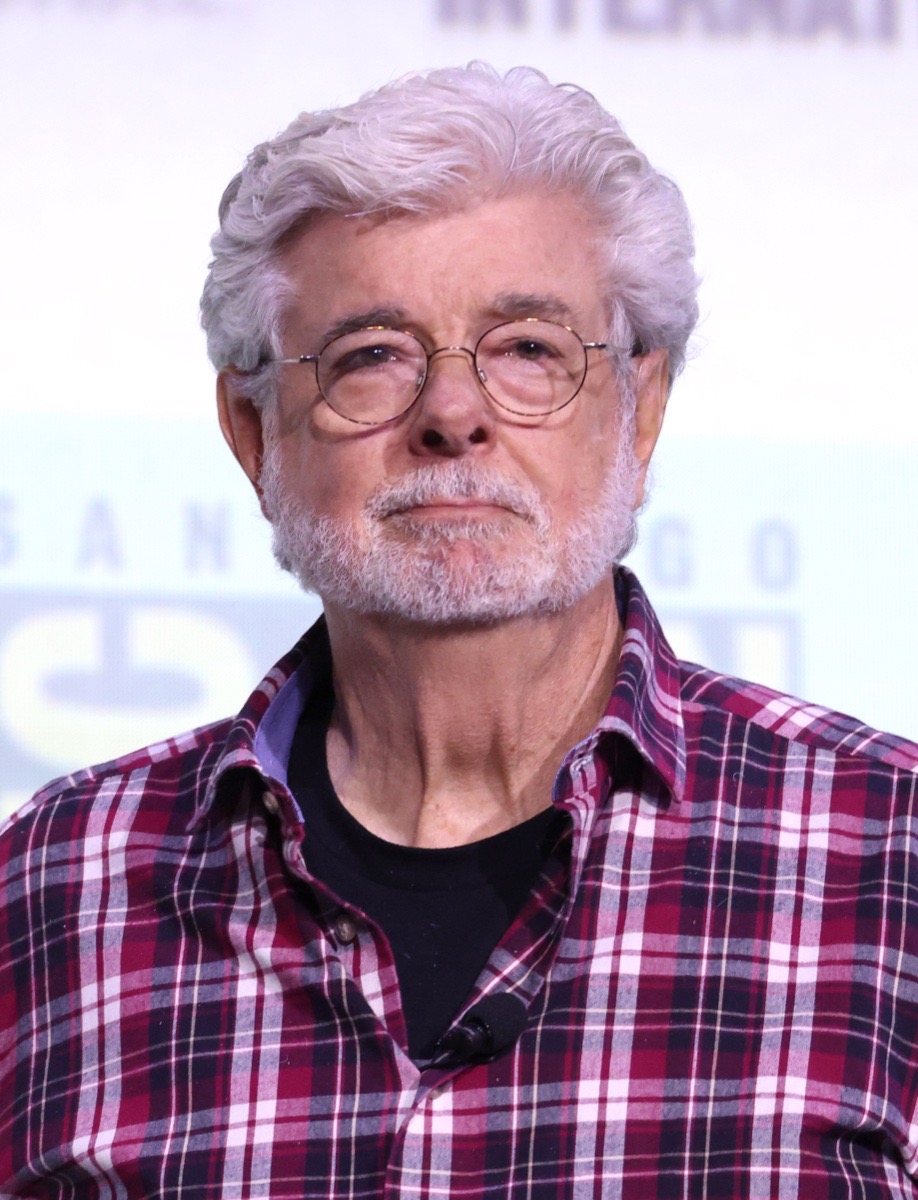
Creator of Star Wars; founder, Lucasfilm and Industrial Light & Magic · b. 1944 · Modesto, California
Two calls made by hand, not formulas. how we score →
Summary
His father ran the town stationery store and expected him to take it over.
He nearly died in a car crash at eighteen, went to film school instead, and built a reputation good enough that Fox let him option away the merchandising and sequel rights on Star Wars rather than pay him more up front. Fox thought that clause was worth nothing. It became the fortune.
How it happened
His father owned the L.M. Morris stationery and office-supply store in downtown Modesto outright, and the family lived on a walnut ranch outside town. It was a business-owning household, not a poor one, and his father assumed George would eventually run the store himself.
Days before his 1962 high school graduation, another car broadsided the one he was driving. It flipped several times into a tree; his seatbelt snapped and threw him clear, which is likely the only reason he survived. He'd wanted to be a race car driver. After the crash he enrolled at Modesto Junior College instead and started shooting 8mm footage of the street racing he could no longer do.
He transferred to USC film school, then co-founded American Zoetrope with Francis Ford Coppola as an alternative to the studio system. Warner Bros. financed a slate of scripts on the strength of it. When Lucas's first feature, THX 1138, did poorly in 1971, Warner pulled the deal and called in the money it had already advanced. Lucas later said he felt cruelly used, and it left him wary of financiers with opinions about creative work.
American Graffiti's success in 1973 gave him leverage he hadn't had before. Rather than push 20th Century Fox to raise his $150,000 director's fee for Star Wars, he asked for something the studio considered close to worthless at the time: ownership of merchandising and sequel rights. Fox agreed. Toys, books, and licensing on the original film alone eventually brought in far more than the movie's box-office gross ever paid him directly.
He built Industrial Light & Magic and Skywalker Ranch out of that money, spun off the computer-graphics division that became Pixar in 1986, and kept full ownership of Lucasfilm for another three and a half decades. He sold it to Disney in 2012 for roughly $4.05 billion and has said he intends to give most of it away.
The coded evidence
Thirteen groups, every claim sourcedDescendant; multi-generation American, not an immigrant family
↗ en.wikipedia.orgFamily home on a walnut ranch outside Modesto and a family business he could have stepped into at any point; his father expected him to eventually run the stationery store.
↗ en.wikipedia.orgHe has described his first six years in the business as "hopeless," and says that while writing American Graffiti he "spent the very last money I had saved up" and had nothing left. This came after Warner Bros. canceled its deal with American Zoetrope and called in money already advanced against future scripts, following the commercial failure of THX 1138 in 1971.
↗ achievement.orgThe hardship was chosen. There was a home to go back to if it failed.
The lean years came after choosing independent filmmaking over the store his father ran and could have handed him; the family home and business remained available the whole time.
↗ en.wikipedia.orgFather George Lucas Sr. owned the L.M. Morris Co. stationery and office-supply store in downtown Modesto outright from 1949; mother Dorothy Lucas kept the home. The family also owned a walnut ranch.
↗ en.wikipedia.orgA parent worked for themselves, the strongest known predictor of founding.
↗ historicmodesto.comHis father assumed he'd take over the store and pushed him toward the business rather than film; sanction for the filmmaking path came later, earned through the crash and his own persistence rather than granted.
↗ en.wikipedia.orgDiagnosed with diabetes as a young man, which resulted in a medical exemption from the Vietnam draft.
↗ en.wikipedia.orgModesto, a Central Valley agricultural town in California; family home on a walnut ranch on its outskirts.
↗ en.wikipedia.orgPublic schooling in Modesto, then Modesto Junior College.
↗ historicmodesto.comFormed a close film-student cohort at USC nicknamed "The Dirty Dozen," including Steven Spielberg and, at times, Martin Scorsese — future peers who became lifelong collaborators and referral sources.
↗ en.wikipedia.orgWon a Warner Bros. scholarship to observe Francis Ford Coppola direct Finian's Rainbow (1968), which led to the American Zoetrope partnership and, later, to Alan Ladd Jr. at 20th Century Fox greenlighting Star Wars on the strength of American Graffiti.
↗ en.wikipedia.orgnot established
No public following before American Graffiti; his standing was industry credibility with studio executives, not an audience.
↗ en.wikipedia.orgnot established
The 1973 renegotiation is described as Lucas's own decision following American Graffiti's success; no agent or lawyer is credited by name in the reachable sourcing for driving the merchandising-rights ask.
↗ en.wikipedia.orgUSC School of Cinematic Arts, then a competitive, elite film-student network that produced multiple major directors of his generation.
↗ en.wikipedia.orgBFA in film, University of Southern California, 1967 (after Modesto Junior College)
↗ en.wikipedia.orgCommunity-college transfer into a four-year film program.
↗ en.wikipedia.org$150,000 director/writer fee for Star Wars under a July 1973 deal memo with 20th Century Fox — modest for a director by industry standards even then.
↗ en.wikipedia.orgIt needed capital up front, before it earned anything.
Star Wars was studio-financed at roughly $11 million; not self-funded or bootstrapped.
↗ en.wikipedia.orgReinvested Star Wars proceeds into owned production infrastructure (ILM, Skywalker Ranch) rather than spending them, then sold Lucasfilm to Disney in 2012 for about $4.05 billion, most of which he has said he intends to give away.
↗ forbes.comAfter American Graffiti's 1973 success, Lucas renegotiated the Star Wars deal to keep merchandising rights (toys, books, apparel) and sequel rights, rather than push for a larger up-front fee. Fox treated merchandising as close to worthless at the time. Licensing on the original film alone generated hundreds of millions of dollars and became the financial base for Lucasfilm and ILM.
↗ en.wikipedia.orgBuilt and owned Industrial Light & Magic (founded 1975), Skywalker Sound, THX, and Skywalker Ranch outright rather than renting facilities or licensing others' effects houses.
↗ en.wikipedia.orgStar Wars grew from his own script development after American Graffiti; the Graphics Group that became Pixar began as an in-house Lucasfilm research division, sold to Steve Jobs in 1986 for roughly $10 million combined investment and capital contribution once it was losing money as a cost center.
↗ en.wikipedia.org1
THX 1138 (1971), his feature debut under American Zoetrope, was a commercial failure; Warner Bros. canceled the Zoetrope deal and recalled money already advanced against future scripts.
↗ inverse.comWarner Bros. absorbed the immediate financial loss on THX 1138 and then called its money back, which fell mainly on Coppola as the deal's principal; Lucas absorbed reputational and morale cost, and has said he felt "cruelly used."
↗ inverse.com29
Age at the July 1973 deal memo and subsequent merchandising-rights renegotiation.
↗ en.wikipedia.orgMid-1970s Hollywood was still figuring out that a blockbuster film could be a merchandising platform; licensing rights on a movie were not yet understood as valuable, which is exactly why Fox gave them up.
↗ en.wikipedia.orgFilm, television, and licensed entertainment properties
↗ en.wikipedia.org5200000000
↗ forbes.comJournalistic estimate
Forbes real-time billionaire estimate; largely traceable to the disclosed $4.05B Disney sale plus subsequent Disney stock performance and other assets, not a filing.
↗ forbes.com2026
↗ forbes.comWealth built on owned assets — merchandising and sequel rights, a wholly owned studio and effects company, and finally Disney stock from the 2012 sale — not on salary.
↗ forbes.comUncapped
↗ forbes.comWarner Bros. terminated its financing and distribution deal with American Zoetrope after THX 1138 underperformed in 1971 and recalled money already advanced against future scripts, a dispute that fell mainly on co-founder Francis Ford Coppola. No litigation or regulatory action naming Lucas personally is established in the reachable record.
↗ inverse.comBefore
↗ inverse.comIncidental
The Zoetrope collapse predates and is unrelated to the Star Wars deal, but it shaped his wariness of outside financiers and his preference for owning rights outright afterward.
↗ inverse.comVisionary, Controlling, Business savvy, Private
↗ en.wikipedia.orgPublic
↗ en.wikipedia.orgBefore
Reputation as an independent-minded filmmaker predates Star Wars, rooted in the Zoetrope years.
↗ en.wikipedia.orgAsset
↗ forbes.comWarmly regarded as the creator of Star Wars by the general public and as a savvy owner-operator by the industry, while a vocal segment of longtime fans criticized the 1997 "Special Editions," the 1999–2005 prequel trilogy, and his 2015 remarks likening the Disney sale to a "divorce" and Disney's handling of the story to being treated like "white slavers" — a comparison he later apologized for.
↗ en.wikipedia.orgStructural context
The cost-of-failure score comes from this person's own money and circumstances. But who they were in America carried its own weight, the same way their household or income did, and it shaped how hard the path was just as much. That part isn't in the cost-of-failure number. It's here instead.
Men hold most of the ownership and gatekeeping across the creative and media industries, the default that recognition and deals flow toward.
↗ assets.uscannenberg.orgWhite creators hold most of the ownership and catalog control relative to their share of the population. Recognition turns into ownership most reliably for them.
↗ assets.uscannenberg.orgAmong the people recorded here — men: 115 · White subjects: 74. Representation here is who reached these outcomes, not equal odds of reaching them.
Controlled comparisons
Each holds one thing constant and varies another, so the difference is the point. A list of similar names wouldn't tell you anything.