Lin-Manuel Miranda
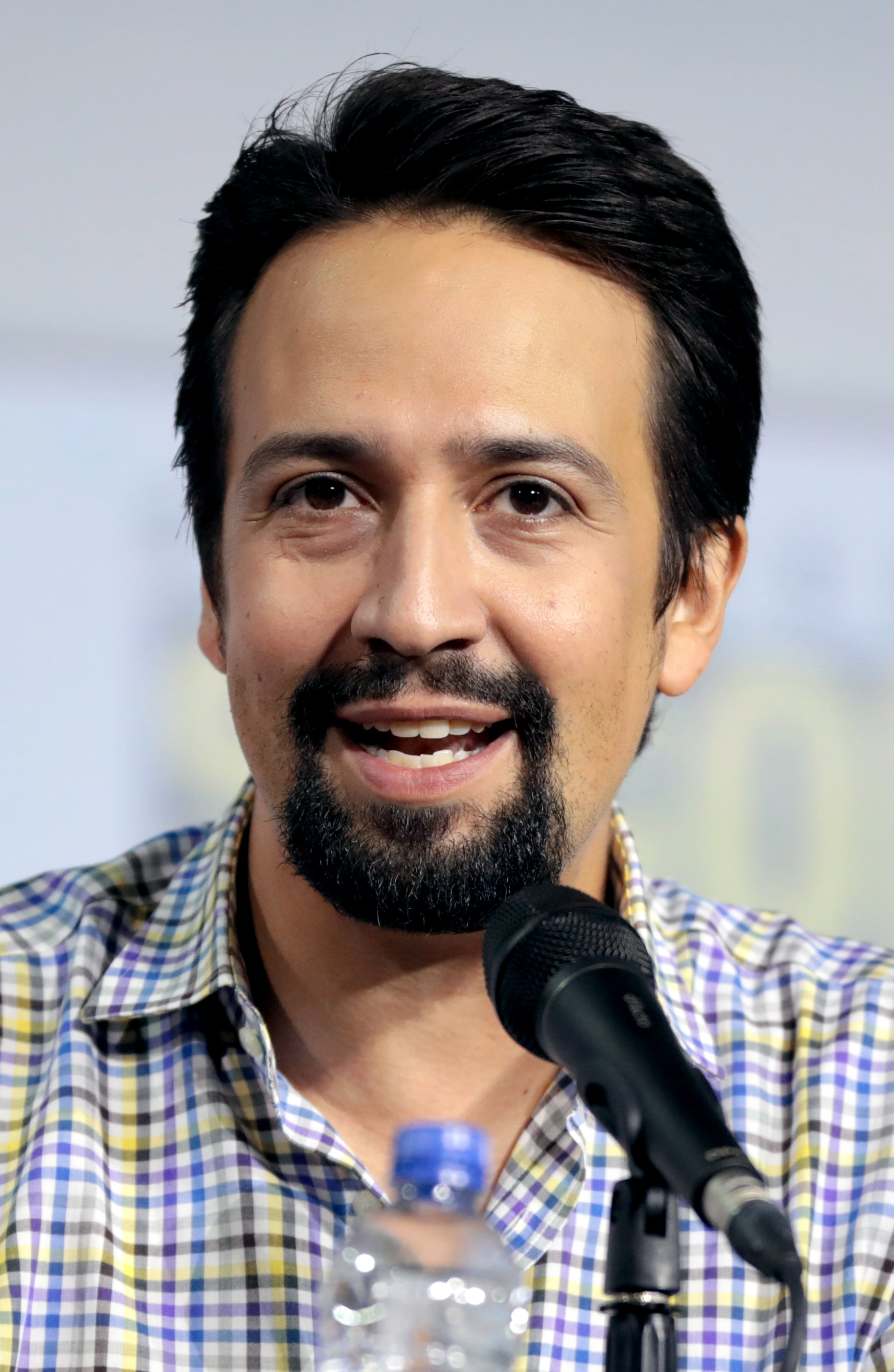
Creator of In the Heights and Hamilton; composer and lyricist for stage and film · b. 1980 · Inwood, Manhattan, New York City
Two calls made by hand, not formulas. how we score →
Summary
He grew up with real professional standing in Manhattan — a political-consultant father, a psychologist mother, a debt-free education through college.
What was actually hard were the writing years: nine unpaid ones from a college draft to a Broadway hit, then a second show built so its creator kept a royalty and profit share instead of a flat fee, on one of theater's most lucrative properties.
How it happened
Born in 1980 in Manhattan to Puerto Rican parents. His father, Luis A. Miranda Jr., ran New York City's Mayor's Office for Hispanic Affairs under Ed Koch and later founded his own political consulting firm, MirRam Group; his mother, Luz Towns-Miranda, worked as a clinical psychologist. The family lived in Inwood, at the northern tip of Manhattan, and couldn't always afford Broadway tickets, so they played the cast recordings instead. He and his older sister both took piano lessons.
He tested into Hunter College Elementary and High School, a free but exam-admission public pipeline the school says draws from the top quarter of one percent of New York City students by score, then went on to Wesleyan University to study theater. His parents backed an arts major rather than steering him toward law or medicine, the more obvious route for a household with professional standing but no family fortune behind it.
He wrote the first draft of In the Heights as a Wesleyan sophomore in 1999. Four people who saw the student production, including Thomas Kail, who would go on to direct both of his Broadway shows, approached him afterward about developing it further. It took a 2005 workshop at the Eugene O'Neill Theater Center and a 2007 off-Broadway run before it reached Broadway in 2008 and won the Tony for Best Musical — nine years of unpaid or low-paid development, most of it while he worked as a full-time English teacher at his own former high school.
He started writing Hamilton in 2008 after reading Ron Chernow's biography on vacation, developed it through a 2013 workshop at Vassar and a Public Theater run, and opened it on Broadway in August 2015. What changed financially wasn't just that it became a hit — In the Heights had been one too. It's that this time he was paid as a rights-holder rather than for a flat writing fee: a reported royalty of around 7% of Broadway's adjusted gross, up to 8.5% on tours, plus a further share of net profits once each production recouped its costs. That structure turns a hit into a royalty stream that keeps paying for as long as the show runs, instead of a single check.
Hamilton won the 2016 Pulitzer Prize for Drama; Miranda had already been named a MacArthur Fellow in 2015. Disney paid a reported $75 million for the film rights in 2020, of which Miranda is estimated to have taken roughly a third. He has kept writing songs for Disney animated films — "How Far I'll Go" for Moana, "We Don't Talk About Bruno" for Encanto — as a well-paid songwriter for hire rather than an owner of those properties. Aggregator estimates put his net worth at around $100 million: real money, built mostly on one royalty-bearing show, not the billion-dollar studio or brand stake some of his entertainment peers reached.
Both of his hit shows cast Latino and Black actors in roles Broadway rarely gave them, which was central to how each was received. That made the criticism of the 2021 film version of In the Heights sting more: viewers and journalists pointed out that its lead roles went to lighter-skinned actors while a Washington Heights neighborhood that is meaningfully Afro-Latino appeared mostly in the background. Miranda apologized publicly, writing that he could "hear the hurt and frustration over colorism" and that the film had fallen short of the community it meant to represent.
The coded evidence
Thirteen groups, every claim sourcednot established
Not established as a field distinct from ethnicity in the public record; Puerto Rican identity spans U.S. census race categories inconsistently and isn't reported on its own.
↗ en.wikipedia.orgBorn in Manhattan to Puerto Rican parents. Puerto Ricans are U.S. citizens by birth, so this is internal domestic movement one generation removed from his own birth, not immigration in the visa sense. He spent at least a month most years as a child with grandparents in Vega Alta, Puerto Rico.
↗ en.wikipedia.orgTwo working professional parents throughout childhood — a political consultant and a clinical psychologist — in a stable Manhattan household. No housing insecurity is documented at any point.
↗ biography.comWorked as a full-time English teacher at his own former high school after graduating Wesleyan, a steady salary through the years he was developing In the Heights toward Broadway.
↗ biography.comnot established
No student debt or other debt overhang is documented, though it isn't ruled out either from the sources reviewed.
↗ biography.comnot established
No homelessness, eviction, or job loss during the build is documented.
↗ en.wikipedia.orgnot established
No period of chosen or imposed scarcity is documented at any point.
↗ en.wikipedia.orgFather Luis A. Miranda Jr. was a political consultant and strategist who ran New York City's Mayor's Office for Hispanic Affairs under Ed Koch (1987-1989), later founded the political and advocacy consulting firm MirRam Group, and founded the Hispanic Federation in 1990. Mother Luz Towns-Miranda worked as a clinical psychologist.
↗ en.wikipedia.orgA parent worked for themselves, the strongest known predictor of founding.
Father founded and ran his own consulting firm, MirRam Group.
↗ en.wikipedia.orgnot established
Specific degrees aren't established in the sources reviewed, though both parents' occupations (political strategist; licensed clinical psychologist) imply college and likely graduate training.
↗ en.wikipedia.orgHis father founded the Hispanic Federation (1990) and later chaired the Latino Victory Fund, placing the family inside New York City Puerto Rican civic and Democratic political leadership from his childhood on, independent of the family's personal wealth.
↗ en.wikipedia.orgHis parents were self-described Broadway enthusiasts who couldn't regularly afford tickets and played cast recordings at home instead; both children took piano lessons. They supported a theater studies major at Wesleyan rather than steering him toward a more conventional professional path.
↗ biography.comInwood, at the northern tip of Manhattan — a working- to middle-class, heavily Latino neighborhood.
↗ en.wikipedia.orgHunter College Elementary School and Hunter College High School, free public schools run by Hunter College (CUNY) with test-score admission the school describes as drawing from the top quarter of one percent of New York City students by score.
↗ en.wikipedia.orgAttended Hunter College High School alongside future journalist Chris Hayes and rapper Immortal Technique, among other future high achievers.
↗ en.wikipedia.orgFour people who saw the 2000 student production of In the Heights at Wesleyan, including Thomas Kail — who went on to direct both In the Heights and Hamilton on Broadway — approached him afterward about developing it into a professional show.
↗ en.wikipedia.orgnot established
No public profile or following before In the Heights is documented.
↗ en.wikipedia.orgPiano lessons as a child, alongside his sister.
↗ biography.comSelective, test-admission public school pipeline (Hunter College Elementary and High School) from childhood through twelfth grade.
↗ en.wikipedia.orgBA in theater studies, Wesleyan University, 2002.
↗ en.wikipedia.orgnot established
No scholarship, loan, or family-contribution amount is publicly documented. The family's professional-class income (political consulting; clinical psychology) is the most plausible funding source for a private university education, but the specific arrangement isn't confirmed on the record.
↗ biography.comnot established
↗ en.wikipedia.orgnot established
No scholarship or minority/first-generation access program is documented.
↗ en.wikipedia.orgNo meaningful outside capital was raised for In the Heights in its early years; it moved from a Wesleyan student production (2000) to a funded workshop at the Eugene O'Neill Theater Center (2005) and an off-Broadway run (2007), each backed by the hosting institution or producers rather than by Miranda's own money.
↗ en.wikipedia.orgnot established
As writer and composer he wasn't the party raising or spending production capital; the Broadway production itself recouped its reported $10 million investment in about ten months.
↗ en.wikipedia.orgOn Hamilton, reported terms have him paid as a rights-holder rather than for a flat writing fee: around a 7% royalty on Broadway's adjusted gross, up to 8.5% on touring and international productions, plus a further share of net profits once each production recouped its costs. That structure is why the show has produced sustained, multi-year income rather than a single paycheck.
Aggregator reporting on private contract terms, not a disclosed filing; widely repeated but not independently confirmed by Miranda or the production.
↗ celebritynetworth.comnot established
No studio, venue, or other physical production infrastructure ownership is documented; his position is a royalty and profit-participation stake, not asset ownership.
↗ celebritynetworth.comPersonal reading, not a commission or a family business: he encountered Ron Chernow's Hamilton biography while on vacation in 2008 and began to see dramatic and musical potential in it.
↗ en.wikipedia.org1
Theater (Hamilton) is the one property where he holds a documented ownership-like royalty and profit stake; his Disney songwriting work (Moana, Encanto, The Little Mermaid) is compensated with work-for-hire fees rather than equity or a rights stake.
↗ forbes.comnot established
No abandoned prior ventures are documented; In the Heights was continuously developed and workshopped for nine years rather than dropped and restarted.
↗ en.wikipedia.orgLargely institutional: the Eugene O'Neill Theater Center funded its 2005 workshop and commercial producers financed the off-Broadway and Broadway runs. Miranda's own cost during the unpaid years was time, covered by his teaching salary.
↗ en.wikipedia.orgA full-time salary teaching English at his own former high school, Hunter College High School, during the years he developed In the Heights toward Broadway.
↗ biography.comBroadway's 2000s-2010s shift toward hip-hop-inflected, demographically diverse musicals; a cast-recording streaming era that let a stage show's music circulate far beyond ticket buyers; and the 2020 launch window of Disney+, a new platform paying a premium for a marquee title while it built out its library.
↗ en.wikipedia.orgBuilt. Original musicals and an original songwriting catalog, not an acquired property.
↗ en.wikipedia.org11
From the August 2015 Broadway opening through this review, with no interruption.
↗ en.wikipedia.orgMusical theater composing, lyric-writing, and performance
↗ en.wikipedia.org100000000
Aggregator estimate; other outlets place him closer to $80 million. No filing or disclosed valuation exists for a private individual whose income is mostly royalties and fees. Not a billionaire figure. Band only.
↗ celebritynetworth.comAggregator
↗ celebritynetworth.comJournalistic estimate
↗ forbes.comMostly income from an ongoing royalty and profit-participation stream tied to a hit show's continued performance, plus songwriting fees, rather than equity in an appreciating owned business like a studio or brand.
↗ celebritynetworth.comPulitzer Prize for Drama (2016, Hamilton); MacArthur Fellowship (2015); multiple Tony, Grammy, and Emmy Awards; two Academy Award nominations; Kennedy Center Honors (2018); named a Disney Legend (2026).
↗ macfound.org16
From the 1999 Wesleyan draft of In the Heights to Hamilton's 2015 Broadway opening.
↗ en.wikipedia.orgUncapped
A percentage royalty on a still-running, still-touring show scales with the show's performance rather than being fixed like a salary.
↗ celebritynetworth.comprodigiously talented, Generous, Community minded
↗ macfound.orgPublic
↗ en.wikipedia.orgBefore
His reputation was established by In the Heights and Hamilton (2008-2016), well before the 2021 casting criticism.
↗ en.wikipedia.orgBoth of his hit shows cast Latino and Black actors in roles Broadway rarely gave them, which was part of how each was received. That made it notable when, after the 2021 film version of In the Heights was released, journalists and viewers (including a widely shared video interview by The Root's Felice León) pointed out that its lead roles went to lighter-skinned actors while darker-skinned Afro-Latino performers appeared mostly in the background. Miranda apologized publicly the following Monday, saying he could "hear the hurt and frustration over colorism" and that the film had been "extractive of the community we wanted so much to represent," adding, "we fell short. I'm truly sorry."
↗ cbsnews.comThe apology didn't visibly affect his mainstream commercial or critical standing; Disney kept commissioning his work and named him a Disney Legend in 2026. The colorism criticism of his own casting choices nonetheless remains part of the public record around In the Heights and is regularly revisited.
↗ cbsnews.comStructural context
The cost-of-failure score comes from this person's own money and circumstances. But who they were in America carried its own weight, the same way their household or income did, and it shaped how hard the path was just as much. That part isn't in the cost-of-failure number. It's here instead.
Men hold most of the ownership and gatekeeping across the creative and media industries, the default that recognition and deals flow toward.
↗ assets.uscannenberg.orgAmong the people recorded here — men: 115. Representation here is who reached these outcomes, not equal odds of reaching them.
Controlled comparisons
Each holds one thing constant and varies another, so the difference is the point. A list of similar names wouldn't tell you anything.