Megan Thee Stallion
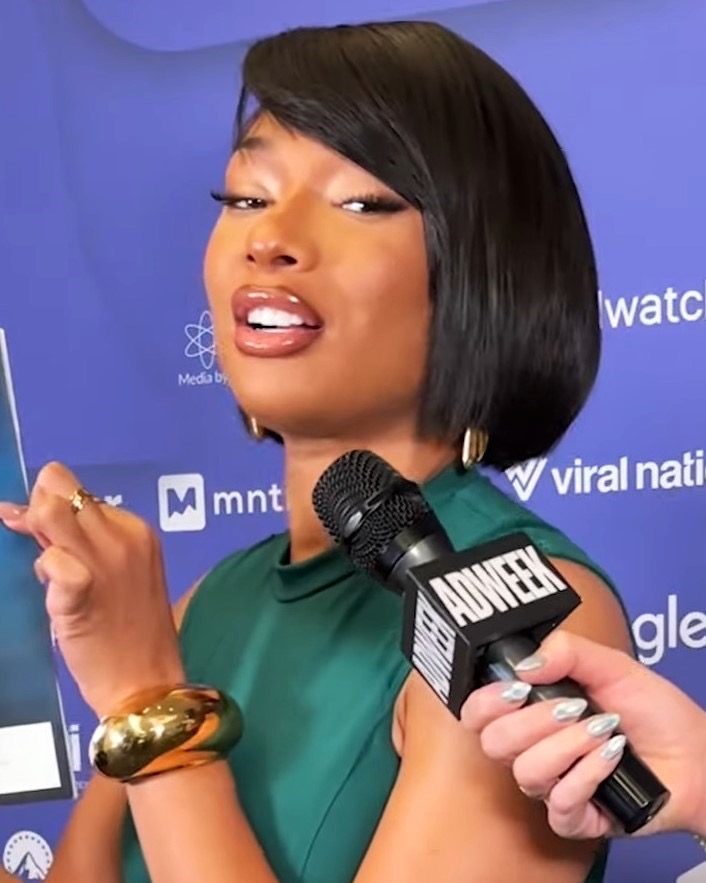
born Megan Jovon Ruth Pete
Grammy-winning rapper; founder, Hot Girl Productions · b. 1995 · San Antonio, Texas
Two calls made by hand, not formulas. how we score →
Summary
She built a fanbase from freestyle videos posted as a college student, then spent years suing her own record label over a contract she says she didn't fully understand when she signed it, eventually settling and starting her own label.
In the middle of that fight, she survived being shot and then watched a chunk of the internet refuse to believe her.
How it happened
Megan Jovon Ruth Pete was born February 15, 1995, in San Antonio, Texas, and moved to Houston shortly after. Her father, Joseph Pete Jr., was incarcerated for the first eight years of her life and died during her freshman year of high school. She was raised mostly by her mother, Holly Thomas, a bill collector who also recorded as a rapper under the name Holly-Wood between 2001 and 2007 and brought Megan along to studio sessions after school instead of daycare.
Megan started writing raps at fourteen over her mother's beats, but Holly told her to wait until 21 to pursue it professionally — she was uneasy about the sexually explicit content Megan wanted to write. Megan enrolled at Prairie View A&M University and later transferred to Texas Southern, and somewhere in that stretch her freestyle videos, posted to social media, started circulating on their own. By the time Houston label owner Carl Crawford signed her to 1501 Certified Entertainment in 2018, as its first female artist, she already had a fanbase — "the hotties" — that no label had built for her.
1501 got her onto 300 Entertainment for wider distribution, and 2019's "Hot Girl Summer" and 2020's "Savage" remix with Beyoncé made her one of the biggest names in the genre. But in 2020, with Roc Nation now managing her, she said she started seeing how bad the 1501 deal actually was — "I didn't understand some of the verbiage" when she signed it at 23. She sued to renegotiate, and when 1501 tried to block her Suga EP, she got a restraining order and released it anyway, running the #FreeTheeStallion campaign in public while simultaneously breaking sales records. A second suit followed in 2022. The dispute didn't settle until October 2023 — five years after she'd signed, and after three Grammys.
In the middle of the label fight, in July 2020, Megan was shot in both feet after a party and needed surgery; she said later she didn't name her shooter right away because she was afraid for her life. When she identified rapper Tory Lanez (Daystar Peterson) publicly that August, a chunk of the response wasn't sympathy but mockery — 50 Cent posted memes about it and later apologized, a former NFL player publicly blamed her, and researchers who study how Black women are treated in the media pointed to the reaction as a textbook case of misogynoir: a shooting victim doubted and ridiculed instead of believed. Lanez was convicted on three felony counts in December 2022 and sentenced to ten years in August 2023.
Her mother died of brain cancer in March 2019; her great-grandmother died the same month. She's said she didn't know who to turn to once she'd lost both of them: "I just started learning that it's OK to ask for help." She finished her health administration degree at Texas Southern in December 2021, already famous, and in 2022 released "Anxiety," a song that opens "I'm a bad bitch, and I got bad anxiety." That September she launched Bad Bitches Have Bad Days Too, a free mental-health resource site for her fans built around the same line.
The 1501 dispute ended in a confidential settlement in October 2023. In 2024 she started her own label, Hot Girl Productions, distributed through Warner Music Group — a structure that gives her more control over her catalog than the deal she started with. Three Grammys, including Best New Artist in 2021, sit alongside an estimated $40 million net worth built mostly on touring, streaming, and endorsements rather than any single owned asset yet.
The coded evidence
Thirteen groups, every claim sourcedDescendant
Born in Texas; no documented immigration event in the family within the reviewed sources.
↗ en.wikipedia.orgnot established
Whether the family owned or rented, or had a fallback home beyond the one they lived in, isn't documented in the sources reviewed.
↗ biography.comHer mother worked as a bill collector, a steady wage job, alongside a part-time rap career (2001–2007). Once Megan signed with 1501 Certified in 2018, the label's advance and structure became her income floor rather than her family's.
↗ biography.comnot established
No student debt or other debt figure documented in sources reviewed.
↗ en.wikipedia.orgnot established
No documented homelessness, eviction, or comparable instability during the years she was building a music career.
↗ en.wikipedia.orgnot established
No single documented period of visible poverty to code as chosen or imposed; the household read as steady but modest, on a bill collector's wage, without a cushion behind it.
↗ biography.comMother Holly Thomas worked as a bill collector and recorded as a rapper under the name Holly-Wood from 2001 to 2007. Father Joseph Pete Jr.'s occupation isn't documented in the sources reviewed; he was incarcerated for the first eight years of Megan's life.
↗ biography.comNeither parent was self-employed.
Her mother's rap career reads as a part-time pursuit alongside wage work, not a business.
↗ biography.comHer mother allowed her to write and perform but set a condition: Megan had to wait until she was 21 to pursue rap professionally, citing discomfort with the sexually explicit material Megan wanted to write. She also brought Megan to studio sessions as a child rather than treating music as off-limits.
↗ en.wikipedia.orgnot established
Raised in one household through childhood; no documented change of primary guardian.
↗ en.wikipedia.orgBorn in San Antonio, moved to Houston (South Park neighborhood) shortly after, then to Pearland, Texas at fourteen, where she stayed through high school. Ordinary family moves rather than documented instability.
↗ en.wikipedia.orgAn immediate family member was incarcerated.
Her father was incarcerated for the first eight years of her life.
↗ en.wikipedia.org2
Houston-area schooling through age fourteen, then Pearland High School after the move; not documented as a disruptive pattern.
↗ en.wikipedia.orgHer father died during her freshman year of high school, roughly age 14–15. Her mother, Holly Thomas, died in March 2019 after a long battle with brain cancer; her great-grandmother died the same month.
↗ en.wikipedia.orgHas spoken publicly about struggling to process grief and stress, including in a 2021 interview describing not knowing who to turn to after losing both parents: "I just started learning that it's OK to ask for help and it's OK to want to go get therapy." Released "Anxiety" (Traumazine, 2022), which opens "I'm a bad bitch, and I got bad anxiety," and has connected her anxiety and depression directly to grief and to the aftermath of being shot in July 2020.
Self-declared on the record, active during and after her commercial breakout — a genuine headwind, reflected in the score.
↗ consequence.netHas said publicly that she lost both parents young — her father during her freshman year of high school, her mother to brain cancer in March 2019, with her great-grandmother dying the same month — and that she didn't have anyone to model how to process it. She and her family later created the Pete and Thomas Foundation in her parents' names.
Her own account of her family's losses. Coded to bereavement only; the July 2020 shooting is documented separately in the narrative and under d13, since no trauma enum value fits a survived shooting without distortion.
↗ en.wikipedia.orgSouth Park, Houston, Texas, then Pearland, Texas from age fourteen.
↗ en.wikipedia.orgPublic schools; Pearland High School, graduated 2013.
↗ en.wikipedia.orgHer mother's own rap career (as Holly-Wood, 2001–2007) meant Megan grew up around recording studios and the local Houston rap scene from childhood, rather than encountering the music industry for the first time as an adult with no context for how it worked.
↗ biography.comBorn in San Antonio; the family moved to Houston shortly after birth, then to Pearland when she was fourteen.
↗ en.wikipedia.orgHouston label owner Carl Crawford, a former MLB and NFL player who ran 1501 Certified Entertainment, signed her in 2018 as the label's first female artist — after her freestyle videos had already been circulating on their own.
↗ en.wikipedia.orgPlatform
Her early audience formed on social media around freestyle battle-rap videos, not through an existing industry relationship.
↗ en.wikipedia.org1501 Certified Entertainment, an independent Houston label, signed her in 2018; it then arranged distribution through 300 Entertainment the same year, giving her national reach through a small label rather than a major from the start.
↗ en.wikipedia.orgCredibility, Network
1501 and 300 supplied distribution, studio resources, and industry standing; no evidence they supplied her personal capital.
↗ en.wikipedia.org23
Signed to 1501 Certified in 2018; born February 1995. Her mother had required she wait until 21 to go professional.
↗ en.wikipedia.orgFreestyle and battle-rap videos posted while she was enrolled at Prairie View A&M University went viral and built a fanbase before any label signed her.
↗ en.wikipedia.orgBuilt a following — "the hotties" — through freestyle videos posted on social media while she was a university student, a channel no label or A&R department controlled, before any label was involved.
↗ en.wikipedia.orgInformal mentorship from her mother, a working rapper, from childhood — brought to studio sessions after school, taught to write, and held to her mother's standard before being allowed to go professional.
↗ biography.comBrought on Roc Nation for management around 2019–2020; Roc Nation's review of her 1501 contract is what she has said made the unfavorable terms clear to her and led to the lawsuit.
↗ en.wikipedia.org2
1501 Certified/300 Entertainment (2018–2023), then her own Hot Girl Productions with Warner Music Group distribution (2024–).
↗ en.wikipedia.orgBachelor of Science in health administration, Texas Southern University, completed December 11, 2021, while already a multi-platinum, Grammy-winning artist.
↗ en.wikipedia.orgnot established
Not documented in sources reviewed; how the degree was funded isn't specified.
↗ en.wikipedia.orgWas actively recording, touring, and releasing music throughout her time at Prairie View A&M and Texas Southern, including through her 2018–2021 commercial breakout, while still enrolled.
↗ en.wikipedia.orgEnrolled at Prairie View A&M University in 2013, an HBCU, then transferred to Texas Southern University, also an HBCU, where she completed her degree.
↗ en.wikipedia.orgBoth are HBCUs, but the network that actually launched her career was social media virality around her freestyle videos, not an institutional connection supplied by either school.
↗ en.wikipedia.orgnot established
No documented first-dollar figure or source; her early studio time was informal, through her mother.
↗ en.wikipedia.orgSigned to 1501 Certified in 2018 on terms she later said she "didn't understand"; sued in 2020 to renegotiate, obtained a restraining order to release Suga against the label's wishes, filed a second suit in 2022 over album-length terms, and reached a confidential settlement in October 2023. In 2024 she founded her own label, Hot Girl Productions, distributed through Warner Music Group rather than owned by a major label imprint.
↗ en.wikipedia.orgOwns Hot Girl Productions outright as of 2024, with Warner Music Group supplying distribution rather than ownership.
↗ en.wikipedia.orgnot established
No separately founded venture that failed before her 2018 signing is documented; her path was a steady buildup of mixtapes and viral videos rather than a failed attempt and relaunch.
↗ en.wikipedia.orgnot established
Early mixtapes and videos were self-produced and largely costless to distribute (social media, free releases); 1501 financed the first paid releases once signed.
↗ en.wikipedia.org25
The "Savage" remix with Beyoncé, her commercial breakout, released April 2020; born February 1995.
↗ en.wikipedia.orgBroke through during a resurgence of commercially dominant women in hip-hop and as TikTok was becoming a primary driver of music virality — both timing effects rather than anything she controlled.
↗ en.wikipedia.org"Savage" became a viral TikTok dance-challenge moment in early 2020 (choreographed by Keara Wilson), then was remixed with Beyoncé that April — the combination pushed her from a rising artist to a mainstream name.
↗ en.wikipedia.orgBuilt her audience from freestyle videos and independent mixtapes rather than acquiring or buying into an existing platform.
↗ en.wikipedia.orgHip-hop music
↗ en.wikipedia.org40000000
Aggregator estimate with no disclosed methodology; treat as a wide band, not a point figure. forbes.com/profile/megan-thee-stallion carries a biography but publishes no net-worth or earnings figure for her.
↗ celebritynetworth.comAggregator
↗ celebritynetworth.comnot established
No Forbes earnings-list figure or other filing-grade income figure located for her.
↗ forbes.comStill primarily income — touring, streaming royalties, and endorsements — complicated for years by an unfavorable label contract; the 2024 move to her own distributed label is a step toward owned, appreciating assets rather than a completed one.
↗ en.wikipedia.orgThree Grammy Awards, including Best New Artist (2021) — only the second female rapper to win it, after Lauryn Hill — plus Best Rap Song and Best Rap Performance for the "Savage" remix. Time 100 (2020). Six BET Awards. Houston named May 2, 2022 "Megan Thee Stallion Day" and gave her an honorary key to the city.
↗ en.wikipedia.org5
From viral freestyle videos circulating around 2015 to the "Savage" remix breakout in 2020.
↗ en.wikipedia.orgUncapped
Was effectively capped by the 1501 deal's royalty and release terms through 2023; became more uncapped with her own distributed label from 2024.
↗ en.wikipedia.orgConfident, Outspoken, Resilient
↗ en.wikipedia.orgPublic
↗ en.wikipedia.orgBefore
Her reputation for confident, unfiltered lyricism formed with the viral freestyle videos and early mixtapes, before the 2020 mainstream breakout.
↗ en.wikipedia.orgMixed
An asset commercially and critically throughout. After the July 2020 shooting, a segment of the public used the same confident, sexually frank persona to discredit her account rather than believe her — a liability effect layered on top of an otherwise strong reputation.
↗ vice.comThe reputation accrued from behaviour rather than being manufactured.
Described consistently as an extension of her own personality and Houston upbringing rather than a constructed persona.
↗ en.wikipedia.orgReported and, by Daystar Peterson's own December 2022 conviction on three felony counts for shooting her, established as fact: Tory Lanez shot her in both feet in July 2020, and he was sentenced to ten years in August 2023. Even so, when she first named him publicly, part of the public response was mockery rather than sympathy — including memes from 50 Cent, who later apologized, and public victim-blaming from a former NFL player. Researchers on the treatment of Black women in media pointed to the reaction as a case study in misogynoir. Her fanbase pushed back publicly in her defense throughout, and sentiment broadly shifted after the conviction.
↗ vice.comPublic sentiment moved substantially in her favor after Lanez's December 2022 conviction and August 2023 sentencing; she continued releasing music, finished her degree, and launched her own label through the period rather than stepping back from public life.
↗ en.wikipedia.orgStructural context
The cost-of-failure score comes from this person's own money and circumstances. But who they were in America carried its own weight, the same way their household or income did, and it shaped how hard the path was just as much. That part isn't in the cost-of-failure number. It's here instead.
Across film, music, and digital, ownership and control stay in far fewer women's hands than men's. For one measure, women directed only about 12% of 2023's top-grossing films.
↗ assets.uscannenberg.orgIn the creative and media industries, recognition comes far more easily to underrepresented creators than the ownership it should turn into. Among 2023's top-grossing film directors, for one measure, eight were Black.
↗ assets.uscannenberg.orgAmong the people recorded here — women: 54 · Black subjects: 58. Representation here is who reached these outcomes, not equal odds of reaching them.
Controlled comparisons
Each holds one thing constant and varies another, so the difference is the point. A list of similar names wouldn't tell you anything.