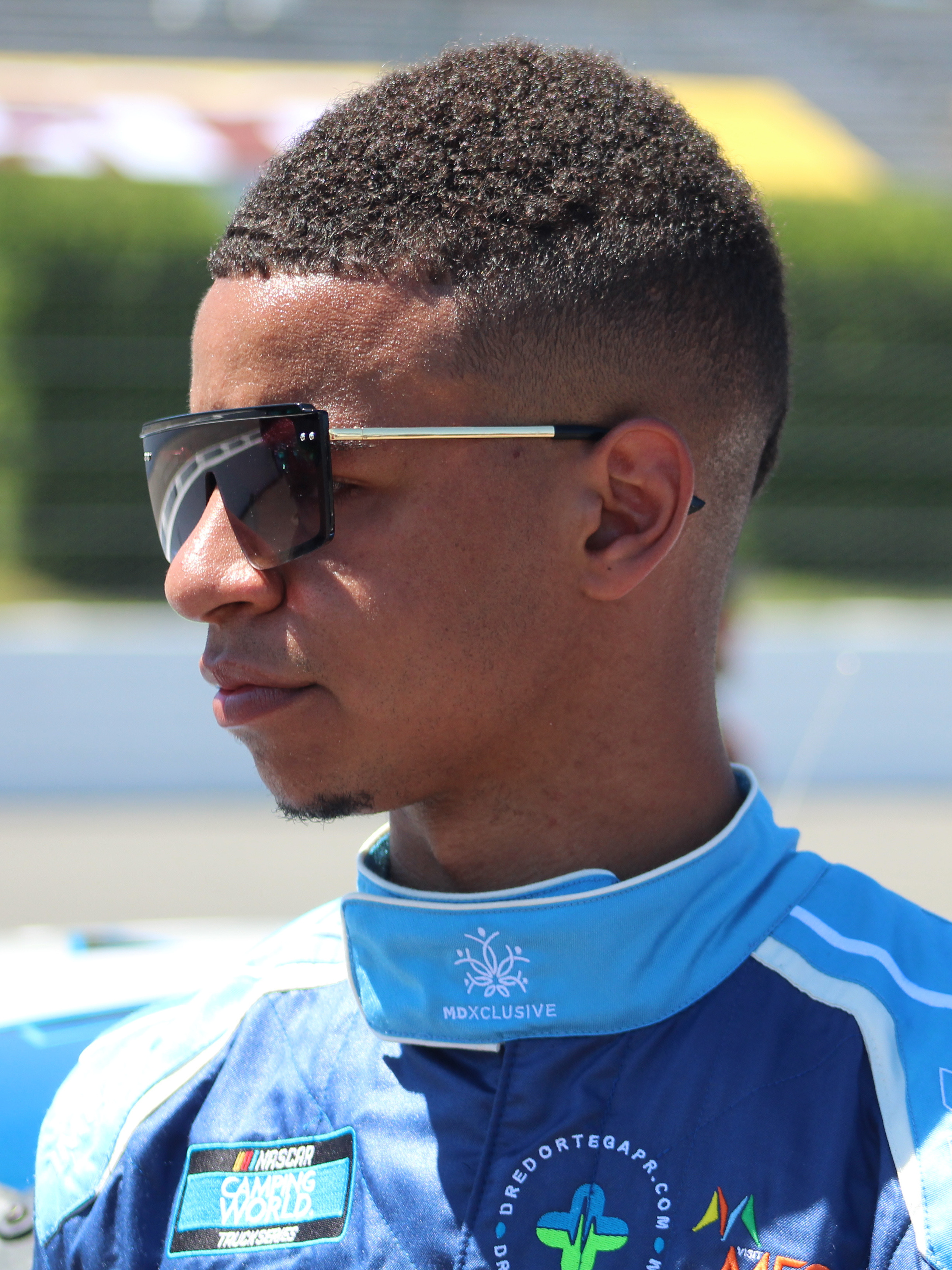
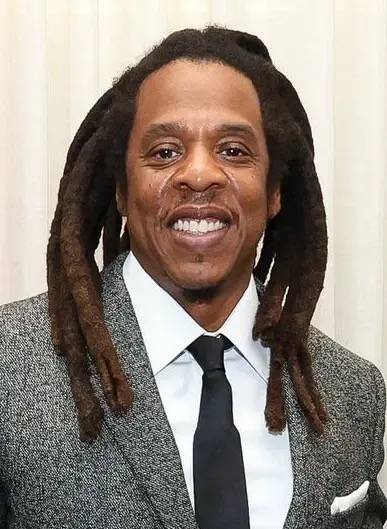
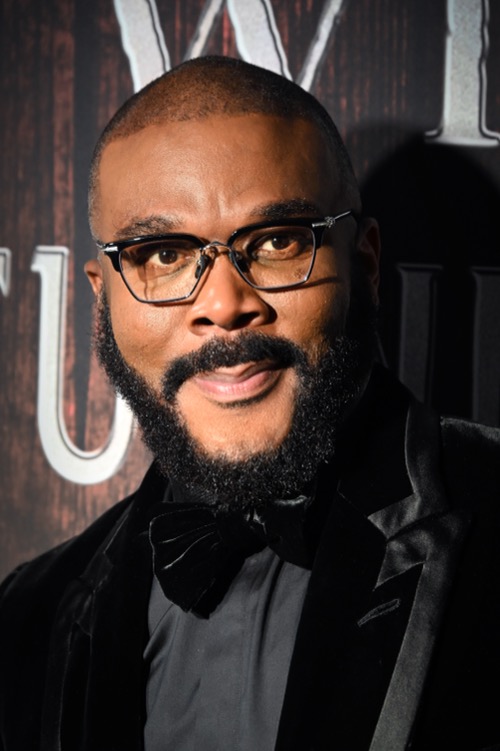
Michael Jordan
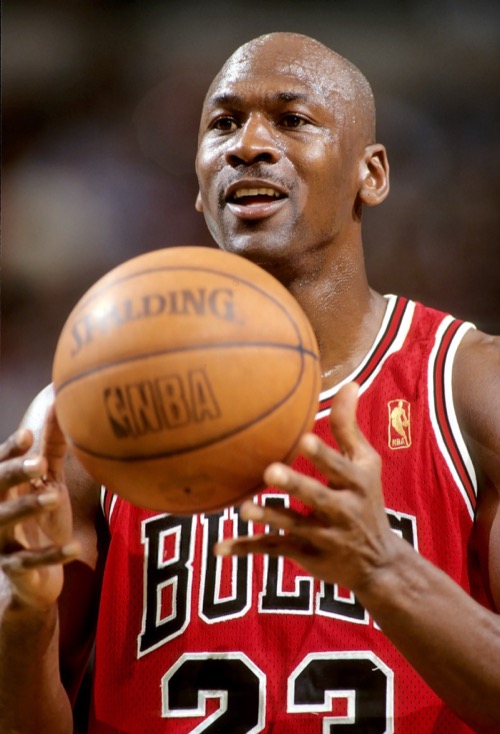
Professional basketball player; majority owner, Charlotte Hornets (2010-2023) · b. 1963 · Brooklyn, New York
Two calls made by hand, not formulas. how we score →
Summary
His father supervised equipment at General Electric and his mother worked in a bank: a stable household, not a hard landing.
The leverage came in 1984, when his mother pushed Nike toward a royalty on every shoe sold instead of a flat fee. He bought an NBA team for $275 million in 2010 and sold a majority stake at a $3 billion valuation in 2023. The fortune traces to ownership, not salary.
How it happened
Michael Jordan was born in Brooklyn in 1963 and moved with his family to Wilmington, North Carolina, in 1968. His father James worked as an equipment and maintenance supervisor at General Electric, and his mother Deloris worked at a bank. Both parents held steady jobs, and the household was stable enough that getting cut from the varsity team as a sophomore for being too short was a setback to train through rather than a crisis.
He was recruited by a long list of major programs and chose the University of North Carolina, hitting the game-winning shot in the 1982 national championship game. He left after his junior year to enter the 1984 NBA draft, going third overall to the Chicago Bulls, and came back to campus in 1986 to finish the geography degree the scholarship had already paid for.
Nike wanted him for a signature shoe line in 1984, and Adidas countered with a matching offer plus a car. His mother Deloris got on the phone and told Nike he would sign only if he earned a percentage of every shoe sold instead of a flat annual fee, a term Jordan has credited largely to her. Nike agreed. By 2022 that royalty alone was paying him upward of $150 million in a single year, on a shoe line generating more than $5 billion in sales.
In 2010 he bought a majority stake in the Charlotte Bobcats for a reported $275 million, becoming the first former player to own an NBA team outright and, at the time, the league's only Black majority owner. He ran the team for thirteen years, mostly as a loser on the court, and sold the majority stake in 2023 in a deal that valued the franchise at about $3 billion, more than ten times what he paid.
Forbes puts his net worth at $4.3 billion. Most of it traces to the Nike royalty and the Hornets sale rather than to his fifteen NBA seasons, over which his playing salary totaled roughly $90 million. He kept a minority stake in the Hornets, became a NASCAR team co-owner in 2020, and has since given more than $100 million to organizations working on racial equity and community health.
The coded evidence
Thirteen groups, every claim sourcedFamily attended Rockfish African Methodist Episcopal Church in Wilmington for decades, per Roland Lazenby's biography as cited on Wikipedia.
↗ en.wikipedia.orgA stable, employed two-parent household in Wilmington, North Carolina, with a family home where his father built him a backyard basketball court. No documented financial precarity at any point in childhood.
↗ en.wikipedia.orgA full athletic scholarship covered college, and his rookie NBA contract with the Chicago Bulls began paying him immediately after the 1984 draft. There was no period of self-funded, income-free building of the kind seen elsewhere in this set.
↗ en.wikipedia.orgThe hardship was imposed, not chosen. There was nothing to fall back on.
No period of visible poverty, chosen or imposed, is documented at any stage of his life.
↗ en.wikipedia.orgFather James R. Jordan Sr. worked as an equipment and maintenance supervisor at General Electric. Mother Deloris (née Peoples) worked as a bank employee.
↗ en.wikipedia.orgNeither parent was self-employed.
↗ en.wikipedia.org4
Two older brothers (James Jr. and Larry), one older sister (Deloris), one younger sister (Roslyn).
↗ en.wikipedia.orgFather James R. Jordan Sr. was murdered on July 23, 1993, during a carjacking at a highway rest area in Lumberton, North Carolina; his body was found in a South Carolina swamp on August 3. Two men were convicted and given life sentences. Jordan retired from the NBA that October, at age 30, and has given conflicting accounts of how much the murder drove that decision versus general exhaustion with fame.
↗ en.wikipedia.orgWilmington, North Carolina, a working- and middle-class city where the family owned their home.
↗ en.wikipedia.orgPublic school. Emsley A. Laney High School in Wilmington.
↗ en.wikipedia.orgOne childhood move: Brooklyn, New York to Wilmington, North Carolina, in 1968, a domestic relocation rather than an immigration event.
↗ en.wikipedia.orgUniversity of North Carolina coach Dean Smith recruited him directly after his standout summer camp and high school play, over competing offers from Duke, Syracuse, and other major programs.
↗ en.wikipedia.orgBeing drafted third overall by the Chicago Bulls in 1984 and winning NBA Rookie of the Year gave Nike an immediately marketable young star to build a signature shoe line around.
↗ en.wikipedia.orgAgent David Falk of ProServ negotiated the 1984 Nike deal and most of Jordan's subsequent endorsement contracts. Jordan has credited Falk with the "Air Jordan" concept itself, calling him "the best at what he does."
↗ en.wikipedia.org2
As a player: Chicago Bulls and Washington Wizards only. Excludes his later roles as a team owner and executive, which are a different kind of relationship to the league.
↗ en.wikipedia.orgSelected for the 1981 McDonald's All-American Game and recruited nationally out of high school, placing him inside the elite amateur basketball pipeline well before college.
↗ en.wikipedia.orgBachelor of Arts in geography, University of North Carolina at Chapel Hill, awarded 1986. He left school a year early to enter the 1984 NBA draft and returned to finish the degree while already playing professionally.
↗ en.wikipedia.orgNone. The degree ran on a basketball scholarship.
↗ en.wikipedia.orgDirect. Athletic scholarship to an elite Division I program, then straight into the NBA draft.
↗ en.wikipedia.orgnot established
Not applicable in the founder sense. His first significant money was his 1984 Chicago Bulls rookie contract and the Nike deal signed the same year, both salaried or contractual rather than self-capitalized.
↗ en.wikipedia.orgBought a majority stake in the Charlotte Bobcats in February 2010 for a reported $275 million as part of an ownership group, MJ Basketball Holdings, rather than as sole owner; by 2014 his personal stake stood at 80%, which he then increased to 89.5%. Sold the majority position in 2023 in a sale that valued the franchise at about $3 billion, more than ten times the purchase price, while retaining a minority stake.
↗ en.wikipedia.orgTwo separate compounding structures: the Nike/Jordan Brand royalty, running continuously since 1984 and still paying out over $150 million a year as of 2022, and the Hornets ownership stake, held for thirteen years before the 2023 sale.
↗ en.wikipedia.orgOwnership proceeds and royalty income were repeatedly redeployed into further ownership stakes rather than spent: the Hornets purchase, a golf course, an MLB minority stake, a NASCAR team, and a 2020 investment in DraftKings.
↗ en.wikipedia.orgThe defining move. His mother Deloris pushed Nike to restructure the 1984 offer from a flat fee toward a royalty on every shoe sold under his name, rather than a fixed annual payment. Jordan does not own equity in Nike or in the Jordan Brand division; the arrangement is a lifetime royalty contract, but it behaves like an appreciating asset rather than a paycheck, scaling with sales instead of being capped by a negotiated salary.
The royalty-instead-of-flat-fee negotiation is dramatized in the 2023 film "Air," but Jordan personally requested the role of his mother be expanded and gave the production his blessing, describing her as instrumental in the decision to sign with Nike. See https://www.biography.com/movies-tv/a43367359/michael-jordan-requests-for-air-movie. The original contract terms (six years, $2.5 million, plus royalties on products sold under his name) are independently documented at https://en.wikipedia.org/wiki/Air_Jordan.
↗ en.wikipedia.org6
Distinct industries where he took an ownership stake rather than only a fee: automotive dealerships (Nissan, from 1990), restaurants (steakhouses and other ventures, from the 1990s), an NBA team (Charlotte Bobcats/Hornets, majority owner 2010-2023), a golf course (Grove XXIII, majority investor, opened 2019), an MLB team (Miami Marlins, minority owner from 2017), and a NASCAR team (23XI Racing, majority owner from 2020). The Nike royalty itself is a contractual percentage, not an equity stake in Nike, and is counted separately under rightsRetention.
↗ en.wikipedia.orgnot established
No failed venture is documented. His path ran through employment (the NBA), an endorsement contract, and later acquisitions, not through founded ventures that could fail in the usual sense.
↗ en.wikipedia.orgThe mid-1980s athletic shoe market was expanding and competitive between Nike, Adidas, and Converse, but no major athlete had yet been given a standalone signature line built around a sales royalty. The structure his mother pushed for was, per Nike's own account, considered industry-disrupting at the time.
↗ en.wikipedia.orgBuy, for the Hornets: acquired an existing NBA franchise rather than starting one. Build, for the shoe line: Air Jordan was a new signature product category for Nike rather than an acquired brand.
↗ en.wikipedia.org13
2010 majority purchase to the 2023 sale of the Hornets stake. The Nike royalty has been compounding far longer, continuously since 1984.
↗ en.wikipedia.orgProfessional basketball; sports team and brand ownership
↗ en.wikipedia.org4300000000
Forbes real-time tracker, 2026. This is the point-in-time net worth and sits in the $1-10B band on its own; the magnitude code above reflects the top band given the additional realized value not captured in a single net-worth snapshot: the $3B Hornets sale proceeds (2023), decades of Nike royalty income (over $150M in 2022 alone), and roughly $2.4B in pre-tax career endorsement earnings outside Nike.
↗ forbes.comJournalistic estimate
↗ forbes.com2026
↗ forbes.com110000000
2015 figure from Jordan Brand income and endorsements, reported by Forbes as the highest of any retired athlete that year. A separate, later figure puts his single-year Nike royalty alone at $150-256 million in 2022.
↗ en.wikipedia.orgJournalistic estimate
↗ en.wikipedia.orgHis fifteen-season NBA playing career paid roughly $90 million total in salary. The fortune itself is built on an owned royalty stream and an owned equity stake in a sports franchise, not on the paycheck from playing the game he was famous for.
↗ en.wikipedia.orgSix NBA championships, five regular-season MVP awards, Naismith Basketball Hall of Fame (2009), and the Presidential Medal of Freedom (2016). Widely regarded as the greatest basketball player in NBA history.
↗ en.wikipedia.org30
From the 1984 Nike deal to becoming the first NBA player to reach billionaire status in June 2014.
↗ en.wikipedia.orgUncapped
↗ en.wikipedia.orgnot established
No NBA suspension is documented. Commissioner David Stern publicly denied in both 1995 and 2006 that Jordan's 1993 retirement was a secret gambling suspension, despite the persistent rumor.
↗ en.wikipedia.orgDiscussed his gambling on 60 Minutes in 2005: "Yeah, I've gotten myself into situations where I would not walk away and I've pushed the envelope. Is that compulsive? Yeah, it depends on how you look at it." He had previously covered $57,000 in golf-betting losses in 1992, and author Richard Esquinas published a 1993 book claiming Jordan owed him $1.25 million from golf wagers.
↗ en.wikipedia.orgDuring
The gambling scrutiny occurred during his playing career, before the Hornets ownership era that produced most of his wealth.
↗ en.wikipedia.orgUnrelated
The gambling did not produce the Nike royalty or the Hornets ownership; it is a separate, contemporaneously documented thread.
↗ en.wikipedia.orgLegal gray
↗ en.wikipedia.orgfiercely competitive, Perfectionist, Image conscious, Relentless
↗ en.wikipedia.orgPublic
↗ en.wikipedia.orgBefore
The competitive reputation was already established at North Carolina, before the Nike deal or any ownership stake.
↗ en.wikipedia.orgAsset
↗ en.wikipedia.orgThe reputation was deliberately built, through books, press, and PR.
Nike and agent David Falk deliberately built the "Air Jordan" persona and marketing mystique around him from 1984 onward.
↗ en.wikipedia.orgStructural context
The cost-of-failure score comes from this person's own money and circumstances. But who they were in America carried its own weight, the same way their household or income did, and it shaped how hard the path was just as much. That part isn't in the cost-of-failure number. It's here instead.
Men hold most of the ownership and gatekeeping across the creative and media industries, the default that recognition and deals flow toward.
↗ assets.uscannenberg.orgIn the creative and media industries, recognition comes far more easily to underrepresented creators than the ownership it should turn into. Among 2023's top-grossing film directors, for one measure, eight were Black.
↗ assets.uscannenberg.orgAmong the people recorded here — men: 169 · Black subjects: 58. Representation here is who reached these outcomes, not equal odds of reaching them.
Controlled comparisons
Each holds one thing constant and varies another, so the difference is the point. A list of similar names wouldn't tell you anything.