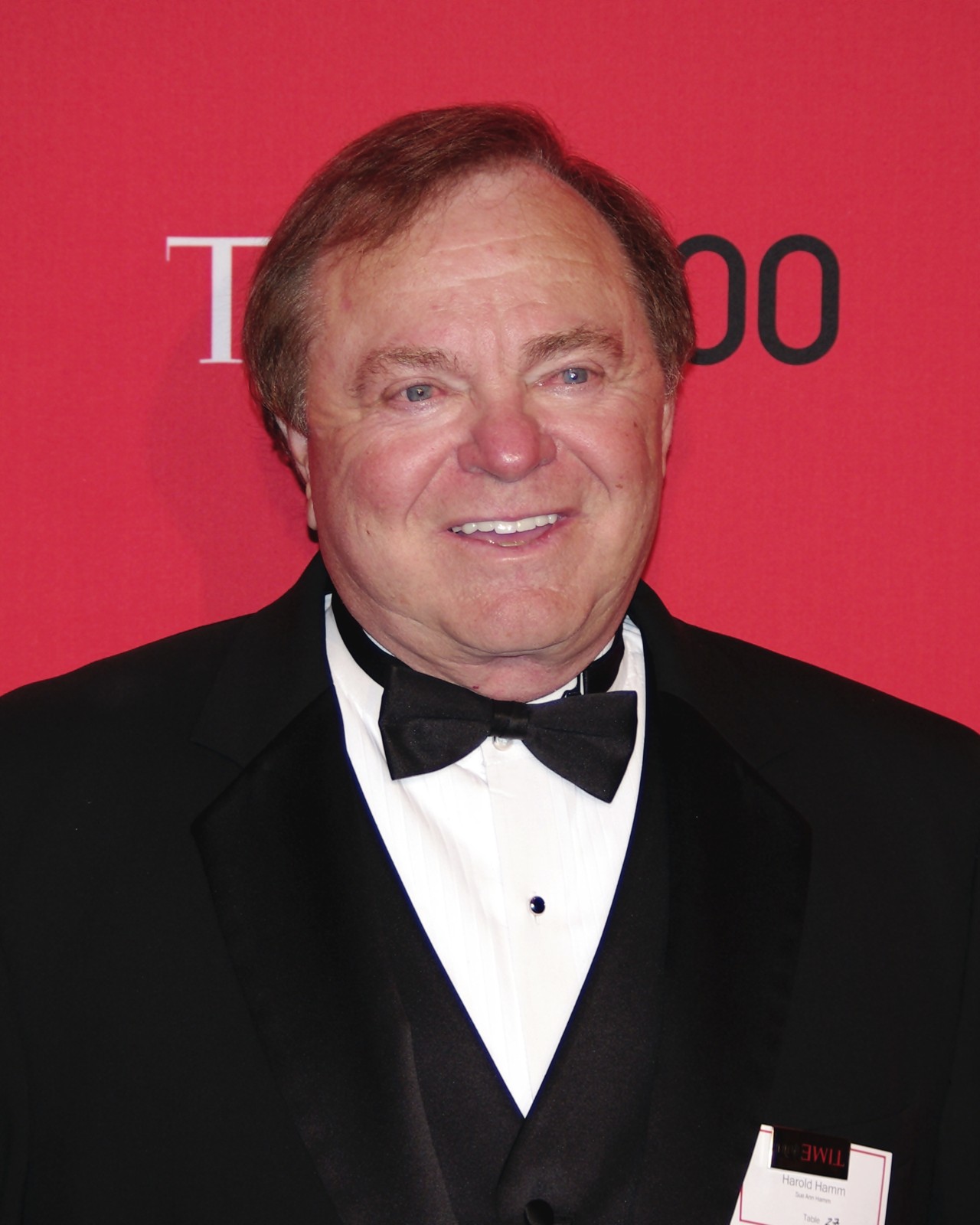
Peter Mallouk
President and CEO of Creative Planning, the Kansas wealth-management firm he bought in 2004 when it managed $34 million · b. 1970 · Kansas City area, Kansas
Two calls made by hand, not formulas. how we score →
Summary
Mallouk, the son of Egyptian immigrants (a physician father, per Bloomberg-based reporting), earned business and law degrees at the University of Kansas, ran record stores, and practiced estate law.
In 2004 he bought a small advisory division with about 30 clients. He grew it organically for years before taking outside capital in 2020. Forbes puts him at $16.5 billion.
Where they worked
How it happened
InvestmentNews describes him as the son of an Egyptian immigrant and says he was raised in Kansas. WealthManagement.com, drawing on Bloomberg's reporting, says his parents were Egyptian immigrants, his father a physician and his mother a teacher. Wikipedia does not give a birth date. InvestmentNews gives his age as 53 in October 2023 and Forbes gives 56 in 2026, which fit a 1970 birth. The family's income and savings are not established in the sources used.
He took undergraduate, law and business degrees at the University of Kansas, with InvestmentNews dating the first to 1993 and the others to 1996. WealthManagement.com reports that while studying he opened a chain of record stores and that music piracy in the early 2000s hurt the business. It says he then used his law training to advise physicians on wills and trusts. How the stores were financed is not established.
Creative Planning began in 1983 in Overland Park as a small division of a larger financial services firm, according to Wikipedia. Mallouk joined as an estate planner around 1999 (Wikipedia says 1999, Forbes says 1998) and bought the business in 2004, when it managed $34 million for roughly 30 clients. WealthManagement.com says he bought it from a financial advisor he had consulted for. That purchase is what put the firm in his hands. The price and the financing are not disclosed in any source used.
Wikipedia lists $591 million under management in 2007, $2 billion in 2011 and $10 billion in 2014, with no acquisitions in that stretch. It reports that he sold the firm's services as one package of tax, estate and investment advice, and the ACG's account says he set the firm up so it could not sell a product to a client. Barron's ranked him among the top independent advisors, first in 2015, per Wikipedia.
The first acquisition came in 2019, and General Atlantic bought a minority stake in February 2020. InvestmentNews reports that he kept more than 80 percent of the equity at that point. A later TPG minority investment valued the firm at $16 billion including debt, per WealthManagement.com. The Goldman Sachs personal financial management unit was bought in 2023, and Forbes lists SageView as a 2025 deal.
Forbes lists a 2026 net worth of $16.5 billion as a Forbes 400 newcomer, describing him as CEO and majority owner of Creative Planning. Bloomberg's index put him at $10.6 billion earlier, and WealthManagement.com says he kept a majority stake. The wealth is mostly his stake in a private firm, so it is an estimate.
The coded evidence
Thirteen groups, every claim sourcedInvestmentNews calls him the son of an Egyptian immigrant. WealthManagement.com says both parents were Egyptian immigrants. Religion is not established and is not coded.
↗ investmentnews.comSecond-generation American
Born in the United States to immigrant parents, per the same two outlets. Coded second-gen.
↗ wealthmanagement.comnot established
Whether his parents could have housed or supported him during the 2004 purchase is not established.
↗ investmentnews.comHe ran record stores and practiced as an estate-planning attorney before buying Creative Planning. His income in those years is not established.
↗ wealthmanagement.comnot established
Debt from the 2004 purchase is not disclosed in the sources used.
↗ investmentnews.comFather a physician, mother a teacher.
A search summary names the father as Alex, a doctor at Saint Luke's Hospital of Kansas City; that detail came from a low-quality aggregator and is not used.
↗ wealthmanagement.comnot established
High school is not established. InvestmentNews says he worked in the Kansas City Royals clubhouse during high school.
↗ investmentnews.comRaised in the Kansas City area and has run the firm from Overland Park, Kansas, in the same metro, for his whole career.
↗ investmentnews.comA financial advisor whose firm he had consulted for, who sold him the division in 2004.
The advisor is not named in the sources used. ACG's account says he was a financial planning and money management client of the firm from 1998 to 2004, which differs slightly from Wikipedia's 1999 start as an estate planner.
↗ wealthmanagement.com29
Joined Creative Planning in 1999 at about 29 from a 1970 birth. He had practiced law and run record stores earlier.
↗ en.wikipedia.orgJuris Doctor and MBA, University of Kansas, 1996, plus a 1993 undergraduate degree.
Forbes's advisor profile also says he holds undergraduate, business and law degrees from the University of Kansas.
↗ investmentnews.comnot established
Not established. credentialFunding is coded self-funded as a placeholder; how he paid for school is not stated in the sources used.
↗ investmentnews.comHe opened and ran a chain of record stores while studying, per WealthManagement.com.
↗ wealthmanagement.comPracticed as an estate-planning attorney and holds the CFP designation.
The CFP is from a conference speaker bio, which lists his name as Peter A. Mallouk, JD, MBA, CFP. The bar jurisdiction is not established.
↗ archive2.salt.orgnot established
The record stores and the legal practice may have supplied the money for the purchase, but no source says so.
↗ wealthmanagement.comMallouk bought the firm in 2004. General Atlantic took a minority stake in February 2020 and TPG followed later, at a $16 billion valuation including debt. InvestmentNews says he kept more than 80 percent of the equity after General Atlantic. WealthManagement.com says he kept a majority after TPG.
Current ownership percentage is not established. The TPG date is given as September 2024 in one account and January 2025 in a search summary.
↗ investmentnews.comCombining tax, estate, legal and money management advice in one firm, with no products sold to clients.
↗ acg.orgDescribed as majority owner after both private equity investments. A precise percentage is not established.
↗ en.wikipedia.orgnot established
WealthManagement.com says piracy damaged his record stores in the early 2000s. Whether they closed is not stated, so no count is given.
↗ wealthmanagement.comTook no outside capital for the first 16 years after the 2004 purchase and grew mostly without acquisitions until 2019.
Wikipedia calls General Atlantic the firm's first outside capital. Whether any offer was turned down is not established.
↗ en.wikipedia.orgOverland Park, Kansas
↗ en.wikipedia.orgWealth management and registered investment advisory
↗ forbes.com16500000000
Forbes' 2026 Forbes 400 newcomers article (read via the Wayback Machine) lists Mallouk at $16.5 billion as CEO and majority owner of Creative Planning, age 56. Forbes's advisor profile at forbes.com/profile/peter-mallouk shows no net worth. Bloomberg's index gave $10.6 billion earlier (WealthManagement.com). The figure rests on a private firm stake and is an estimate.
↗ forbes.comJournalistic estimate
↗ forbes.com2026
↗ forbes.comLargely unrealized: the estimate is a stake in a private firm valued in minority sales to General Atlantic and TPG. Any proceeds he took in those deals are not established.
↗ wealthmanagement.comCreative Planning describes itself as managing or advising about $780 billion as of the Forbes advisor profile, up from $34 million in 2004. He also holds a majority stake in Sporting Kansas City (2025) and a minority stake in the Kansas City Royals, per Forbes.
The $780 billion figure includes assets advised and appears to include acquired firms. Earlier dated figures are $100 billion (2021) and $350 billion (2025).
↗ forbes.comUncapped
↗ forbes.comWikipedia reports that in 2018 the SEC fined Creative Planning $200,000 over client testimonials used in radio advertising, and fined Mallouk $50,000 for not reporting family members' investments in the firm.
The SEC order itself returned 403 to automated access, so the amounts are as Wikipedia states them. They have not been checked against the order.
↗ en.wikipedia.orgAfter
↗ en.wikipedia.orgIncidental
Advertising and reporting compliance matters, not how the firm was acquired or built.
↗ en.wikipedia.orgFine absorbed
↗ en.wikipedia.orgPress
↗ en.wikipedia.orgStructural context
The cost-of-failure score comes from this person's own money and circumstances. But who they were in America carried its own weight, the same way their household or income did, and it shaped how hard the path was just as much. That part isn't in the cost-of-failure number. It's here instead.
Men held about 90% of Fortune 500 CEO seats in 2023, and a wider majority of the rungs below. The ladder is widest for them the whole way up.
↗ forbes.comImmigrants and their children are overrepresented among America's biggest companies, as founders and as senior leaders. They got there through the visa, credential, and network hurdles that make the path harder to even start down.
↗ forbes.comAmong the people recorded here — men: 225. Representation here is who reached these outcomes, not equal odds of reaching them.
Controlled comparisons
Each holds one thing constant and varies another, so the difference is the point. A list of similar names wouldn't tell you anything.