Ralph de la Vega
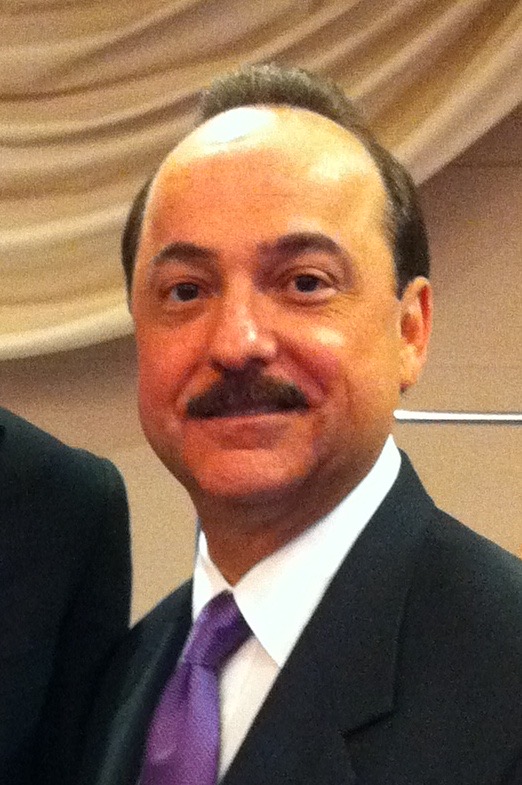
born Rafael de la Vega
Former President & CEO, AT&T Mobility; former Vice Chairman, AT&T Inc. · b. 1952 · Cuba
Two calls made by hand, not formulas. how we score →
Summary
Sent to Miami alone at ten because only his papers cleared to leave Cuba, he spent four years without his parents before an engineering degree got him into BellSouth in 1974.
He stayed inside one company, through three mergers, for forty-two years, ending up running AT&T's wireless business and then serving as its vice chairman. The floor was thin at the start; the ceiling was a salary.
How it happened
De la Vega has said that in 1962, as his family tried to leave Cuba together, an official told them only his papers were in order — "only the boy can go." He was ten. He flew to Miami alone and was taken in by a friend of his aunt's, a household with no blood relation to him at all. He has said it took four years for his parents to reach the United States and reunite with him.
He has recounted that a high school guidance counselor told him to give up on engineering. His grandmother, herself a recent arrival, told him instead, "don't let anybody put limitations on what you can achieve." He took an associate degree at Miami Dade College, then a mechanical engineering degree at Florida Atlantic University, graduating with honors from both.
He joined BellSouth in 1974 as a management assistant and stayed inside the company, and the companies it became, for the rest of his career. He ran network operations across the Southeast, then took charge of BellSouth's Latin American wireless operations in the early 2000s, managing through an Argentine currency collapse, unrest in Colombia, and instability in Venezuela.
As chief operating officer of Cingular Wireless he helped fold in 60,000 employees from the AT&T Wireless merger in nineteen days. In 2007 he became president and CEO of the renamed AT&T Mobility, the job that put him in charge of the country's largest wireless carrier through the launch of the iPhone and the buildout of the smartphone market. This is the role his whole climb had been aimed at, and the one that made everything after it possible.
In 2014 his role expanded to AT&T Mobile and Business Solutions, and by 2016 he was vice chairman of AT&T Inc. and CEO of AT&T Business Solutions and AT&T International. He retired on December 31, 2016, after forty-two years at the company.
He published the memoir "Obstacles Welcome" in 2009, built around the Pedro Pan story and a framework he calls turning adversity into advantage. He has said he doesn't regret how it started: "looking back as a man, I would not change a thing, because it completely turned my life for the better."
The coded evidence
Thirteen groups, every claim sourced1.5 generation. Born in Cuba and sent to the United States alone at around age ten, rather than being born in the U.S. or emigrating as an adult.
↗ en.wikipedia.orgSpanish. He arrived in the U.S. speaking little to no English at age ten, per multiple accounts of his early years with a non-relative host family.
↗ forbes.com0
No documented employment gap from his 1974 BellSouth entry through his December 2016 retirement, described in AT&T's 2017 proxy as a "42-year career."
↗ sec.govNone of his own. On arrival in Miami in 1962 he had no family in the country at all; he was taken in by a friend of his aunt's, not a blood relative, for the roughly four years before his parents reached the U.S.
↗ forbes.comContinuously salaried from his 1974 entry-level job at BellSouth onward, across 42 years and three corporate mergers (BellSouth to Cingular to AT&T), with no personal venture or capital of his own ever at risk.
↗ sec.govnot established
No debt figure is documented in sources reviewed, including for his community-college and engineering degrees.
↗ en.wikipedia.orgnot established
No documented homelessness, food insecurity, or job loss during his adult career; the severe instability of his early life belongs to his childhood arrival, captured under d2 through d4 instead.
↗ en.wikipedia.orgThe hardship was imposed, not chosen. There was nothing to fall back on.
His family's separation was forced by Cuban exit-permit policy and the halt in U.S.-Cuba flights after the Cuban Missile Crisis, not a chosen hardship.
↗ en.wikipedia.orgnot established
His parents' occupations in pre-revolution Cuba, or after they reached the U.S., are not established in sources reviewed.
↗ en.wikipedia.orgnot established
No source reviewed details how his Miami Dade College or Florida Atlantic University tuition was funded.
↗ ralphdelavega.comAt about age ten he was separated from his parents when only his exit papers were approved; he flew to the U.S. alone and was placed with a friend of his aunt's, a non-relative household, until his parents reached the country roughly four years later and the family reunited.
↗ forbes.comAt least two international relocations before adulthood: Cuba to Miami alone at about age ten, sent to a non-relative household, then reunification with his parents roughly four years later.
↗ forbes.comDe la Vega has written and spoken about being separated from his parents at around age ten when, as his family tried to leave Cuba together, an official told them "only the boy" had the papers to go. He has said he flew to Miami alone and was taken in by a friend of his aunt's, with no family of his own in the country, and that it took about four years before his parents reached the United States and the family was reunited. He has framed the experience as formative rather than dwelling on it as hardship: "looking back as a man, I would not change a thing, because it completely turned my life for the better." He built his 2009 memoir, "Obstacles Welcome," around the episode.
↗ forbes.comnot established
↗ en.wikipedia.orgCuba (city not specified in sources reviewed), then Miami, Florida, from about age ten.
↗ forbes.comLeft Cuba for Miami alone in 1962 at about age ten, as part of the Operation Pedro Pan exodus of unaccompanied Cuban children, after exit permission came through for him but not his parents. His parents reached the U.S. roughly four years later and the family reunited, settling in the Miami area, where he later attended Miami Dade College and Florida Atlantic University.
↗ en.wikipedia.orgnot established
His family's occupational standing in Cuba before 1962 isn't established in sources reviewed, so no before/after comparison is made here.
↗ en.wikipedia.orgHis initial host on arrival was a friend of his aunt's, not a blood relative — closer to an informal foster placement than a kin-hosted migration in the usual sense.
↗ forbes.comArrived in the U.S. speaking little English at ten and later built a 42-year career in telecommunications engineering and operations, an industry with very few Hispanic executives at the senior-most levels through the period he rose in it. No specific documented incident of bias against him personally is established in sources reviewed.
↗ en.wikipedia.orgBellSouth, which he joined in 1974 and which became, through mergers, Cingular Wireless and then AT&T Mobility and AT&T Inc. He never worked anywhere else across the whole climb.
↗ sec.gov22
Approximate age at his 1974 BellSouth entry, based on a birth year of about 1952 and his 1972-74 Florida Atlantic University enrollment.
↗ ralphdelavega.com1
BellSouth, Cingular Wireless, AT&T Mobility, and AT&T Inc. are a single continuous employer lineage connected by mergers, not separate job changes.
↗ sec.govB.S. in mechanical engineering, Florida Atlantic University (1974, honors), preceded by an A.A. in pre-engineering from Miami Dade College (1972, honors); M.B.A. in business and managerial economics, Northern Illinois University (1989), completed while working; The Executive Program, University of Virginia's Darden School (1994); honorary Doctor of Humane Letters, Florida Atlantic University (2011).
↗ ralphdelavega.comnot established
Not established for his undergraduate years; his MBA is documented as completed while employed at BellSouth.
↗ en.wikipedia.orgCommunity-college transfer: an associate degree at Miami Dade College, then a bachelor's in engineering at Florida Atlantic University, both completed with honors.
↗ ralphdelavega.comnot established
Not applicable in the founder sense; his entire adult income came from employee salary, bonus, and equity grants, never a venture he personally financed.
↗ en.wikipedia.orgSalary, annual incentive pay, and stock-based awards from a single employer lineage (BellSouth, Cingular, AT&T Mobility, AT&T Inc.) over a 42-year career, not any investment vehicle or venture he personally controlled.
↗ sec.gov0
No independent venture attempted; a continuous employment climb inside one corporate lineage.
↗ en.wikipedia.orgA BellSouth/AT&T salary throughout his adult career. There were no employment gaps to sustain.
↗ sec.gov55
Approximate age at his 2007 appointment as president and CEO of AT&T Mobility, based on a birth year of about 1952.
↗ en.wikipedia.orgPost-1984 AT&T breakup and Bell System deregulation opened room for BellSouth's growth; the buildout of the U.S. cellular and then smartphone industry, including the 2007 iPhone launch on AT&T's network, ran through the years he led AT&T Mobility.
↗ en.wikipedia.org42
AT&T's 2017 proxy describes his retirement, effective December 31, 2016, as ending a "42-year career with the Company," dating to his 1974 BellSouth entry.
↗ sec.govTelecommunications and wireless operations
↗ en.wikipedia.orgnot established
No Forbes wealth profile or other credible net-worth estimate exists for de la Vega; he is a salaried and equity-compensated executive who never held a founder-scale ownership stake. His outcome here is coded from disclosed compensation rather than a guessed net worth.
↗ en.wikipedia.org12029530
Total FY2016 compensation from AT&T's 2017 proxy Summary Compensation Table: $965,833 salary, $5,699,856 stock awards, $1,920,000 non-equity incentive, $1,467,079 change in pension value, and $1,976,762 all other compensation (including sizable relocation and aircraft-use benefits tied to his retirement transition). His highest disclosed year; FY2015 total was $10,086,702 and FY2014 was $10,074,247.
↗ sec.govProxy statement
↗ sec.govHigh salaried and equity-based income as a public-company executive, not ownership of anything he founded. No dual-class stock or control block behind his position.
↗ sec.govPresident and CEO of AT&T Mobility through the iPhone-era buildout of the U.S. wireless industry, later vice chairman of AT&T Inc.; author of the memoir "Obstacles Welcome" (2009); inducted into the Wireless Hall of Fame (2016); board seats at American Express, New York Life, and Morehouse College, among others.
↗ en.wikipedia.orgCapped
A salaried public-company executive with board-set compensation targets, not an open-ended founder's equity stake.
↗ sec.govResilient, operationally disciplined, an evangelist for finding opportunity in adversity
↗ forbes.comPress
↗ forbes.comBefore
The personal story his public reputation is built on predates his corporate rise; the memoir and leadership-circuit profile of it were published in 2009, while he was already CEO of AT&T Mobility.
↗ forbes.comAsset
↗ forbes.comThe reputation was deliberately built, through books, press, and PR.
A memoir, a named leadership framework, and a continuing speaking and advisory circuit built deliberately around his personal story.
↗ maxwellleadership.comStructural context
The cost-of-failure score comes from this person's own money and circumstances. But who they were in America carried its own weight, the same way their household or income did, and it shaped how hard the path was just as much. That part isn't in the cost-of-failure number. It's here instead.
Men held about 90% of Fortune 500 CEO seats in 2023, and a wider majority of the rungs below. The ladder is widest for them the whole way up.
↗ forbes.comImmigrants and their children are overrepresented among America's biggest companies, as founders and as senior leaders. They got there through the visa, credential, and network hurdles that make the path harder to even start down.
↗ forbes.comAmong the people recorded here — men: 169. Representation here is who reached these outcomes, not equal odds of reaching them.
Controlled comparisons
Each holds one thing constant and varies another, so the difference is the point. A list of similar names wouldn't tell you anything.