Reese Witherspoon
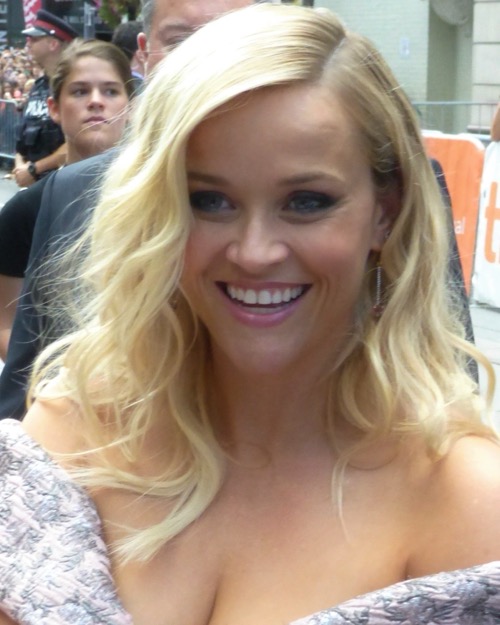
Actress; Academy Award winner, "Walk the Line"; founder, Hello Sunshine · b. 1976 · New Orleans, Louisiana → Nashville, Tennessee
Two calls made by hand, not formulas. how we score →
Summary
A surgeon father and a nurse-turned-professor mother gave her a stable start with nothing to fall back into.
Two decades of acting fees paid well but ran out of good parts by her mid-thirties, so she started optioning books and producing them herself. The company she built and later sold, not the films she starred in, is what turned a well-paid actress into an owner.
How it happened
Born in New Orleans and raised in Nashville. Her father, John Witherspoon Sr., was an otolaryngologist in private practice; her mother, Betty Witherspoon, held a PhD in pediatric nursing and taught nursing at Vanderbilt. Two professional incomes, private schooling, and a "definitive Southern upbringing" she has described as built around family, tradition, and being conscientious of other people. No money was ever the constraint.
She went to an open casting call in 1991 meaning to read for a bit part in "The Man in the Moon" and was cast in the lead instead. "Election" (1999) got her serious notice and, by her own account, typecast her as difficult; "Legally Blonde" (2001) made her a star and one of Hollywood's highest-paid actresses through the 2000s. "Walk the Line" (2005) won her the Academy Award for Best Actress at 29, playing June Carter Cash.
Her 2006 divorce from Ryan Phillippe was followed by what she has called several years of "floundering," a run of poorly reviewed, underperforming films, and a magazine list of washed-up actors that named her. "You can't really be very creative when you feel like your brain is scrambled eggs," she said later. It stung enough to work as motivation rather than just an insult.
In March 2012, six years after the Oscar, she merged her small shell company with producer Bruna Papandrea's to form Pacific Standard, built explicitly to option books with strong female leads and produce them herself rather than wait to be offered a good part. She personally bought the film rights to Cheryl Strayed's memoir "Wild" that same spring. Two decades of acting-fee income meant she didn't need anyone's permission to start.
"Gone Girl" and "Wild" both released in 2014, the second earning her a second Best Actress nomination. She took full control of the company in 2016 after parting ways with Papandrea, folded it into a new firm called Hello Sunshine, and produced "Big Little Lies" (2017, an Emmy for the series) and "The Morning Show." Draper James, a Southern lifestyle clothing brand, and Reese's Book Club launched alongside it, each converting her audience into a stake rather than a fee.
In August 2021 she sold a majority interest in Hello Sunshine to a Blackstone-backed venture that became Candle Media, in a deal reported at $900 million, keeping roughly an 18% stake and a board seat. Forbes later reported that stake was worth less than half what she sold it for, as the company's value declined. Her personal net worth was put at $440 million in 2025 — real money, and a fraction of the headline company valuation that made the news.
The coded evidence
Thirteen groups, every claim sourcedDescendant; no immigration event in the family record reviewed.
↗ en.wikipedia.orgHas described attending church regularly as an adult and speaks of a "definitive Southern upbringing" centered on family and tradition.
↗ en.wikipedia.orgBoth parents held stable professional positions throughout her childhood and young-adult years — her father in private medical practice, her mother as a tenured nursing professor. No source documents her ever needing a fallback, but the household could plainly have absorbed one.
↗ en.wikipedia.orgnot established
Her 2007–2012 "floundering" was a creative and commercial slump — poor reviews, underperforming films, a stretch of parts she wasn't proud of — not a period of financial precarity. She remained one of Hollywood's highest-paid actresses throughout it.
↗ cbsnews.comnot established
No period of chosen or imposed austerity is documented at any point.
↗ en.wikipedia.orgFather, John Draper Witherspoon Sr., was an otolaryngologist in private practice (also a lieutenant in the U.S. Army Reserve). Mother, Mary Elizabeth "Betty" Witherspoon, held a PhD in pediatric nursing and was a nursing professor at Vanderbilt University.
↗ en.wikipedia.orgA parent worked for themselves, the strongest known predictor of founding.
Her father ran a private medical practice until 2012.
↗ en.wikipedia.orgFather, M.D. Mother, PhD in pediatric nursing.
↗ en.wikipedia.orgnot established
She attended private schools (Harding Academy, Harpeth Hall) and Stanford; no specific parental sacrifice aimed at tuition is documented, and none would be expected given both parents' incomes.
↗ en.wikipedia.orgAt age seven she was cast in a local florist's TV ad and enrolled in acting lessons off the back of it; by fourteen her family let her attend an open casting call that became her feature debut. Nothing in the record suggests the family discouraged an acting career, and a comfortable household made the detour affordable.
↗ en.wikipedia.orgSaid publicly in October 2017 that she was first sexually assaulted at age nine, and separately that she was assaulted by a director at sixteen while working as a young actress — adding it "wasn't an isolated incident" and that she had "multiple experiences of harassment and sexual assault" across her career.
Her own on-record disclosure (Elle's Women in Hollywood, 2017). The director is unnamed and is not named here.
↗ time.comNashville, Tennessee (raised there after birth in New Orleans).
↗ en.wikipedia.orgHarding Academy (middle school) and Harpeth Hall School, a private all-girls school in Nashville.
↗ en.wikipedia.orgBroke in cold: went to an open casting call in 1991 intending to read for a minor part in "The Man in the Moon" and was cast as the lead instead. No family industry connection or personal introduction is documented.
↗ en.wikipedia.orgBy 2012 she was an Academy Award winner and two-decade movie star with major studio bankability — leverage no first-time producer has, and the thing that let investors and studios take Pacific Standard seriously from its first slate.
↗ en.wikipedia.orgNo degree. Attended Stanford University as an English literature major but left before graduating to pursue acting full time.
↗ en.wikipedia.orgPaid screen work from age fourteen ("The Man in the Moon," 1991), well before any venture existed.
↗ en.wikipedia.orgTwo decades of film-acting fees — reportedly $15 million for "Legally Blonde 2" alone in 2003, and consistent top-tier pay through the 2000s — supplied the personal capital to option books and bankroll a production company without needing outside investors to start.
↗ en.wikipedia.orgHello Sunshine took outside investment (Otter Media/AT&T from 2016, later Emerson Collective) as it grew, then sold a majority stake to a Blackstone-backed venture (later Candle Media) in August 2021 for a reported $900 million. Witherspoon retained roughly an 18% stake and a board seat rather than exiting entirely.
The $900M figure and the 18% retained stake are journalistic estimates; neither Witherspoon nor Blackstone/Candle disclosed exact terms. Treat as band-level, not precise.
↗ forbes.comReinvested acting-era earnings into founding and running two production companies and a clothing brand rather than treating them purely as consumption income.
↗ en.wikipedia.orgThe point of the whole pivot: rather than being paid a fee to appear in shows a studio or network owns outright, she owned Pacific Standard and then Hello Sunshine as businesses, so the value of what she built accrued to her as equity, not just as a paycheck.
↗ en.wikipedia.orgPersonal frustration. She has said she and her producing partner "read and read and read" looking for scripts with real female leads and largely came up empty, which is what pushed her toward optioning source material and producing it herself instead of waiting to be cast.
↗ cbsnews.com3
Took an ownership stake, not just a fee, across three distinct categories: television/film production (Hello Sunshine), apparel and home goods (Draper James), and publishing/media (Reese's Book Club).
↗ en.wikipedia.orgSelf, reputationally rather than financially. The films that flopped were studio-financed; she remained one of Hollywood's highest-paid actresses through the same years, so the cost was to her standing and confidence, not her finances.
↗ cbsnews.comA roughly five-year creative and commercial trough, 2007 to 2012, following her divorce — a run of critically panned, underperforming films she later called her "love triangle period."
↗ en.wikipedia.orgFounded Pacific Standard just ahead of the mid-2010s prestige-television and streaming boom, which created real buyer demand for exactly the female-led literary adaptations she was assembling.
↗ en.wikipedia.orgBuilt, though from parts: Pacific Standard was a March 2012 merger of her existing shell company, Type A Films, with producer Bruna Papandrea's Make Movies banner, rather than a startup from nothing or an acquisition of an unrelated asset.
↗ en.wikipedia.orgFilm and television acting and production
↗ en.wikipedia.org440000000
Forbes estimate, June 2025. No filing exists for a private individual; band only.
↗ forbes.comJournalistic estimate
↗ forbes.com2025
↗ forbes.com20000000
Reported figure for roughly ten episodes of "The Morning Show." Forbes also named her the world's highest-paid actress in 2021; an exact figure for that year wasn't independently confirmed here.
↗ forbes.comJournalistic estimate
↗ forbes.comMixed. The 2021 Hello Sunshine sale realized cash on the majority stake sold; the roughly 18% she kept is paper wealth in a private company Forbes later reported had lost more than half its value from the 2021 mark.
↗ forbes.comTwo different engines, back to back. Two decades of acting fees were high but capped, project by project. Building and selling equity in Hello Sunshine is the uncapped, appreciating-asset outcome — and it's the bigger of the two, even though the fee income was what funded the company that made it possible.
↗ forbes.comAcademy Award for Best Actress, "Walk the Line" (2006 ceremony); Primetime Emmy for Outstanding Limited Series as a producer of "Big Little Lies" (2017); named the world's highest-paid actress by Forbes in 2021; co-founder of the Time's Up anti-harassment initiative (2018).
↗ en.wikipedia.orgUncapped
Acting income was capped, fee by fee, for two decades before the pivot. What made the overall path uncapped was the Hello Sunshine equity and the $900M sale it produced.
↗ forbes.comReported and on the record: on April 19, 2013, she was arrested and charged with disorderly conduct after her then-husband, Jim Toth, was stopped on suspicion of driving under the influence. She pleaded no-contest to obstruction of an officer and was ordered to pay court costs.
↗ eonline.comAfter
↗ eonline.comUnrelated
A roadside incident during a traffic stop, unconnected to her acting or production business.
↗ eonline.comCrime
Misdemeanor-level charge resolved by no-contest plea, not a conviction after trial.
↗ eonline.comFine absorbed
Paid court costs; no further personal or professional consequence documented.
↗ eonline.comDriven, Type A, Resilient, Businesslike
"Type A" is her own family's nickname for her since childhood, later the name of her first production company.
↗ cbsnews.comPress
↗ cbsnews.comBefore
Her reputation as a bankable, hardworking star was set by the "Legally Blonde"/"Walk the Line" run, years before Hello Sunshine.
↗ en.wikipedia.orgAsset
↗ forbes.comThe 2013 arrest drew brief news coverage and no lasting reputational or career effect; she was headlining major films again within the year. Reporting on Hello Sunshine's declining value after 2021 dented the "self-made mogul" framing somewhat but hasn't been treated by the press as a personal failing.
↗ forbes.comStructural context
The cost-of-failure score comes from this person's own money and circumstances. But who they were in America carried its own weight, the same way their household or income did, and it shaped how hard the path was just as much. That part isn't in the cost-of-failure number. It's here instead.
Across film, music, and digital, ownership and control stay in far fewer women's hands than men's. For one measure, women directed only about 12% of 2023's top-grossing films.
↗ assets.uscannenberg.orgAmong the people recorded here — women: 54 · white subjects: 3. Representation here is who reached these outcomes, not equal odds of reaching them.
Controlled comparisons
Each holds one thing constant and varies another, so the difference is the point. A list of similar names wouldn't tell you anything.