Rihanna
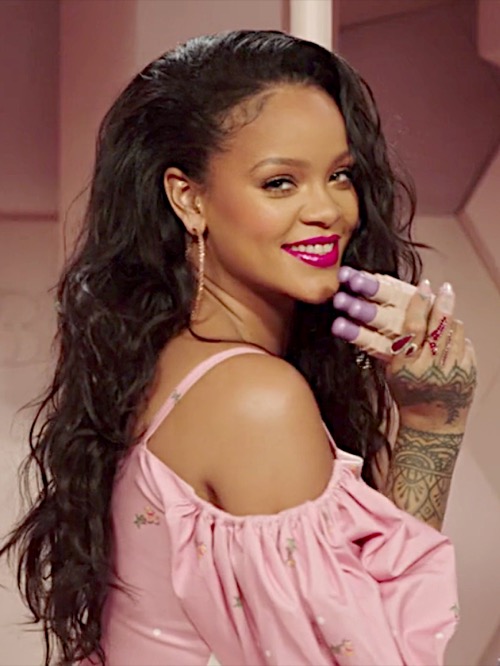
born Robyn Rihanna Fenty
Recording artist; co-founder, Fenty Beauty and Savage X Fenty · b. 1988 · Saint Michael, Barbados
Two calls made by hand, not formulas. how we score →
Summary
She started with almost no money in Bridgetown, got pulled out by an American producer at fifteen, and spent two decades converting fame into equity instead of fees.
The billion came from owning half of a beauty company, not from the music.
How it happened
Robyn Rihanna Fenty grew up in a three-bedroom house in Bridgetown. Her father, Ronald, worked as a warehouse supervisor and also sold clothes from a street stall, where she helped him as a child. Her mother, Monica, was an accountant. Ronald drank heavily and used crack cocaine, and Rihanna has said on the record that she watched him hit her mother and, at least once, hit her.
In 2003, American record producer Evan Rogers heard her audition while visiting Barbados and brought her to Stamford, Connecticut, at sixteen to cut a demo. Early the next year that demo got her into a room with Jay-Z and L.A. Reid at Def Jam, and she left with a six-album deal.
The music made her famous, but Def Jam owned the recordings, which is normal for a first deal. After she finished that contract in 2014 she set up her own imprint under Jay-Z's Roc Nation and got the masters back. Three years later, when LVMH wanted her name on a cosmetics line, she pushed for a joint venture instead of a licensing fee. Fenty Beauty launched as a straight 50-50 split.
Fenty Beauty sold in 1,600 stores across 17 countries on day one and passed $550 million in sales within its first year. Savage X Fenty followed in 2018; she kept roughly 30 percent after outside investors came in. Not everything under the Fenty name worked. LVMH shut down her ready-to-wear fashion house in 2021, less than two years after opening it, citing weak sales during the pandemic.
Forbes counted her as a billionaire in 2021, mostly on the strength of the beauty stake. By late 2025 LVMH was reportedly shopping its own half of Fenty Beauty, and her estimated net worth had slid with it. Still, most of what she's worth sits in equity she negotiated for, not a paycheck for showing up.
The coded evidence
Thirteen groups, every claim sourcedFirst generation immigrant to the US, arrived at 16 to record
↗ biography.comEnglish (Barbadian English/Bajan)
↗ en.wikipedia.orgDef Jam funded her studio time and development under the standard six-album deal after she signed at 16; she wasn't self-funding the music career.
↗ biography.comA home destabilized by her father's addiction and violence toward her mother, through her mid-teens until her parents divorced when she was 14.
↗ dailymail.comThe hardship was imposed, not chosen. There was nothing to fall back on.
↗ en.wikipedia.orgFather Ronald Fenty a warehouse supervisor who also sold clothes from a street stall; mother Monica Fenty (née Braithwaite), an Afro-Guyanese accountant.
↗ en.wikipedia.orgA parent worked for themselves, the strongest known predictor of founding.
The street-stall clothes selling, alongside her father's warehouse job.
↗ en.wikipedia.org2
Two younger full brothers, Rorrey and Rajad; also two half-sisters and a half-brother from her father's earlier relationships.
↗ en.wikipedia.orgHas said on the record (Rolling Stone, 2011; ABC News) that she grew up with domestic violence between her parents — that her father was the one who hit her mother — and that he once slapped her hard as a child.
Her own on-record disclosures, via outlets citing her Rolling Stone and ABC News interviews.
↗ theblast.comWorking-class Bridgetown, Saint Michael, Barbados.
↗ en.wikipedia.orgCharles F. Broome Memorial Primary School, then Combermere School, a public secondary school in Bridgetown.
↗ en.wikipedia.orgBarbados to Stamford, Connecticut at 16 to record a demo (2004); then New York and later Los Angeles as her career grew.
↗ biography.comAmerican record producer Evan Rogers heard her audition while visiting Barbados in 2003 and brought her, at 16, to Stamford, Connecticut, to record a demo with his production company, Syndicated Rhythm Productions.
↗ biography.comInstitutional: the demo Rogers produced got her an audition directly with Def Jam's Jay-Z and L.A. Reid in New York in January 2005.
↗ biography.com16
Age at the Def Jam signing. She had informally sold clothes at her father's stall years earlier, but that wasn't the industry she entered.
↗ biography.comBy the time Fenty Beauty launched in 2017 she had over a decade of global chart success and a large existing fan base, which the brand launched directly into.
↗ prnewswire.comSigned a six-album deal with Def Jam Recordings in 2005; later, after that contract ended, built her own imprint (Westbury Road Entertainment) under Jay-Z's Roc Nation.
↗ finance.yahoo.comLeft Combermere School at 16 for the Def Jam deal; no college.
↗ biography.comNo personal capital into the music career; Def Jam financed studio time and development under the standard artist deal.
↗ biography.comLVMH's Kendo Brands supplied the capital, manufacturing, and Sephora distribution for Fenty Beauty, not a passive check, in exchange for half the company.
↗ forbes.comFenty Beauty is a straight 50-50 joint venture with LVMH, not a licensing or endorsement deal. Savage X Fenty took outside institutional capital (L Catterton, Marcy Venture Partners, and others) across several rounds, reaching a $1 billion valuation in February 2021 while she kept roughly a 30 percent stake.
↗ cnbc.comDef Jam owned her master recordings under the original deal, as is standard for a first artist contract. After fulfilling that contract in May 2014 she launched her own imprint under Roc Nation and reportedly reacquired the masters to her catalog, from "Music of the Sun" through "Anti."
↗ finance.yahoo.com3
Distinct industries where fame converted to an ownership stake rather than a fee: beauty (Fenty Beauty), lingerie (Savage X Fenty), and ready-to-wear fashion (Fenty, closed 2021).
↗ forbes.comLaunched into the mid-2010s inclusive-beauty shift, after years of documented complaints that mainstream makeup lines under-served darker skin tones; Fenty Beauty's 40-shade foundation range was built directly against that gap.
↗ femfounded.orgBuilt. Fenty Beauty, Savage X Fenty, and the short-lived Fenty fashion house were all new brands, not acquisitions.
↗ en.wikipedia.org29
Age at the Fenty Beauty launch, the point her wealth shifted from music income to owned equity.
↗ prnewswire.comMusic, beauty, and fashion
↗ forbes.com1000000000
Forbes real-time estimate as of this review. Her estimated net worth peaked near $1.7B in 2022 and has since declined toward $1B as Fenty Beauty and Savage X Fenty valuations softened. Band only, never a continuous figure.
↗ forbes.comJournalistic estimate
↗ forbes.com2026
↗ forbes.comWealth in owned equity (roughly half of Fenty Beauty, about 30 percent of Savage X Fenty), not primarily salaried or touring income at this point.
↗ forbes.comWith the 2019 Fenty ready-to-wear launch she became the first woman and first person of color to head a new LVMH-owned luxury fashion house; that label closed in 2021. She headlined the Super Bowl LVII halftime show in 2023, the most-watched in its history.
↗ en.wikipedia.orgUncapped
↗ forbes.comShrewd, Self made, Inclusive
↗ forbes.comPress
↗ forbes.comAfter
The 'shrewd businesswoman' reputation formed on top of the earlier music fame, not before it.
↗ forbes.comAsset
↗ forbes.comStructural context
The cost-of-failure score comes from this person's own money and circumstances. But who they were in America carried its own weight, the same way their household or income did, and it shaped how hard the path was just as much. That part isn't in the cost-of-failure number. It's here instead.
Across film, music, and digital, ownership and control stay in far fewer women's hands than men's. For one measure, women directed only about 12% of 2023's top-grossing films.
↗ assets.uscannenberg.orgIn the creative and media industries, recognition comes far more easily to underrepresented creators than the ownership it should turn into. Among 2023's top-grossing film directors, for one measure, eight were Black.
↗ assets.uscannenberg.orgImmigrants and their children are overrepresented among America's biggest companies, as founders and as senior leaders. They got there through the visa, credential, and network hurdles that make the path harder to even start down.
↗ forbes.comAmong the people recorded here — women: 68 · Black subjects: 58. Representation here is who reached these outcomes, not equal odds of reaching them.
Controlled comparisons
Each holds one thing constant and varies another, so the difference is the point. A list of similar names wouldn't tell you anything.