Shannon Sharpe
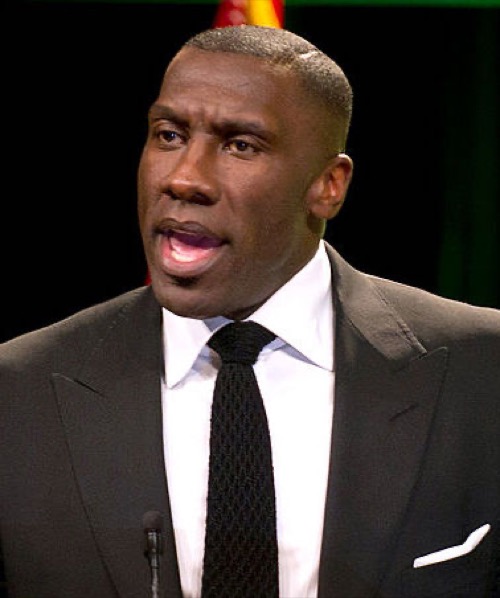
NFL Hall of Fame tight end; broadcaster, "Undisputed" and "First Take"; host, "Club Shay Shay" · b. 1968 · Chicago, Illinois
Two calls made by hand, not formulas. how we score →
Summary
A seventh-round pick from a Division II program nobody else recruited, raised by a grandmother whose housekeeping wages fed a house full of children with no indoor plumbing.
Football got him to the Hall of Fame; broadcasting made him rich and famous on someone else's payroll. He did not start owning any of it until he built his own podcast company instead of signing another contract.
How it happened
His parents split up when he was three months old, and he was raised mostly by his grandmother, Mary Porter, in a small cinder-block house in Glennville, Georgia, alongside his brother Sterling and another sibling. Porter worked as a housekeeper at a local nursing home; it was the family's only steady income. His father died of lung cancer while Shannon was still in his early teens. He has joked about the poverty rather than dressed it up: "We were so poor, a robber once broke into our house and we ended up robbing the robber."
He was all-state in three sports at Glennville High School, but no major program recruited him. Savannah State University, a Division II HBCU about fifty miles away, was the only school that did. A high school coach, William Hall, drove him to visits and functioned as a surrogate father in getting him there. He played three seasons at Savannah State and made All-American as a Division II player, which is a much smaller signal than the major-conference tape NFL scouts usually work from.
The Denver Broncos took him in the seventh round of the 1990 draft, 192nd overall — a courtesy pick as much as a plan. He turned into one of the players who redefined what a tight end could be: 815 career receptions, three Super Bowl rings (two with Denver, one with the Baltimore Ravens), eight Pro Bowl selections, and induction into the Pro Football Hall of Fame in 2011.
Retirement moved him into television, first as a commentator on CBS's "The NFL Today," then from 2016 as Skip Bayless's co-host on Fox Sports 1's "Skip and Shannon: Undisputed." It made him one of the most recognizable voices in sports media and paid him well, but it was a salaried seat on somebody else's show. He left Fox in mid-2023 after a buyout and moved to a recurring role on ESPN's "First Take" that September.
In August 2023 he took his "Club Shay Shay" podcast to The Volume, the network founded by Colin Cowherd, under a deal built around his own company, Shay Shay Media, rather than a straight employment contract. That structure gave him ownership of the shows themselves — "Club Shay Shay," "Nightcap" with Chad Johnson, and others — instead of a fee for appearing on someone else's. A January 2024 interview with comedian Katt Williams pulled in roughly 89 million YouTube views and, by his own account, paid him more than any single season of his NFL career. "Club Shay Shay" won the NAACP Image Award for Outstanding Society and Culture Podcast in February 2025.
The coded evidence
Thirteen groups, every claim sourcednot established
No immigration in the family history that has been documented; a multi-generation domestic Southern family, coded migration: none.
↗ en.wikipedia.orgHis grandmother's small cinder-block house in Glennville, Georgia was the family's only floor — cramped enough that he shared a bed with her — and there was no other property or relative with meaningfully more room or money to fall back to.
Household-conditions detail is consistent across several secondary biographical sources but not independently confirmed by a primary document.
↗ profootballhistory.comHis grandmother's wages as a housekeeper at a local nursing home were the household's only reliable income while she raised him and his siblings; his mother and father were separated from when he was three months old and his father died of lung cancer in his early teens.
↗ profootballhistory.comHis grandmother, Mary Porter, carried the childrearing and household labor for him and his siblings after his parents separated.
↗ profootballhistory.comThe hardship was imposed, not chosen. There was nothing to fall back on.
Imposed poverty, not chosen — a single low-wage household income with no property or savings to return to.
↗ profootballhistory.comFather Pete Sharpe and mother Mary Alice Sharpe separated when Shannon was three months old; his father died of lung cancer during Shannon's early teens. Neither parent's occupation is well documented in available sources.
↗ profootballhistory.com2
His grandmother raised him "alongside his two siblings" per this source; his older brother is Sterling Sharpe. Exact birth order and a second sibling's identity are not independently confirmed.
↗ profootballhistory.comHis grandmother, Mary Porter, was the central figure raising him — not an occasional relative but the primary household — after his parents separated when he was three months old.
↗ profootballhistory.comHis older brother, Sterling Sharpe, was also an NFL All-Pro wide receiver and was inducted into the Pro Football Hall of Fame in 2025 — the same family produced two Hall of Famers out of the same household.
↗ en.wikipedia.orgEffectively raised by his grandmother from infancy rather than by either parent, following his parents' separation when he was three months old.
↗ profootballhistory.comHis father, Pete Sharpe, died of lung cancer while Shannon was still in his early teens.
↗ profootballhistory.comBorn with a lisp that interfered with reading; placed in speech therapy in third grade and remedial reading classes in high school. Did not constrain his eventual field, which was athletic rather than verbal, though it stands at odds with his later career as a professional talker.
↗ profootballhistory.comGlennville High School, a small public high school in rural Tattnall County, Georgia, where he was all-state in three sports.
↗ en.wikipedia.orgNo childhood relocation documented. He stayed in the same rural Georgia county through high school, attended college roughly fifty miles away at Savannah State, and left the region only after being drafted by Denver in 1990.
↗ en.wikipedia.orgHigh school coach William Hall drove him to college visits and functioned as a surrogate father figure in landing the Savannah State scholarship offer — the only one he received.
↗ profootballhistory.comSavannah State University, a Division II HBCU program, where he was a three-time All-American — a far smaller scouting stage than the major-conference programs most NFL draft picks come from.
↗ profootballhof.comHis broadcasting career started from an existing base: an eight-time Pro Bowler and Hall of Famer moving into television commentary already had name recognition no unknown analyst would have.
↗ en.wikipedia.org"Club Shay Shay" and "Nightcap" are distributed directly on YouTube and other social platforms under his own Shay Shay Media banner rather than solely through a television network, a channel legacy sports-media gatekeepers did not control.
↗ cultureofsport.substack.comShay Shay Media's YouTube audience — the Katt Williams episode alone drew roughly 89 million views — is an asset his company owns outright, unlike his prior seats at CBS, Fox, and ESPN.
↗ si.com5
Denver Broncos, Baltimore Ravens, CBS, Fox Sports 1, and ESPN as an employer or on-air contractor, prior to building his own company.
↗ en.wikipedia.orgAttended Savannah State University from 1986 to 1989 on an athletic scholarship, playing football and competing in basketball and track and field, before entering the 1990 NFL Draft. Whether he completed a degree is not clearly established; he has joked about being "a terrible student."
↗ en.wikipedia.orgSavannah State is a historically Black Division II program; his All-American production there was what put him on NFL scouts' radar despite the level of competition.
↗ profootballhof.comIt paid its own way from the start. Revenue came before any outside money.
Every stage of his career — NFL contract, broadcasting salary, and podcast revenue — has been paid work rather than capital he raised; he has never taken outside investment.
↗ en.wikipedia.orgCommentary on his business has noted that the outsized revenue from the viral January 2024 Katt Williams episode helped fund an expansion of Shay Shay Media's slate of shows rather than being taken simply as personal income.
Interpretive business analysis rather than a disclosed financial statement.
↗ cultureofsport.substack.com"Club Shay Shay" grew directly out of the on-air persona and relationships he built across nearly two decades in sports broadcasting, rather than an acquired format.
↗ en.wikipedia.orgAt CBS, Fox Sports 1, and ESPN he was a paid on-air employee with no stake in the programs. The 2023 move of "Club Shay Shay" to The Volume was structured around his own company, Shay Shay Media, giving him ownership of and creative control over the shows rather than a fee to appear on someone else's.
↗ cultureofsport.substack.com1
One identified conversion of recognition into ownership — the podcast and media company — rather than a fee, distinct from his still-fee- based broadcasting and NFL income.
↗ cultureofsport.substack.comReached in the middle of the YouTube and podcast creator economy's rise, when direct-to-audience distribution let established sports- media personalities (Pat McAfee, Sharpe himself) negotiate ownership stakes instead of accepting another network salary.
↗ cultureofsport.substack.comA January 2024 "Club Shay Shay" interview with comedian Katt Williams drew roughly 89 million YouTube views and, according to Sharpe, paid him more than any single season of his NFL career.
↗ celebritynetworth.comBuild
↗ en.wikipedia.org2
Shay Shay Media's ownership structure dates to August 2023; short duration as of this review, and still an early, unproven compounding run compared to the rest of the record.
↗ en.wikipedia.orgSports broadcasting and media
↗ en.wikipedia.org20000000
Aggregator estimates for 2025 range widely, from roughly $12 million to $30 million; no filing or disclosed valuation exists for a private individual whose income mixes past salary, broadcasting fees, and an unconfirmed podcast-company valuation. $20 million is a midpoint, not a precise figure.
↗ celebritynetworth.comAggregator
↗ celebritynetworth.com5000000
Reported as his highest NFL season salary, with the Baltimore Ravens in 2000. He has said his 2024 podcast income from a single viral episode exceeded this, but no comparable disclosed annual figure exists for the podcast era.
↗ celebritynetworth.comJournalistic estimate
↗ celebritynetworth.comA reported deal for Shay Shay Media's slate of shows valued "upwards of $100 million" was under negotiation as of April 2025; this is a reported valuation, not a disclosed, closed, or realized figure, and should not be treated as confirmed wealth.
↗ si.comThree decades of salaried and fee income — NFL contracts, then CBS, Fox, and ESPN broadcasting fees — with no ownership stake, followed since 2023 by a minority-of-career but growing share of income tied to owning Shay Shay Media outright rather than being paid to appear on someone else's show.
↗ cultureofsport.substack.com33
From the 1990 NFL Draft to the 2023 Shay Shay Media ownership deal — an unusually long run across three distinct career acts (playing, broadcasting, ownership) rather than a single founding event.
↗ en.wikipedia.orgUncapped
His NFL and broadcasting income was capped — a salary or a per- appearance fee with no equity attached. Ownership of Shay Shay Media since 2023 is structurally uncapped, though still unproven at scale.
↗ cultureofsport.substack.comBrett Favre filed a defamation suit against Sharpe in February 2023 over comments Sharpe and co-host Skip Bayless made on "Undisputed" in 2022 about Favre's connection to Mississippi's welfare-fraud scandal. A federal judge dismissed the suit in 2023, finding Sharpe's remarks constitutionally protected rhetorical hyperbole, and the Fifth Circuit Court of Appeals affirmed that dismissal in 2024.
↗ cbssports.comAfter
↗ cbssports.comIncidental
On-air commentary unrelated to how he built his broadcasting or podcast career.
↗ cbssports.comOutspoken, Competitive, Blunt
↗ profootballhof.comPublic
↗ profootballhof.comBefore
His reputation as an intense, outspoken competitor was established during his playing career, well before broadcasting or podcasting.
↗ profootballhof.comAsset
The same blunt, opinionated persona that defined him as a player is the persona that made him valuable on television and now on his own podcast.
↗ en.wikipedia.orgThe reputation was deliberately built, through books, press, and PR.
A media career built for two decades around a consistent on-air persona is at least partly a deliberate construction rather than purely emergent behavior, though the underlying personality is also documented from his playing days.
↗ en.wikipedia.orgStructural context
The cost-of-failure score comes from this person's own money and circumstances. But who they were in America carried its own weight, the same way their household or income did, and it shaped how hard the path was just as much. That part isn't in the cost-of-failure number. It's here instead.
Men hold most of the ownership and gatekeeping across the creative and media industries, the default that recognition and deals flow toward.
↗ assets.uscannenberg.orgIn the creative and media industries, recognition comes far more easily to underrepresented creators than the ownership it should turn into. Among 2023's top-grossing film directors, for one measure, eight were Black.
↗ assets.uscannenberg.orgAmong the people recorded here — men: 115 · Black subjects: 58. Representation here is who reached these outcomes, not equal odds of reaching them.
Controlled comparisons
Each holds one thing constant and varies another, so the difference is the point. A list of similar names wouldn't tell you anything.