Sofía Vergara
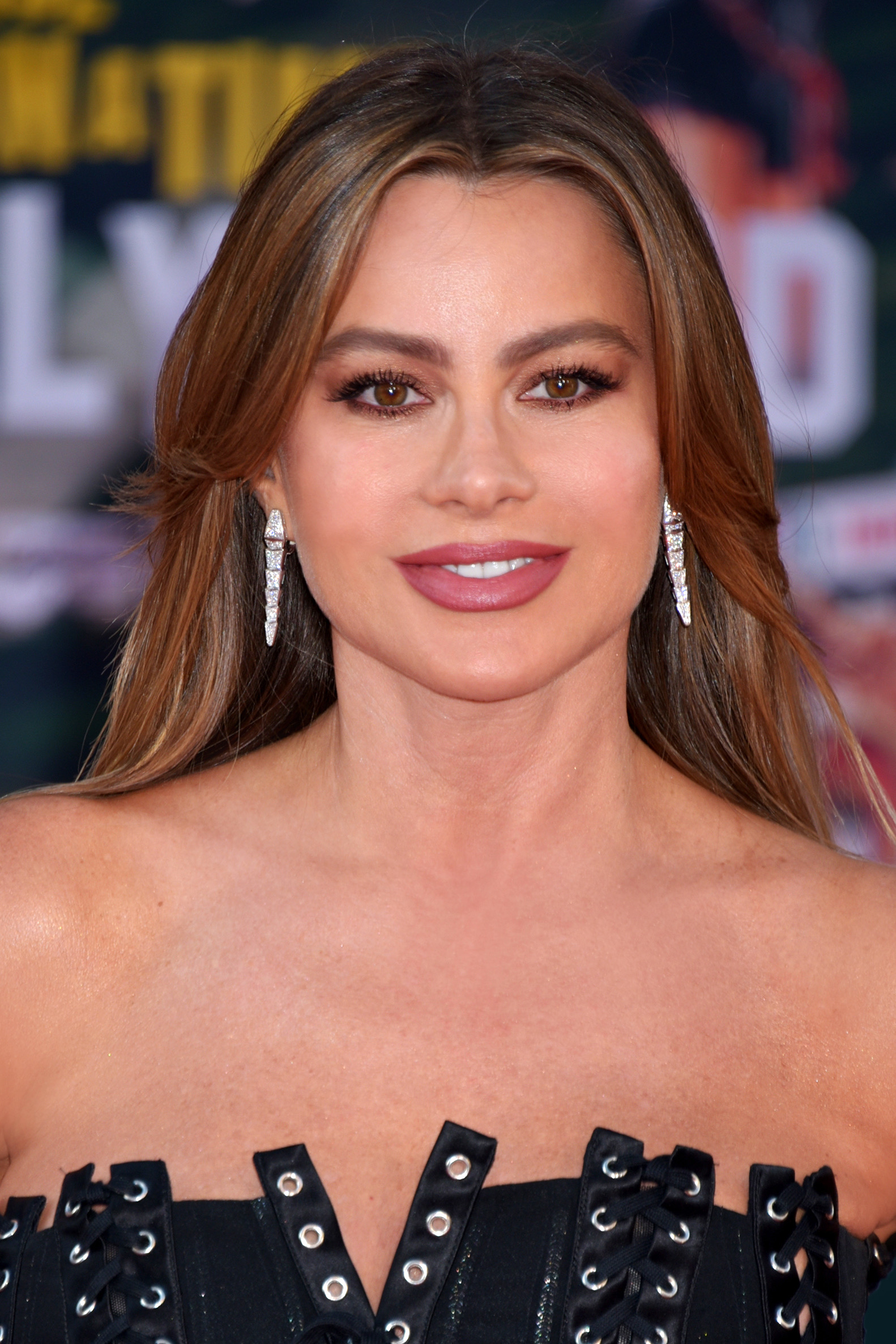
Actress (Modern Family, Griselda); America's Got Talent judge; founder of consumer brands including EBY and Toty · b. 1972 · Barranquilla, Colombia
Two calls made by hand, not formulas. how we score →
Summary
Vergara grew up comfortable in Barranquilla — a cattle rancher's daughter at a private bilingual school, headed toward dentistry — and built the rest herself: modeling, a decade of Spanish-language television, then Modern Family, which made her the highest-paid actress on US TV for years and funded an endorsement and consumer-brand portfolio she partly owns.
How it happened
Sofía Vergara was born in 1972 in Barranquilla, Colombia, one of six children. Her father, Julio Enrique Vergara Robayo, was a cattle rancher supplying the meat industry; her mother, Margarita, was a homemaker. She attended Marymount School Barranquilla, a private bilingual Catholic school, and went on to study dentistry for about three years at the National University of Colombia — two semesters short of finishing — before leaving to pursue modeling.
She was scouted on a beach in Santa Marta and won Colombia's Look of the Year modeling contest in 1992. Through the 1990s she built a career in front of the camera across the Spanish-language market — commercials starting at seventeen, then hosting and correspondent work for Univision programs including Fuera de Serie — before relocating to Miami in 1998 to pursue a career in US television.
Her English-language film career started slowly, in supporting roles through the 2000s. She has said on the record that her accent narrowed what she could be cast as — "there's not much that I can play with this stupid accent," and that she compared herself to Latina peers without one: "Eva Longoria doesn't have an accent. Jennifer Lopez doesn't have an accent... Is it frustrating? Of course." She's also described how her look was read differently once she dyed her naturally blonde hair dark for roles, becoming, in casting terms, "the hot Latin girl."
Cast in 2009 as Gloria Delgado-Pritchett on Modern Family, a role that ran for eleven seasons. It made her, for roughly seven years running (2012 through 2018, tied with Kaley Cuoco in 2015), Forbes' highest-paid actress on US television — by 2018 an annual figure north of $40 million, more than half of it from licensing and endorsement deals rather than her acting fee. The show didn't just pay well; it supplied the visibility that made retailers and manufacturers want her name on their products.
Rather than take flat licensing fees, she structured her retail deals — clothing at Kmart and later Walmart, furniture at Rooms To Go, a fragrance line, Foster Grant eyewear — to include a share of revenue, not just a royalty. In 2018 she co-founded EBY, a lingerie company, with entrepreneur Renata Black, built around a give-back model donating a share of sales to a women's microfinance nonprofit; EBY raised $6 million in outside Series A funding in 2021. In 2023 she launched Toty, a sun-care-focused skincare line made in partnership with the Spanish lab Cantabria Labs.
She's judged America's Got Talent since 2020, reported to pay about $10 million a season, and continues to expand her consumer-brand portfolio into her fifties. Estimates put her net worth at roughly $180 million as of 2026 — self-earned across acting fees, endorsement revenue shares, and the equity she holds in the brands she founded, not inherited and not shared with a spouse.
The coded evidence
Thirteen groups, every claim sourcednot established
Not established as a distinct field from ethnicity in the public record; Colombian/Latina identity spans US census race categories inconsistently and isn't consistently reported on its own.
↗ en.wikipedia.orgFirst-generation immigrant to the United States: born and raised in Colombia, and moved to Miami in 1998 at age twenty-five or twenty-six, as an adult already established in Spanish-language modeling and television.
↗ en.wikipedia.orgAttended Marymount School Barranquilla, a private Catholic bilingual school.
↗ en.wikipedia.orgSpanish, growing up in Barranquilla; English was acquired at a bilingual school and used professionally only after her move to the US
↗ en.wikipedia.orgGrew up in a financially comfortable household headed by a self-employed cattle rancher; no documented period in which family housing was unavailable to her.
↗ en.wikipedia.orgnot established
No documented homelessness, food insecurity, or housing instability during her modeling career, her Spanish-language television years, or her move to and early years in the United States.
↗ en.wikipedia.orgnot established
No documented period of visible poverty or chosen austerity exists in the record to code as either voluntary or imposed — the hardness score here is genuinely low rather than a hardship narrative laundered through chosen scarcity.
↗ en.wikipedia.orgFather Julio Enrique Vergara Robayo, a cattle rancher supplying the meat industry; mother Margarita Vergara de Vergara, a homemaker.
↗ en.wikipedia.orgA parent worked for themselves, the strongest known predictor of founding.
Father ran his own cattle-ranching operation rather than working for wages.
↗ en.wikipedia.orgFamily stability and comfortable means made it low-risk to permit a detour from the dentistry track into modeling and pageants as a teenager and young adult; there's no documented family objection to the switch comparable to what harder-landing subjects in this set report.
↗ en.wikipedia.orgHas said on the record that she was diagnosed with thyroid cancer in 2000, at twenty-eight, nine years before Modern Family. She underwent a thyroidectomy and radioiodine therapy, has described making a full recovery, and has since taken medication for the resulting hypothyroidism. It preceded her biggest US success by nearly a decade and was treated, so it's weighted lightly here rather than as a major barrier during her climb.
↗ en.wikipedia.orgBarranquilla, a large coastal city in Colombia's Atlántico department; no more granular neighborhood-level detail is established in the public record.
↗ en.wikipedia.orgMarymount School Barranquilla, a private, Catholic, bilingual (Spanish/English) K-12 school.
↗ en.wikipedia.orgMoved from Barranquilla, Colombia to Miami, Florida in 1998, at twenty-five or twenty-six, already an established model and Spanish-language television personality rather than arriving to start from nothing.
↗ en.wikipedia.orgCold, not connections: scouted by a photographer on a beach in Santa Marta and went on to win Colombia's Look of the Year contest in 1992. No family or industry relationship opened the initial modeling door.
↗ en.wikipedia.orgBy the time Modern Family began in 2009 she already had roughly a decade of hosting, correspondent, and modeling work behind her across Univision and the Spanish-language market — an existing audience that English-language casting largely didn't register until the show made her visible to it.
↗ en.wikipedia.orgNo completed degree. Studied dentistry for about three years at the National University of Colombia, leaving two semesters before completion to pursue modeling and entertainment full time.
↗ en.wikipedia.orgPaid modeling and commercial work beginning around age seventeen, including an early Pepsi commercial; no documented amount for the first paycheck.
↗ en.wikipedia.orgIt paid its own way from the start. Revenue came before any outside money.
Her television and endorsement income funded her move into brand ownership; the ventures were not capital-raised startups with the exception noted below for EBY.
↗ yahoo.comModern Family fee income (reported as high as roughly $500,000 per episode at its peak) plus a large endorsement portfolio funded her transition from performer to brand owner across the 2010s.
↗ yahoo.comEBY, the lingerie company she co-founded with Renata Black in 2018, is the one venture in her portfolio known to have raised institutional capital: a $6 million Series A in 2021 led by Colt Ventures, with additional investors including Azure Capital and former Ulta Beauty and NYSE executives. The rest of her brand portfolio runs through manufacturer or retailer partnerships rather than raised capital.
↗ retailboss.coRather than take a flat licensing royalty, she has negotiated a percentage of revenue on top of a fee for most of her retail partnerships (clothing, furniture, fragrance, eyewear) — reported by Forbes as a deliberate difference from typical celebrity-brand deals. Her personal equity percentage in most individual ventures isn't publicly disclosed.
↗ yahoo.comEBY grew out of her own frustration with uncomfortable, visible-line underwear; she co-founded it with entrepreneur Renata Black in 2018 around a give-back model donating a share of sales to the Seven Bar Foundation, a women's microfinance nonprofit.
↗ retailboss.co6
Distinct categories where she took a founder or brand-equity position rather than a pure endorsement fee: clothing (Kmart, then Walmart's Sofía Jeans and Sofía Intimates), lingerie (EBY), furniture (Rooms To Go), fragrance, eyewear (Foster Grant), and skincare (Toty).
↗ en.wikipedia.orgHer retail licensing deals landed in the early-2010s boom in celebrity-fronted product lines at mass retailers (Kmart, then Walmart), a period when big-box chains were actively signing famous names to drive foot traffic.
↗ en.wikipedia.orgBuilt, not acquired. Modern Family was an existing show she was cast into rather than founded, but EBY, Toty, and her clothing, furniture, fragrance, and eyewear lines were all new ventures she started or co-founded.
↗ en.wikipedia.org37
Age when Modern Family premiered in 2009, the role that became the platform for everything after.
↗ en.wikipedia.org17
2009 Modern Family premiere to 2026, continuous television and brand-building work.
↗ en.wikipedia.orgTelevision and consumer brands
↗ yahoo.com180000000
Aggregator-style estimate as of a 2026 update, with no disclosed calculation methodology. Squarely in the $100M-1B band, and coded as her own self-earned wealth from acting, endorsements, and her brands, not combined with any spouse's fortune.
↗ yahoo.comAggregator
↗ yahoo.com2026
↗ yahoo.com42500000
Forbes' reported figure for the twelve months ending mid-2018, the year she topped its highest-paid TV actresses list for roughly the seventh consecutive time (tied with Kaley Cuoco in 2015); more than half of the total was attributed to licensing and endorsement income rather than her acting fee.
↗ forbes.comJournalistic estimate
↗ forbes.comA mix of large fee income (Modern Family, and reportedly around $10 million a season as an America's Got Talent judge) layered on top of revenue-share endorsement and licensing deals and founder equity in EBY and Toty, most of which isn't individually disclosed.
↗ yahoo.comTopped Forbes' list of highest-paid US TV actresses for roughly seven years running, 2012 through 2018 (tied with Kaley Cuoco in 2015); in 2024 became the first Latina born in a Latin American country nominated for the Lead Actress Emmy in a Limited Series or Movie, for Griselda.
↗ variety.comUncapped
Founder or brand-equity positions in EBY, Toty, and her retail lines sit alongside capped fee income from acting and judging.
↗ en.wikipedia.orgshrewd businesswoman, Hardworking, self-aware about her own image
Business press coverage has repeatedly framed her as unusually deliberate about deal terms — negotiating revenue shares rather than flat fees — rather than simply lending her name to products.
↗ yahoo.comPress
↗ yahoo.comBefore
Her comedic-actress reputation was established by Modern Family before the brand-ownership ventures that followed from roughly 2011 onward.
↗ en.wikipedia.orgAsset
↗ yahoo.comStructural context
The cost-of-failure score comes from this person's own money and circumstances. But who they were in America carried its own weight, the same way their household or income did, and it shaped how hard the path was just as much. That part isn't in the cost-of-failure number. It's here instead.
Across film, music, and digital, ownership and control stay in far fewer women's hands than men's. For one measure, women directed only about 12% of 2023's top-grossing films.
↗ assets.uscannenberg.orgImmigrants and their children are overrepresented among America's biggest companies, as founders and as senior leaders. They got there through the visa, credential, and network hurdles that make the path harder to even start down.
↗ forbes.comAmong the people recorded here — women: 54. Representation here is who reached these outcomes, not equal odds of reaching them.
Controlled comparisons
Each holds one thing constant and varies another, so the difference is the point. A list of similar names wouldn't tell you anything.