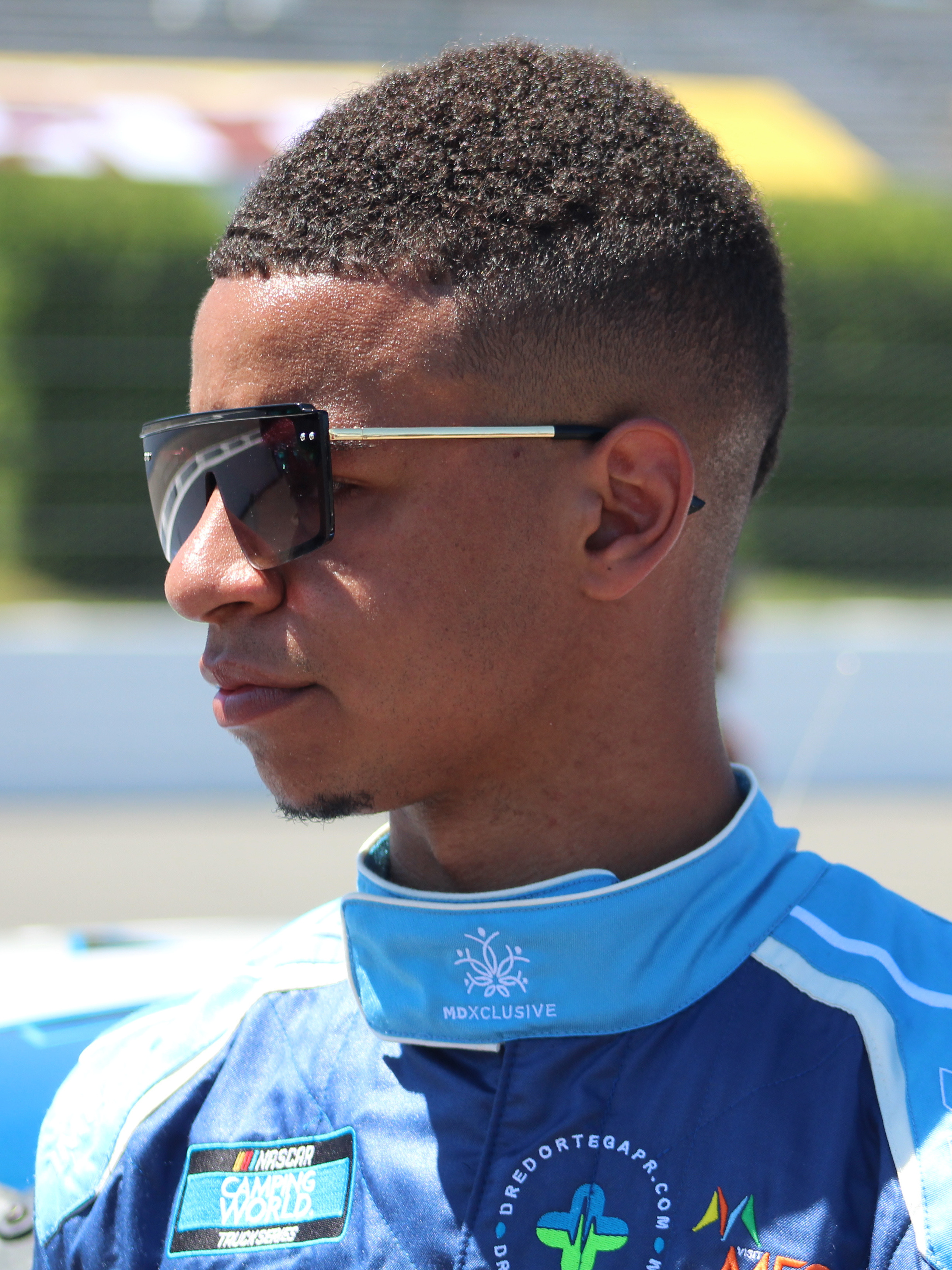
Solomon Trujillo
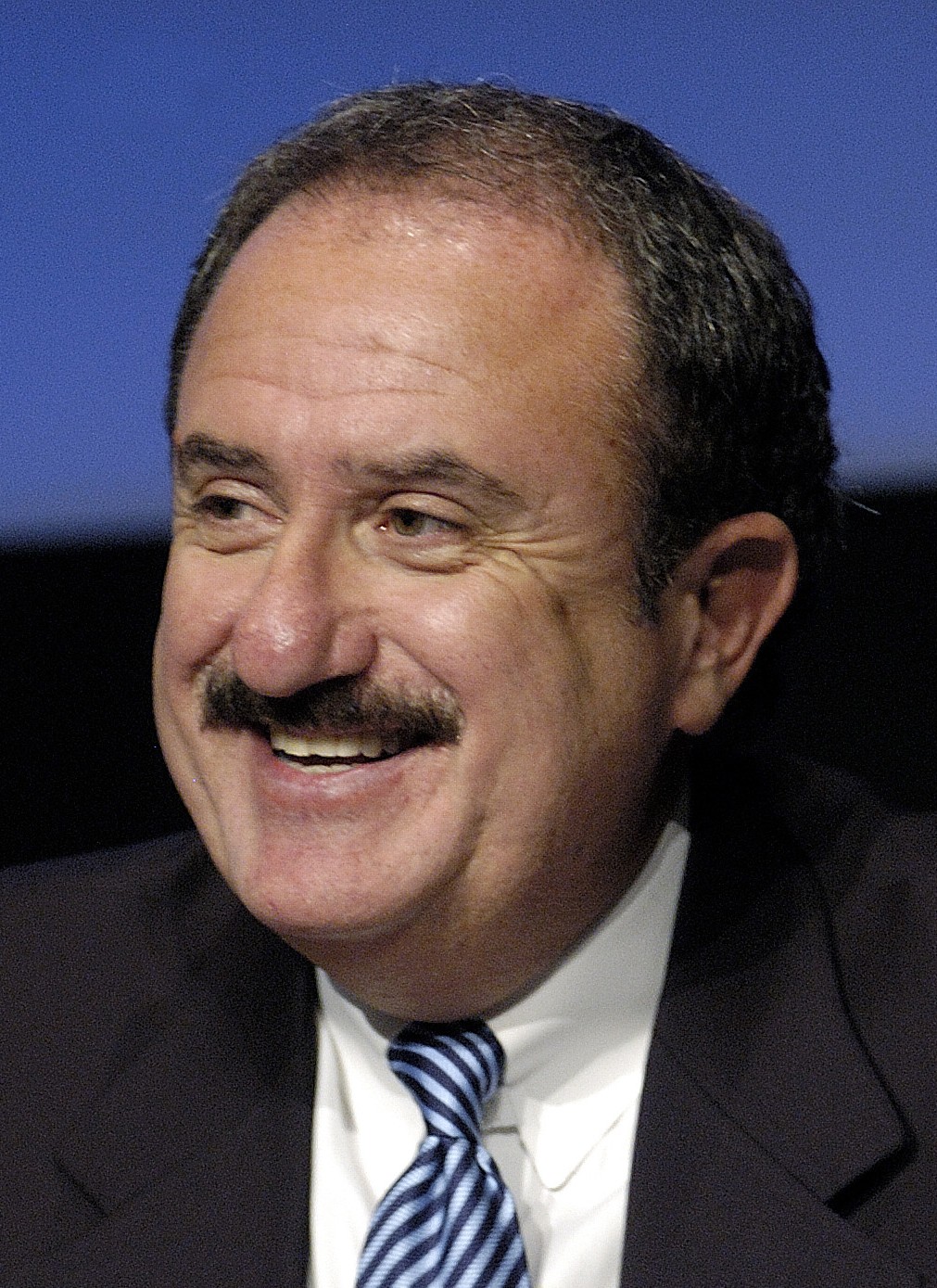
born Solomon Dennis Trujillo
Former CEO of US West, Orange, and Telstra · b. 1951 · Cheyenne, Wyoming
Two calls made by hand, not formulas. how we score →
Summary
Born to a Mexican-American family in Cheyenne, one of very few Latino households in Wyoming, Trujillo started working at eight and went to the state university because it was the school he could attend.
He rose inside Mountain Bell for 24 years to become one of the first Hispanic CEOs of a Fortune 200 company, then spent a decade running two more telecom giants in France and Australia.
How it happened
Born November 17, 1951, in Cheyenne, Wyoming, to Solomon and Theresa (née Lujan) Trujillo, whose family roots trace to Spanish-colonial New Mexico. His parents moved to Wyoming after World War II looking for work. Trujillo has described his family as one of very few Latino households in the state and has said he and his family "experienced their share of racism" growing up there. He started working at age eight and has said his parents "worked harder than anyone could work" without complaint, teaching him to look everyone in the eye rather than up or down at them.
He attended the University of Wyoming, which he has described as essentially his only realistic choice at the time, and earned a bachelor's degree in business followed by an MBA in finance. He has said he noticed early on that wealthier classmates tended to have parents already working in business, which wasn't his situation.
Mountain Bell, then a division of AT&T, hired him in 1974 as an economic forecaster. He moved into operating roles and, at 32, was named state vice president and chief executive of Mountain Bell's New Mexico operations, making him, by the company's own account, the youngest officer in AT&T's history. He has said he took New Mexico from the company's lowest-earning state operation to its highest within two years and pushed early fiber investment into rural areas.
Mountain Bell became part of US West after the 1984 AT&T breakup. Named president of US West in 1996, Trujillo became president and CEO in 1998, twenty-four years after he'd started as a forecaster. He is widely described, including by the Wall Street Journal and Latino Magazine, as the first native-born Hispanic CEO of a Fortune 200 company. Under him, US West shifted its pitch from plain local phone service toward high-speed internet and early voice-over-internet technology.
US West merged with Qwest Communications in 2000, and Trujillo left in 2002, citing differences with Qwest CEO Joe Nacchio over direction. He briefly chaired and ran Graviton, a wireless-sensor startup that raised more than $60 million from investors including Kleiner Perkins and Qualcomm, before it was sold to Xsilogy for an undisclosed amount after he'd moved on.
After two years on the board of France Télécom's mobile arm, Orange S.A., Trujillo became its CEO in 2003, reportedly the first American to run a company on the CAC 40. He pushed an aggressive growth strategy against a debt load left by the parent company, and by most accounts Orange added five million customers and improved its margins before he stepped down in March 2004, having done what he was brought in to do.
Telstra named him CEO effective July 1, 2005, a role the Economist called "Australia's toughest corporate job" given the mandate: prepare the partly state-owned carrier for what became a A$15.5 billion final privatization sale in 2006. He brought in two other American executives, Phil Burgess and Greg Winn, whom the Australian press dubbed the "Three Amigos." His team built a new national 3G network between late 2005 and 2006 that was, at the time, described as the largest and fastest of its kind, and Australian Telecom Magazine named him CEO of the Year in 2008.
The same team became known for openly confrontational dealings with regulators and the government, with Trujillo's American executives sometimes called "gunslingers" for their combative style. In 2006, when regulators wouldn't agree to Telstra's terms for access pricing on a proposed fiber network, the company shelved the project; Trujillo said publicly, "My duty is to our shareholders — including 1.6 million ordinary Australians. I will only invest where I can earn an economic return." In 2008 the Rudd government excluded Telstra's bid from the tender to build the National Broadband Network, ruling it non-compliant, which Australian commentators treated as the culmination of years of friction between Telstra and Canberra. His pay became its own controversy: Telstra's own remuneration reports show his package rising to about $13.4 million in the 2007–08 financial year, and the Future Fund and several major asset managers publicly opposed his compensation at the 2007 annual meeting.
Trujillo announced his departure in February 2009 and left that May; Prime Minister Kevin Rudd's one-word public reaction was "Adios." Telstra's 2009 remuneration report put his final-year pay at roughly $9.06 million. Commentary at the time was largely critical of his tenure — Telstra's share price had fallen over the period, and one columnist called the closing payment "a final insult to long suffering shareholders" — though later retrospectives have credited his team's network investment as the foundation later CEOs built on.
Trujillo returned to the U.S. and set up Trujillo Group, a private investment and advisory vehicle funded from his executive career, and later became a senior advisor to Bain & Company. He has served on the boards of PepsiCo, Bank of America, EDS, Target, Western Union (from 2012), ProAmerica Bank, and Cano Health, among others, and briefly returned to operating work on the board of the Australian startup Unlockd in 2016. In 2010 he co-founded the Latino Donor Collaborative with former HUD Secretary Henry Cisneros, the nonprofit behind the "US Latino GDP" research showing the economic output of U.S. Latinos as, by their measure, one of the largest economies in the world if counted on its own. He later co-founded L'ATTITUDE, an annual business and policy gathering built around the same argument.
The coded evidence
Thirteen groups, every claim sourcedCoarse public-record coding; ethnicity is a noisy, interpretive category.
↗ en.wikipedia.orgMulti-generation American. His family's roots trace to Spanish-colonial New Mexico with no recent immigration; his parents relocated internally from New Mexico to Wyoming after World War II for work.
↗ cultursmag.com0
No documented gap in his employment history from 1974 through his 2009 Telstra departure.
↗ en.wikipedia.orgA stable two-parent household with no documented property or savings cushion. His parents worked, by his own account, extremely hard for wages; no family business, inheritance, or real estate is documented.
↗ hispanicexecutive.comContinuously employed from his 1974 entry-level hire at Mountain Bell through his climb to state vice president by 32 and the US West presidency in 1996 — no documented gap or independent venture at risk during those years.
↗ en.wikipedia.orgnot established
No debt is documented for his University of Wyoming education or otherwise.
↗ en.wikipedia.orgnot established
No documented homelessness, food insecurity, or job loss during his adult career.
↗ en.wikipedia.orgThe hardship was imposed, not chosen. There was nothing to fall back on.
His family's working-class circumstances in Wyoming were economic, not a chosen simplicity; he has said he began working at age eight.
↗ hispanicexecutive.comnot established
Not specifically named in sources reviewed. Trujillo has described both parents only in general terms — that they "worked harder than anyone could work" without complaint — without naming their occupations.
↗ hispanicexecutive.comFamily roots traced by Trujillo to Spanish-colonial New Mexico, long predating US statehood, though the family held no documented wealth or institutional standing by the time he was born in Wyoming.
Single-source magazine profile; not independently corroborated.
↗ cultursmag.comnot established
No specific family sacrifice tied to funding his University of Wyoming education is documented.
↗ en.wikipedia.orgnot established
His family's move from New Mexico to Wyoming took place before his birth; no residential instability during his own childhood is documented.
↗ en.wikipedia.orgnot established
↗ en.wikipedia.orgnot established
No specific survived trauma is documented; the racism he describes experiencing is captured under d4 instead.
↗ en.wikipedia.orgnot established
↗ en.wikipedia.orgCheyenne, Wyoming
↗ en.wikipedia.orgPublic schooling in Cheyenne, including East High School.
↗ en.wikipedia.orgHis parents relocated from New Mexico to Wyoming after World War II looking for work, before Trujillo was born; he grew up in Cheyenne as part of one of very few Latino families in the state.
↗ cultursmag.comHe has said he and his family "experienced their share of racism" growing up in Cheyenne, and has described feeling "like a unicorn in Wyoming" given how few Latino families lived there. Early in his corporate career he has said he felt he "had to be ten times better than everybody else." He later encountered friction of a different kind as an American executive in Australia, including public mockery of his name and confrontational relations with regulators and the press during his Telstra tenure.
↗ hispanicexecutive.comnot established
No Latino affinity network or community institution is documented as having supplied him capital, customers, or introductions; by his own account there was little Latino community around him in Wyoming to draw on.
↗ hispanicexecutive.comnot established
No named sponsor or personal connection is documented behind his 1974 entry-level hire.
↗ en.wikipedia.orgMountain Bell, an AT&T division, which hired him in 1974 as an economic forecaster. He spent the next 28 years inside the company and its successor, US West, before it merged into Qwest in 2002.
↗ en.wikipedia.org4
Mountain Bell/US West, Graviton, Orange S.A., and Telstra as the four organizations where he held CEO or chief-executive-equivalent title; board and advisory roles held before and after aren't counted here.
↗ en.wikipedia.orgBachelor's degree in business and an MBA in finance, both from the University of Wyoming.
↗ soltrujillo.comnot established
He has said he began working at age eight, but no detail is established on whether or how he worked specifically during his University of Wyoming years.
↗ cultursmag.comDirect enrollment at the state's flagship public university, which he has described as essentially the only realistic option available to him at the time, straight into an entry-level corporate job.
↗ cultursmag.comnot established
Not applicable in the founder sense. His entire adult income came from employer salary, bonus, and equity across a sequence of large companies; he never personally financed a venture of his own until founding the advisory firm Trujillo Group after leaving Telstra.
↗ en.wikipedia.orgSalary, bonus, and equity from a sequence of large-company CEO roles — US West, Orange, and Telstra — rather than any investment vehicle he personally controlled during the climb. Trujillo Group, founded after Telstra, is a private investment and advisory vehicle funded from that executive-career income rather than the source of his wealth itself.
↗ lattitude.netNo dual-class shares or control-block structure at any of the companies he ran; his authority came from the CEO title and board confidence, not a personal ownership stake.
↗ en.wikipedia.org0
No personal venture failure is documented. Graviton, the wireless-sensor startup he chaired and ran between US West and Orange, was eventually sold rather than shut down, though for an undisclosed sum after he had already moved on.
↗ en.wikipedia.org46
Sources give only the year of his 1998 CEO appointment, not the month, so the exact age at appointment (46 or 47) isn't pinned down.
↗ en.wikipedia.orgThe 1984 AT&T breakup created US West and the other regional Bell companies, opening executive tracks inside newly independent organizations that hadn't existed a decade earlier. Later in his career, national governments in France and Australia were moving state-linked telecom carriers toward full private ownership, which created demand for executives experienced in preparing a formerly-regulated carrier for open markets — the specific mandate behind both his Orange and Telstra hires.
↗ economist.comDenver-area headquarters of US West.
↗ en.wikipedia.org46
Approximate age at his 1998 appointment as US West's president and CEO, his first major-company chief-executive title.
↗ en.wikipedia.org11
1998 to 2009, spanning his CEO tenures at US West, Orange, and Telstra with an roughly eight-month interlude at Graviton, a much smaller startup, in between the first two.
↗ en.wikipedia.orgTelecommunications; corporate executive management
↗ en.wikipedia.orgnot established
No Forbes profile or reliable net-worth estimate exists for Trujillo; he is a salaried executive rather than a founder with a tracked equity stake. His outcome here is coded from disclosed compensation instead of a guessed net worth figure.
↗ en.wikipedia.org12000000
Telstra's own remuneration report, as cited by the Mayne Report (an Australian corporate-governance commentary site), put Trujillo's total pay at A$13.4 million for the 2007–08 financial year, up from A$11.8 million the year before — his highest documented single-year figure. Converted here to an approximate US-dollar equivalent (roughly A$0.88 to the US dollar in that period) for comparability with other records in this file; treat the conversion as approximate, not a filed USD figure. His departing 2008–09 year came in lower, reported at A$9.06 million.
↗ maynereport.comJournalistic estimate
Sourced to press commentary quoting Telstra's own remuneration report rather than a primary filing reviewed directly for this record.
↗ maynereport.comHigh salaried and bonus income as a public-company executive across four organizations, not ownership of anything he founded. No dual-class stock or control-block structure behind any of his CEO roles.
↗ en.wikipedia.orgWidely described as the first native-born Hispanic CEO of a Fortune 200 company (1998), the first American to lead a CAC 40 company (Orange, 2003), and CEO of Telstra during Australia's largest-ever privatization sale. Co-founded the Latino Donor Collaborative in 2010 and later L'ATTITUDE, both built around research on the economic scale of U.S. Latinos.
↗ en.wikipedia.orgCapped
A salaried public-company executive across every role, with board-set compensation rather than open-ended founder's equity.
↗ en.wikipedia.orgAs Telstra CEO, Trujillo's company had repeated disputes with Australian regulators: in 2006 Telstra shelved a proposed fiber-optic network rather than accept the access-pricing terms regulators required, and in 2008 the Rudd government ruled Telstra's bid for the National Broadband Network tender non-compliant and excluded it from the process. These were disputes over commercial and regulatory terms, not enforcement findings against Trujillo personally, and no fine or personal liability resulted from either.
↗ channelnews.com.auTrujillo defended Telstra's position publicly rather than conceding fault, saying of the 2006 fiber dispute, "My duty is to our shareholders — including 1.6 million ordinary Australians. I will only invest where I can earn an economic return."
↗ en.wikipedia.orgDuring
The regulatory disputes ran throughout his 2005–2009 Telstra tenure, the venture that produced this record's outcome coding.
↗ en.wikipedia.orgIncidental
The confrontational regulatory posture wasn't what produced his CEO appointment or his compensation, both of which were set independently by Telstra's board; if anything, press and shareholder criticism of the conduct threatened his standing rather than advancing it.
↗ crikey.com.auNone
No personal fine or liability finding against Trujillo. He completed his full term and departed in 2009 with his contracted final-year pay intact despite public criticism of the amount.
↗ crikey.com.auCombative, Confrontational, Aggressive, Turnaround focused, Tough talking
Trujillo's American team, including himself, Phil Burgess, and Greg Winn, was described in Australian press coverage as "gunslingers" for their style toward regulators and competitors; a later retrospective called them "a tough talking team who knew where they wanted to go."
↗ channelnews.com.au4
Approximate count of independent Australian outlets (Crikey, Mayne Report, SmartCompany, ChannelNews) whose direct coverage of his tenure was reviewed for this record, rather than a formal source-independence audit.
↗ crikey.com.auAfter
His reputation as a combative operator formed during the 2005–2009 Telstra years, after the 1998 US West CEO appointment coded as this record's inflection point; his earlier US West and Orange tenures aren't documented as carrying the same characterization.
↗ smartcompany.com.auMixed
An asset in terms of the network investment and turnaround plan his successors were later credited with building on; a liability in terms of relations with the government, regulators, and the press, and with the pay controversy that shadowed his exit. Prime Minister Kevin Rudd's public reaction to his departure was a one-word "Adios."
↗ smartcompany.com.auA 2020s retrospective on Telstra's leadership credited Trujillo's team with a clear strategy and durable network investment that later CEOs "lived off," a more favorable read than the largely critical press coverage of his actual tenure, which one columnist summed up as a "shambles" and his final pay packet as "a final insult to long suffering shareholders."
↗ channelnews.com.auHe returned to corporate life afterward through board seats at Target, Western Union, and other companies, briefly returned to operating work advising the Australian startup Unlockd in 2016, and built a second, separate public reputation from 2010 onward as co-founder of the Latino Donor Collaborative and L'ATTITUDE — work unconnected to the Telstra controversy.
↗ latinodonorcollaborative.orgStructural context
The cost-of-failure score comes from this person's own money and circumstances. But who they were in America carried its own weight, the same way their household or income did, and it shaped how hard the path was just as much. That part isn't in the cost-of-failure number. It's here instead.
Men held about 90% of Fortune 500 CEO seats in 2023, and a wider majority of the rungs below. The ladder is widest for them the whole way up.
↗ forbes.comAmong the people recorded here — men: 115. Representation here is who reached these outcomes, not equal odds of reaching them.
Controlled comparisons
Each holds one thing constant and varies another, so the difference is the point. A list of similar names wouldn't tell you anything.