Steve Forbes
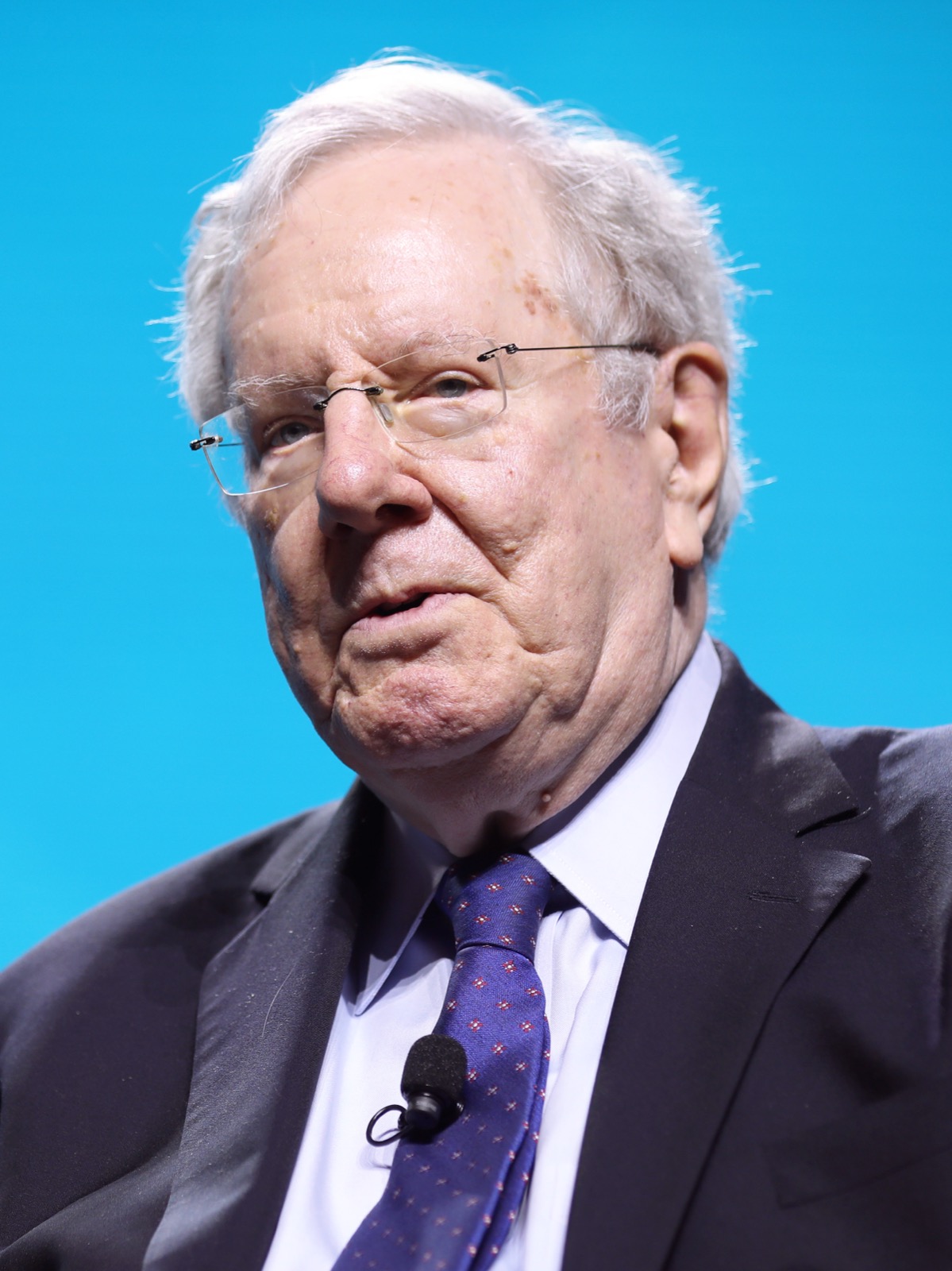
born Malcolm Stevenson Forbes Jr.
Chairman and editor-in-chief of Forbes Media; ran for the Republican presidential nomination in 1996 and 2000 on a flat tax · b. 1947 · Morristown, New Jersey
Two calls made by hand, not formulas. how we score →
Summary
He is the third generation of the family that has run Forbes since his grandfather founded it in 1917.
He went from Princeton to the family firm, took over as chief executive when his father died in 1990, and could afford two self-funded presidential runs. It is a position handed down within a family, not a route anyone else can enter.
Where they worked
How it happened
Steve Forbes was born in 1947 in Morristown, New Jersey. His grandfather, B. C. Forbes, founded Forbes in 1917, and his father, Malcolm Forbes, ran it as president, chief executive and editor-in-chief after his own brother's death in 1964. Steve went to a private country day school, then Brooks School, then Princeton, where he took a history degree in 1970 and co-founded a student magazine, Business Today.
When Malcolm Forbes died in 1990, Steve became chief executive of the company and editor-in-chief of the magazine, according to Britannica. He had not built the firm and did not found it. He inherited a seat that three generations of his family had held, in a business his family still owned outright.
In 1996 he ran for the Republican presidential nomination on a flat income tax. Wikipedia says he sold some Forbes voting shares to relatives to help pay for it; his total spending that year is not established here, since sources give conflicting figures. He won the Arizona and Delaware primaries and did not come close to the nomination. He ran again in 2000, raising $86 million, of which $37 million was his own money, and dropped out early in the primaries. He went back to running the company.
In 2014 the Forbes family bought out the outside investor Elevation Partners, and then a Hong Kong group, Integrated Whale Media Investments, bought a 51% stake. The company is based in Jersey City and Integrated Whale has owned it since. Steve is still listed as chairman and editor-in-chief. How much of the company he personally holds today is not established.
The coded evidence
Thirteen groups, every claim sourcedInferred from family history and public images. No self-description opened.
↗ en.wikipedia.orgnot established
Not established in the sources opened. Migration coded none provisionally.
↗ en.wikipedia.orgnot established
Not documented. Coded soft on the family's wealth, not on a stated fallback.
↗ en.wikipedia.orgFather Malcolm Forbes was publisher, president and chief executive of Forbes; mother is listed as Roberta Remsen Laidlaw.
↗ en.wikipedia.orgA parent worked for themselves, the strongest known predictor of founding.
Malcolm gained exclusive control of the family company after his brother's death in 1964. The company was family-owned, so this reads as owner-operator rather than self-employed in the usual sense.
↗ en.wikipedia.orgnot established
Malcolm Forbes's article lists five children from his marriage, which implies four siblings. Not stated on Steve's own page, so left null.
↗ en.wikipedia.orgGrandson of B. C. Forbes, who founded Forbes in 1917; son of Malcolm Forbes, who ran it from the 1950s.
↗ en.wikipedia.orgFather Malcolm Forbes died in 1990, when Steve was 42.
Death year inferred from the 1990 succession given in Britannica via search result and from Wikipedia's statement that Steve has run the business since 1990.
↗ en.wikipedia.orgFar Hills Country Day School and Brooks School (private), then Princeton.
↗ en.wikipedia.orgRaised inside the family publishing company; father and grandfather were the magazine's editors-in-chief.
↗ en.wikipedia.orgFamily firm. The chair came through his father's death in 1990.
Britannica was found through search and not opened directly (blocked to fetch).
↗ britannica.comForbes was founded by his grandfather in 1917 and led by his father until 1990.
↗ en.wikipedia.orgReagan appointed him head of the Board for International Broadcasting around 1985; Bush reappointed him and he served until 1993.
↗ en.wikipedia.orgA.B. in history, Princeton University, 1970.
↗ en.wikipedia.orgnot established
Not established. Family-funded is inferred from the family's wealth and private schooling, not from a stated source.
↗ en.wikipedia.orgCo-founded the student magazine Business Today at Princeton.
↗ en.wikipedia.orgSold some Forbes, Inc. voting shares to other family members to help finance the 1996 run.
↗ en.wikipedia.orgnot established
How Malcolm Forbes's ownership passed to his children in 1990 is not stated in the sources opened. Inheritance as origin capital is inferred from his becoming chief executive of the family company.
↗ en.wikipedia.orgFamily-held until 2014. Elevation Partners took a minority stake in 2006; the family bought it out in July 2014 and Hong Kong-based Integrated Whale Media Investments bought a 51% stake. The family kept the rest, per Wikipedia's account.
The family's remaining share is implied, not quantified. Steve's personal holding is not established.
↗ en.wikipedia.orgChairman and editor-in-chief of a company a Hong Kong group has majority-owned since 2014.
↗ en.wikipedia.orgnot established
Not established. The two failed presidential bids are recorded under non-wealth outcome, not counted as ventures.
↗ en.wikipedia.orgThe campaigns were paid in part with his own money. The 1996 run drew on sales of Forbes voting shares to relatives; the 2000 run included $37 million of his own funds.
↗ en.wikipedia.orgPublishing and media
↗ en.wikipedia.org430000000
Wikipedia gives $430 million for 1996 and no newer figure. The Forbes profile page returned an error on retrieval. Search results for a current figure were content farms that disagreed ($400M to $650M), so none was used. Whether he is on today's Forbes 400 was not established.
↗ en.wikipedia.orgJournalistic estimate
↗ en.wikipedia.orgWealth is stakes in a privately held company, not liquid securities. 2014 sale of a 51% stake priced the company; Steve's share of proceeds is not established.
↗ en.wikipedia.orgChairman and editor-in-chief of Forbes. Head of the Board for International Broadcasting (to 1993). Ran for the Republican presidential nomination in 1996, winning the Arizona and Delaware primaries, and again in 2000. Later advised the Giuliani and McCain campaigns and sits on policy boards.
↗ en.wikipedia.orgCapped
A salaried and stake-based position in a media company whose 2023 sale talk valued it near $800 million. Coded capped on that scale; low confidence.
↗ en.wikipedia.orgPolicy minded, Establishment
Light coding from his campaigns, policy boards and editorial role; no direct trait quote opened.
↗ en.wikipedia.orgPublic
↗ en.wikipedia.orgAsset
His name and national profile came with the family brand and kept him a regular voice on tax policy after losing the campaigns.
↗ en.wikipedia.orgStructural context
The cost-of-failure score comes from this person's own money and circumstances. But who they were in America carried its own weight, the same way their household or income did, and it shaped how hard the path was just as much. That part isn't in the cost-of-failure number. It's here instead.
Men held about 90% of Fortune 500 CEO seats in 2023, and a wider majority of the rungs below. The ladder is widest for them the whole way up.
↗ forbes.comAmong the people recorded here — men: 225. Representation here is who reached these outcomes, not equal odds of reaching them.
Controlled comparisons
Each holds one thing constant and varies another, so the difference is the point. A list of similar names wouldn't tell you anything.