Taylor Swift
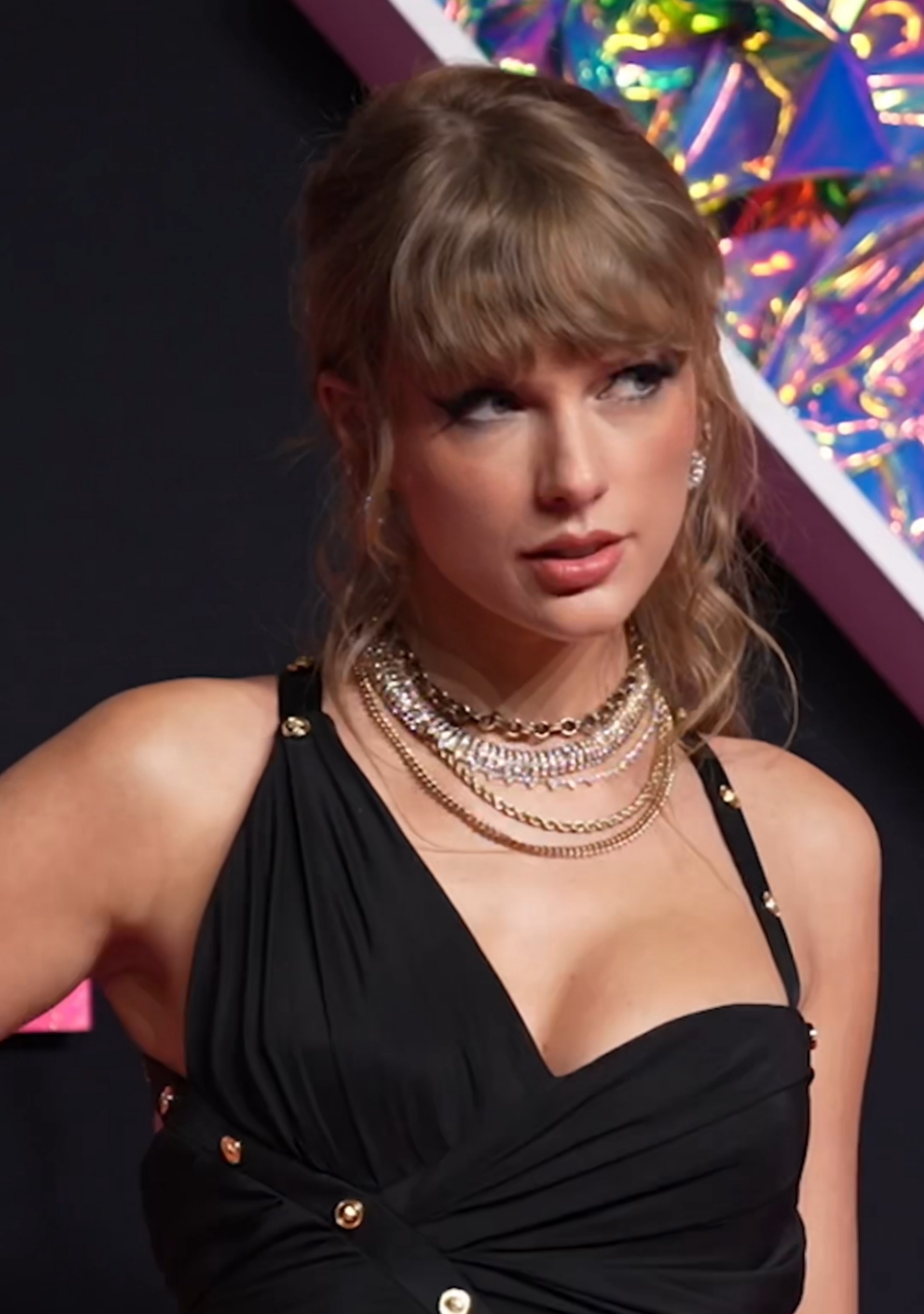
Singer-songwriter; re-recorded her own catalogue and bought back her original masters; the Eras Tour, the first tour to gross over $1 billion · b. 1989 · West Reading, Pennsylvania
Two calls made by hand, not formulas. how we score →
Summary
Swift grew up affluent — a stockbroker father, a marketing-executive mother, a family that relocated across states and bought a stake in her label.
Money and choice were never in question. What she fought for was the work itself: when her masters sold out from under her in 2019, she re-recorded six albums to take the audience with her, then bought the originals back in 2025.
How it happened
Taylor Swift was born in 1989 in West Reading, Pennsylvania. Her father, Scott Kingsley Swift, was a stockbroker at Merrill Lynch; her mother, Andrea, had worked as a mutual fund marketing executive before staying home with Taylor and her younger brother, Austin. The family lived comfortably in Wyomissing, spending holidays on a Christmas tree farm and summers at the New Jersey shore, and she attended a Montessori school and then a private school before switching to public school in Wyomissing.
At eleven she traveled to Nashville with her mother to shop a demo around Music Row and was turned down by every label. Rather than give up, the family kept investing: she signed an artist-development deal with RCA at thirteen and a publishing deal with Sony/ATV at fourteen, the youngest songwriter the company had signed. In 2004, when she was fourteen, her parents relocated the family from Pennsylvania to the Nashville suburb of Hendersonville specifically so she could pursue music full time — a cross-state move most families can't make on a teenager's hobby, and one her family's income made possible without asking anyone else's permission.
She signed with the newly founded Big Machine Records in 2005, at fifteen, after a showcase at Nashville's Bluebird Cafe. Her father reportedly bought a roughly 3% equity stake in the label around the same time. The contract gave Big Machine ownership of the master recordings for whatever albums she made there, in exchange for the label's investment and distribution — the standard trade in the industry, and one a fifteen-year-old and her family had no real leverage to negotiate against.
Swift released six studio albums on Big Machine between 2006 and 2017, building into one of the best-selling acts in the world. In 2018, as her contract neared its end, her team proposed that the label sell her the masters back; Big Machine said she could earn one old album back for every new one she delivered elsewhere, a trade she declined. In June 2019, Big Machine's founder Scott Borchetta sold the label, and with it the masters to Swift's first six albums, to Scooter Braun's Ithaca Holdings for a reported $330 million. Swift said publicly she had never been given the chance to buy the masters or the label outright, calling the sale her "worst case scenario" and describing years of "incessant, manipulative bullying" from Braun.
At Billboard's Women in Music event later in 2019, she connected what had happened to broader sexism in the industry, saying the sale happened "without my approval, consultation or consent" and describing how the same behavior in a man gets called strategic while in a woman it gets called calculated. She has spoken repeatedly about being underestimated and about the imbalance in negotiating power between a teenage artist and the men who ran her label and the private-equity buyers behind the next one.
Rather than accept the sale, Swift began re-recording her first six albums in late 2020 as "Taylor's Version," releasing "Fearless (Taylor's Version)" and "Red (Taylor's Version)" in 2021 and "Speak Now (Taylor's Version)" and "1989 (Taylor's Version)" in 2023, aiming to make the new masters — which she owned outright — the versions fans, film, and TV licensing would use instead of the originals. It was a strategy no artist had executed at this scale before: use an existing fanbase to functionally devalue the asset that had been taken from her, and it worked well enough that it became the template other artists point to when a label sale goes wrong.
Braun sold the original masters on to Shamrock Holdings, the Walt Disney family's investment firm, in 2020; Swift declined Shamrock's offer of an equity partnership because it would have kept Braun financially tied to her work. In May 2025 she bought the original masters, videos, concert films, and related material from Shamrock outright, on terms she described as having "no strings attached, no partnership, with full autonomy." The purchase price wasn't disclosed.
The Eras Tour, running 2023 to 2024 across five continents, became the first tour to gross over $1 billion and finished at roughly $2 billion, alongside a companion concert film that itself grossed around $250 million. Forbes puts her net worth at roughly $2 billion as of mid-2026, built from touring, catalogue value including the repurchased masters, and royalties — the first musician to reach that ranking primarily on the strength of songs and performances rather than a separate business empire.
The coded evidence
Thirteen groups, every claim sourcedCoarse public-record coding; not a category she has addressed directly herself.
↗ en.wikipedia.orgDescendant; no recent immigration on either side documented in the public record.
↗ en.wikipedia.orgEnglish
↗ en.wikipedia.orgGrew up in a financially comfortable household — a Merrill Lynch stockbroker father and a marketing-executive mother — with no documented period in which family housing was ever in question.
↗ en.wikipedia.orgFamily income from her father's finance career funded her early artist-development years; no evidence she or the family depended on her music income to cover living costs before it succeeded.
↗ en.wikipedia.orgnot established
No documented homelessness, food insecurity, or housing instability at any point.
↗ en.wikipedia.orgnot established
No period of visible poverty or austerity is documented to code as voluntary or imposed — hardness here is genuinely low, not a hardship narrative.
↗ en.wikipedia.orgFather Scott Kingsley Swift, a stockbroker for Merrill Lynch; mother Andrea Gardner Swift (née Finlay), a former mutual fund marketing executive who left the workforce to raise Taylor and her younger brother, Austin.
↗ en.wikipedia.orgNeither parent was self-employed.
Father was a salaried financial-services employee, not self-employed.
↗ en.wikipedia.orgMaternal grandmother Marjorie Finlay was a professionally trained opera singer whose church performances Swift has described as among her earliest memories of music.
↗ en.wikipedia.orgFamily means and stability made it low-risk to fully back a music career: her parents funded trips to Nashville at eleven, an artist-development deal at thirteen, and relocated the entire family across state lines at fourteen so she could pursue it full time.
↗ en.wikipedia.orgWyomissing, Pennsylvania, an affluent Reading-area suburb.
↗ en.wikipedia.orgMontessori school, then a private school, then Wyomissing Area Junior/Senior High School, before finishing via homeschooling at the Aaron Academy in Hendersonville, Tennessee.
↗ en.wikipedia.orgnot established
Her father's finance career had no documented connection to the music industry.
↗ en.wikipedia.orgMoved from Wyomissing, Pennsylvania to Hendersonville, Tennessee in 2004, at fourteen, a deliberate family relocation to support her music career rather than a job transfer or economic necessity.
↗ en.wikipedia.orgA showcase at Nashville's Bluebird Cafe led directly to her signing with Big Machine Records, a label newly founded by Scott Borchetta, two weeks later in 2005.
↗ en.wikipedia.orgInstitutional: an artist-development deal with RCA Records at thirteen and a Sony/ATV publishing deal at fourteen preceded her label signing, both reached through industry showcases her family arranged and funded trips to attend.
↗ en.wikipedia.orgSony/ATV Music Publishing signed her at fourteen as the youngest songwriter in the company's history, well before her recording career had produced any revenue.
↗ en.wikipedia.orgNo college. Finished high school via homeschooling through the Aaron Academy in Hendersonville, Tennessee, while recording her debut album.
↗ en.wikipedia.orgAdvance and royalty income from her 2005 Big Machine recording contract and her Sony/ATV publishing deal, both reached at fourteen and fifteen; no specific first-payment figure is documented.
↗ en.wikipedia.orgHer father reportedly purchased a roughly 3% equity stake in Big Machine Records around the time of her signing in 2005 — direct family capital placed into the business relationship that launched her career, not merely emotional support.
↗ en.wikipedia.orgHer original 2005 Big Machine contract gave the label ownership of the master recordings for her first six albums — standard industry terms she had no leverage to negotiate against as a fifteen-year-old. When those masters were sold in 2019 without her being given the chance to buy them, she re-recorded the albums as "Taylor's Version" (2021-2023) to own the new masters outright, then bought the originals back from Shamrock Holdings in May 2025.
↗ en.wikipedia.orgBy 2025 she held outright ownership of both the re-recorded masters she made herself and the original masters she repurchased — full ownership rather than a partial economic stake with someone else retaining control.
↗ en.wikipedia.orgIn 2018, before her Big Machine contract expired, her team proposed the label sell her the masters back; Big Machine offered only to let her earn one old album back for every new album delivered elsewhere, which she declined. She has said publicly she was never given the chance to buy the masters or the label outright "with a check."
↗ en.wikipedia.org2
Music recordings/touring and film (the Eras Tour concert film, which she produced and distributed directly).
↗ en.wikipedia.orgStreaming had by 2019 made an artist's back catalogue a continuously monetizable asset rather than a one-time sale, which is part of what made re-recording a viable commercial strategy rather than a symbolic gesture.
↗ en.wikipedia.orgBuilt new masters through the re-recording project rather than only litigating or waiting to buy the originals back; later also bought the original assets outright once a seller was willing.
↗ en.wikipedia.orgMusic and touring
↗ forbes.com2000000000
Forbes real-time estimate as of August 2026, composed of roughly $800M in music royalties and touring income, $600M in catalogue value, and $110M in real estate. Band only; below $1B this kind of figure would be tier C, but above it Forbes ties it to disclosed touring grosses and catalogue transactions.
↗ forbes.comJournalistic estimate
↗ forbes.com2026
↗ forbes.comWealth built from owned, appreciating assets — the re-recorded and repurchased masters, publishing, and a touring business she largely controls — rather than a fixed salary or fee-for-work arrangement.
↗ en.wikipedia.org14 Grammy Awards including a record four Album of the Year wins; Time Person of the Year 2023, the first individual from the arts to receive it; the Eras Tour (2023-2024) became the first tour to gross over $1 billion, finishing at roughly $2 billion.
↗ en.wikipedia.orgUncapped
Owned masters, publishing, and touring economics rather than a capped salary or fee.
↗ forbes.comshrewd about ownership, underestimated early in her career, Self made
↗ forbes.comPress
↗ forbes.comBefore
Her commercial reputation as a hitmaking songwriter was established well before the 2019 masters dispute.
↗ en.wikipedia.orgAsset
↗ forbes.comThe 2019 Big Machine sale and the ensuing dispute with Scooter Braun were widely covered contemporaneously. Swift has said, in on-the-record remarks at Billboard's Women in Music event later that year, that the sale proceeded "without my approval, consultation or consent," and has connected the episode to a broader pattern of double standards in how the industry describes identical business behavior by men and women. These are her own on-the-record characterizations of a business dispute over her own venture's assets, not a third-party allegation against her.
Rollingstone.com is on the blocked-domain list for automated fetching; content corroborated via search-indexed excerpts of the on-the-record Billboard speech rather than a direct fetch of the article.
↗ rollingstone.comStructural context
The cost-of-failure score comes from this person's own money and circumstances. But who they were in America carried its own weight, the same way their household or income did, and it shaped how hard the path was just as much. That part isn't in the cost-of-failure number. It's here instead.
Across film, music, and digital, ownership and control stay in far fewer women's hands than men's. For one measure, women directed only about 12% of 2023's top-grossing films.
↗ assets.uscannenberg.orgWhite creators hold most of the ownership and catalog control relative to their share of the population. Recognition turns into ownership most reliably for them.
↗ assets.uscannenberg.orgAmong the people recorded here — women: 54 · White subjects: 74. Representation here is who reached these outcomes, not equal odds of reaching them.
Controlled comparisons
Each holds one thing constant and varies another, so the difference is the point. A list of similar names wouldn't tell you anything.