Carlos Gutierrez
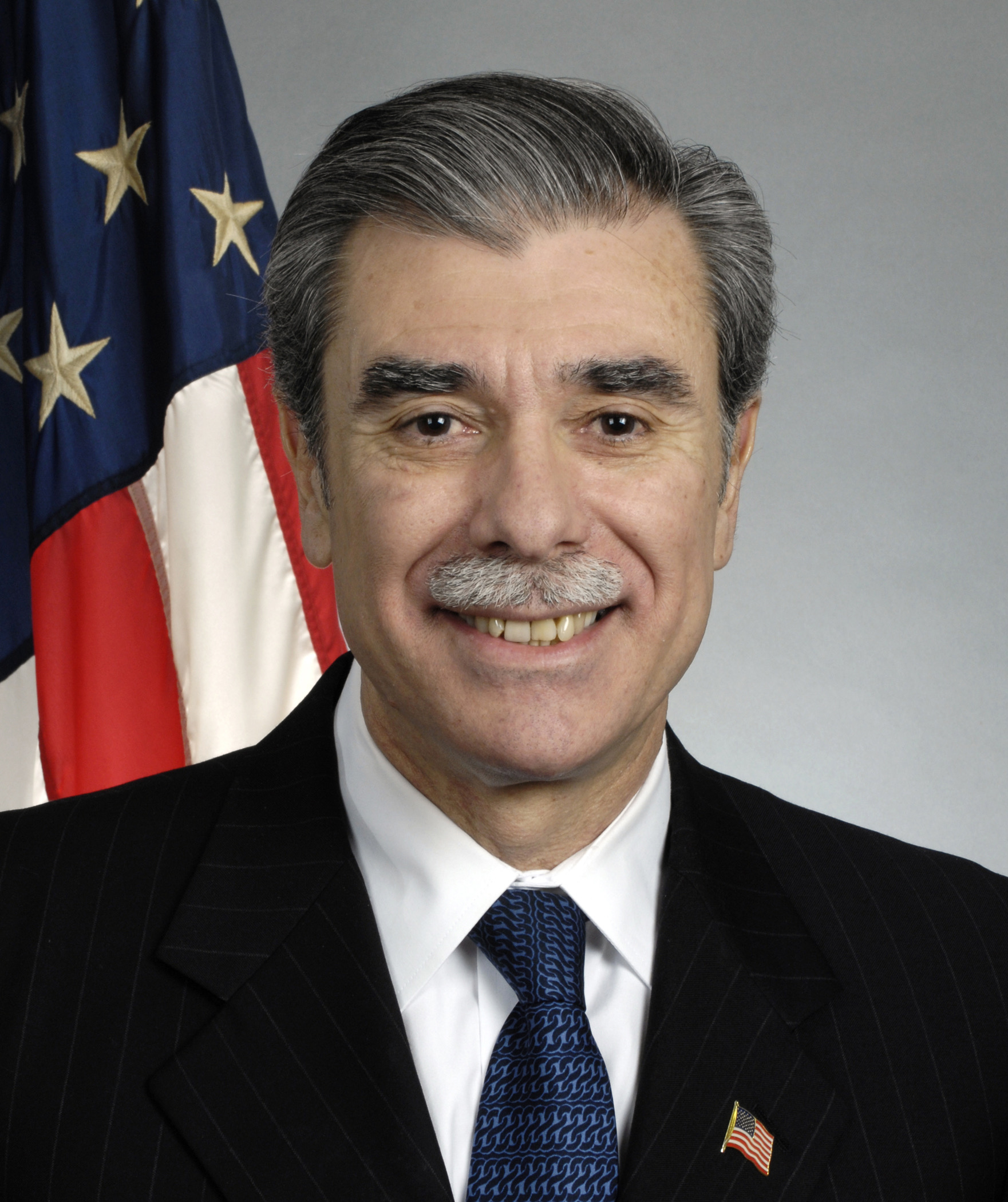
Former Chairman and CEO, Kellogg Company; 35th U.S. Secretary of Commerce · b. 1953 · Havana, Cuba
Two calls made by hand, not formulas. how we score →
Summary
Affluent in Havana until Castro's revolution took his father's pineapple plantation and briefly jailed him, the family reached Miami in 1960 with almost nothing.
Carlos started at Kellogg in Mexico City in 1975 driving a delivery route and selling cereal to small stores, never finished college, and rose to run the company twenty-four years later, then left to run the U.S. Commerce Department.
How it happened
Born November 4, 1953, in Havana to Pedro Gutierrez, who owned and ran a pineapple plantation, and Olga Fernandez, who kept the house. The family lived comfortably and sent Carlos to Catholic school. After Castro's 1959 revolution, the government nationalized the plantation and, by several accounts, briefly jailed his father over alleged anti-government activity. In 1960, when Carlos was six, the family left for Miami with almost nothing.
They landed in a Miami Beach hotel, where Carlos learned his first words of English from the bellhops. His father spent the next several years chasing work — Fort Lauderdale, New York City, Mexico City, and the port town of Tampico — before landing a job with H.J. Heinz in Mexico and eventually starting a small business of his own. Carlos enrolled at the Monterrey Institute of Technology in Querétaro to study business administration, but he didn't finish. A job offer came first.
In 1975, at twenty-one, Kellogg de México hired him as a sales and management trainee. His actual job for the first stretch was driving a delivery truck around Mexico City, restocking small stores with Frosted Flakes. He stayed with the company for the next twenty-nine years and never worked anywhere else.
He moved through Kellogg's Latin American marketing operations in the early 1980s, ran the Mexican subsidiary from 1984 to 1989 and turned an underperforming plant into one of the company's best, then took the top job at Kellogg Canada. Transfers to Battle Creek, Michigan followed: vice president of product development, then sales and marketing, then general manager of the U.S. cereal division, then president of the Asia-Pacific business, then executive vice president and chief operating officer.
The board named him president and CEO in April 1999, the youngest chief executive in the company's history and, by most contemporary accounts, the only Latino running a Fortune 500 company at the time. He added the chairmanship a year later and ran Kellogg on a "Volume to Value" strategy that traded market share for margin — the approach Fortune credited with turning around a company it had called sluggish.
President Bush nominated him for Secretary of Commerce in November 2004; the Senate confirmed him unanimously two months later, and he resigned from Kellogg the day he was sworn in, February 7, 2005. He ran the department until the end of the Bush administration in January 2009, then moved into advisory and board work — Citigroup, Time Warner, Occidental Petroleum — and eventually chaired the Albright Stonebridge Group and co-founded EmPath, a workforce-technology company, where he remains executive chairman.
The coded evidence
Thirteen groups, every claim sourced1.5 generation. Left Cuba with his family in 1960 at about age six and grew up mostly in the United States and Mexico rather than arriving as an adult.
↗ abcnews.comInferred from his attendance at Catholic school in Cuba; not separately confirmed as the family's practiced faith.
↗ referenceforbusiness.comSpanish. He has said he learned his first English from hotel bellhops after the family reached Miami Beach in 1960.
↗ abcnews.comBefore 1960, a working pineapple plantation and a comfortable Havana household. Castro's government nationalized the plantation, and none of that property or income crossed into the United States with the family — they arrived in Miami with, by most accounts, almost nothing, and no U.S. property or savings were waiting for them.
↗ referenceforbusiness.comA continuous Kellogg salary from 1975 onward, through his climb from a delivery-route trainee to CEO. Before that, in the 1960s, his father's income was unstable across several relocations; there was no family income floor behind Carlos once he was an adult starting his own career, and he began at an entry-level trainee wage.
↗ encyclopedia.comnot established
No debt is documented. He left college without finishing rather than accumulating loan debt to complete it.
↗ en.wikipedia.orgnot established
No documented homelessness, food insecurity, or job loss during his adult Kellogg career; employment was continuous from 1975 to 2004. The family's earlier childhood instability is captured under d3 and d4 instead.
↗ en.wikipedia.orgThe hardship was imposed, not chosen. There was nothing to fall back on.
The loss of the Cuban plantation and the family's difficult years in the 1960s were imposed by nationalization and exile, not chosen.
↗ referenceforbusiness.comFather Pedro Gutierrez owned and ran a pineapple plantation in Cuba before 1960; after the family's exile he worked for H.J. Heinz Company in Mexico and later started his own business. Mother Olga Fernandez kept the household.
↗ en.wikipedia.orgA parent worked for themselves, the strongest known predictor of founding.
Self-employed before 1960 (the plantation) and again later in Mexico, with an intervening stretch as a Heinz employee.
↗ referenceforbusiness.comnot established
Not established whether the family made a specific sacrifice to fund his time at Monterrey Tech.
↗ referenceforbusiness.comAt least six moves before adulthood: Havana to a Miami Beach hotel in 1960, then Fort Lauderdale, New York City, Mexico City, and the industrial port city of Tampico, as his father searched for stable work through the 1960s.
↗ encyclopedia.comAn immediate family member was incarcerated.
His father was reportedly jailed briefly around the revolution on suspicion of anti-government activity, a political detention tied to the confiscation of the family's property rather than a criminal conviction.
↗ encyclopedia.comHavana, then a sequence of U.S. and Mexican cities through the 1960s (Miami, Fort Lauderdale, New York, Mexico City, Tampico) with no single fixed community.
↗ encyclopedia.comCatholic school in Cuba before 1960; schooling scattered across the family's subsequent moves; later attended, but did not complete, a business-administration program at the Monterrey Institute of Technology and Higher Education, Querétaro campus.
↗ referenceforbusiness.comHis father's job with H.J. Heinz Company's Mexico operations put a food-and-beverage multinational inside the family's daily life before Carlos ever worked for one himself. He went on to join a different food company, Kellogg, at twenty-one.
↗ en.wikipedia.orgLeft Havana for Miami in 1960 after the revolution, then moved with his family through Fort Lauderdale, New York City, Mexico City, and Tampico over the following years as his father looked for work.
↗ encyclopedia.comIn Cuba the family owned a plantation and lived comfortably; in the United States his father started over as an employee before eventually building a small business again. The family's occupational and social standing inverted sharply for most of the 1960s.
↗ en.wikipedia.orgHe arrived in the U.S. speaking no English, learning his first words from hotel bellhops, and later built a corporate career in Battle Creek, Michigan as a Cuban-born, Spanish-speaking immigrant. Coverage of his 1999 appointment routinely noted he was the only Latino running a Fortune 500 company at the time. No specific documented incident of bias against him personally is established in the sources reviewed.
↗ abcnews.comnot established
No named sponsor or personal connection is documented behind his 1975 hire; he appears to have entered through Kellogg's ordinary trainee program rather than an introduction.
↗ en.wikipedia.orgKellogg de México, which hired him in 1975 as a sales and management trainee. He stayed inside the Kellogg Company for the next twenty-nine years, all the way to the chairmanship.
↗ en.wikipedia.org21
Sources vary slightly: implied as 21-22 from a November 1953 birth and 1975 hire in most accounts, while one ABC News profile states he began "at age 20."
↗ en.wikipedia.org1
One employer across his entire corporate climb, 1975 to 2004. His later government service and board and advisory roles came after leaving Kellogg.
↗ en.wikipedia.orgNo degree. Studied business administration at the Monterrey Institute of Technology and Higher Education, Querétaro campus, but left before finishing when Kellogg hired him in 1975.
↗ washingtonpost.comSome college with no completed credential; he entered Kellogg directly from an unfinished business-administration program rather than through any funded or targeted pipeline.
↗ referenceforbusiness.comNot applicable in the founder sense. His entire adult income came from a single employer's salary, bonus, and eventually stock and option grants; he never personally financed or owned a venture.
↗ sec.govHis financial position built up through Kellogg salary, bonus, and equity grants over a twenty-nine-year single-employer career, then a company pension, not through any investment vehicle he personally controlled.
↗ forbes.comHis CEO authority came from the title and board confidence rather than any special voting structure. A financial-disclosure filing at his 2005 Senate confirmation put his Kellogg stock at $5 million to $25 million, a modest equity position next to contemporaries who built founder-scale holdings inside comparably sized companies.
↗ forbes.com0
No venture history to fail. A single continuous corporate climb inside one company.
↗ en.wikipedia.orgKellogg was losing cereal-aisle share to private label and competitors through the 1990s and had been described in the business press as sluggish. The board promoted an internal candidate with three decades of international operating experience rather than recruiting an outside turnaround executive, and he ran the company afterward on a "Volume to Value" strategy that traded market share for margin.
↗ en.wikipedia.org6
April 1999 to his February 2005 resignation as chairman and CEO, a comparatively short tenure at the top next to Iacocca's or Goizueta's.
↗ en.wikipedia.orgConsumer packaged goods (breakfast cereal and snack foods); later U.S. federal government (Commerce Department)
↗ en.wikipedia.orgnot established
No reliable net-worth figure exists. A financial-disclosure filing at his 2005 Senate confirmation put his Kellogg stock alone at $5 million to $25 million, plus $582,000 to roughly $1 million in other stock and at least $1 million in bank and credit union accounts; low-quality aggregator sites separately publish a $61 million figure with no disclosed methodology. Left null rather than repeat an unsourced number; his outcome here is coded from documented compensation and disclosed holdings instead of a guessed net worth.
↗ forbes.comnot established
↗ forbes.comnot established
↗ forbes.com7393444
Fiscal-year-2003 total compensation from Kellogg's 2004 proxy summary compensation table: $1,004,808 salary, $1,685,600 annual bonus, $4,586,000 long-term incentive plan payout, and $117,036 other compensation. His highest disclosed year; FY2004, his final partial year before leaving for Commerce, came in lower at $4,175,548 per the 2005 proxy, which also carries $80,000 of imputed value for personal use of company aircraft tied mostly to his Commerce appointment.
↗ sec.govProxy statement
↗ sec.govThe FY2003 figure is realized cash compensation, not unexercised option value: salary, bonus, and a long-term incentive cash payout. His beneficial Kellogg holdings that year included about 1.84 million shares reachable through stock options, but a Senate financial disclosure filed a year later put the net value of his Kellogg stock at only $5 million to $25 million, since much of the option value sat close to its exercise price.
↗ sec.govSalaried and bonus compensation with a modest equity component, not an owned appreciating asset base. His disclosed Kellogg stock position was a fraction of the size that contemporaries running comparably sized public companies accumulated over similar tenures.
↗ forbes.comYoungest CEO in Kellogg's history and, by most contemporary accounts, the only Latino chief executive of a Fortune 500 company at the time. Went on to serve as the 35th U.S. Secretary of Commerce, a Cabinet-level position, from February 2005 to January 2009.
↗ en.wikipedia.orgCapped
A salaried public-company executive and then a Cabinet officer; no dual-class or control-block structure that could make his compensation behave like founder equity.
↗ sec.govVisionary, Disciplined, Turnaround focused
President Bush described him as "a visionary executive" at his Commerce nomination; business press credited his "Volume to Value" strategy with fixing a company it had called sluggish.
↗ abcnews.comPress
↗ abcnews.comAfter
His reputation as an effective operator formed through the results of his Kellogg turnaround strategy, not before it.
↗ en.wikipedia.orgAsset
The Kellogg turnaround reputation was cited directly in coverage of his Commerce Department nomination.
↗ abcnews.comThe reputation accrued from behaviour rather than being manufactured.
Reputation accrued from company results and government service rather than from a deliberate media campaign.
↗ en.wikipedia.orgStructural context
The cost-of-failure score comes from this person's own money and circumstances. But who they were in America carried its own weight, the same way their household or income did, and it shaped how hard the path was just as much. That part isn't in the cost-of-failure number. It's here instead.
Men held about 90% of Fortune 500 CEO seats in 2023, and a wider majority of the rungs below. The ladder is widest for them the whole way up.
↗ forbes.comImmigrants and their children are overrepresented among America's biggest companies, as founders and as senior leaders. They got there through the visa, credential, and network hurdles that make the path harder to even start down.
↗ forbes.comAmong the people recorded here — men: 115. Representation here is who reached these outcomes, not equal odds of reaching them.
Controlled comparisons
Each holds one thing constant and varies another, so the difference is the point. A list of similar names wouldn't tell you anything.