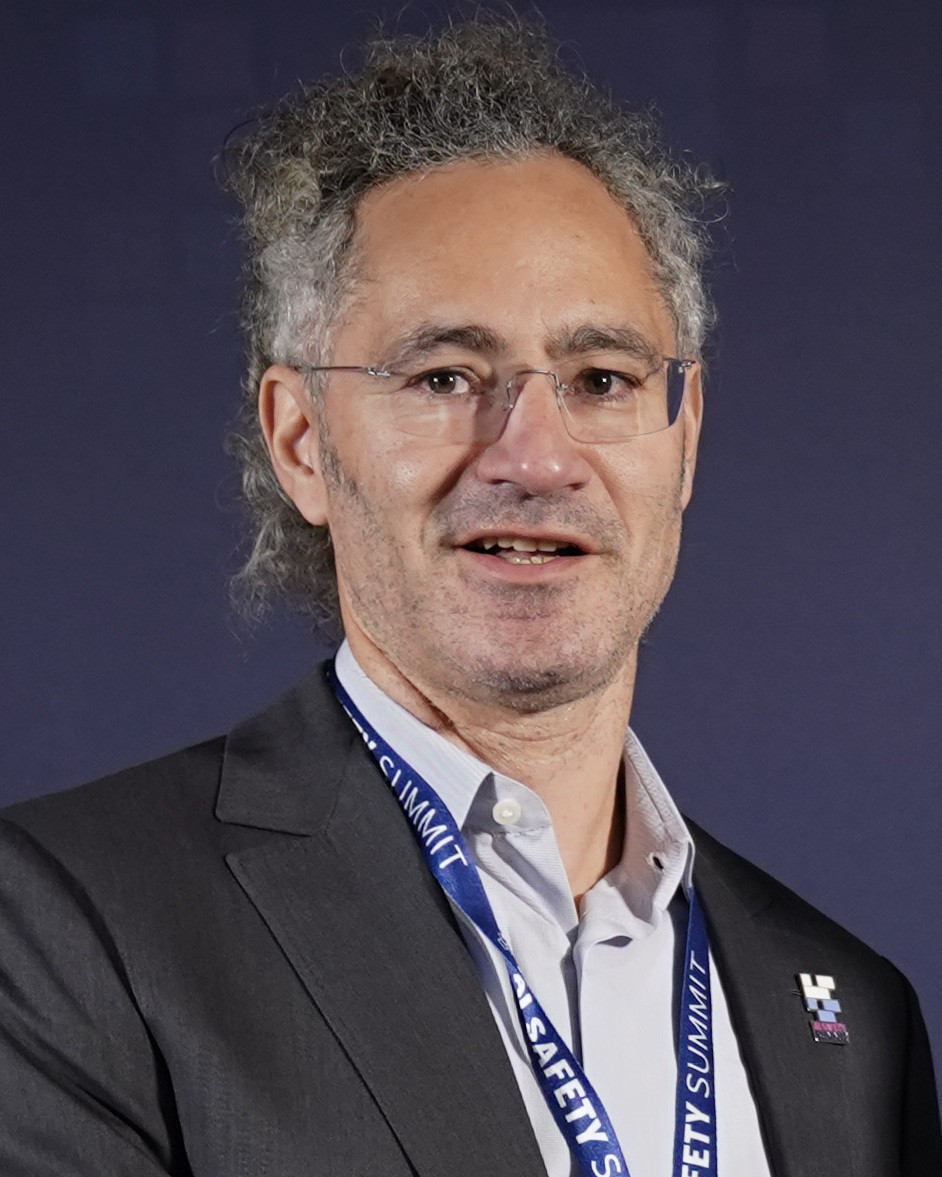
David Sacks
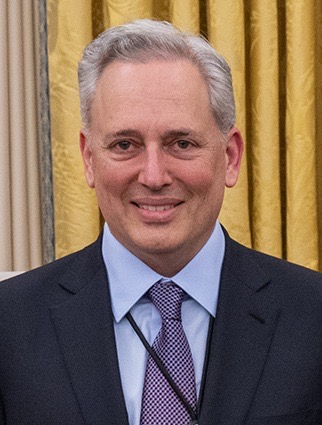
PayPal COO; co-founder of Yammer; interim CEO of Zenefits; co-founder of Craft Ventures · b. 1972 · Cape Town, South Africa
Two calls made by hand, not formulas. how we score →
Summary
Born in Cape Town to a Jewish family that emigrated to Memphis when he was about five, Sacks went from Stanford and University of Chicago Law into PayPal's executive ranks, then co-founded Yammer and sold it to Microsoft for $1.2 billion in 2012.
He steered Zenefits through a compliance crisis, co-founded Craft Ventures, and in 2025 became the White House's first "AI and crypto czar."
How it happened
Sacks was born on May 25, 1972, in Cape Town, South Africa, to a Jewish family; his father was an endocrinologist, and by his own account his grandfather had run a candy factory since the 1920s. The family emigrated to the United States when he was about five, settling in Memphis, Tennessee, where he attended Memphis University School, a private college-preparatory day school.
He earned a B.A. in economics from Stanford in 1994, where he became friends with Peter Thiel and co-wrote "The Diversity Myth" with him the following year, then a J.D. from the University of Chicago Law School in 1998. Rather than practice law, he joined McKinsey & Company, then followed Thiel's circle into PayPal in 1999 as its first product leader. He rose to chief operating officer, building out the company's product, sales, and marketing functions before eBay bought PayPal for $1.5 billion in October 2002.
In 2006 he founded the genealogy site Geni.com and ran it as CEO. An internal messaging tool his team built there became Yammer, which he spun out in March 2008 with co-founder Adam Pisoni and launched publicly that September, winning the top prize at TechCrunch50. Yammer raised roughly $142 million from investors including Charles River Ventures, Emergence Capital, and Peter Thiel's Founders Fund, grew past four million users, and became one of the earliest enterprise social networks people signed up for on their own rather than through an IT department. Microsoft bought it for $1.2 billion in cash in 2012, and Sacks stayed on to run the team inside Microsoft's Office division.
Sacks made a large personal investment in the HR-software startup Zenefits in December 2014. When founder Parker Conrad resigned in February 2016 after it emerged the company had built software letting brokers skip state-mandated insurance training, Sacks took over as interim CEO. He cut the workforce by more than a quarter across two rounds of layoffs and settled compliance actions with regulators in Tennessee, California, and New York before handing the role to a permanent CEO in February 2017.
In 2017 he co-founded the venture capital firm Craft Ventures with Bill Lee, starting with a $350 million fund; StubHub founder Jeff Fluhr joined as a general partner the following year. Craft raised several more funds after that and, per Forbes, managed around $3.3 billion by 2025, with early stakes in companies including Airbnb, Uber, SpaceX, and Palantir. Sacks also began co-hosting the All-In Podcast with Chamath Palihapitiya, Jason Calacanis, and David Friedberg in 2020, building a large audience for unscripted commentary on technology, markets, and politics.
Sacks became a visible Republican donor and surrogate, hosting a $12 million fundraiser for Donald Trump in mid-2024 and speaking at that year's Republican National Convention. In December 2024, Trump named him the White House's first "AI and crypto czar," a newly created role he filled as a special government employee, and he also co-chaired the President's Council of Advisors on Science and Technology. He and Craft Ventures sold their direct cryptocurrency holdings before he took office, and he announced the end of his government tenure in March 2026.
The coded evidence
Thirteen groups, every claim sourcedSouth African-born Ashkenazi Jewish
Sourced from biographical summaries describing his birth in Cape Town and Jewish family background; no more specific ancestry is documented in the sources reviewed.
↗ forbes.com1.5-generation immigrant — born in Cape Town, South Africa, and brought to the United States by his family at about age five.
↗ en.wikipedia.orgnot established
Not established in the sources reviewed; presumed English given the family's South African English-speaking background, but this is not documented.
↗ en.wikipedia.orgA stable, professional household throughout childhood — his father was a practicing physician — with no housing precarity documented at any point, in South Africa or after the family's move to Memphis.
↗ forbes.comSalary, stock, and proceeds from his 1999-2002 PayPal tenure, realized at eBay's 2002 acquisition, gave him the personal capital to found Geni.com in 2006 and spin out Yammer in 2008 well before either needed to be self-sustaining.
↗ en.wikipedia.orgnot established
No period of visible austerity, chosen or imposed, is documented at any point in the record reviewed.
↗ en.wikipedia.orgFather was an endocrinologist. Mother's occupation is not documented in the sources reviewed.
↗ forbes.comnot established
Not established whether his father's medical practice was self-employed or salaried/institutional.
↗ forbes.comFather held a medical degree (endocrinology). Mother's education is not documented.
↗ forbes.comSacks has cited his grandfather, who started a candy factory in the 1920s, as an early influence on his entrepreneurial outlook — a documented family business history rather than elite social standing.
↗ forbes.comnot established
No specific sacrifice or second job for tuition is documented; the family appears to have afforded private schooling directly.
↗ en.wikipedia.orgMemphis, Tennessee, after the family's emigration from Cape Town when Sacks was about five.
↗ forbes.comMemphis University School, a private, college-preparatory day school in Memphis.
↗ en.wikipedia.orgBorn in Cape Town, South Africa, in 1972; emigrated with his family to Memphis, Tennessee, at about age five; later moved to Palo Alto, California for Stanford, to Chicago for law school, and to the San Francisco Bay Area for his career.
↗ en.wikipedia.orgnot established
Not established either way — his father's professional occupation (endocrinologist) is documented in South Africa, but no source describes the family's occupational or social standing immediately after arriving in Tennessee.
↗ en.wikipedia.orgPeter Thiel, a Stanford friend and "The Diversity Myth" co-author, connected Sacks into the founding leadership circle at PayPal, which Sacks joined in 1999.
↗ en.wikipedia.orgPayPal, 1999-2002. Supplied executive-operating experience across product, sales, and marketing, an equity stake realized at eBay's 2002 acquisition, and a lasting "PayPal Mafia" network — including Peter Thiel's Founders Fund, later an investor in Yammer.
↗ en.wikipedia.orgCapital, Credibility, Network, Skill
↗ en.wikipedia.orgYammer was co-founded with Adam Pisoni. It began as an internal communication tool at Geni.com, the genealogy company Sacks had founded and was running as CEO.
↗ en.wikipedia.orgBy 2008 he had standing in Silicon Valley as a former PayPal COO and the founder of Geni.com, giving Yammer built-in press and investor credibility at launch.
↗ en.wikipedia.orgYammer used a bottom-up, freemium adoption model: employees could sign up with a corporate email address without IT approval, so usage spread inside companies before any purchasing decision was made.
↗ en.wikipedia.orgStanford undergraduate economics into University of Chicago Law School, an elite, selective pipeline for his generation.
↗ en.wikipedia.orgJ.D., University of Chicago Law School (1998); B.A. in Economics, Stanford University (1994).
↗ en.wikipedia.orgNever practiced law despite the J.D.; went directly into management consulting at McKinsey & Company.
↗ forbes.comDirect — elite undergraduate (Stanford) to elite law school (University of Chicago) to McKinsey & Company management consulting, then into technology at PayPal, with no licensure practiced despite the law degree.
↗ forbes.comStanford put him in the same circle as Peter Thiel, with whom he co-wrote "The Diversity Myth" in 1995; that relationship connected him to PayPal's founding leadership team a few years later.
↗ en.wikipedia.orgIt needed capital up front, before it earned anything.
Yammer launched on a freemium model, with venture funding arriving well before significant monetization of paid seats.
↗ en.wikipedia.orgStock and proceeds from his 1999-2002 PayPal tenure, realized at eBay's 2002 acquisition of PayPal, gave him the personal capital to found Geni.com in 2006 and spin out Yammer in 2008.
↗ en.wikipedia.orgYammer raised roughly $142 million in venture funding across five rounds. Charles River Ventures partner George Zachary was its largest institutional investor; other backers included Emergence Capital, Founders Fund, US Venture Partners, and, in an $85 million later round, Draper Fisher Jurvetson with Meritech Capital Partners, Capricorn Investment Group, and Khosla Ventures.
↗ forbes.comYammer was acquired outright by Microsoft for $1.2 billion in cash in 2012 — a full sale rather than a partial or dual-class structure, so all outside investors and founders were cashed out at close.
↗ techcrunch.comSince 2017, Craft Ventures itself functions as a compounding vehicle: Sacks earns management fees and carried interest deploying outside limited-partner capital — reported by Forbes at around $3.3 billion under management by 2025 — across five funds, rather than building further wealth solely from his own capital.
↗ forbes.comSacks made a large personal investment in Zenefits in December 2014 and joined as an executive; when he became interim CEO in 2016 it was as an investor-executive with an equity position, not a standard hired-CEO compensation package. Exact terms are not disclosed.
↗ en.wikipedia.orgRather than fully cashing out after PayPal and Yammer, he redeployed proceeds into new ventures — Geni.com, an investment and executive role at Zenefits, and ultimately Craft Ventures — and continued angel investing in companies including Facebook, Uber, SpaceX, Palantir, and Airbnb.
↗ forbes.comYammer grew out of an internal communication tool built at Geni.com, the genealogy company Sacks had founded and was running as CEO — a direct-experience origin rather than an external market study.
↗ en.wikipedia.orgFounded in 2008 amid the "enterprise 2.0" wave of consumer-style, bottom-up adoption inside businesses and just ahead of the financial crisis; Microsoft's 2012 acquisition came as it was building out the collaboration features around its Office and cloud business.
↗ en.wikipedia.orgSan Francisco Bay Area.
↗ en.wikipedia.orgYammer's public launch and grand-prize win at TechCrunch50 in September 2008 gave it an early wave of press coverage and self-serve adopters.
↗ en.wikipedia.orgBuilt — spun a new company, Yammer, out of an internal tool his existing company had built, rather than acquiring an existing product.
↗ en.wikipedia.org18
From Yammer's March 2008 founding through 2026. Wealth continued to compound through the Zenefits chapter and, since 2017, through Craft Ventures' management fees and carried interest.
↗ en.wikipedia.orgnot established
The opposite pattern applies — he built directly inside the San Francisco Bay Area technology hub rather than at a deliberate distance from it.
↗ en.wikipedia.orgTechnology and venture capital — enterprise software (Yammer), HR/insurance technology (Zenefits), and startup investing (Craft Ventures)
↗ en.wikipedia.orgnot established
Forbes' own profile page does not carry a real-time net-worth figure for Sacks, unlike its tracked billionaires. Aggregator sites (Celebrity Net Worth and similar) publish conflicting, undisclosed-methodology estimates ranging roughly from $400 million to $2 billion, driven mostly by disagreement over how to value his private Craft Ventures GP stake and carried interest. No single credible figure meets this record's evidentiary bar, so the value is left null; the magnitude band below is instead coded from documented capital events (the $1.2B Yammer sale, prior PayPal equity, and Craft's roughly $3.3B in assets under management as of 2025) rather than from any of these estimates.
↗ forbes.comnot established
No disclosed filing or single credible methodology exists; see the note on netWorth above.
↗ forbes.comnot established
↗ forbes.comnot established
Not established. As an executive at private companies (PayPal pre-IPO period aside, Yammer, Zenefits) and a partner at a private venture firm, his annual compensation was never subject to proxy-statement- style disclosure.
↗ en.wikipedia.orgA mix: the PayPal and Yammer sales converted his equity into cash at close, while his Craft Ventures GP stake, carried interest, and early-stage holdings in still-private companies (at the time of investment, firms like SpaceX and Palantir) remain illiquid, paper value.
↗ forbes.comWealth built through two realized liquidity events — the 2002 eBay acquisition of PayPal and the 2012 Microsoft acquisition of Yammer — plus ongoing management-fee and carried-interest income from Craft Ventures since 2017, rather than a public-company salary.
↗ en.wikipedia.orgCo-authored "The Diversity Myth" (1995) with Peter Thiel; produced the films "Thank You for Smoking" (2006) and "Dalíland" (2023); co-hosts the All-In Podcast (since 2020); and was appointed the White House's first "AI and crypto czar" in December 2024, also co-chairing the President's Council of Advisors on Science and Technology, before announcing the end of his government tenure in March 2026.
↗ en.wikipedia.orgUncapped
↗ en.wikipedia.orgZenefits, the company Sacks took over as interim CEO in February 2016, settled state regulatory actions arising from compliance failures under his predecessor, founder Parker Conrad — including a $62,500 settlement with Tennessee (July 2016), a $7 million settlement with California (November 2016), and a $1.2 million settlement with New York (2017). The underlying conduct (software that let insurance brokers skip state-mandated training) predated Sacks' tenure; he inherited it, self-reported alongside the company, and negotiated the settlements as part of a broader restructuring.
↗ en.wikipedia.orgnot established
No co-founder or ownership dispute involving Sacks is documented in the sources reviewed.
↗ en.wikipedia.orgAfter
The Zenefits matter (2016-2017) came after Yammer's 2012 sale, his defining wealth event.
↗ en.wikipedia.orgUnrelated
The regulatory conduct was the company's, under a predecessor CEO, and did not produce Sacks' own wealth or standing — he was brought in to remediate it, not implicated in causing it.
↗ en.wikipedia.orgCivil wrong
State insurance-licensing and compliance violations, resolved through civil regulatory settlements rather than criminal charges; attributable to the company under its founder, not to Sacks personally.
↗ en.wikipedia.orgFine absorbed
Fines were paid by the company; no personal liability for Sacks is documented.
↗ en.wikipedia.orgOperator, turnaround executive, Outspoken, Media savvy, political provocateur
↗ en.wikipedia.orgPress
↗ en.wikipedia.org5
Wikipedia, Forbes' profile, Wikipedia's Yammer and Zenefits articles, and contemporaneous 2012 tech-press coverage of the Microsoft acquisition, among sources reviewed.
↗ en.wikipedia.orgBefore
His reputation as a capable operator and turnaround executive formed through the PayPal, Yammer, and Zenefits years, well before his later political prominence via the All-In Podcast and the 2025 government role.
↗ en.wikipedia.orgMixed
His operator reputation has functioned as an asset for fundraising and access (Craft Ventures, the government appointment); his political commentary has functioned as a liability with parts of the press and tech industry who see it as partisan or conflicted.
↗ en.wikipedia.orgThe reputation was deliberately built, through books, press, and PR.
A weekly podcast with a large audience, a sustained fundraising and media presence, and a government role reflect a deliberately built public profile beyond his companies.
↗ en.wikipedia.orgHis political activism and 2024 pro-Trump fundraising made him a polarizing figure: celebrated in parts of the tech and conservative political world, while press coverage and parts of the tech industry raised conflict-of-interest questions about his 2025 "AI and crypto czar" role given his and Craft Ventures' crypto-adjacent investments, despite their having sold direct cryptocurrency holdings before he took office.
↗ forbes.comStructural context
The cost-of-failure score comes from this person's own money and circumstances. But who they were in America carried its own weight, the same way their household or income did, and it shaped how hard the path was just as much. That part isn't in the cost-of-failure number. It's here instead.
Men founded the companies that took nearly all the venture funding and almost every top outcome, a tailwind that never shows up in one person's own circumstances.
↗ techcrunch.comWhite founders are heavily overrepresented among funded companies and top-tier wealth relative to their share of the population, an edge that has nothing to do with a person's own money.
↗ techcrunch.comImmigrants and their children are overrepresented among America's biggest companies, as founders and as senior leaders. They got there through the visa, credential, and network hurdles that make the path harder to even start down.
↗ forbes.comAmong the people recorded here — men: 169 · White subjects: 114. Representation here is who reached these outcomes, not equal odds of reaching them.
Controlled comparisons
Each holds one thing constant and varies another, so the difference is the point. A list of similar names wouldn't tell you anything.