Drake
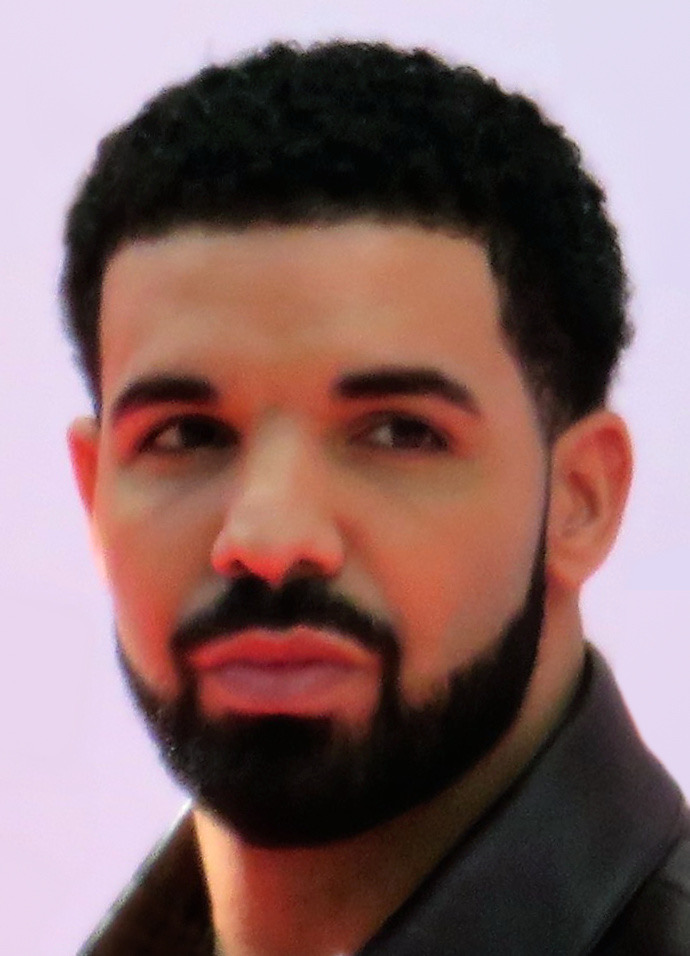
born Aubrey Drake Graham
Recording artist and label founder, OVO Sound (Drake) · b. 1986 · Toronto, Ontario, Canada
Two calls made by hand, not formulas. how we score →
Summary
His mother's income and his own paycheck from a Canadian teen drama kept a divorced single-parent household afloat, not comfortable.
He financed three self-released mixtapes with that acting money before labels came looking for him instead of the other way around, then spent a decade trading fame for equity in whiskey, sneakers, streaming, and his own label rather than settling for a fee.
How it happened
Aubrey Graham was born in Toronto to Sandra "Sandi" Graham, a Canadian Ashkenazi Jewish English teacher and florist, and Dennis Graham, an African American touring drummer from Memphis who had played with Jerry Lee Lewis. His parents divorced when he was about five; his father returned to Memphis, where he later served time on drug-related charges, and Aubrey grew up primarily with his mother in Toronto. He attended Jewish day school and became a bar mitzvah. The family lived first in the working-class Weston Road area, then moved to the wealthier Forest Hill neighborhood around 2000 — into the bottom half of a divided house. "The other people had the top half, we had the bottom half," he said later. "I lived in the basement, my mom lived on the first floor."
An acting agent connected him to the CTV series "Degrassi: The Next Generation" at fifteen, where he played Jimmy Brooks from 2001 to 2008. "The only money I had coming in was from Canadian TV," he said of that period. He also worked at a Toronto furniture factory as a teenager. He used the TV income to self-finance his first mixtape, "Room for Improvement," in 2006 — it sold roughly 6,000 copies and earned him $304.04 in royalties. He put out "Comeback Season" the following year under his own fledgling October's Very Own imprint.
In February 2009 he gave away his third mixtape, "So Far Gone," free through the OVO blog. It logged more than 2,000 downloads in its first two hours and turned into a genuine hit off the strength of "Best I Ever Had." Rather than shopping himself around, labels came to him — reporting described the resulting contest for his signature as one of the biggest bidding wars in the industry's recent memory. He signed with Lil Wayne's Young Money Entertainment, distributed through Cash Money and Universal Motown, on June 29, 2009, at twenty-two.
That same year he co-founded OVO Sound with producer Noah "40" Shebib and manager Oliver El-Khatib. The label operated inside Warner Music Group's distribution machine from 2012 until 2022, when it became independent; it now distributes through Sony's Santa Anna Label Group. He built fifteen number-one Billboard 200 albums and fourteen number-one Hot 100 singles, both records for a male solo artist, and turned the fame into ownership stakes rather than fees wherever he could: Virginia Black bourbon in 2016, the Nocta line with Nike, a stake in the esports organization 100 Thieves, and a television and film production company, DreamCrew, behind shows like "Euphoria" and "Top Boy." In 2022 he re-signed with Universal Music Group in a long-term deal across recorded music, publishing, film, television, and brands reported to be worth as much as $400 million.
Forbes credited him with roughly $78 million in earnings on its 2025 highest-paid musicians list; aggregator estimates put his total net worth around $400 million, well short of the billionaire mark some of his peers in the genre have reached. In 2024 Kendrick Lamar's diss track "Not Like Us" included lyrics insinuating Drake had sexual relationships with minors. Drake sued Universal Music Group for defamation in January 2025, alleging the label knowingly promoted a false and damaging claim; a federal judge dismissed the case in October 2025, ruling the lyrics were "nonactionable opinion" inside a heated rap battle. Drake has appealed.
The coded evidence
Thirteen groups, every claim sourcedCoarse public-record coding; race is a noisy, interpretive category.
↗ en.wikipedia.orgNot a classic immigrant-generation case. Born in Toronto to a Canadian-born mother and an American-born father from Memphis; he holds dual Canadian/American citizenship through his father. He later relocated to Los Angeles as an adult for his career, which is an industry move rather than a family immigration story.
↗ en.wikipedia.orgHis mother's Toronto household was the constant floor throughout his teens and early twenties — first in the working-class Weston Road area, later in the bottom half of a divided house in the wealthier Forest Hill neighborhood. Real but modest; no independent housing crisis is documented.
↗ en.wikipedia.orgHis own wages from acting on "Degrassi: The Next Generation," which he has described as the only money coming in during a financially difficult stretch, functioned as the household's income floor while he built his early music career.
↗ en.wikipedia.orgNo homelessness or eviction is documented. The family's living situation was reduced rather than unstable — sharing a divided house in an affluent neighborhood while his mother worked and he held a factory job as a teenager alongside acting.
↗ en.wikipedia.orgThe hardship was imposed, not chosen. There was nothing to fall back on.
Imposed by the divorce and his mother's income, not chosen — though a steady TV paycheck from age fifteen made it materially lighter than a household with no earner at all.
↗ en.wikipedia.orgMother Sandra "Sandi" Graham worked as an English teacher and florist. Father Dennis Graham was a touring drummer from Memphis who played with Jerry Lee Lewis; he returned to Memphis after the divorce and later served time on drug-related charges, remaining largely absent from Aubrey's Toronto upbringing.
↗ en.wikipedia.orgnot established
His mother's work as a florist may have been self-employment or wage work; not established which from the sources reviewed.
↗ en.wikipedia.orgAn immediate family member was incarcerated.
His father, Dennis Graham, served time on drug-related charges after returning to Memphis following the parents' divorce, while Aubrey was a child in Toronto.
↗ en.wikipedia.org3
Weston Memorial Junior Public School, then Forest Hill Collegiate Institute, then Vaughan Road Academy, before dropping out to pursue acting; he earned a GED in October 2012 at twenty-five.
↗ en.wikipedia.orgWeston Road, a working-class area in Toronto's west end, through grade six; the family then moved to Forest Hill, an affluent neighborhood, around 2000 — but into the bottom half of a shared house rather than owning outright in it.
↗ en.wikipedia.orgPublic schools throughout: Weston Memorial Junior Public School, Forest Hill Collegiate Institute, and Vaughan Road Academy, which he described as "not by any means the easiest school to go to."
↗ en.wikipedia.orgMoved within Toronto from Weston Road to Forest Hill around 2000. Relocated to Los Angeles as an adult once his music career was established; retained Toronto as his primary base and public identity ("The 6") through much of his career.
↗ en.wikipedia.orgAn acting agent connected him, at fifteen, to "Degrassi: The Next Generation." The agent's identity and how the connection was made aren't established in the sources reviewed.
↗ en.wikipedia.org"Degrassi: The Next Generation" (2001–2008), a CTV teen drama, gave him a wage floor, a modest public profile in Canada, and proximity to a working television industry from age fifteen.
↗ en.wikipedia.orgCapital, Network
Degrassi income directly funded his first two self-released mixtapes; the show also put him inside a working entertainment industry rather than outside it.
↗ en.wikipedia.orgCo-founded OVO Sound in 2009 with producer Noah "40" Shebib and manager Oliver El-Khatib, who remained his closest collaborators through the label's growth.
↗ en.wikipedia.orgSeven years of national TV recognition from Degrassi preceded his music career and gave "So Far Gone" a real base to spread from rather than a cold start.
↗ en.wikipedia.orgReleased "So Far Gone" free through the OVO blog rather than shopping it to labels first; the mixtape's spread through blogs and downloads is what brought labels to him instead of the reverse.
↗ en.wikipedia.orgThe OVO blog and mixtape circuit were his own channel, built before any label was involved and before "Room for Improvement" or "Comeback Season" existed inside a distribution deal.
↗ en.wikipedia.orgNo college. Dropped out of high school to pursue acting and music; earned a GED in October 2012, at twenty-five, after already being a platinum-selling artist.
↗ en.wikipedia.orgWorked steadily as a paid actor on Degrassi from fifteen through his later teens while still nominally in school, and also worked at a Toronto furniture factory as a teenager.
↗ en.wikipedia.org"Room for Improvement" (2006), his self-released debut mixtape, sold roughly 6,000 copies and earned him $304.04 in royalties — his literal first money from music, financed by his Degrassi wages.
↗ en.wikipedia.orgFinanced "Room for Improvement" (2006) and "Comeback Season" (2007) out of his own Degrassi paychecks, with no outside investors or label money involved before the 2009 Young Money signing.
↗ en.wikipedia.orgReinvested earnings into OVO Sound's infrastructure and into brand ventures — Virginia Black whiskey, the Nocta line with Nike, a stake in 100 Thieves, the production company DreamCrew — alongside substantial real estate purchases in Toronto, Beverly Hills, and Texas.
Aggregator figures for the real estate holdings; no filing-level confirmation.
↗ celebritynetworth.comSigned to Young Money Entertainment, distributed through Cash Money and Universal Motown, on June 29, 2009; the exact ownership split on his early masters isn't publicly disclosed. OVO Sound, the label he co-owns, operated inside Warner Music Group's distribution from 2012 to 2022, then went independent, and now distributes through Sony's Santa Anna Label Group. In May 2022 he re-signed with Universal Music Group in a long-term worldwide deal spanning recorded music, publishing, film, television, and brands, reported to be worth as much as $400 million.
↗ en.wikipedia.orgCo-owns OVO Sound outright as an independent label (as of 2022), rather than only holding a recording contract with someone else's label.
↗ en.wikipedia.org4
Spirits (Virginia Black, 2016), apparel (Nocta with Nike), gaming (a stake in esports organization 100 Thieves), and television/film production (DreamCrew, behind "Euphoria" and "Top Boy").
↗ en.wikipedia.orgnot established
No separate failed venture is documented. "Room for Improvement" sold poorly by commercial standards but isn't described as a failure so much as an early, low-selling release on the way to "So Far Gone."
↗ en.wikipedia.orgDegrassi wages sustained him through the making and release of "Room for Improvement" (2006), "Comeback Season" (2007), and "So Far Gone" (2009), before any recording contract existed.
↗ en.wikipedia.org22
"So Far Gone" released February 2009 and the Young Money signing followed in June 2009; born October 1986.
↗ en.wikipedia.orgBroke through during the blog-and-mixtape era of hip-hop, when a free download could travel widely with no label or radio gatekeeper involved — a distribution window that has narrowed since, as streaming platforms replaced blogs as the dominant discovery channel.
↗ en.wikipedia.orgStayed in Toronto rather than relocating to New York, Atlanta, or Los Angeles before breaking through — outside the traditional hip-hop industry hubs of the time.
↗ en.wikipedia.org"So Far Gone" logged more than 2,000 downloads in its first two hours after being posted free to the OVO blog in February 2009.
↗ en.wikipedia.orgBuilt his early identity and audience from Toronto rather than moving to an established rap capital first, later building the city itself into part of his public brand ("The 6").
↗ en.wikipedia.orgMusic and entertainment business
↗ en.wikipedia.org400000000
Aggregator estimate, dated March 2026, with no disclosed methodology; treat as directional rather than precise. No public filing exists for a private individual whose wealth sits mostly in brand equity and real estate.
↗ celebritynetworth.comJournalistic estimate
↗ celebritynetworth.com78000000
Forbes' 2025 highest-paid musicians figure, dated December 30, 2025 — the most recent documented figure, not necessarily his career peak. Earlier Forbes lists placed him around $50 million pre-tax in 2021.
↗ forbes.comJournalistic estimate
↗ forbes.comA mix of both: large recurring income from touring, streaming, and endorsements (including a reported nine-figure annual Stake.com deal), plus appreciating equity in OVO Sound, real estate, and several brand stakes rather than fee income alone.
↗ celebritynetworth.comFifteen Billboard 200 number-one albums and fourteen Billboard Hot 100 number-one singles, both records for a male solo artist; five Grammy Awards; Billboard named him Artist of the Decade for the 2010s.
↗ en.wikipedia.orgUncapped
Equity across OVO Sound and multiple brand ventures rather than fee income alone.
↗ en.wikipedia.orgProlific, commercially dominant, Litigious
↗ en.wikipedia.orgPublic
↗ en.wikipedia.orgBefore
His commercial dominance was established well before the 2024 feud with Kendrick Lamar.
↗ en.wikipedia.orgMixed
↗ abcnews.comKendrick Lamar's 2024 diss track "Not Like Us" included lyrics insinuating Drake had sexual relationships with minors, an allegation Drake has denied and disputed as false. Drake sued Universal Music Group for defamation in January 2025, arguing the label knowingly promoted a damaging falsehood; a federal judge dismissed the suit on October 9, 2025, ruling the lyrics amounted to "nonactionable opinion" within a heated rap battle, and Drake has appealed. Commercially he remained dominant through the period — "Not Like Us" itself became a cultural phenomenon at his expense, and public reaction to the feud and the lawsuit split sharply between listeners who treated it as a loss and those who saw the underlying lyrics as a genuine defamatory harm worth litigating.
↗ abcnews.comStructural context
The cost-of-failure score comes from this person's own money and circumstances. But who they were in America carried its own weight, the same way their household or income did, and it shaped how hard the path was just as much. That part isn't in the cost-of-failure number. It's here instead.
Men hold most of the ownership and gatekeeping across the creative and media industries, the default that recognition and deals flow toward.
↗ assets.uscannenberg.orgAmong the people recorded here — men: 115 · Black and white (biracial) subjects: 1. Representation here is who reached these outcomes, not equal odds of reaching them.
Controlled comparisons
Each holds one thing constant and varies another, so the difference is the point. A list of similar names wouldn't tell you anything.