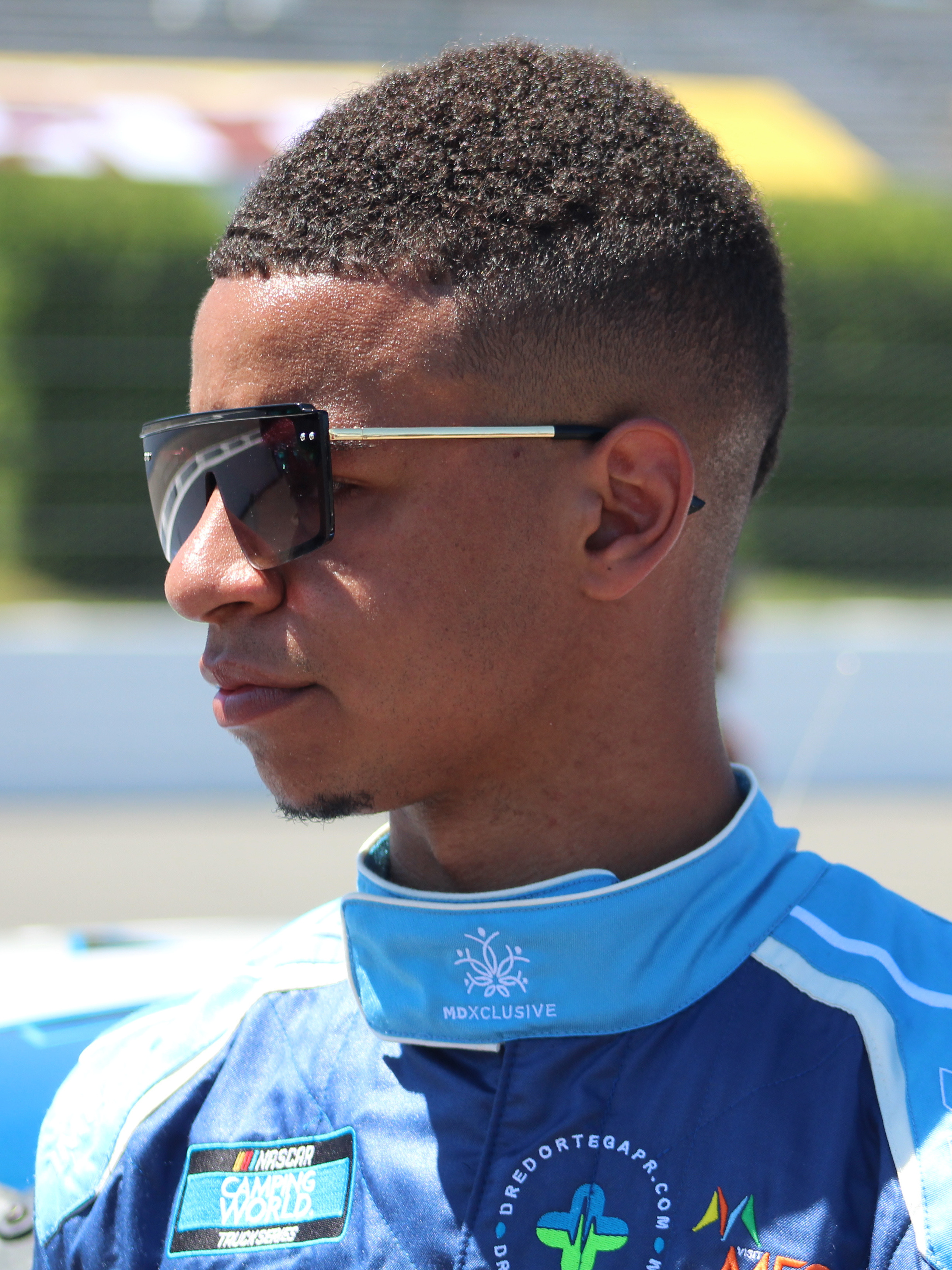
Dwayne Johnson
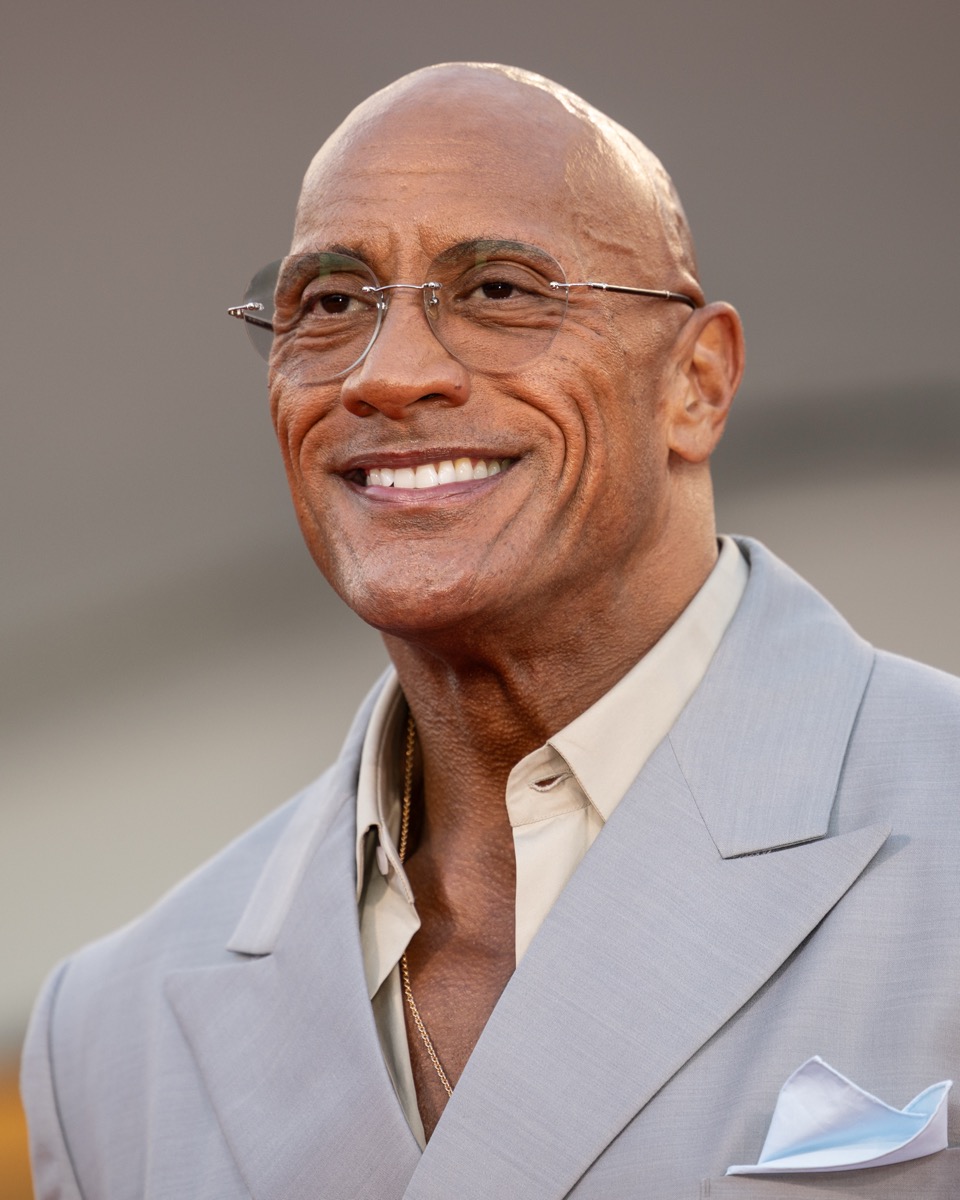
Actor, producer, and former professional wrestler (The Rock) · b. 1972 · Hayward, California
Two calls made by hand, not formulas. how we score →
Summary
He grew up in a wrestling family that opened a door into the business when football failed, but not into money — his family was evicted at fourteen, and he had seven dollars in his pocket when the CFL cut him.
He built movie stardom on that fame, then spent two decades converting it into ownership: a tequila brand, an energy drink, a football league, a production company he actually runs.
How it happened
His father Rocky Johnson was a professional wrestler, often away on the road, and his mother Ata was the adopted daughter of Peter Maivia, a Samoan wrestler and promoter. None of it produced savings. At fourteen the family was evicted from their apartment in Honolulu; he later described coming home to a padlock on the door and his mother breaking down in the doorway. By his teens he'd been arrested more than once, for theft and check fraud.
A football scholarship took him to the University of Miami, where he was on the 1991 national championship team but mostly rode the bench behind future NFL talent. He graduated in 1995 and signed with the CFL's Calgary Stampeders. They cut him after two months. He has said he had seven dollars to his name when it happened.
With football gone, he turned to the one industry his name already opened doors in. His father trained him, and Pat Patterson, a WWF veteran who knew the family, arranged his tryouts. He debuted in November 1996 as Rocky Maivia, a name built from his father's and grandfather's ring names, and fans booed the character for the better part of a year before the Rock persona clicked.
Universal paid him $5.5 million for "The Scorpion King" in 2002, a record salary for a first-time lead, up from $500,000 the year before for a supporting role. Instead of just banking bigger fees as his films piled up billions at the box office, he started buying pieces of things: Seven Bucks Productions in 2012, named for the money he had when the CFL cut him, then a tequila brand, an energy drink, and in 2020 the XFL itself, bought out of bankruptcy for $15 million.
Estimates put his net worth around $800 million as of late 2023, built more on owned brands than acting fees, though a number that size for a private portfolio is always an estimate rather than a filing. He has talked openly about three separate bouts of depression, the first during a rough patch at Miami. In 2024, TKO, WWE's parent company, gave him back the trademark to his own name.
The coded evidence
Thirteen groups, every claim sourcedCoarse public-record coding; race is a noisy, interpretive category. He has addressed it directly himself: "I identify as exactly what I am - both. Equally proud. Black/Samoan," posted March 19, 2019.
↗ en.wikipedia.orgBlack Nova Scotian (father) and Samoan (mother)
His father, born Wayde Bowles in Amherst, Nova Scotia, was part of the historic Black Nova Scotian community, a distinct lineage from African American, though Dwayne was born and raised in the US. His mother is the adopted daughter of Samoan wrestler Peter Maivia.
↗ en.wikipedia.orgSecond generation on his father's side
His father moved from Nova Scotia, Canada to Toronto at 16 and later into the US wrestling territories — a low-friction, English-speaking, culturally adjacent move, not a hardship-immigration case. His mother's birthplace (American Samoa versus independent Samoa) is not established from reachable sources, so the maternal side isn't coded here.
↗ en.wikipedia.orgNone established. His family was evicted from their Honolulu apartment when he was fourteen, and when the CFL cut him in 1995 he has said he had seven dollars to his name, with no fallback mentioned.
Original URL https://www.cnbc.com/2021/01/12/dwayne-the-rock-johnson-on-where-he-gets-his-drive.html (blocked domain; fetched via Wayback).
↗ web.archive.orgHis father's wrestling income was inconsistent and he was frequently away working it; no steady household income floor is documented through Dwayne's childhood.
↗ en.wikipedia.orgThe instability sits mostly in childhood rather than during the actual venture-building years: eviction at fourteen, repeated moves, and teenage arrests for theft and check fraud. Once he had a WWF contract in 1996, income was steady even before he was well paid.
↗ biography.comThe hardship was imposed, not chosen. There was nothing to fall back on.
Original URL https://www.cnbc.com/2021/01/12/dwayne-the-rock-johnson-on-where-he-gets-his-drive.html (blocked domain; fetched via Wayback). Imposed, not chosen — an eviction notice on the door.
↗ web.archive.orgFather Rocky Johnson (born Wayde Douglas Bowles), a professional wrestler and, with Tony Atlas, the WWF's first Black tag-team champions in 1983. Mother Ata, adopted daughter of Samoan wrestler and promoter Peter Maivia; his maternal grandmother Lia Maivia ran the family's Polynesian Pacific Pro Wrestling promotion after Peter's death in 1982.
↗ en.wikipedia.orgnot established
Wrestling in this era ran through promotions rather than independent self-employment; doesn't map cleanly onto the field.
↗ en.wikipedia.orgA wrestling dynasty on both sides: his father and grandfather are both WWE Hall of Famers (he inducted them together in 2008), his uncle Ricky Johnson also wrestled, and through his grandfather he is a non-blood member of the Anoa'i wrestling family (the Wild Samoans, Umaga, Roman Reigns, and others). No money came with any of it, but a name that opened doors in one specific industry did.
↗ en.wikipedia.orgHe has said that at fifteen he pulled his mother back from stepping into freeway traffic in Nashville during a suicide attempt tied to her own depression, and that he carried real responsibility for the household's stability from early adolescence.
Original URL https://www.latimes.com/entertainment-arts/movies/story/2023-05-15/dwayne-johnson-depression-mental-health (blocked domain; fetched via Wayback). Reported by the LA Times, sourced to his own 2019 account to the UK Express. Self-told, not a third-party allegation.
↗ web.archive.orgMoved repeatedly through childhood, attending schools in Charlotte, NC; Hamden, CT; Honolulu, HI; twice in Nashville, TN; and finally Bethlehem Township, PA, where he graduated in 1990 — roughly seven schools by his count of listed enrollments. The Honolulu period ended in eviction.
↗ en.wikipedia.orgArrested multiple times as a teenager for fighting, theft, and check fraud; no record of formal charges sticking or a lasting conviction is established.
↗ en.wikipedia.orgHas described "three bouts of depression" on the record: the first in college at Miami after a serious injury, when he left school and skipped midterms without understanding what was happening to him; a second during his 2008 divorce from Dany Garcia; a third around 2017, which he said was the first time he could name it as depression.
Original URL https://www.latimes.com/entertainment-arts/movies/story/2023-05-15/dwayne-johnson-depression-mental-health (blocked domain; fetched via Wayback). Self-declared across multiple interviews (The Pivot Podcast, Men's Health). Episodic; tracked but not raising headwinds on its own.
↗ web.archive.orgNo single fixed childhood ZIP; the family moved with his father's wrestling bookings across North Carolina, Connecticut, Hawaii, Tennessee, and Pennsylvania.
↗ en.wikipedia.orgHis father's job as a wrestler is the single clearest access vector in his record: it put him backstage and in gyms around the business as a child, got him trained personally by his father, and got him tryouts through Pat Patterson, a WWF veteran connected to the family.
↗ en.wikipedia.orgMoves through childhood tracked his father's wrestling territory work rather than any single relocation decision, ending at Freedom High School in Bethlehem Township, PA, where he graduated in 1990.
↗ en.wikipedia.orgPat Patterson, a WWF veteran who knew the family, arranged his early tryouts after his father trained him. WWF signed him and paired him with trainer Tom Prichard.
↗ en.wikipedia.orgBy "The Mummy Returns" (2001) he already carried a WWF fanbase the studio described as reaching more than 130 countries, which Universal cited in justifying his record salary for the following film.
↗ en.wikipedia.orgTrained directly by his father, a WWE Hall of Fame wrestler, before entering the WWF system — a sustained, family-supplied apprenticeship in the exact field he entered.
↗ en.wikipedia.orgCut by the Calgary Stampeders (CFL) after two months in 1995, with by his own account seven dollars left. Redirected within about a year into professional wrestling, the one industry where his family name already carried weight.
↗ en.wikipedia.orgDany Garcia — his first wife, a Merrill Lynch-trained finance professional before she became his manager in 2008 — is widely credited with converting his fee-based acting career into ownership stakes: Seven Bucks Productions, Teremana, ZOA, and the XFL/UFL were all built with her as strategist or co-owner, continuing after their 2008 divorce.
↗ en.wikipedia.orgFull athletic scholarship, University of Miami football, 1991-1995.
↗ en.wikipedia.orgBA, General Studies (dual major in criminology and physiology), University of Miami, 1995, on a full athletic scholarship.
↗ en.wikipedia.orgNone documented; the scholarship covered the degree.
↗ en.wikipedia.orgDirect four-year degree on an athletic scholarship.
↗ en.wikipedia.orgNot a founding-capital story in the usual sense. The formative figure is the seven dollars he says he had left when the CFL cut him in 1995, which became the name of his production company years later.
↗ en.wikipedia.orgIt paid its own way from the start. Revenue came before any outside money.
Paid from a wrestling contract and then film fees from the start; no capital was raised to fund his own career.
↗ en.wikipedia.orgMixed by venture. Seven Bucks Productions and the XFL purchase were built with his and Garcia's own capital plus a co-investor (RedBird Capital); ZOA brought in Molson Coors as a minority investor in 2021, expanded in 2023, and Molson Coors took majority ownership of ZOA in November 2024, with Johnson remaining the brand's public face but no longer the majority owner of that specific venture.
Financial terms of the Molson Coors majority-stake deal were not disclosed.
↗ fooddive.comFounded Seven Bucks Productions in 2012 with Dany Garcia, self-funded from acting income, and used it and the fees that followed to buy into brands rather than just banking bigger paychecks.
↗ en.wikipedia.orgBuilt Seven Bucks Productions as an owned production company rather than working purely for hire. In a further, unusual reversal, when he joined the TKO Group Holdings board in January 2024, TKO — WWE's parent — gave him back the trademark to his own ring name, "The Rock."
↗ en.wikipedia.orgCo-owns the United Football League outright (with Dany Garcia and RedBird Capital Partners) rather than licensing or running someone else's league, after buying the bankrupt XFL for $15M in August 2020.
↗ en.wikipedia.orgPersonal experience and platform: Teremana and ZOA both grew out of his own consumption habits and public fitness brand; the XFL purchase was an acquisition of an existing, bankrupt league rather than a new idea.
↗ en.wikipedia.org4
Distinct industries where fame converted to an ownership or founder stake rather than a pure fee: spirits (Teremana Tequila, 2020), apparel (Under Armour's Project Rock line, 2016, a royalty/brand deal rather than disclosed equity), energy drinks (ZOA, co-founded ~2019), and professional sports league ownership (XFL/UFL, 2020-24).
↗ en.wikipedia.orgnot established
No distinct venture failures are documented. The closest analogue is being cut from the CFL in 1995, a failed attempt at his first-choice career (football) that preceded wrestling rather than a business failure.
↗ en.wikipedia.orgSelf. There's no record of family or outside money absorbing losses at any stage. The closest thing to a failure, the CFL release, simply ended with him broke and redirecting into wrestling.
↗ en.wikipedia.org40
Founded Seven Bucks Productions in 2012, the point where fee-for-work acting started converting into ownership; born May 1972.
↗ en.wikipedia.orgCame up during the WWF's late-1990s "Attitude Era" ratings boom, which built the fame he later cashed into a film career, then built his later brands during the 2010s-20s rise of celebrity-founded consumer brands and direct-to-consumer distribution deals.
↗ en.wikipedia.orgMixed. Seven Bucks Productions and the acting career were built from nothing; the XFL was bought out of bankruptcy in 2020 for $15M rather than built as a new league.
↗ en.wikipedia.orgFilm, television, and consumer brands (formerly professional wrestling)
↗ en.wikipedia.org800000000
Original URL https://www.vanityfair.com/style/2023/10/dwayne-the-rock-johnson-maui-fund-apology (blocked domain; fetched via Wayback). Reported estimate (tracing to Parade), corroborated by a separate biography.com profile citing the same figure. No filing exists for a private celebrity portfolio; band only, never a continuous value.
↗ web.archive.orgJournalistic estimate
Original URL https://www.vanityfair.com/style/2023/10/dwayne-the-rock-johnson-maui-fund-apology (blocked domain; fetched via Wayback).
↗ web.archive.org2023
Original URL https://www.vanityfair.com/style/2023/10/dwayne-the-rock-johnson-maui-fund-apology (blocked domain; fetched via Wayback).
↗ web.archive.org64500000
Original URL https://www.forbes.com/sites/natalierobehmed/2016/08/25/the-worlds-highest-paid-actors-2016-the-rock-leads-with-knockout-64-5-million-year/ (article page blocked; fetched via Wayback). Forbes named him the world's highest-paid actor for the year ending June 2016 at $64.5M.
↗ web.archive.orgJournalistic estimate
Original URL https://www.forbes.com/sites/natalierobehmed/2016/08/25/the-worlds-highest-paid-actors-2016-the-rock-leads-with-knockout-64-5-million-year/ (article page blocked; fetched via Wayback).
↗ web.archive.orgA mix by this point: large per-film fees (Black Adam paid him $22.5M in 2022) alongside owned, appreciating stakes in Teremana (valued at roughly $3.5B for the brand in 2024 reporting), Seven Bucks, and the UFL — the fee income funded the equity positions.
↗ en.wikipedia.orgFilms have grossed over $11.4B worldwide, among the highest of any actor. Named one of Time's 100 most influential people in 2016 and 2019, and People's Sexiest Man Alive in 2016. Ten-time world wrestling champion; WWE Hall of Fame inductee of both his father and grandfather in 2008; joined the TKO Group Holdings board in January 2024.
↗ en.wikipedia.orgUncapped
Shifted from a capped, fee-based acting ceiling toward uncapped equity positions from 2012 onward.
↗ en.wikipedia.orgHardworking, Likeable, Self made, controlling of his own brand
↗ en.wikipedia.orgPublic
↗ en.wikipedia.orgMixed
Mostly an asset commercially, but after "Black Adam" underperformed at the box office in 2022, some industry reporting attributed part of the film's creative troubles to his level of control over the project; he has not conceded that account.
↗ en.wikipedia.orgThe reputation was deliberately built, through books, press, and PR.
A deliberately built "hardest working man in Hollywood" public persona, sustained through social media, interviews, and the autobiographical series "Young Rock" (2021-23).
↗ en.wikipedia.orgIn 2023, a public apology followed backlash over asking for donations to the Maui wildfire relief fund alongside Oprah Winfrey while both were reported to hold nine- and ten-figure net worths respectively — a moment where public goodwill briefly split from his usual reception.
Original URL https://www.vanityfair.com/style/2023/10/dwayne-the-rock-johnson-maui-fund-apology (blocked domain; fetched via Wayback).
↗ web.archive.orgStructural context
The cost-of-failure score comes from this person's own money and circumstances. But who they were in America carried its own weight, the same way their household or income did, and it shaped how hard the path was just as much. That part isn't in the cost-of-failure number. It's here instead.
Men hold most of the ownership and gatekeeping across the creative and media industries, the default that recognition and deals flow toward.
↗ assets.uscannenberg.orgImmigrants and their children are overrepresented among America's biggest companies, as founders and as senior leaders. They got there through the visa, credential, and network hurdles that make the path harder to even start down.
↗ forbes.comAmong the people recorded here — men: 115 · Black and Samoan subjects: 1. Representation here is who reached these outcomes, not equal odds of reaching them.
Controlled comparisons
Each holds one thing constant and varies another, so the difference is the point. A list of similar names wouldn't tell you anything.