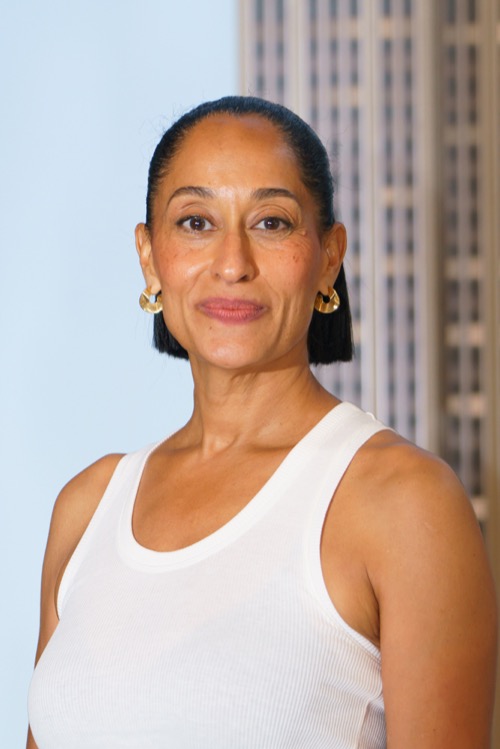
Geisha Williams
born Geisha Jimenez Williams
Former CEO and President, PG&E Corporation; first Latina CEO of a Fortune 500 company · b. 1962 · Cuba
Two calls made by hand, not formulas. how we score →
Summary
Williams left Cuba with her parents at five, arriving with almost nothing.
Her father worked a factory job and washed dishes to save toward a small grocery store, and she worked its register as a kid. She spent decades climbing through Florida Power & Light and PG&E, becoming in 2017 the first Latina to run a Fortune 500 company, then resigned as wildfire liability pushed PG&E toward bankruptcy.
How it happened
Born around 1962 in Cuba to the Jimenez family. Her parents spent eighteen months trying to get permission to leave the country, and when it finally came, the government gave them only days to go. Geisha was five. There was no time to pack toys or books, and her father had just enough time to visit his own parents and say goodbye before the family left their government-owned apartment with whatever they could carry. They flew to Miami and continued on to St. Paul, Minnesota, where the family's only relative in America, an elderly aunt, was living at the time. It was March 1967, and it was the first time any of them had seen snow.
Her father took whatever work he could find in Minnesota, then moved the family toward the Northeast, working a factory job during the day and washing dishes at night to save capital. He eventually opened two small grocery stores, and the business later expanded with a location in Florida, where the family put down roots. Geisha worked the register after school, an experience she has credited with teaching her math, customer service, and the discipline of showing up. Multiple accounts describe the family arriving with essentially nothing and rebuilding from a small storefront rather than any inherited money or land.
She earned a bachelor's degree in industrial engineering from the University of Miami in 1983, the first in her family to finish college, and went straight to Florida Power & Light as an entry-level residential energy auditor. She later completed an MBA at Nova Southeastern University while working. An early manager at FPL pushed her toward leadership directly, asking her, as she has recounted it, "someone has to be in charge — why not you?" She spent more than two decades at FPL, rising to vice president and helping run electric restoration after Hurricane Wilma and a string of Florida hurricanes in 2004 and 2005.
PG&E hired her in 2007. By 2011 she was in charge of the company's electric operations, the unit responsible for maintaining and running the grid serving millions of Californians — the kind of direct operating authority that utility boards look to when choosing a chief executive. She has said the role felt like a natural ceiling: "this is the pinnacle of my career; I could end my career here and be very happy." It was also the platform that put her in line for the top job.
PG&E named her president and CEO effective March 1, 2017, fifty years almost to the day after her family had landed in America. She became, by wide agreement in the business press, the first Latina to run a Fortune 500 company. She inherited a company already under federal criminal probation from an earlier gas-pipeline explosion and operating under a state mandate to hit 50 percent renewable power by 2030, which PG&E met years ahead of schedule under her.
Seven months into her tenure, a series of wind-driven wildfires tore through Northern California's wine country in October 2017; state investigators later linked several of them to PG&E power lines and vegetation. In November 2018, the Camp Fire ignited when a worn hook on a PG&E transmission tower failed, sending a line arcing into dry brush. It became the deadliest and most destructive wildfire in California history, killing 85 people and destroying the town of Paradise. PG&E ultimately faced tens of billions of dollars in potential wildfire liability from these and earlier fires, and the company later pleaded guilty, as a corporation, to 84 counts of involuntary manslaughter over the Camp Fire. Much of the aging equipment and deferred vegetation management behind these fires had been building for years before her appointment; no criminal charges were ever brought against Williams personally.
Williams resigned as CEO and from the board on January 13, 2019. Sixteen days later, PG&E Corporation filed for Chapter 11 bankruptcy protection, citing wildfire liabilities that outside estimates put as high as $30 billion. Her exit package, reported at roughly $4.1 million in cash and equity, drew public criticism given the scale of the crisis she was leaving behind. PG&E's general counsel, John Simon, took over as interim CEO; Bill Johnson was named permanent CEO that April.
She moved into board and advisory work rather than another operating role: a seat on the supervisory board of Siemens Energy, the chairmanship of Osmose Utility Services, board seats at Artera Services and the Bipartisan Policy Center, and a senior advisor role at the investment firm EQT starting in 2021.
The coded evidence
Thirteen groups, every claim sourced1.5 generation. Born in Cuba and left with her family at about age five as part of the post-revolution exile wave, rather than being born in the U.S. or arriving as an adult.
↗ news.miami.eduSpanish. She has described becoming her family's de facto interpreter as a child, handling conversations with lawyers, accountants, and landlords on their behalf as they adjusted to the U.S.
↗ aldianews.com0
No documented gap in employment from her 1983 entry into FPL through her 2019 PG&E resignation.
↗ en.wikipedia.orgNone on arrival. The family left a government-owned Cuban apartment with only what they could carry and had no U.S. property, savings, or relatives beyond a single elderly aunt in St. Paul, Minnesota, who hosted them initially. Stability came later and slowly, once her father's savings from factory and dishwashing work funded a small grocery store.
↗ news.miami.eduContinuously salaried from her 1983 entry-level job at Florida Power & Light onward, across roughly 24 years at FPL and then PG&E, with no personal venture or capital of her own ever at risk.
↗ eqtgroup.comnot established
No debt is documented in sources reviewed, including for her University of Miami degree.
↗ en.wikipedia.orgnot established
No documented homelessness, food insecurity, or job loss during her adult career; the family's severe early instability belongs to her childhood in the years after leaving Cuba, captured under d2 through d4 instead.
↗ en.wikipedia.orgThe hardship was imposed, not chosen. There was nothing to fall back on.
The family's exile and years of rebuilding from nothing were forced by Cuban government policy, not a chosen simplicity.
↗ news.miami.eduHer father worked a factory job during the day and washed dishes at night after the family reached the U.S., saving toward capital to open two small grocery stores, reportedly named La Guajira and La Milagrosa. The business later expanded with a Florida location. Her mother's occupation is not established in sources reviewed.
↗ hispanicexecutive.comA parent worked for themselves, the strongest known predictor of founding.
Grocery-store ownership, built up over years from wage labor rather than inherited.
↗ hispanicexecutive.comnot established
One lower-tier profile states the family financially supported her college years, consistent with the grocery business being established by then, but no higher-quality source confirms a specific sacrifice aimed at tuition, so this is left unconfirmed.
↗ moneyinc.comAs a child still learning English, she became her family's de facto interpreter, handling conversations with lawyers, accountants, and landlords that her parents could not conduct themselves.
↗ aldianews.comAt least four relocations before adulthood: Cuba to Miami, then on to St. Paul, Minnesota, at age five; a subsequent move toward the Northeast (accounts point to New Jersey) as her father chased work; and an eventual move to Florida once the family's grocery business expanded there.
↗ news.miami.eduAn immediate family member was incarcerated.
Her father is described as a political prisoner in Cuba before the family's 1967 exile; other accounts describe both parents as political dissidents rather than detailing the detention.
↗ en.wikipedia.orgWilliams has spoken about being forced from Cuba with her family at age five after her parents spent eighteen months seeking permission to leave, given only days once it came, and departing with only what they could carry from a government-owned apartment. She has framed the family's early years in the U.S. as a rebuild from nothing rather than dwelling on hardship, but by multiple accounts they arrived with no money, no property, and one distant relative to rely on.
↗ news.miami.edunot established
↗ en.wikipedia.orgCuba (city not specified in sources reviewed), then St. Paul, Minnesota, from age five; later New Jersey and, by her college years, Florida.
↗ news.miami.eduLeft Cuba for the United States in March 1967 at about age five, after her parents spent eighteen months seeking exit permission. The family flew to Miami and continued to St. Paul, Minnesota. They later moved east, and by the time she reached college the family had a foothold in Florida, where she attended the University of Miami.
↗ news.miami.edunot established
The family's occupational standing in Cuba before their 1967 exile isn't established in sources reviewed, so no before/after comparison is made here.
↗ en.wikipedia.orgThe family's initial destination, St. Paul, Minnesota, was chosen because it was where their only relative in America at the time, an elderly aunt, lived.
↗ news.miami.eduArrived in the U.S. speaking little English at five, and later built a 35-plus-year career in engineering and utility operations, an industry with very few Latinas in senior technical or executive roles, becoming by wide agreement the first Latina to lead a Fortune 500 company. No specific documented incident of bias against her personally is established in sources reviewed.
↗ en.wikipedia.orgAn early manager at Florida Power & Light challenged her toward leadership directly, telling her, as she has recounted it, that "someone has to be in charge" and asking why not her — a specific prompt she has credited with reorienting her career ambitions.
↗ hispanicexecutive.comFlorida Power & Light, which hired her straight out of the University of Miami in 1983 as a residential energy auditor and where she spent more than two decades before PG&E recruited her in 2007.
↗ eqtgroup.com21
Approximate age at her 1983 University of Miami graduation and FPL hire, based on a birth year of about 1962.
↗ news.miami.eduB.S. in industrial engineering, University of Miami, 1983; MBA, Nova Southeastern University, completed later while working.
↗ eqtgroup.comnot established
Not established for her undergraduate years; her MBA is documented as completed while employed.
↗ en.wikipedia.orgFirst-generation college student into a public research university engineering program, then a part-time MBA completed alongside full-time work, rather than any funded pipeline or targeted access program.
↗ news.miami.edunot established
Not applicable in the founder sense; her entire adult income came from FPL and PG&E salary, bonus, and equity grants, never a venture she personally financed.
↗ en.wikipedia.orgSalary, bonus, and stock awards from two large-utility employers over a 35-year career, culminating in board-granted PG&E equity as CEO, rather than any investment vehicle she personally controlled.
↗ sec.gov0
No independent ventures attempted; a continuous employment climb across two companies.
↗ en.wikipedia.orgPG&E was already operating under federal criminal probation from a 2016 conviction tied to the 2010 San Bruno gas-pipeline explosion when Williams became CEO, and California law required 50% renewable power by 2030, a target PG&E hit years early under her. Wildfire risk from aging transmission equipment and vegetation management had been building for years before her appointment and became acute seven months into her tenure.
↗ en.wikipedia.org1.9
March 1, 2017 CEO appointment to her January 13, 2019 resignation — an unusually short tenure at the top compared with most subjects in this set.
↗ sec.govElectric and gas utilities; energy infrastructure
↗ en.wikipedia.orgnot established
No Forbes wealth estimate or other reliable net-worth figure exists for Williams; she is a salaried executive who never held a founder-scale equity stake. Her outcome here is coded from disclosed compensation rather than a guessed net worth.
↗ forbes.com9289842
Fiscal-year-2018 total compensation from PG&E Corporation's 2019 proxy Summary Compensation Table: $1,079,167 salary, $6,400,078 stock awards, $1,600,003 option awards, $40,341 pension-value change, and $170,253 other compensation. Her highest disclosed year; FY2017, her first partial year as CEO, was $8,597,220.
↗ sec.govProxy statement
↗ sec.govHigh salaried and equity-based income as a public-company executive, not ownership of anything she founded. No dual-class stock or control-block structure behind her position.
↗ sec.govWidely described as the first Latina to lead a Fortune 500 company. After leaving PG&E she moved into governance and advisory roles: the supervisory board of Siemens Energy, the chairmanship of Osmose Utility Services, board seats at Artera Services and the Bipartisan Policy Center, and a senior advisor role at the investment firm EQT starting in 2021.
↗ eqtgroup.comCapped
A salaried public-company executive with board-set compensation targets, not an open-ended founder's equity stake.
↗ sec.govCalifornia investigators linked PG&E equipment to multiple October 2017 North Bay wildfires and, separately, determined that a failed component on a PG&E transmission tower ignited the November 2018 Camp Fire, the deadliest and most destructive wildfire in California history. PG&E also remained under federal criminal probation throughout her tenure, stemming from a 2016 conviction over the 2010 San Bruno pipeline explosion that predated her appointment. These findings concern PG&E as a corporation; no regulatory finding was made against Williams personally.
↗ en.wikipedia.orgPG&E Corporation later pleaded guilty, as a corporation, to 84 counts of involuntary manslaughter over the Camp Fire, in June 2020 — roughly a year and a half after Williams's resignation. No criminal charge was brought against Williams herself.
↗ en.wikipedia.orgPG&E ultimately reached a roughly $13.5 billion settlement with wildfire victims covering the Camp Fire, the Tubbs Fire, the Butte Fire, and the 2017 North Bay Fires, negotiated after Williams's departure as part of its bankruptcy proceeding.
↗ en.wikipedia.orgDuring
The North Bay fires (October 2017) and the Camp Fire (November 2018) both occurred while she was CEO, though the underlying aging equipment and deferred vegetation management had been building for years under predecessors and during her earlier years running electric operations.
↗ en.wikipedia.orgIncidental
Williams was made CEO in March 2017 on the strength of her operating record, before the fires occurred; the wildfire crisis undermined and ultimately ended her tenure rather than having produced her rise to it.
↗ en.wikipedia.orgCivil wrong
Coded from PG&E's corporate outcome (civil settlements and a corporate guilty plea) rather than any finding against Williams individually.
↗ en.wikipedia.orgNone
No personal fine, criminal charge, or civil judgment against Williams individually; the corporate liability, guilty plea, and settlements were borne by PG&E. She did lose her position, resigning January 13, 2019, sixteen days before PG&E's Chapter 11 filing, and her roughly $4.1 million exit package drew public criticism given the scale of the crisis.
↗ en.wikipedia.orgTrailblazing, Operational, Embattled
"Trailblazing" and "operational" describe coverage of her rise and her background running electric operations; "embattled" describes press characterization during the 2018 wildfire crisis and the criticism of her exit package.
↗ equilar.comPress
↗ equilar.comBefore
Her reputation as a historic "first" and an operations-minded executive formed at her March 2017 appointment, before the October 2017 and November 2018 fires.
↗ news.miami.eduMixed
An asset as a groundbreaking historic appointment; a liability as the wildfire crisis and bankruptcy filing overtook the company on her watch.
↗ en.wikipedia.orgThe reputation accrued from behaviour rather than being manufactured.
↗ en.wikipedia.orgRather than returning to an operating CEO role, she moved into board and advisory positions after leaving PG&E, including the supervisory board of Siemens Energy, the chairmanship of Osmose Utility Services, and a senior advisor role at the investment firm EQT.
↗ eqtgroup.comStructural context
The cost-of-failure score comes from this person's own money and circumstances. But who they were in America carried its own weight, the same way their household or income did, and it shaped how hard the path was just as much. That part isn't in the cost-of-failure number. It's here instead.
Women ran 10.4% of Fortune 500 companies in 2023, an all-time high and still only a tenth of the seats. A 'broken rung' thins their numbers at every level below the top.
↗ forbes.comImmigrants and their children are overrepresented among America's biggest companies, as founders and as senior leaders. They got there through the visa, credential, and network hurdles that make the path harder to even start down.
↗ forbes.comAmong the people recorded here — women: 54. Representation here is who reached these outcomes, not equal odds of reaching them.
Controlled comparisons
Each holds one thing constant and varies another, so the difference is the point. A list of similar names wouldn't tell you anything.