Jack Ma
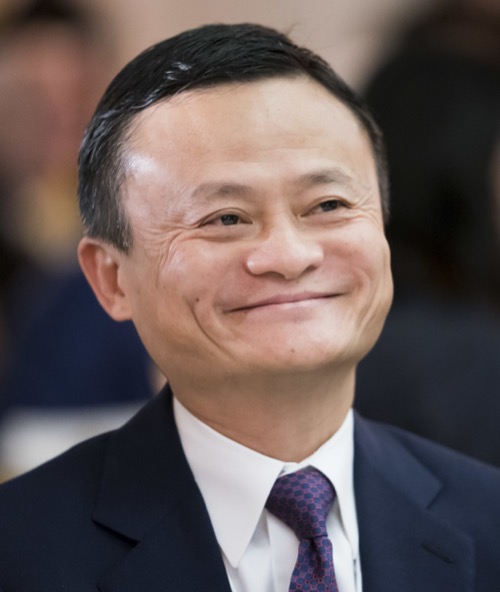
Co-founder, Alibaba Group; former Executive Chairman · b. 1964 · Hangzhou, Zhejiang, China
Two calls made by hand, not formulas. how we score →
Summary
Raised by a state cultural-affairs administrator in Hangzhou, he failed the entrance exam twice, was turned away by KFC and roughly thirty other employers, and taught himself English as a volunteer tour guide.
He pooled about $60,000 with seventeen friends in his apartment to found Alibaba in 1999. Two decades later, criticizing regulators froze Ant Group's IPO and pushed him out of public life.
How it happened
His father, Ma Laifa, worked as a photographer before moving into cultural administration, eventually chairing the Zhejiang Quyi Artists Association and helping revive Hangzhou pingtan, the region's traditional sung-storytelling form; he is credited with writing an award-winning pingtan piece. It was a household with standing inside a state cultural bureaucracy but no real money, and the family's circumstances were shadowed by his grandfather's persecution as a "black category" figure during the Cultural Revolution. Ma failed his middle-school math exam badly, then failed the national college entrance exam twice before getting into what was then Hangzhou Teachers College on his third attempt.
After graduating with an English degree in 1988, he applied to roughly thirty entry-level jobs and was turned down by all of them, including KFC, where 23 of 24 applicants who showed up that day were hired and he was the one who wasn't. He has said Harvard Business School rejected him ten separate times. Long before any of that, starting around age twelve, he spent nine years biking 27 kilometers a day to a Hangzhou hotel to practice English with foreign tourists as an unpaid guide, which is where he got the name "Jack" from a pen pal who found his Chinese name hard to say.
A 1995 government trip to the United States was his first exposure to the internet; searching for Chinese beer online and finding nothing gave him the idea for a company. He and a partner founded China Pages, an online business directory, later that year, and it turned a modest profit before he left it in 1997 under circumstances that aren't fully documented. He then spent 1998 and 1999 running an information-technology unit inside a Beijing trade ministry office before quitting to go back to Hangzhou.
In 1999, eighteen founders, including Ma, gathered in his Hangzhou apartment and launched Alibaba.com as a business-to-business marketplace, pooling roughly 500,000 yuan (about $60,000) of their own money. Goldman Sachs and SoftBank put in $25 million within the year. Ma kept effective board control for two decades afterward through a partnership structure that let a small management group nominate a majority of directors, independent of how much stock anyone actually owned.
Alibaba's 2014 New York listing raised over $25 billion, the largest IPO on record at the time, and left Ma holding about 7.8 percent of the company. In October 2020 he told a Shanghai financial forum that Chinese regulators operated with a "pawn shop mentality," and two days before Ant Group's planned $34.5 billion IPO, regulators pulled it. He went unseen in public for three months, Ant was restructured under central-bank oversight and fined roughly $985 million in 2023, and his voting control there fell from over 50 percent to about 6 percent. He largely left China for several years afterward before returning in 2023, and now appears in public only occasionally.
The coded evidence
Thirteen groups, every claim sourcednot established
Not applicable. Born, raised, and educated in mainland China with no cross-border family migration; Alibaba was built entirely domestically.
↗ en.wikipedia.orgnot established
He is described in adulthood as an adherent of Buddhism and Taoism. What, if anything, he was raised in as a child is not established in the sources reviewed.
↗ en.wikipedia.orgMandarin and the Hangzhou dialect; English acquired later, self-taught.
Chinese-language infobox lists his languages as Mandarin, Hangzhounese, and English.
↗ zh.wikipedia.orgFamily home in Hangzhou tied to his father's salaried position in a state cultural-affairs association. Stable but unremarkable; no documented property, savings, or standing beyond that.
↗ baike.baidu.comHe held salaried positions, as a university English lecturer from 1988 and then inside a Beijing trade-ministry IT unit through 1998-99, immediately before founding Alibaba. The company itself launched on pooled personal savings from eighteen founders rather than on any one person's capital or backing.
↗ en.wikipedia.orgnot established
No housing or material instability is documented during the 1999 founding; he moved directly from a salaried Beijing government job back to Hangzhou to start the company.
↗ en.wikipedia.orgnot established
No period of visible chosen or imposed poverty is documented around the founding itself. The family's circumstances were modest but steady rather than a hardship narrative.
↗ en.wikipedia.orgFather Ma Laifa (1939-) worked as a photographer from 1956 before moving into cultural administration, later chairing the Zhejiang Quyi Artists Association across two terms, a body overseeing traditional Chinese storytelling and ballad-singing performing arts; he is credited with reviving Hangzhou pingtan performance and writing an award-winning pingtan piece, "Mashan Fengyun." Mother Cui Wencai (1944-); her occupation is not established in the sources reviewed.
Tertiary, translated Chinese-language source. Corroborated in general terms by Chinese Wikipedia, which describes the father as head of a Zhejiang drama association and an elder figure in China's quyi performing-arts world.
↗ baike.baidu.comNeither parent was self-employed.
A cultural-association chairmanship and prior state-employed photography work, not self-employment.
↗ baike.baidu.comHis paternal grandfather, Ma Shuzhou, held a government post during the Second Sino-Japanese War era but was later persecuted as a "black category" figure during the Cultural Revolution, a mark against the family rather than an asset. Chinese-language sources describe this as contributing to an unhappy childhood environment rather than supplying capital, exposure, or protection.
↗ zh.wikipedia.orgHangzhou, Zhejiang province, an ordinary urban household with no documented distinguishing affluence or disadvantage.
↗ en.wikipedia.orgLocal Hangzhou public schooling (Zhongbei Second Primary School, briefly Tianshui Middle School), then Hangzhou Teachers College/Institute (now Hangzhou Normal University), a regional public institution, after failing the national entrance exam twice.
↗ zh.wikipedia.orgnot established
His father's career was in state cultural administration and traditional performing arts, unconnected to the internet or trade businesses Ma eventually built. No parental workplace access to his eventual field is established.
↗ baike.baidu.comnot established
No childhood relocations are documented; the family remained in Hangzhou. He later moved to Beijing as an adult, 1998-99, before returning to found Alibaba.
↗ en.wikipedia.orgA 1998-99 posting inside an information-technology unit of the China International Electronic Commerce Center, part of the Ministry of Foreign Trade and Economic Cooperation in Beijing, gave him exposure to national internet and e-commerce policy circles immediately before he quit to found Alibaba.
↗ en.wikipedia.orgNetwork, Credibility
Inferred from the nature of a national ministry policy role; not itemized in the sources reviewed.
↗ en.wikipedia.orgEighteen founders total, including Ma, gathered in his Lakeside Gardens apartment in Hangzhou in 1999 to launch Alibaba.com.
Alibaba's SEC F-1/A registration statement states "our 18 founders first gathered in Jack Ma's Lakeside Gardens apartment."
↗ sec.govnot established
No public following or audience existed before Alibaba's 1999 founding.
↗ en.wikipedia.orgFrom around age twelve, he biked 27 kilometers a day for nine years to a Hangzhou hotel frequented by foreign tourists to practice English as an unpaid guide, an informal, self-constructed language apprenticeship with no institution or teacher behind it.
↗ en.wikipedia.orgApplied for roughly 30 entry-level jobs after graduating in 1988 and was rejected by all of them, including a KFC opening where 23 of 24 applicants who showed up were hired and he was the one turned away. He has also said he applied to Harvard Business School ten separate times and was rejected every time. None of the rejections redirected him into a specific substitute path the way some people here show; he taught English, then moved into entrepreneurship on his own.
Widely repeated in his own retellings; exact counts (30 vs. 31 jobs) vary slightly across sources.
↗ en.wikipedia.org2
English lecturer at Hangzhou Dianzi University (from 1988) and the Beijing ministry IT posting (1998-99), not counting the ventures (China Pages, Alibaba) he founded himself.
↗ en.wikipedia.orgBachelor's degree in English, Hangzhou Teachers College/Institute (now Hangzhou Normal University), 1988.
↗ zh.wikipedia.orgnot established
No debt documented; Chinese public university tuition at the time was nominal and state-subsidized.
↗ en.wikipedia.orgContinued unpaid volunteer English tour-guiding through his student years, a practice he had begun around age twelve.
Timeline is approximate; sources describe the guiding as running roughly nine years from around age twelve.
↗ en.wikipedia.orgDirect. Regional public teachers' college after failing the national entrance exam twice, no transfer or credential-shortcut program.
↗ zh.wikipedia.orgRoughly 500,000 yuan (about $60,000) pooled from personal savings of Ma and seventeen co-founders at the 1999 founding, gathered in his apartment.
↗ en.wikipedia.orgnot established
No family capital contribution to Alibaba's founding is documented.
↗ en.wikipedia.orgnot established
His grandfather was persecuted and stripped of standing during the Cultural Revolution rather than passing down family wealth.
↗ zh.wikipedia.orgIt needed capital up front, before it earned anything.
The initial launch was self-funded from founders' pooled savings, but Goldman Sachs and SoftBank supplied $25 million in outside capital within about a year of founding, before the business had scaled significant revenue of its own.
↗ en.wikipedia.org$25 million raised across October 1999 and January 2000 from Goldman Sachs and SoftBank, roughly a year after the founding on pooled founder savings.
↗ en.wikipedia.orgSoftBank, led by Masayoshi Son, became Alibaba's largest outside shareholder and remained so through the 2014 IPO, holding 34.1 percent of shares immediately before the offering.
Figure from the F-1/A principal-shareholders table as of August 31, 2014.
↗ sec.govGrew through outside venture capital (Goldman Sachs, SoftBank, later Yahoo) followed by a 2014 public listing, rather than being financed purely from operating cash flow. Ownership was heavily diluted by IPO, but board control was preserved through a separate governance mechanism rather than share count.
↗ sec.govPersonal experience. A 1995 government trip to the United States was his first exposure to the internet; finding no information about China when he searched online gave him the idea first for China Pages, then for a global marketplace connecting Chinese exporters to foreign buyers.
↗ en.wikipedia.orgAt the 2014 IPO, Ma held 8.8 percent of shares before the offering and 7.8 percent after, per Alibaba's SEC filing. Despite that minority economic stake, the "Alibaba Partnership," a group of company management, retained the exclusive contractual right to nominate a simple majority of the board of directors, independent of share count. Hong Kong's exchange would not permit this structure, which is why Alibaba listed in New York instead.
Control was diluted further and eventually ceded at Ant Group specifically; see d12 for the 2023 governance restructuring there.
↗ sec.gov1
China Pages (1995), his first internet venture, generated roughly 5 million yuan in profit over three years before he left the company in 1997. It was not a clean failure, it was modestly profitable, but he exited before it became anything larger; the precise circumstances of his departure are not fully established in the sources reviewed.
↗ en.wikipedia.orgSelf and a co-founder, He Yibing. No outside investor was involved in China Pages.
↗ en.wikipedia.orgnot established
No unexplained career gaps are documented; salaried work bridged every transition.
↗ en.wikipedia.orgSalaried employment, first as a university English lecturer, then in the Beijing ministry IT posting, sustained him between his own ventures.
↗ en.wikipedia.org50
Alibaba's IPO priced and began trading on the NYSE in September 2014, days after his 50th birthday (September 10).
↗ en.wikipedia.orgBuilt during China's 1990s-2000s internet and export-manufacturing boom, with government encouragement of e-commerce infrastructure and no dominant foreign platform (Amazon, eBay) able to hold the Chinese market once local alternatives emerged.
↗ en.wikipedia.orgHangzhou, not Beijing or Shenzhen, China's more conventional political and hardware-tech hubs. Alibaba has remained headquartered there since founding.
↗ en.wikipedia.orgBuilt. Alibaba, Taobao, and Alipay were each created from scratch rather than acquired.
↗ en.wikipedia.org20
1999 founding to his 2019 retirement as executive chairman. He remained on the board for one further year, until October 2020.
↗ en.wikipedia.orgDeliberately based the company in Hangzhou rather than moving to Beijing or Shenzhen, a choice that became part of Alibaba's stated culture and identity.
↗ en.wikipedia.orgE-commerce, retail platforms, and financial technology
↗ en.wikipedia.orgJournalistic estimate
↗ forbes.com2026
↗ forbes.comnot established
Individual executive salary/compensation figures were not located in the reviewed filing; his wealth is equity-derived rather than salary-derived.
↗ sec.govEntirely equity wealth in a diluted but valuable public shareholding, not salary. He held 7.8 percent of Alibaba immediately after the 2014 IPO.
↗ sec.govBecame one of the most recognized figures in Chinese business, built a company that grew to employ hundreds of thousands, founded the Jack Ma Foundation for education and environmental philanthropy, and later became a visible example of the limits China places on its most prominent private entrepreneurs.
↗ en.wikipedia.orgUncapped
↗ sec.govTwo days before Ant Group's planned $34.5 billion IPO in November 2020, the Shanghai Stock Exchange suspended the listing, citing "major issues," following an October 2020 speech in which Ma criticized Chinese financial regulators. Ant was subsequently ordered to restructure as a financial holding company under central-bank oversight, and in July 2023 Chinese regulators fined it roughly ¥7.123 billion (about $985 million) for regulatory violations tied to corporate governance, lending, and payments practices.
↗ en.wikipedia.orgIn 2011, Alibaba restructured ownership of Alipay so that it was transferred to a Chinese domestic entity controlled by Ma, done to comply with new central-bank rules requiring domestic ownership of payment licenses. Analysts and reports at the time said the transfer happened without full advance notice to board members representing Yahoo and SoftBank, and some characterized it as Ma acquiring the asset from the company below market value; Ma said Alibaba's board was aware. The dispute was resolved by negotiated settlement among Alibaba, Yahoo, and SoftBank in July 2011, without litigation.
↗ en.wikipedia.orgIn April 2019, amid a nationwide backlash against the "996" schedule (9 a.m. to 9 p.m., six days a week), Ma publicly called 996 "a huge blessing" and said achieving success required it. The comments drew international criticism and rebukes from Chinese state media outlets including People's Daily and Xinhua, which said the practice violated labor law.
↗ en.wikipedia.orgAfter
The Alipay restructuring (2011) predates the 2014 IPO inflection; the Ant Group suspension (2020) and 996 comments (2019) both postdate it. Coded relative to the primary 2014 inflection as a whole, since both major conduct episodes cluster after the fortune was substantially made.
↗ en.wikipedia.orgUnrelated
Neither the Ant Group suspension nor the 996 controversy produced Alibaba's core fortune, made by the 2014 IPO. The 2011 Alipay restructuring is a closer case, arguably instrumental to preserving the payment license underlying what became Ant Group, but that business sat outside the IPO'd entity and is judged here as a separate, later value stream rather than the founding advantage.
↗ en.wikipedia.orgLegal gray
The Alipay restructuring was framed by Ma as regulatory compliance and by critics as a governance breach; it was never adjudicated in court. The Ant Group matter was a direct regulatory finding, not gray at all, and is coded here as the more severe of the two documented episodes.
↗ en.wikipedia.orgFine absorbed
The 2023 fine was paid by Ant Group corporately, not by Ma personally, and the Alipay dispute resolved without any court judgment. His personal consequence was structural rather than financial: voting control at Ant Group fell from over 50 percent to roughly 6 percent, and he was absent from public view for three months and maintained a far lower profile for years afterward.
↗ en.wikipedia.orgAs Alibaba's founder he publicly defended an intensive work schedule that labor authorities said violated Chinese labor law, at a company that was among dozens reported to run 996 or more intensive schedules.
↗ en.wikipedia.orgVisionary, Showman, Outspoken, Controversial
↗ en.wikipedia.orgPublic
↗ en.wikipedia.orgBefore
His reputation as a charismatic, unconventional entrepreneur predates the 2020 Ant Group controversy by two decades.
↗ en.wikipedia.orgMixed
An asset for building Alibaba's global profile and fundraising for two decades; a liability with Chinese regulators after October 2020.
↗ en.wikipedia.orgThe reputation was deliberately built, through books, press, and PR.
Known for high-visibility public performances, speeches, and media appearances that read as deliberate image-building rather than incidental exposure.
↗ en.wikipedia.orgCelebrated for two decades internationally and domestically as the face of Chinese entrepreneurial success. After the October 2020 speech, the Chinese state treated him as a cautionary example of private-sector overreach, while he retained broad admiration among entrepreneurs and much of the public both inside and outside China.
↗ en.wikipedia.orgPartial. He returned to occasional public appearances from 2023 onward, including a March 2023 visit to a Hangzhou school and a February 2025 symposium with Xi Jinping, though state media omitted his name from coverage of the latter. He never regained control of Ant Group and remains far less publicly visible than before 2020.
↗ en.wikipedia.orgStructural context
The cost-of-failure score comes from this person's own money and circumstances. But who they were in America carried its own weight, the same way their household or income did, and it shaped how hard the path was just as much. That part isn't in the cost-of-failure number. It's here instead.
Men founded the companies that took nearly all the venture funding and almost every top outcome, a tailwind that never shows up in one person's own circumstances.
↗ techcrunch.comAmong the people recorded here — men: 169 · Asian subjects: 11. Representation here is who reached these outcomes, not equal odds of reaching them.
Controlled comparisons
Each holds one thing constant and varies another, so the difference is the point. A list of similar names wouldn't tell you anything.