James Dyson
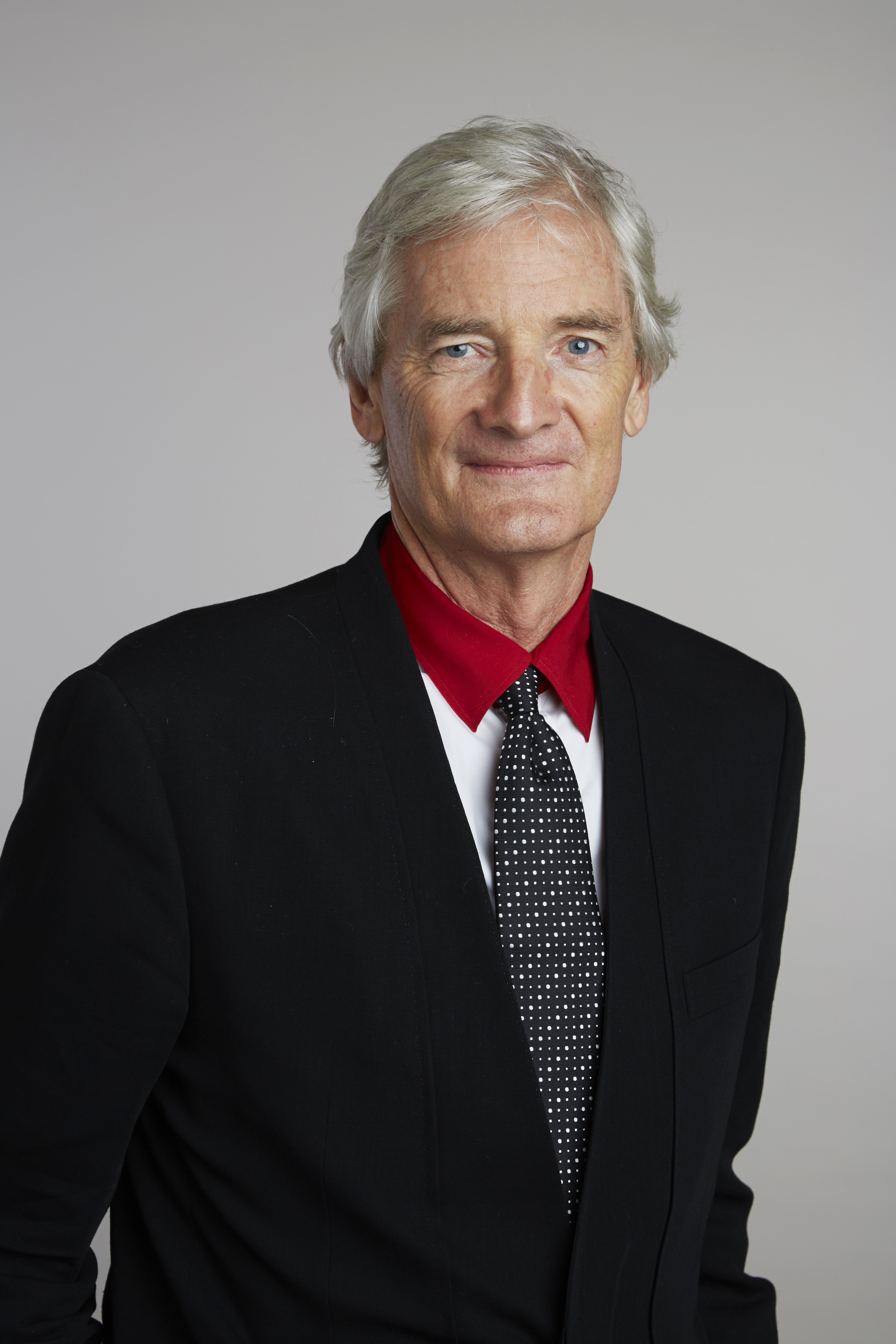
Inventor and founder, Dyson Ltd · b. 1947 · Cromer, Norfolk, England
Two calls made by hand, not formulas. how we score →
Summary
His father, a classics teacher, died of cancer when James was nine.
He trained as a designer, then lost the patent on his first invention when investors diluted him out of his own company. Fifteen years and 5,127 prototypes made a bagless vacuum no manufacturer would touch, funded by his wife's salary and a remortgaged house. He opened his own factory in 1993 and kept full ownership from then on.
How it happened
Born in Cromer, Norfolk, in 1947. His father, Alec Dyson, was head of Classics at Gresham's School in nearby Holt, where both parents taught and where James was later a pupil. Alec died of cancer in 1956, when James was nine. The household had standing but no real money, and he has since described building into himself the sense that his future was down to him alone.
Gresham's, then a foundation year at the Byam Shaw School of Art, then the Royal College of Art from 1966, where he moved from furniture design into engineering. While still a student he joined Rotork Marine, run by Jeremy Fry, and helped design the Sea Truck landing craft — his first paid engineering work.
In 1974 he and his wife Deirdre launched the Ballbarrow, a wheelbarrow that replaced the wheel with a plastic ball, through a company called Kirk-Dyson. He assigned the patent to the company rather than keeping it himself, and when the business needed outside money to grow he took on investors who diluted his stake and eventually voted against him. He lost control of both the company and the patent on his own invention. He has called it the biggest mistake of his career.
Frustrated that his own vacuum cleaner lost suction as its bag clogged, and having seen industrial cyclone separators at a sawmill, he set out around 1978 to build a bagless machine. Working through 5,127 prototypes over five years in a converted coach house, he supported the household on his wife's income as an art teacher while repeatedly remortgaging their home. He has said he ran up more than a million dollars in debt and didn't mind "living on the edge."
Every major UK and US vacuum manufacturer and retailer turned the design down — a bagless machine threatened their income from replacement bags. A 1984 licensing approach from Amway collapsed into a fraud accusation and a repaid fee, followed years later by litigation after Amway brought out a similar machine of its own. In 1986 he licensed the design to a Japanese company, Apex, which sold it as the pink "G-Force" through mail-order catalogues. The royalty terms looked generous on paper but were worth little more than sixty thousand pounds a year once wholesalers took their cut — proof, he later said, that too many middlemen between him and the customer would always eat the margin.
He used the Japanese royalty income to fund his own research centre and factory in Malmesbury, Wiltshire, and in 1993 launched the DC01 under his own name rather than licensing it to anyone else. It became the fastest-selling vacuum cleaner in UK history. For the first time the invention, the company, and the brand were all his, with no investor and no licensee standing between him and the sale.
Dyson sued Hoover over a competing cyclone design in 1999 and won, collecting roughly six million pounds in damages and costs. The company remains wholly owned by Dyson and his family, has grown past six billion pounds in annual revenue, and employs some 14,000 people worldwide. He was knighted in 2007, campaigned publicly for Britain to leave the EU, and drew criticism for moving Dyson's global headquarters to Singapore in 2019. Recent estimates put his fortune above ten billion pounds.
The coded evidence
Thirteen groups, every claim sourcednot established
No immigrant generation is documented; family appears English for generations.
↗ en.wikipedia.orgEnglish
↗ en.wikipedia.orgnot established
He and his wife owned their own home throughout the vacuum-development years and used it as loan collateral rather than a fallback to retreat to; no separate family backstop is documented.
↗ en.wikipedia.orgHis wife Deirdre's salary as an art teacher supported the household through the roughly fifteen years he spent developing the vacuum before it generated income of its own.
↗ entrepreneur.comMore than a million dollars in accumulated, dischargeable business and personal debt by the early 1980s, carried against a repeatedly remortgaged family home.
↗ entrepreneur.comnot established
No homelessness or eviction is documented. The strain took the form of large leveraged debt against an owned, remortgaged home rather than survival-level instability — real financial risk, but from a starting position most people building the same thing wouldn't have had.
↗ en.wikipedia.orgnot established
No period of visible poverty is documented, so the voluntary-versus-imposed test doesn't cleanly apply. The origin household was comfortable middle class, not poor; the debt he carried during the build was a real, unavoidable business risk rather either chosen austerity or destitution.
↗ en.wikipedia.orgFather Alec William Dyson was head of the Classics department at Gresham's School, a private boarding school in Holt, Norfolk; his mother also taught at the school.
↗ en.wikipedia.orgNeither parent was self-employed.
Both parents were salaried schoolteachers, not self-employed.
↗ en.wikipedia.orgnot established
Not established beyond his father having reached a teaching post that implies a university-level classics education.
↗ en.wikipedia.orgnot established
He attended Gresham's, the school where both parents worked; whether fees were reduced or waived for staff children isn't established in the sources reviewed.
↗ en.wikipedia.orgHis father, head of Classics at Gresham's School, died of cancer in 1956, when James was nine.
Widely documented across biographical sources; recorded here as the subject's own early biography rather than any third-party conduct.
↗ en.wikipedia.orgnot established
No on-record, self-declared neurodivergence was found; not established.
↗ en.wikipedia.orgHe lost his father to cancer at nine, and has spoken since about having built into himself the sense that his future was entirely his own responsibility.
The self-reliance quote is his own, on the record; the source doesn't explicitly tie it to his father's death, so the two are presented here as adjacent facts rather than one asserted causal claim.
↗ entrepreneur.comCromer and Holt, Norfolk, a rural county on England's east coast.
↗ en.wikipedia.orgGresham's School, a private boarding school in Holt, Norfolk, where both his parents taught.
↗ en.wikipedia.orgNorfolk to London for art school and the Royal College of Art, then to the west of England (Bath area, later Malmesbury, Wiltshire) for his businesses; no international moves before founding Dyson.
↗ en.wikipedia.orgJeremy Fry, chairman of Rotork Marine, took him on to help design the Sea Truck landing craft while he was still a student — his first paid engineering work.
↗ en.wikipedia.orgRotork Marine supplied his first engineering experience and industry credibility, though not capital; the vacuum venture itself grew out of his own workshop, not an employer.
↗ en.wikipedia.orgSkill
↗ en.wikipedia.orgHis sister and brother-in-law were partners in the earlier Ballbarrow venture (Kirk-Dyson); the vacuum business that became Dyson Ltd had no co-founder.
↗ ensafrica.com8
From leaving the Royal College of Art in 1970 to starting the vacuum project around 1978, spanning the Sea Truck work and the Ballbarrow venture.
↗ en.wikipedia.orgEvery major UK and US vacuum manufacturer and retailer declined to make or carry the bagless design, since it threatened their income from replacement dust bags. He redirected to a licensing deal with a Japanese manufacturer instead of abandoning the product.
↗ en.wikipedia.orgStudied furniture and interior design, then industrial design, at the Royal College of Art, 1966-1970. All Royal College of Art programmes are postgraduate.
↗ en.wikipedia.orgWorked on the Sea Truck landing craft for Rotork Marine while still a student at the Royal College of Art.
↗ en.wikipedia.orgDirect: private boarding school, then an art-school foundation year, then a postgraduate design college.
↗ en.wikipedia.orgCo-founded the earlier Ballbarrow venture, Kirk-Dyson Ltd, in 1974 with his sister and brother-in-law; no specific transfer amount is documented.
↗ ensafrica.comIt needed capital up front, before it earned anything.
The vacuum's development was funded by debt and his wife's income for years before any product sold; income arrived first through the 1986 Japanese royalty deal, not through his own company's sales.
↗ jermainebrown.orgThe couple's own home, remortgaged repeatedly to fund prototyping.
↗ entrepreneur.comNo outside equity was ever taken for Dyson Ltd. It was funded first by Japanese royalty income and then by reinvested profit after the 1993 UK launch; the company remains 100% owned by Dyson and his family.
↗ en.wikipedia.orgHe assigned the Ballbarrow patent to Kirk-Dyson Ltd rather than keeping it himself, then lost control of the company to outside investors who diluted his stake — his own account of his biggest business mistake. On the vacuum, he first licensed the design to a Japanese company rather than owning the whole chain himself; a near-deal with Amway collapsed into a fraud dispute in 1985 and, separately, litigation after Amway later released a similar machine. From 1993 he manufactured and sold the vacuum under his own name with no licensee between him and the customer.
Amway account per this secondary source; broad outline (a 1985 dispute, later litigation, eventual resolution) is corroborated elsewhere, but the specific dollar figures rest on a single source.
↗ jermainebrown.orgBuilt his own research centre and factory in Malmesbury, Wiltshire, in 1993 rather than continuing to license production to others.
↗ en.wikipedia.orgPersonal experience: frustration that his own vacuum cleaner lost suction as its bag clogged, combined with having seen industrial cyclone dust separators at a sawmill.
↗ forbes.comFull economic ownership and control coincide; the company has never taken outside shareholders, so there's no dual-class structure or dilution to manage.
↗ en.wikipedia.orgRepeatedly remortgaged the family home over roughly fifteen years to fund prototyping and the eventual factory, converting home equity directly into venture funding.
↗ entrepreneur.comTurned down by every major UK and US vacuum manufacturer, distributor, and investor he approached before licensing the design abroad.
↗ en.wikipedia.org0
The Ballbarrow itself sold well; what he lost was control of the company and the patent, not a failed product.
↗ ensafrica.comSelf and his wife, through debt and her income, across the fifteen-year vacuum development; outside investors absorbed and then redirected the earlier Ballbarrow venture.
↗ entrepreneur.comRoughly five years and 5,127 prototypes to a working machine (1978-1983), then another decade of licensing before he owned a factory outright in 1993.
↗ en.wikipedia.orgThe vacuum cleaner market was dominated by a few legacy brands whose profit came partly from replacement dust bags, giving them a direct commercial reason to reject a bagless design rather than adopt it.
↗ en.wikipedia.orgMalmesbury, Wiltshire, England, where he built his own research centre and factory.
↗ en.wikipedia.orgBuilt. The cyclonic separation technology and the machine around it were his own design, not an acquisition.
↗ en.wikipedia.org33
From the 1993 factory launch to the present; the company has kept expanding into new product categories throughout.
↗ en.wikipedia.orgDeliberately built his research centre and factory in rural Wiltshire rather than London or an existing appliance-industry cluster.
↗ en.wikipedia.orgVacuum cleaners and consumer appliances
↗ en.wikipedia.org15200000000
Forbes real-time estimate, August 2026. The Sunday Times Rich List put the wider Dyson family fortune at roughly £23 billion in 2023; the figure moves with private-company valuation assumptions, but every recent estimate clears the $10 billion band.
↗ forbes.comJournalistic estimate
↗ forbes.com2026
↗ forbes.comnot established
Dyson Ltd is privately held and doesn't disclose his personal compensation; his wealth is almost entirely the value of his ownership stake, not a salary figure.
↗ forbes.comMostly the value of a 100% private ownership stake rather than disclosed dividends or a public share price; some income has presumably been realized as dividends over three decades, though amounts aren't published.
↗ en.wikipedia.orgOwnership wealth from a wholly owned private company, not salary.
↗ en.wikipedia.orgKnighted in 2007. Order of Merit, 2016. Fellow of the Royal Academy of Engineering (2005) and the Royal Society (2015). Provost of the Royal College of Art, 2011-2017.
↗ en.wikipedia.org15
From starting the vacuum project around 1978 to the 1993 UK launch under his own name.
↗ en.wikipedia.orgUncapped
↗ en.wikipedia.orgDiluted out of, and eventually removed from control of, Kirk-Dyson Ltd by outside investors in the 1970s after assigning the Ballbarrow patent to the company. Decades later, on the vacuum side, he sued Hoover for patent infringement in 1999 and won roughly £6 million in damages and costs; a separate, earlier dispute and lawsuit with Amway over a competing design was resolved without an admission of wrongdoing on either side.
↗ en.wikipedia.orgBefore
The Kirk-Dyson dilution happened in the 1970s, well before the 1993 vacuum launch.
↗ ensafrica.comIncidental
Losing Kirk-Dyson was a setback, not what produced his later wealth — though it directly shaped the ownership structure he insisted on for Dyson Ltd.
↗ ensafrica.comNone
No fine, judgment, or personal liability against Dyson himself is documented in either dispute.
↗ en.wikipedia.orgPersistent, Combative, Self reliant
↗ en.wikipedia.orgPublic
↗ en.wikipedia.orgBefore
His reputation as a persistent inventor-engineer was established well before the Brexit-era controversies.
↗ en.wikipedia.orgMixed
An asset in business and engineering circles as Britain's best-known living inventor; a point of public criticism after 2019 over the Singapore headquarters move, discussed below.
↗ en.wikipedia.orgThe reputation was deliberately built, through books, press, and PR.
Has written an autobiography and remains a frequent public spokesman for British engineering and manufacturing.
↗ en.wikipedia.orgHe campaigned publicly for Britain to leave the EU single market before the 2016 referendum. In January 2019 Dyson moved its global headquarters to Singapore, a move he attributed to proximity to Asian markets and manufacturing; reporting at the time noted the criticism that the timing looked inconsistent with his Brexit advocacy. He has since been reported as having returned to UK residency.
↗ en.wikipedia.orgStructural context
The cost-of-failure score comes from this person's own money and circumstances. But who they were in America carried its own weight, the same way their household or income did, and it shaped how hard the path was just as much. That part isn't in the cost-of-failure number. It's here instead.
Men founded the companies that took nearly all the venture funding and almost every top outcome, a tailwind that never shows up in one person's own circumstances.
↗ techcrunch.comWhite founders are heavily overrepresented among funded companies and top-tier wealth relative to their share of the population, an edge that has nothing to do with a person's own money.
↗ techcrunch.comAmong the people recorded here — men: 115 · White subjects: 74. Representation here is who reached these outcomes, not equal odds of reaching them.
Controlled comparisons
Each holds one thing constant and varies another, so the difference is the point. A list of similar names wouldn't tell you anything.