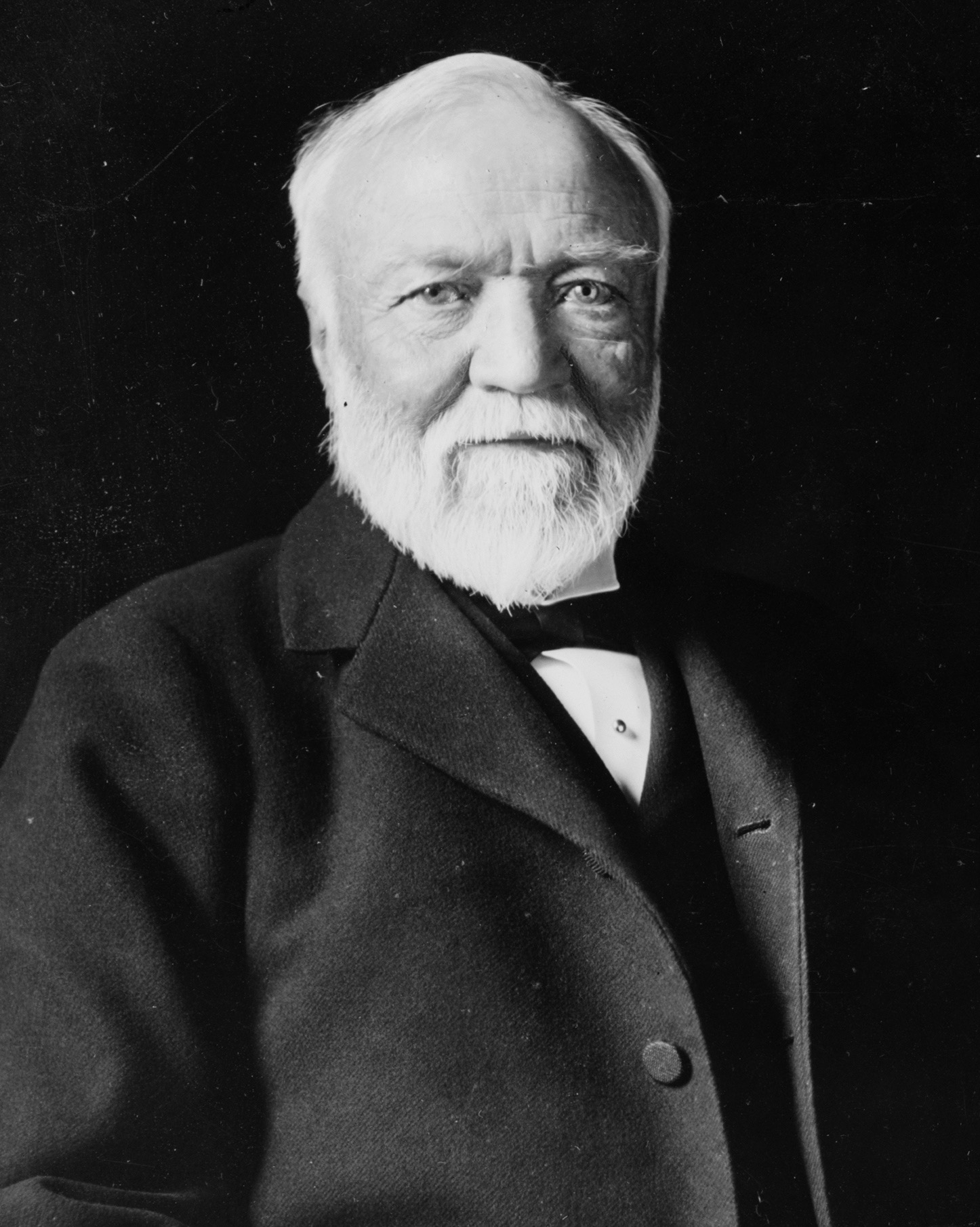
Jim Simons

born James Harris Simons
Mathematician; founder, Renaissance Technologies and the Medallion Fund · b. 1938–2024 · Brookline, Massachusetts
Two calls made by hand, not formulas. how we score →
Summary
A mathematician who chaired a university department, was pushed out of Cold War code-breaking for publicly opposing the Vietnam War, then at 40 left a secure academic post to trade currencies.
What he built, Renaissance Technologies and its closed Medallion Fund, compounded at rates no other fund has matched, on statistical signals nobody outside the firm ever saw.
How it happened
Born in 1938 in Cambridge and raised in Brookline, Massachusetts, an only child of Matthew and Marcia Simons. His father worked in film distribution before taking over running a shoe factory tied to the family — a comfortable, stable household, not a wealthy one. Simons later said he was doing math in his head before he could read.
He finished his MIT mathematics degree in three years, then rode a motor scooter from Boston to Bogotá the summer after graduating. At Berkeley he earned a PhD in differential geometry under Bertram Kostant at 23, and years later, working with Shiing-Shen Chern, produced the Chern-Simons form, now standard in string theory and condensed-matter physics.
He spent the mid-1960s cracking Soviet codes for the NSA through the Institute for Defense Analyses while also teaching at MIT and Harvard. In 1967 he wrote a letter published in the New York Times Magazine, answering General Maxwell Taylor's defense of the Vietnam War, arguing that "any political gains stemming from a military victory cannot possibly be offset by the enormous economic, intellectual and moral investment which we are continuing to place in this venture." IDA management fired him for it the following year.
He chaired the math department at Stony Brook University from 1968 to 1978, building it into a serious research center and, along the way, earning the 1976 Oswald Veblen Prize in geometry. It was a secure, well-paid academic post with tenure behind it — the kind of position that makes the next move optional rather than necessary.
In 1978, at 40, he walked away from that tenured chair to open Monemetrics, a currency-trading shop in a Long Island strip mall, funded from his own savings and a small circle of backers. He had no finance background and no track record; what he had was a hunch that the mathematics he knew could find patterns in market data that nobody trading by instinct or fundamentals could see.
He recruited Leonard Baum, a cryptanalyst colleague from IDA, to build statistical models for currencies, then brought in mathematician James Ax, who found the models worked across commodity futures too. The firm became Renaissance Technologies in 1982, and its Medallion Fund launched in 1988. Renaissance closed Medallion to outside money in 1993, capping its size on purpose to protect the edge, and by the account most often cited it returned an average of 66.1% gross and 39.1% net annually from 1988 through 2018 — figures with no real peer anywhere in finance.
In 2014 a Senate subcommittee investigation criticized a trading structure Renaissance used, basket options that a Senate report said converted short-term trading gains into lower-taxed long-term ones. The IRS pursued the matter for years afterward, and in September 2021 Simons and other Renaissance principals reached a settlement, reported to be one of the largest in IRS history, paying back taxes, interest, and penalties without admission of wrongdoing becoming part of the public record.
He retired as Renaissance's CEO in 2010, staying on as non-executive chairman, and was worth somewhere around $30-32 billion when he died in New York in May 2024 at 86. He and his wife Marilyn gave away billions through the Simons Foundation, Math for America, and the Flatiron Institute, and made some of the largest gifts a US public university has ever received, at Stony Brook and MIT and Berkeley alike.
The coded evidence
Thirteen groups, every claim sourcedSources vary slightly on whether the shoe factory was owned outright by his father or by his father's in-laws and managed by his father; both versions agree it was the family's steady income source through his childhood.
↗ handwiki.orgDescendant. No documented recent immigration in the family line.
↗ en.wikipedia.orgAn only child in a stable two-parent household in Brookline, Massachusetts, an affluent Boston suburb; his father's business supplied a comfortable, unspectacular floor throughout childhood.
↗ en.wikipedia.orgTwenty years of academic and government salary (MIT and Harvard teaching, NSA code-breaking pay via the Institute for Defense Analyses, then a decade as a tenured department chair at Stony Brook) preceded the 1978 founding of Monemetrics, leaving him with savings and a re-employable academic career if the venture had failed.
↗ en.wikipedia.orgnot established
No housing or income instability is documented at any point in his life.
↗ en.wikipedia.orgFather Matthew Simons worked in film distribution before taking over running a shoe factory connected to the family; mother Marcia (née Kantor) is not documented as having an outside occupation.
↗ handwiki.orgA parent worked for themselves, the strongest known predictor of founding.
His father ran a shoe factory rather than working a salaried job.
↗ handwiki.orgBrookline, Massachusetts, an affluent Boston suburb.
↗ en.wikipedia.orgPublic schools in Brookline, Massachusetts. The specific high school isn't established in the sources reviewed.
↗ en.wikipedia.orgThe Institute for Defense Analyses and Stony Brook's math department supplied the specific people who later built Renaissance's trading models: cryptanalyst Leonard Baum, recruited from IDA, and mathematician James Ax, a Stony Brook colleague. Neither the models nor the recruits existed before those two institutional postings.
↗ en.wikipedia.orgNetwork, Skill, Credibility
↗ en.wikipedia.org20
Roughly two decades in academic mathematics and code-breaking before founding Monemetrics in 1978.
↗ en.wikipedia.orgStudied differential geometry under Bertram Kostant at Berkeley, completing a PhD at 23, and later collaborated directly with Shiing-Shen Chern, one of the field's defining figures, producing the Chern-Simons form.
↗ en.wikipedia.orgMIT undergraduate mathematics (BS in three years, 1958) into a Berkeley PhD under a leading geometer, the standard elite pipeline for a research mathematician of his generation.
↗ en.wikipedia.orgPhD in mathematics, University of California, Berkeley, 1961, age 23.
↗ en.wikipedia.orgnot established
Not documented. A stable family business income is the presumed source for undergraduate costs; graduate funding (likely a teaching or research assistantship, standard for the era) isn't separately established.
↗ en.wikipedia.orgDirect: BS at MIT in three years, then straight into a Berkeley PhD, no gap or detour before the doctorate.
↗ en.wikipedia.orgMIT and Berkeley, and later faculty stints at MIT and Harvard, placed him inside the small world of elite research mathematics before he was 25 — the same world he drew on two decades later to recruit Renaissance's first scientists.
↗ en.wikipedia.orgnot established
No precise figure for Monemetrics' 1978 starting capital is documented in the sources reviewed; accounts describe it as funded from his own savings plus a small group of backers, without a confirmed total.
↗ en.wikipedia.orgTwo decades of academic salary, IDA code-breaking pay, and a decade as a tenured department chair at Stony Brook gave him personal capital and a re-employable career before he founded Monemetrics at 40.
↗ en.wikipedia.orgMonemetrics (1978) traded on capital assembled from Simons and a small circle of backers rather than an institutional round. When it was reorganized with Howard Morgan as Renaissance Technologies in 1982, the new firm was structured roughly half around venture-capital investing and half around currency trading before narrowing into the quantitative trading firm it became.
Detail on the exact 1982 structure is thin outside this one secondary account; treat the split as approximate.
↗ acquiredbriefing.comRenaissance Technologies, and specifically the Medallion Fund (launched 1988), compounds wealth through trading profits and fees on proprietary statistical models. Renaissance deliberately closed Medallion to outside investors in 1993 and has kept it capped in size ever since, returning excess capital rather than letting the fund grow past the point its edge could support — the opposite of the usual asset-gathering incentive in the fund industry.
↗ en.wikipedia.orgLeonard Baum, a cryptanalyst Simons recruited from his old IDA circle, built the first statistical trading models for currencies. James Ax, a Stony Brook colleague brought in to extend Baum's work, found the same models held across commodity futures generally, which became the basis for what grew into Medallion.
↗ en.wikipedia.orgSimons ran Renaissance as founder and chairman from 1982 until retiring as CEO in 2010, remaining non-executive chairman afterward; he kept effective control of the firm for more than three decades without a forced ownership dilution or outside takeover.
↗ en.wikipedia.org1
While still at IDA he and colleagues, including Richard Leibler, tried to start a trading company called iStar; it was discovered by IDA management and shut down before it went anywhere, per Gregory Zuckerman's "The Man Who Solved the Market."
↗ en.wikipedia.orgFounded Monemetrics in 1978, seven years after the US left the Bretton Woods fixed-exchange-rate system, which floated major currencies and created the kind of continuous, liquid price data his statistical models needed. Quantitative trading itself was almost nonexistent on Wall Street at the time.
↗ en.wikipedia.org50
He left academia to found Monemetrics at 40 in 1978, but the specific vehicle that produced the extraordinary returns, the Medallion Fund, didn't launch until 1988, when he was 50.
↗ en.wikipedia.org36
Medallion Fund, 1988 to his death in 2024; Renaissance itself ran continuously from 1978 to 2024, 46 years.
↗ en.wikipedia.orgQuantitative finance and mathematics
↗ en.wikipedia.org31400000000
Forbes figure at time of death, April 2024. Bloomberg's index put it at $31.8 billion around the same time and Forbes had him at roughly $30 billion earlier in 2023; treat this as a band, not a precise figure.
↗ forbes.comJournalistic estimate
Renaissance is privately held; no filing discloses his personal stake.
↗ forbes.com2024
↗ forbes.com2800000000
2007 earnings, reported as the highest hedge-fund manager compensation that year.
↗ en.wikipedia.orgJournalistic estimate
↗ en.wikipedia.orgNearly all wealth came from fund fees and trading profits on his own capital inside Renaissance's funds, an appreciating, compounding stake in a private trading firm rather than a public-equity holding or a salary.
↗ en.wikipedia.org1976 Oswald Veblen Prize in Geometry. Elected to the National Academy of Sciences in 2014. The Chern-Simons form bears his name and underlies work in string theory and condensed-matter physics. Co-founded the Simons Foundation (1994), Math for America (2004), and the Flatiron Institute (2016); gave roughly $500 million to Stony Brook University in 2023, among the largest gifts ever made to a US public university.
↗ simonsfoundation.orgUncapped
↗ forbes.comA July 2014 US Senate Permanent Subcommittee on Investigations report examined Renaissance's use of "basket options" and found the structure let the firm treat short-term trading gains as lower-taxed long-term capital gains; Senator John McCain said at the time it let Renaissance avoid more than $6 billion in taxes. The IRS pursued the matter for years afterward, and in September 2021 Simons and other Renaissance principals reached a settlement, reported by multiple outlets to be one of the largest in IRS history, paying back taxes, interest, and penalties. No criminal charges were filed and no admission of wrongdoing is part of the public settlement record.
↗ en.wikipedia.orgAfter
The basket-option trades under scrutiny ran mostly through the 2000s, well after Medallion's extraordinary returns were already established.
↗ en.wikipedia.orgIncidental
The tax structure affected how much of Medallion's trading profit was kept after tax; it didn't produce the underlying statistical edge that generated the profit in the first place.
↗ en.wikipedia.orgCivil wrong
Resolved by civil settlement with the IRS, not criminal charges or a court finding.
↗ en.wikipedia.orgFine absorbed
Back taxes, interest, and penalties paid by Simons and other Renaissance principals under the 2021 settlement.
↗ en.wikipedia.orgSecretive, Brilliant, Press shy, Generous
↗ simonsfoundation.orgPublic
↗ en.wikipedia.orgBefore
His reputation as a top mathematician and then as Wall Street's most successful quant predates the 2014-2021 tax dispute.
↗ en.wikipedia.orgMixed
An asset among investors and in the mathematics world throughout; the 2014 Senate report and the years-long tax dispute that followed were a real, if secondary, drag on his public reputation without denting Renaissance's standing as a trading firm.
↗ en.wikipedia.orgThe 2021 settlement closed the tax dispute without any apparent effect on Renaissance's business or his standing in the investing world; philanthropic gifts through the Simons Foundation continued at scale through his death in 2024.
↗ simonsfoundation.orgStructural context
The cost-of-failure score comes from this person's own money and circumstances. But who they were in America carried its own weight, the same way their household or income did, and it shaped how hard the path was just as much. That part isn't in the cost-of-failure number. It's here instead.
Men held about 90% of Fortune 500 CEO seats in 2023, and a wider majority of the rungs below. The ladder is widest for them the whole way up.
↗ forbes.comWhite executives hold most Fortune 500 CEO seats relative to their share of the population, an edge that adds up at every rung of the climb.
↗ finance.yahoo.comAmong the people recorded here — men: 115 · White subjects: 74. Representation here is who reached these outcomes, not equal odds of reaching them.
Controlled comparisons
Each holds one thing constant and varies another, so the difference is the point. A list of similar names wouldn't tell you anything.