John Paul DeJoria
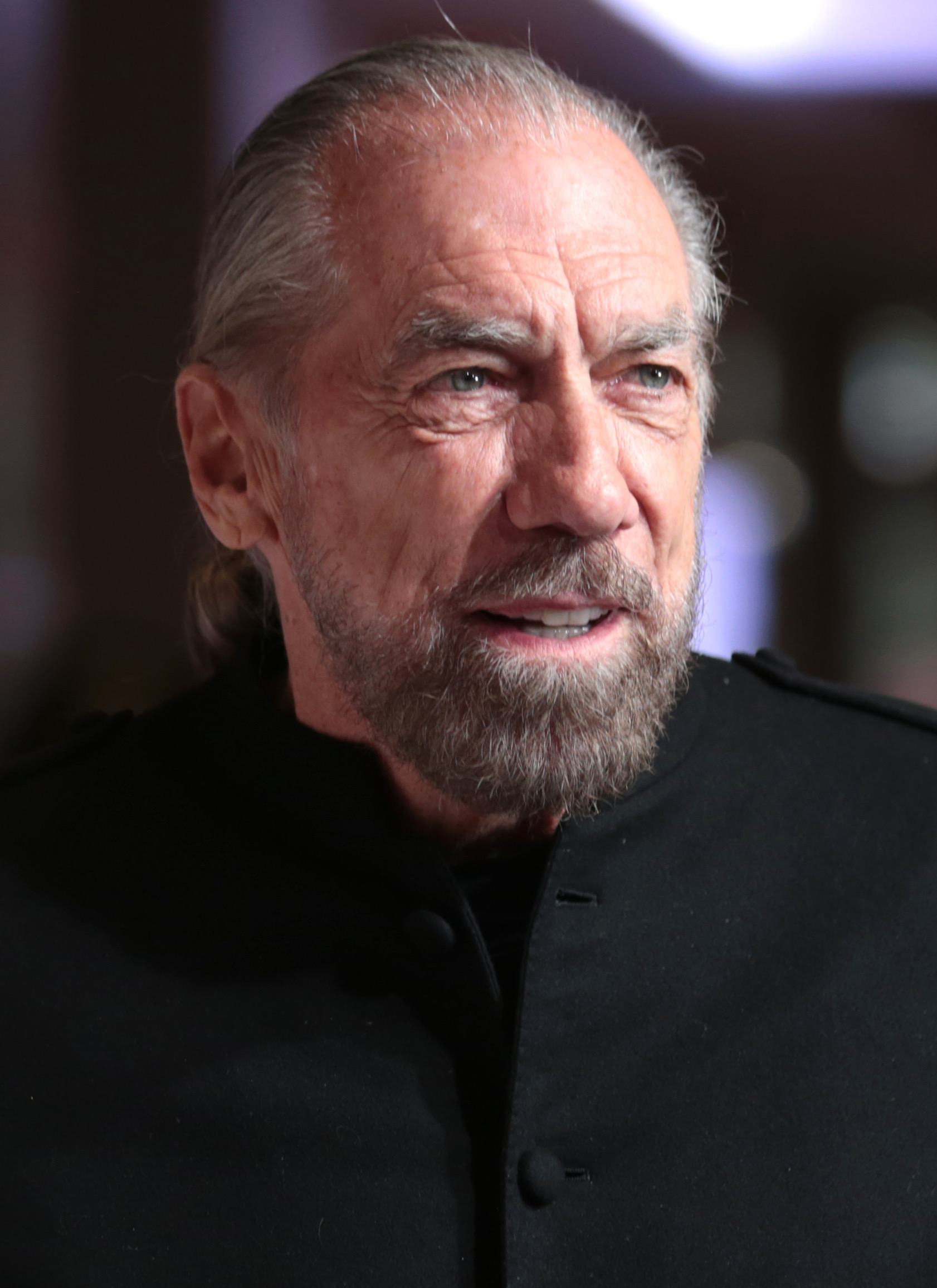
Co-founder, John Paul Mitchell Systems and Patrón Spirits · b. 1944 · Echo Park, Los Angeles, California
Two calls made by hand, not formulas. how we score →
Summary
He was homeless twice: once in his early twenties as a single father collecting bottles to get by, and again during the first two weeks of 1980, sleeping in his car while starting a hair-care line on a $700 loan and some savings.
He and his hairdresser partner sold it salon by salon and refused to put it on a drugstore shelf. Forty-five years later the company is still privately his.
How it happened
Born in 1944 in Echo Park to an Italian immigrant father and a Greek immigrant mother who divorced by the time he was two. His mother couldn't support both boys while working, so he and his older brother spent weekdays in an East Los Angeles foster home until he was nine, coming home only on weekends. At nine he was already selling Christmas cards and newspapers with his brother to bring in money. As a teenager he ran with a street gang for a stretch, and left it after a night school teacher pushed him to.
After the Navy and a run of jobs — janitor, door-to-door encyclopedia salesman, insurance salesman — he was fired from an entry-level job at Redken. Sometime in his early twenties, before any of the businesses that made him known, he was a single father with a toddler son and no home, at one point picking up bottles off the street to cash in for grocery money.
In 1980 he partnered with a working hairdresser, Paul Mitchell, and put together $700 — accounts differ on how much of it was a loan and how much was his own savings — to launch a shampoo line built for salons. Their first backer pulled out almost immediately, and DeJoria spent the opening weeks living out of his car while the two of them walked into salons unannounced and stayed until someone bought. The rule that mattered as much as the product was that it would never be sold in a drugstore or supermarket.
In 1989 he and Martin Crowley bought the rights to a small-batch Mexican tequila and built Patrón into the category's dominant premium brand, eventually selling more than three million cases a year. Bacardi bought the company in 2018 in a deal that valued Patrón at $5.1 billion — the company's price, not DeJoria's personal payout, which isn't publicly disclosed.
John Paul Mitchell Systems is still privately owned and still declines to sell through mass retail. Forbes puts his own net worth at roughly $3.1 billion, a figure that has barely moved since it first cited the same number in 2017. He put some of the money into Blazer House, a gang-neutral youth center in the neighborhood he grew up in, and later lost tens of millions when a lawyer he trusted absconded with funds meant for a Scottish property deal — money he mostly got back through the courts, but as the person defrauded, not the one accused of anything.
The coded evidence
Thirteen groups, every claim sourcedItalian and Greek descent (paternal Italian immigrant, maternal Greek immigrant)
Inferred from his parents' documented national origins, not a self-declared ethnic identity statement from DeJoria himself.
↗ en.wikipedia.orgSecond generation — born in the US to two immigrant parents
↗ en.wikipedia.orgnot established
Not established. An Italian Catholic upbringing would be a common guess given his father's origin, but no source states it, and his mother's Greek Orthodox background complicates any assumption. Left null rather than inferred.
↗ en.wikipedia.orgNone documented at either point he was without housing. No account describes a family home, in-law, or co-signer he could return to; the foster placement itself was necessity, not a cushion behind it.
↗ forbes.comNone beyond the $700 that started the company. He has said their first financial backer withdrew support almost immediately after the 1980 launch, leaving him and Mitchell to sell their way to revenue with no salary underneath them.
↗ grahambensinger.com1
A young son (reported as age two or three depending on the account) during the earlier of his two homeless periods, in his early twenties. Whether he had dependents during the 1980 car-living stretch isn't established.
↗ grahambensinger.comHe has said publicly he was homeless twice: once in his early twenties as his young son's sole caregiver, collecting discarded bottles to cash in for grocery money, and again for the first two weeks of 1980, living in his car while John Paul Mitchell Systems got off the ground.
His own on-record account (Forbes, and separately Graham Bensinger's 2021 interview), not a third-party claim. Treated as ordinary sourced biography, not sequestered — this is his own survived hardship, not an allegation about anyone else.
↗ forbes.comThe hardship was imposed, not chosen. There was nothing to fall back on.
No fallback home is documented at either homeless period; nothing suggests it was chosen.
↗ forbes.comnot established
Not established beyond national origin. His mother worked enough that weekday foster care was needed for the two boys; her occupation and his father's aren't documented.
↗ en.wikipedia.org1
An older brother, Robert, who DeJoria has credited as a major influence and who died in a motorcycle accident at 29. Additional siblings aren't documented; exact birth order beyond "younger of the two" isn't established.
↗ grahambensinger.comParents divorced when he was about two. He and his brother spent weekdays in an East Los Angeles foster home until he was nine, returning to their mother on weekends, then rejoined her full time after nine.
↗ en.wikipedia.orgSole caregiver for his young son during the earlier of his two homeless periods, in his early twenties.
↗ grahambensinger.comWeekday foster placement from about age two to nine, followed as an adult by two separate homeless periods.
↗ en.wikipedia.orgnot established
No criminal record established. He has spoken about running with a street gang as a teenager, but no arrest or charge is documented.
↗ en.wikipedia.orgTwo years in the US Navy, serving aboard the USS Hornet (CV-12), before returning to Los Angeles. Did not fund a degree; he went straight into sales jobs afterward.
↗ en.wikipedia.orgEcho Park and East Los Angeles, working-class immigrant neighborhoods.
↗ en.wikipedia.orgJohn Marshall High School, a public high school in Los Angeles.
↗ en.wikipedia.orgPaul Mitchell, an established working hairdresser who co-founded the company and supplied the salon-industry credibility and product sense DeJoria didn't have on his own.
↗ en.wikipedia.orgCold. Early sales came from walking into salons with no introduction and demonstrating the product on the spot until someone bought.
↗ legacytaxresolutionservices.comNo introductions and no rep network. He and Mitchell went salon to salon themselves and, by his own telling, wouldn't leave until someone bought.
↗ legacytaxresolutionservices.comPaul Mitchell brought the hairdressing expertise; how the two men first met isn't established in the public record.
↗ en.wikipedia.orgNot a bypass so much as a discipline: the product was sold only to salons and never to mass retail, which is what preserved the hairdresser relationship that made the door-to-door approach work at all.
↗ forbes.comnot established
Documented pre-founding jobs include janitor, door-to-door encyclopedia salesman, insurance salesman, and an entry-level role at Redken Laboratories (from which he was fired). An exact count and sequence aren't fully established.
↗ en.wikipedia.orgNo college. High school diploma, John Marshall High School, Los Angeles.
↗ forbes.com$700 to launch John Paul Mitchell Systems in 1980. Most accounts (Wikipedia, Forbes) describe the whole amount as "a loan" without naming a lender; at least one detailed retelling says it was his own savings plus a loan. Neither version names a source for the borrowed portion.
Coded as wage-savings at the coded-summary level as the best-supported non-institutional, non-family bucket; "family-loan" was considered and rejected for lack of any named family lender, and "none" was rejected because $700 of real capital demonstrably existed at founding.
↗ en.wikipedia.orgIt paid its own way from the start. Revenue came before any outside money.
Sold door-to-door and salon-to-salon from day one; no capital-raise phase.
↗ legacytaxresolutionservices.comNo outside investors at founding. Their first financial backer withdrew support shortly after the 1980 launch, and the company has remained privately owned and independent since, run on its own revenue.
↗ en.wikipedia.orgReinvested Patrón proceeds and JPMS profits into new ventures, including the ROKiT group of technology and media companies, several of which have since filed for bankruptcy, and into philanthropy including Blazer House and Grow Appalachia rather than simply banking the money.
↗ forbes.comPatrón built its own distillery in Jalisco, Mexico, completed in 2002, rather than continuing to contract out production indefinitely.
↗ en.wikipedia.orgPersonal industry exposure. He'd worked entry-level at Redken before being fired, and paired his own sales instincts with a working hairdresser's product knowledge rather than acting on a researched market gap.
↗ en.wikipedia.orgHimself, at every point: both homeless periods, and the loan itself once the first backer pulled out of the 1980 launch. No family or investor backstop is documented.
↗ grahambensinger.comEffectively none. He was living in his car for the first two weeks of the business before any real revenue arrived.
↗ forbes.comLaunched in 1980 into a professional hair-care channel that mass retail hadn't yet fully colonized, which is what made a salons-only distribution rule a viable strategy rather than a handicap.
↗ en.wikipedia.orgBuilt, twice. John Paul Mitchell Systems was created from a $700 start with no existing brand to acquire, and Patrón was built into the category leader after buying the rights to a small existing tequila rather than founding the recipe itself.
↗ en.wikipedia.org46
John Paul Mitchell Systems has run continuously from 1980 to the present, still privately held.
↗ en.wikipedia.orgHair care and spirits (consumer products)
↗ forbes.com3100000000
Forbes' real-time figure as of 25 Aug 2026 is $3.1 billion, band 5 — not band 6. Forbes cited the same $3.1 billion figure back in 2017, so unlike most subjects here this number has been roughly flat for the better part of a decade rather than compounding. This is his personal net worth and must not be confused with the $5.1 billion enterprise value Bacardi paid for all of Patrón in 2018 — that figure is the company's price, not DeJoria's payout, which was never disclosed.
↗ forbes.comJournalistic estimate
↗ forbes.com2026
↗ forbes.comMixed. The Patrón stake was cashed out in the 2018 Bacardi sale; the John Paul Mitchell Systems stake remains an illiquid private holding.
↗ en.wikipedia.orgWealth held in owned, privately held companies rather than a salary. No large disclosed annual income appears anywhere in the record.
↗ forbes.comFounded Blazer House, a gang-neutral youth center in the Los Angeles neighborhood where he'd once run with a gang himself, along with several other philanthropic ventures.
↗ forbes.comUncapped
↗ forbes.comNo judgment against him is documented. In 2018 he was the victim of a fraud: he gave a lawyer, Stephen Jones, roughly £10 million to buy a Scottish property (Taymouth Castle), and Jones absconded with the funds. DeJoria later recovered about $7 million through a UK Court of Appeal order against the lawyer's professional-indemnity insurer, and Jones was jailed. He is the wronged party in this record, not the accused.
↗ en.wikipedia.orgrelentless salesman, Self made, Philanthropic, Unpretentious
↗ forbes.comPublic
↗ forbes.comAfter
His public "homeless to billionaire" story took shape through interviews and speeches well after both companies were already established, not before.
↗ forbes.comAsset
↗ forbes.comThe 2018 Taymouth Castle fraud, in which he was the victim, doesn't appear to have damaged his public standing — coverage of it consistently frames him as the person defrauded, and press attention since has continued to focus on his businesses and philanthropy.
↗ en.wikipedia.orgStructural context
The cost-of-failure score comes from this person's own money and circumstances. But who they were in America carried its own weight, the same way their household or income did, and it shaped how hard the path was just as much. That part isn't in the cost-of-failure number. It's here instead.
Men founded the companies that took nearly all the venture funding and almost every top outcome, a tailwind that never shows up in one person's own circumstances.
↗ techcrunch.comWhite founders are heavily overrepresented among funded companies and top-tier wealth relative to their share of the population, an edge that has nothing to do with a person's own money.
↗ techcrunch.comImmigrants and their children are overrepresented among America's biggest companies, as founders and as senior leaders. They got there through the visa, credential, and network hurdles that make the path harder to even start down.
↗ forbes.comAmong the people recorded here — men: 115 · White subjects: 74. Representation here is who reached these outcomes, not equal odds of reaching them.
Controlled comparisons
Each holds one thing constant and varies another, so the difference is the point. A list of similar names wouldn't tell you anything.